Friendship

Male friendship is in crisis

From our UK edition

Most of my women friends work hard to keep ancient friendships alive; the seasonal lunches, shopping trips and afternoon teas are observed as scrupulously as the feasts of the liturgical calendar. ‘Friends make all the difference in life,’ my mother used to say. In her late eighties, she would defy the wobbles of Parkinson’s and haul herself on to a bus for the all-important ‘Tea with Daisy’, inscribed with a shaky hand in her diary. My sister was the same. In September last year she marched her girlfriends off to Whitby for a week of what I assume was slightly manufactured jollity (she was dying of cancer), but you’d never tell from looking at the photographs.

Dear Mary: What’s the etiquette of tipping takeaway delivery drivers?

From our UK edition

Q. Rory Sutherland recently wrote about high-end takeaways (Wiki Man, 19 February). In the last London lockdown, I was fortunate to use the Supper app to try a number of gourmet takeaways from places such as Nobu, Coya Mayfair and Park Chinois, spending up to £100 per head. What surprised me, given that someone had driven halfway across town at speed to deliver the food, was that no service charge was added. I considered this far greater service and effort than one receives in a restaurant, but my fellow diners were aghast when I insisted on giving 10-20 per cent as a tip to the driver. What is the correct protocol here, Mary? – S.F., Chesterfield A. A tip on top of what has been factored into your bill as payment to the delivery driver is entirely voluntary.

Dear Mary: How do I stop my new friend leaving me broke?

From our UK edition

Q. Recently I started hanging out with a new friend. We are both in our twenties, single, and usually go to gatherings and talks downtown. I’m working part-time and studying, she has graduated and is working full-time. We both live in the suburbs, not too close to each other. I drive, she doesn’t, and she refuses to use public transportation. The result is, she asks that I chauffeur her around, while normally I would use public transportation. She does reimburse me for petrol, but this is money I’d rather not spend. On top of this, she wishes to go out dining every time we meet up, and Mary, frankly I don’t have the budget for any of this. But how to avoid overspending just so that we can be friends? – Name and address withheld A.

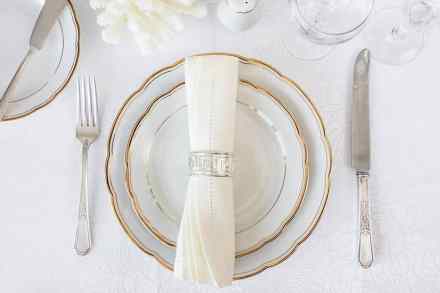
Dear Mary: How do I tell my friends that napkin rings are the height of naff?

From our UK edition

Q. Three weeks ago I banged my head on the lower branch of our near neighbours’ tree, which I couldn’t see from under my peaked cap. I delivered a polite and non-threatening letter explaining that I wasn’t badly hurt and that the branch of their tree overhanging the pavement was a danger they should kindly arrange to remove. Although they were in residence, I received no acknowledgement of my letter, but this morning their entire tree came crashing down in the storm. Mary, please advise how I should write to thank them for their courtesy in arranging this divine intervention? — T.L. (86), London NW11 A. For all sorts of practical reasons it is better to stay on good terms with neighbours. It is the same with in-laws.

Can I really be turning 80?

From our UK edition

A princess of Hanover wrote in her diary: ‘My 30th birthday. There must be some mistake.’ Substitute 30th for 80th and you have how I feel this week. But age is all relative, being dependent on your genes, immune system and how it was primed in childhood; on your location, your income and luck. I had long-lived grandparents on both sides; had measles, rubella, mumps, chicken pox, whooping cough and scarlet fever before five; and in spite of semi-permanent tonsillitis was 20 before any antibiotic entered my body. I spent the years until 16 on the north-east coast of Yorkshire, through bitter snowbound winters, my lungs loaded with fresh sea air. Attitude and expectations are important too.

Dear Mary: How can I stop unexpected visitors using my loo?

From our UK edition

Q. I treat myself to a manicure every ten days. It’s a 30-minute appointment and the girl I use is always fully booked. I turned up — punctual as always — for my appointment this week to be told that the client before me had been stuck in traffic and so my manicurist was ‘running late’. It turned out to be a wait of 12 minutes and she ended up giving me rather a rushed job. I looked at my watch when I left, and saw that she had made up her lost time at my expense and I felt short-changed. This isn’t the first time it has happened. Mary, how can I politely make clear that I want the full therapeutic value of the treatment I am paying for: i.e. the relaxing hand massage well as the nail-painting? — Name and address withheld A.

Dear Mary: Do I have to display my friend’s awful painting?

From our UK edition

Q. A long-standing artist friend, whose work now commands high prices, has sent me out of the blue a present of one of her paintings. She clearly didn’t realise after all these years that, although I have always been immensely fond of her, I have never been a fan of her work. I am grateful and will keep it in my attic but wouldn’t dream of selling it while she is still alive. My friend now lives abroad but is the sort of person who might suddenly turn up in London with no warning and drop in without ringing first. I would hate to hurt her feelings by not having her painting in pride of place were this to happen, but it is large and overpowering and there is simply nowhere in my house where it wouldn’t jar with the existing decor. Any suggestions, Mary?

Dear Mary: How do I get my masseuse to stop talking?

From our UK edition

Q. Our two daughters often bring friends down for the weekend. These friends are more than welcome; we enjoy their company and most have perfect manners — except they never leave a tip. Our daughters claim that no one of their age group (early twenties) carries cash and that even if they remind their guests to bring some to leave in their room, they are so unused to using cash points that most of them still forget. How should I insist without striking a bullying or inhospitable note? — N.H., Bridport, Dorset A. Make it easier for the guests by casually mentioning that you have been out to a cashpoint and stocked up, so anyone who wants to borrow cash for a tip can come to you.

Dear Mary: Should I pay to charge my electric car at a friend’s house?

From our UK edition

Q. An acquaintance suggested organising a celebratory dinner in honour of some mutual friends. He asked my husband and me, along with the other proposed guests, if we would all contribute towards the cost. The evening, in the private room of a top London restaurant, was a huge success and, as agreed, the organiser paid the bill and later sent us all emails with his bank account details to reimburse him. We have now heard that the friends in whose honour the dinner was held are under the impression that the party was paid for solely by the organiser and have been singing his praises ever since. I am not suggesting he misled them, but they may not have been concentrating if or when he explained it was — financially at least — a group effort.

Dear Mary: How do I stop my grey-haired friend giving away my true age?

From our UK edition

Q. I never lie about my age but I try not to think — or talk — about it. Now an old school friend, who has been living abroad for many years, has just come back to the UK and is planning to move here permanently. Unlike me, she is letting her hair go grey. Admirable though her authenticity may be, when virtually all the women from her old circle have highlights or full colour she, known to be roughly our age, but three-quarters grey, shows the rest of us up. At a recent wedding, more than one of us was quietly, but tactlessly told, as though it were a compliment, words to the effect of ‘you look decades younger than your exact contemporary’. We know we are shallow but we don’t appreciate our true ages being ‘outed’ like this at social events.

My failed attempts to be a good Samaritan

From our UK edition

I’ve been trying to be a good Samaritan for some time now and failing. But this week I discovered that even well-trained, experienced good Samaritans — who work for the Samaritans — can fail too. Reports have surfaced revealing the ‘abuse’ of vulnerable callers by a small number of the charity’s phone volunteers. It’s a sad state of affairs when even the Samaritans are subject to scandal. They do excellent work and have always been the Eton of Britain’s volunteer sector. Two years ago, I tried to get in and failed, which was a bit of a shock. I’d assumed that my listening skills would make me the ideal volunteer.

Dear Mary: How do we stop our friends’ dogs wrecking our house?

From our UK edition

Q. We have old friends who live in the northern hinterlands and have a property in Provence where they normally spend each summer. On their journey down through England they make a stopover with us. We’re always pleased to have them, but not their ill-trained dogs, which always cause some damage. Since our friends couldn’t go last year, they are determined, despite France being on the amber list, to travel later in July and are angling to stay with us. While we’d be glad to see them, we’ve had enough of their dogs (they now have three) and won’t tolerate them any more. I did consider booking the dogs into our local kennels, but our friends always arrive late, outside the opening times.

Dear Mary: How can we avoid getting stuck with a useless cleaner?

From our UK edition

Q. We have moved house from north to south London. For me one of the chief pluses is that we no longer need to employ the same cleaner who has blighted my life for years by being useless. My wife, who is a soft touch, could never bring herself to sack the woman for fear of ‘hurting her feelings’. How can we avoid repeating the mistake (with going rates as much as £15 an hour)? We don’t know any of our new neighbours to ask for recommendations. — B.B., London SW17 A. Advertise in a newsagent’s window. It is important to mention the hourly rate you are prepared to pay as potential cleaners will not make contact otherwise.

Dear Mary: How do we tell our friend that her hairstyle doesn’t suit her?

From our UK edition

Q. At a lunch party, I was getting on so well with someone I had not met before. She knew my work (I’m a designer) and loves it — so much so that she suggested I contact friends of hers who own a design company and are looking to fill a post. I told her that, coincidentally, I had just been for an interview at that very company but, despite shared aesthetic sensibilities, had not (inexplicably to my mind) been offered the job. At this point my interlocutor cried: ‘Oh, how ridiculous. You would have been perfect. I had forgotten what terrible snobs they are.’ Mary, I am still asking myself what it is about me that my new acquaintance so clearly saw could ‘trigger’ snobbery.

Dear Mary: How do I tell my fiancee that she eats with her mouth open?

From our UK edition

Q. I’ve recently been approached by a very good friend who — with genuinely admirable candour and tact — pointed out that my fiancée ‘eats with her mouth open’, and that I ought to mention it to her to prevent future embarrassment. I suppose I have occasionally noticed this habit in the context of pizzas and wine on the sofa, but now that my friend has addressed it I can’t help but see — and indeed hear — his concern daily. Mary, how can I approach this rather unedifying conversation about a very unedifying habit with my otherwise cultured thirty-something fiancée, without causing embarrassment? — Name and address withheld A.

Dear Mary: How do I cope with colleagues’ bad habits now I’m back in the office?

From our UK edition

Q. I am placed in a social dilemma due to a proposed visit on the last weekend of June by an American friend who has been hospitable to me. She is great fun. However, it is also the weekend (planned far ahead) when I have staying a recent widow who has been even more hospitable, having had me to visit three times overseas at her seaside house, providing there delicious meals, tourist attractions and delightful company in the form of her other house guests. She is bringing to me a mutual friend, a charming elderly widower. She and he are taking me out to dinner on the Saturday night. But what do I do about the unexpected American? I don’t want to put them in the position of paying for her, too.

Dear Mary: What’s the etiquette of loo-flushing for overnight guests?

From our UK edition

Q. My husband and I have started receiving invitations to large summer events scheduled for after 21 June. We have been shielding for the past year and, although happy to meet up with small groups of friends out of doors, for the time being we are fearful to commit to indoor unventilated parties. Obviously our hosts require responses to these kind invitations, but we don’t know how to refuse without being thought of as ‘wimps’. Mary, can you help?— P.Z., London SW7 A. There is no need to supply a reason for a party refusal. Indeed traditional etiquette decrees that you should not. You need only say you will be unable to attend. Your hosts will be far too busy planning their parties to bother challenging you for an explanation. Q.

A celebration of friendship: Common Ground, by Naomi Ishiguro, reviewed

From our UK edition

Naomi Ishiguro began writing Common Ground in the aftermath of the Brexit referendum. The title refers to both Goshawk Common in Newford, Surrey, where 13-year-old Stanley Gower meets 16-year-old Charlie Wells, and the threads that bind the boys despite their differences. Stan isn’t a talker; he tends ‘to stay quiet and stare at people’, which, together with his second-hand clothes and his desire to learn, has made him a target at school. Charlie is the opposite, with ‘his cigarettes and talk of girls and his recklessness and messiness’. Yet a friendship blooms on this ‘scrubby grass and tumbling hillside in the south of England’ — on common ground.

Dear Mary: What should my wife and I do with the risque photos we took in our youth?

From our UK edition

Q. I hesitate to bring you this problem, but I suspect it is not that uncommon. Early in our very successful marriage we privately took photographs of each other which neither of us would like our children, or indeed anyone else, to see. They were intended for our old age and now that has arrived we take the greatest pleasure in them; indeed they did much to enliven our most recent Christmas spent on our own. Those of my wife I find quite enchanting: she was extremely attractive in her youth and remains very good-looking to this day. It would be such a shame to destroy them prematurely but at some stage we will surely have to deprive ourselves. Or is there a solution you can suggest, Mary?— R., Watlington A.

What did Spectator writers really get up to at school?

From our UK edition

Rod Liddle If you leave a Bunsen burner on for about ten minutes, then quickly put the rubber pipe over a water tap and turn it on full, you get a small explosion and a scalding stream of water to be directed at a boy called Harris. Similarly, if you attach crocodile clips to Harris’s jacket and then wire it up to a power source, it makes him jump about a lot. I loved physics lessons. Jeremy Clarke Snow in the playground. The tall caped figure of the headmaster appeared on a short outside staircase — a rare balcony appearance of a benign, reclusive demigod. One long-distance snowball among the flying hundreds, arcing higher than the rest, travelling through the air in slow time, apparently laser guided, is fixed in the memory of all who saw it.