Freemasonry

The short, eventful life of George Forster – explorer, naturalist and revolutionary

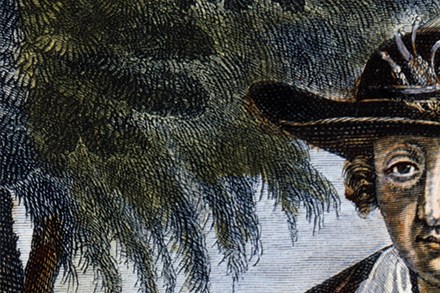
George Forster (1754-94), the German-Polish polymath, was in every sense a late Enlightenment prodigy. He was just ten years old when he accompanied his father, Johann Reinhold, on a scientific expedition to Russia and still in his teens when he sailed with him on Captain Cook’s epic three-year voyage to Antarctica and the Pacific islands. The ensuing book, A Voyage Round the World (1777), largely written by George, became a classic. It established him as one of the most significant naturalists and travel writers of the age, leading to him being elected a Fellow of the Royal Society aged just 22. He was also a very young polyglot, having learnt German, French, English and Russian by the age of 12. (He later added Dutch, Italian, Spanish, Portuguese and Swedish, as well as Latin.
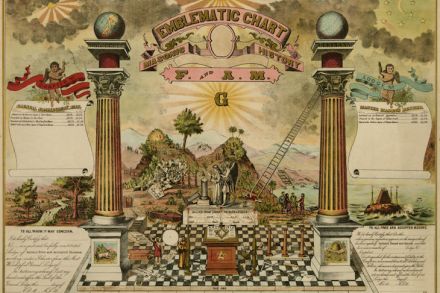
In defence of the Freemasons

It’s a personal delight that on 29 September 1829, the first day of Robert Peel’s new force, the first warrant number issued by the Metropolitan Police was to a William Atkinson. I’m less happy that officer number one was sacked after just four hours on duty, for being drunk. As the Met approaches its 200th birthday, the state of it would embarrass even my namesake. The force is ineffective, scandal-prone and discredited. Shoplifting is up 104 per cent since 2020. Knife crime has reached a 14-year high. In 2023, a review by Louise Casey declared the Met riddled with institutional sexism, racism and bullying. Many recent studies have found that more than half of Londoners do not trust their police.

The diminutive dictator who ruled Spain with an iron fist

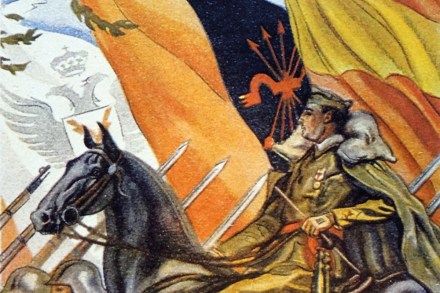
General Franco died on 20 November 1975, and with the 50th anniversary just passed, this biography – the first in years – of the man who ruled Spain with an iron fist for nearly four decades is timely, incisive and authoritative. Written by a former Madrid correspondent of the Economist, it’s also an up to date and highly accessible introduction to 20th-century Spanish history. Born in 1892 into a middle-class family, Francisco Franco shared a bedroom with his younger brother Ramon, who later won international fame as Europe’s ‘equivalent of Charles Lindbergh’. There were few signs, however, that eminence also awaited Francisco. A weedy child, who dutifully got by at school, he had a difficult relationship with his domineering Freemason father.