Free speech

Of course there’s a free speech crisis on campus

From our UK edition

A free speech crisis on campus? Apparently, it’s a myth, concocted by right-wing commentators and latched on to by a Tory government desperate to talk about something other than Covid. That, at least, is the unconvincing take being echoed across social media at the moment, as the campus wars erupt once again. When the government announced this week that it wants to toughen the law around free speech on campus, the National Union of Students dismissed the very premise. ‘There is no evidence of a freedom of expression crisis on campus’, it said. ‘Students’ unions are constantly taking positive steps to help facilitate the thousands of events that take place each year.

My advice for the next ‘free speech champion’

From our UK edition

I was delighted to hear the government plans to appoint a ‘free speech champion’ to the board of the Office for Students. His or her responsibility will be to make sure universities in England do everything that is reasonably practicable to uphold freedom of speech within the law, including preventing external speakers from being no-platformed by student activists. This legal duty has been on the statute books since 1986, but there is no enforcement mechanism. That’s why this announcement is so important. The new free speech tsar will have the power to fine universities that don’t uphold the law. Theresa May’s government took a dummy run at this when it appointed me to the board of the Office for Students in 2018.

Portrait of the week: Hotel quarantine starts, Ribblehead Viaduct cracks and a royal guest for Oprah

From our UK edition

Home The target was achieved of vaccinating, by the middle of February, about 15 million people of 70 or over, together with care home residents and workers, and the clinically extremely vulnerable. But there was concern that a substantial proportion of care home workers declined the vaccine. By 16 February, more than 20 per cent of the population had been given their first dose. At dawn on 14 February, total UK deaths (within 28 days of testing positive for the coronavirus) had stood at 116,908, including 4,861 in the past week. Over the previous week, the seven-day moving average of deaths had fallen to 688 a day from 932 a day. An extra 1.7 million people were added to the 2.3 million advised to shield, entitling them to earlier vaccination.

The problem with pop psychology

From our UK edition

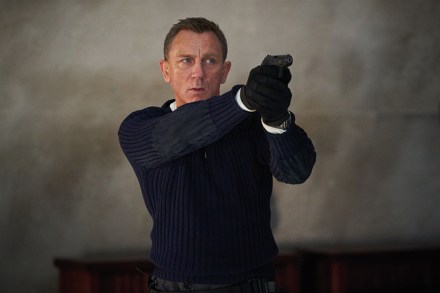
James Bond is not what he used to be. His motivations were once so simple: MI6 had told him to do it. Of late, though, he has been propelled about the screen by his inner demons, shooting people he’s not supposed to shoot, revisiting his childhood, collecting traumas, developing a mother-complex with Judi Dench. What makes Bond, Bond? Once, it didn’t matter, now it does. The next film, Bond girl Léa Seydoux has said, will be ‘even more psychological’. The screen reflects the culture. Psychology, it seems, is what we want now. The stuff is simply everywhere. Imposter syndrome, projection, narcissism, Stockholm syndrome, triggering, boundaries, personality type, self-care — these terms now pepper the discourse.

Donald Trump and the limits of free speech

From our UK edition

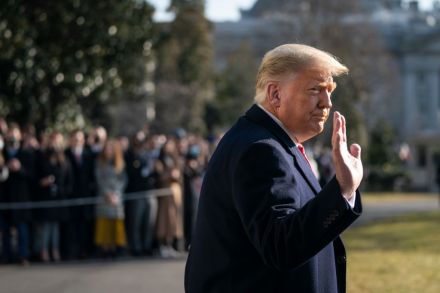
Is Donald Trump’s expulsion from Twitter an attack on free speech? A great many Republicans are saying so. You certainly can call it ‘deplatforming’: when you lose your speaking invite, your social media posting rights or your book deal. Josh Hawley, a Republican Senator, has claimed that his First Amendment rights were violated by Simon & Schuster when they decided not to publish his book. It’s a problematic definition, since it means that Simon & Schuster are also violating my free speech by not publishing my books. And in fact, the rights of most aspiring authors on the planet. But of course, the First Amendment expressly refers to laws made by Congress abridging the freedom of speech.

Why I was sacked from Eton

From our UK edition

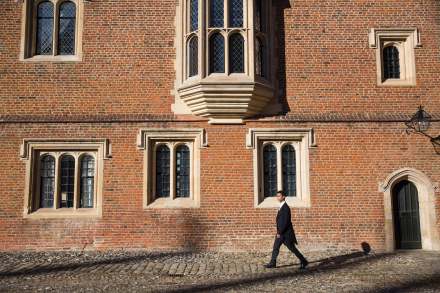
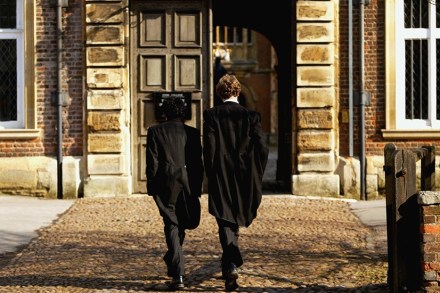
One of the things I’ll miss about teaching at Eton is the ever-present threat of an ironic riposte from one of the boys. ‘Cheer up,’ I told one who looked un-enthused by Milton in my first week at the school, nine years ago. ‘Two hundred years ago, you’d have been down a mine!’ ‘Sir,’ he replied deadpan, ‘we’d have owned the mines.’ The class erupted in self--deprecating laughter. I’d arrived. It was the boys themselves who suggested and named the YouTube channel Knowland Knows, which has since got me summarily dismissed.

Cambridge academics have just won an important battle for free speech

From our UK edition

Academics at Cambridge won a cheering victory for free speech today when they voted by an overwhelming majority to reject plans from the vice-chancellor to change the rules governing debate at the university. They rejected the university’s proposals to insist that students and staff be ‘respectful’ of opposing views. They decided, instead, that the rules should say students and staff must ‘tolerate’ opposition. The result was as close to conclusive as you can get. Only 162 academics voted in favour of the university’s plan, while 1316 voted in favour of the change. (A further 208 academics wanted neither.

Eton was right to sack teacher Will Knowland

From our UK edition

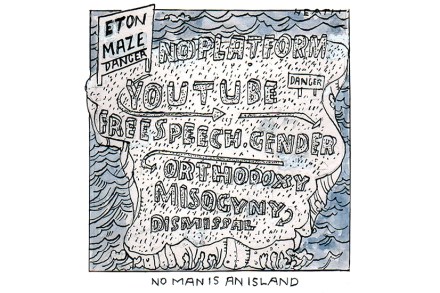
Last week Eton College made the controversial decision to sack an English teacher after he refused to take down his YouTube video entitled ‘The Patriarchy Paradox’. In the 30-minute lecture, Will Knowland argues that the patriarchy results from biological differences rather than social constructs and that the system benefits women. Eton’s decision is not, as many people would argue, an attack on free speech and fundamental liberties. It is an attack on foolishness. If Knowland’s intention had been to encourage healthy academic debate, then there are many other outlets he could have chosen: an assembly, a debate, or one of his English lessons.

The battle for Eton’s soul

From our UK edition

When trying to get my head around the row that has engulfed Eton College in the past two weeks I keep getting sidetracked by the comic details. Like the fact that the headmaster, Simon Henderson, is nicknamed ‘trendy Hendy’ on account of his mission to transform Eton into a modern, progressive institution. By all accounts, he has set about trying to cleanse the school of its ‘toxic’ traditions with the zeal of a captain in the Red Guards, promising to ‘decolonise’ the curriculum, recruiting the creator of the Everyday Sexism blog to lecture the staff on the gender pay gap and, at one point, proposing to scrap Eton’s famous uniform. Among his initiatives has been to elevate a drama teacher to the post of Director of Inclusion Education.

Tolerance is out of fashion at Cambridge University

From our UK edition

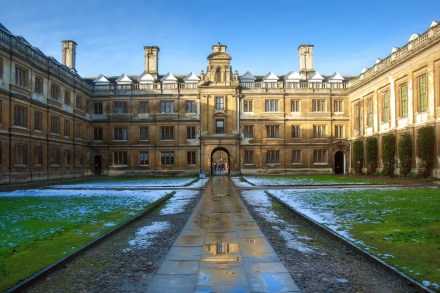
A struggle begins in Cambridge on Friday, which will determine the freedom to argue in the university. As the students of today are the elites of tomorrow, and as the same fight between liberalism and, for want of a better word, wokeism is being fought everywhere, it is an early skirmish in the fight over everyone’s freedom. At its heart is a distinction with a difference worth fighting over: the line between ‘tolerance’ and ‘respect’. Tolerance is an old liberal virtue that is tougher than it looks. After the devastation brought by the wars of religion, the early Enlightenment decided, in the words of John Locke, that ‘the civil magistrate has no jurisdiction over souls’.

Will my kids report me for hate speech?

From our UK edition

When Humza Yousaf, the SNP’s cabinet secretary for justice, announced that his new Hate Crime Bill would remove the ‘dwelling exemption’ in the Public Order Act 1986, people were understandably horrified. As things stand, you cannot be prosecuted for stirring up racial hatred because you’ve said something inflammatory about race or religion in the privacy of your own home. But that’s far too wishy-washy for Yousaf. Not only does he want to enlarge the number of ‘protected’ groups, he also wants the new speech restrictions to apply in people’s homes. Henceforth, Big Brother will be watching you in the kitchen and the bedroom.

The trans debate could cost this Cambridge porter his job

From our UK edition

This is a story about a man called Kevin Price, who was until last week a councillor and who is, for now at least, employed as a porter at a Cambridge college. The story illustrates two points. First, political conflict over trans rights and women’s rights is far from over, especially in the Labour Party. Second, people who say the wrong thing in this debate can put their livelihood at risk. Mr Price last week resigned from Cambridge City Council. He had sat as a Labour councillor since 2010 and was once the council’s deputy leader. He resigned rather than follow the Labour Group whip and vote for a motion that declared, among other things that: 'Trans women are women. Trans men are men. Non-binary individuals are non-binary.

The rise of the left-wing language police

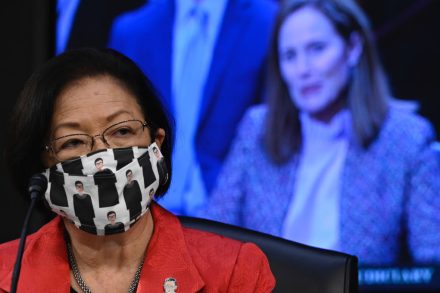
This week, after many hours of questioning during the Senate hearings deciding her nomination, Judge Amy Coney Barrett used the term ‘sexual preference’ in passing. Her hearings had been so staid and her performance so even-keeled that the use of the term became a huge deal as no other excitement was forthcoming. This despite the fact that her point was she would not discriminate against anyone on the basis of their orientation.‘If it is your view that sexual orientation is merely a preference...then the LGBTQ community should be rightly concerned whether you would uphold their constitutional right to marry,’ Sen. Mazie Hirono admonished.Until Coney Barrett said it, few had a problem with the term.

language police

Mark Zuckerberg’s quest for redemption

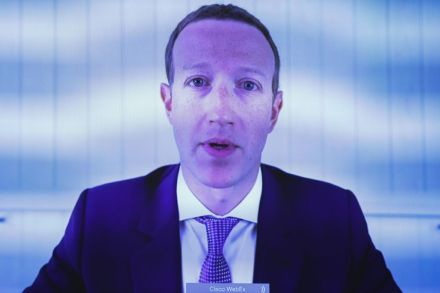
Stung by recent criticism, and fearing major regulation, Mark Zuckerberg, founder and CEO of Facebook, has announced the establishment of a kind of ‘Supreme Court’ for his company. Selected and paid by Facebook, the members of this ‘Oversight Board’ will in theory behave as independent adjudicators capable of making rulings over content moderation and other important aspects of the business. No doubt Mr Zuckerberg is looking at the example being set by the US Supreme Court and thinking, ‘What could go wrong?’ It's hard to believe now but in 2017, it seemed plausible that Mark Zuckerberg might become president.

zuckerberg

The creep of internet censorship

From our UK edition

Kristie Higgs, a 44-year-old school assistant, didn’t realise that criticising the sex education curriculum at her son’s school on Facebook would get her fired. For one thing, her account was set to ‘private’, so only her family and friends could read it. For another, she was posting under her maiden name, so no one could connect her with her employer. Finally, the school that sacked her for expressing these views wasn’t actually her son’s, but another one altogether. This seems a pretty clear case of a person losing her livelihood for dissenting from progressive orthodoxy. Kristie’s case is being heard at an employment tribunal in Bristol this week. The dispute relates to two Facebook posts from two years ago.

Scots poll in favour of free expression

From our UK edition

The SNP’s determination to push on with its draconian Hate Crime Bill has put it on the wrong side of Scottish public opinion. A new poll indicates popular unease with plans to criminalise speech on everything from religion to ‘transgender identity’ if it is deemed ‘likely that hatred would be stirred up’. The Savanta ComRes poll of 1,008 Scottish adults found both generalised endorsement of classical liberal precepts such as free expression, open debate and the absence of a right not to be offended, as well as more specific concerns about the Bill itself.

Jake Auchincloss and incendiary rhetoric

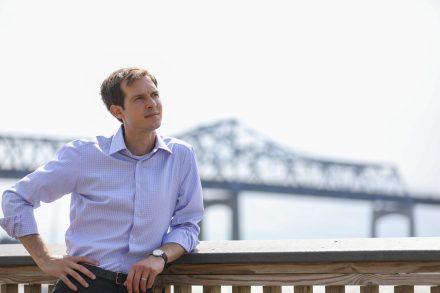
I can’t claim to know what Jake Auchincloss was thinking when he asked, 10 years ago, why it was acceptable for Pakistanis to burn the American flag but not Americans to burn the Qur’an. But I can make an educated guess. Auchincloss, currently front-runner in the race to succeed Rep. Joe Kennedy in the Massachusetts Fourth Congressional District, was a 22-year-old Harvard student when protests erupted across the Muslim world after an American Christian preacher threatened to burn the Muslim holy book. It was the ninth anniversary of 9/11 and Terry Jones wanted to memorialize that somber event in a way sure to attract attention.

jake auchincloss

My open letter to Twitter

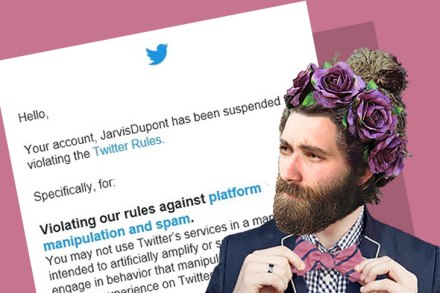
Dear Twitter,The other day I spotted an elderly man not wearing a mask in the pharmacy. He had a badge pinned to his shirt which proclaimed him to have COPD, absolving him of his responsibility to do the decent thing. At first glance everything looked legit, but to my keen eyes, the kerning on his medical exemption badge was all wrong. A friend of mine is doing a graphic design course and after discreetly WhatsApping them a close-up, they confirmed to me it was indeed a clever forgery. I immediately opened my Twitter app so that I could broadcast me shaming him to my 128,000 followers, but my plan was abruptly scuppered. I tapped the familiar icon and was confronted with a message telling me that my account, MY account had been suspended! SUSPENDED! Can you imagine that?

twitter

President Trump should bend — but not break — Big Tech

Americans’ increasing focus on this fall’s elections has awakened in me a tinge of nostalgia for the good old days of campaigning — before the internet changed everything. As a conservative running for the US Senate in 1994, I remember being able to connect with thousands of voters to respond to my opponents’ dishonest attacks, the press’s deceitful characterizations of my positions, local television refusing to cover my campaign events, and the character assassinations by the newspaper editorial boards. Actually, I don’t remember that, because I had no way to reach thousands of voters except by paying those same media outlets millions of dollars to buy ads.

trump

We’re all thought criminals now

I’m disappointed that Bari Weiss has resigned from the New York Times and not just because she was one of the few voices of reason on the paper. A while ago, I flew to New York at Bari’s request to be interviewed by her for a forthcoming profile of a group of maverick writers and intellectuals in what was billed as a follow-up to her famous piece on the ‘Intellectual Dark Web’ — a kind of Junior College branch. Among those to be featured were the African American essayist Coleman Hughes; the Australian editor-in-chief of Quillette, Claire Lehmann; and the Swedish columnist Paulina Neuding. We spent an enjoyable afternoon together at the Times building on Eighth Avenue, having our photographs taken and being wined and dined by Weiss in the boardroom.

bari weiss anti-semitism