Fraud

Conning the booktrade connoisseurs

From our UK edition

Literary scandals – like actual scandals – come and go. Who now recalls, or indeed cares less about, the hoo-ha surrounding whether or not the professional huckster James Frey made stuff up in his much celebrated 2004 memoir A Million Little Pieces and then had the audacity to lie about it to Oprah Winfrey? Anyone remember JT LeRoy? Binjamin Wilkomirski? Authorship debates, accusations of plagiarism, obscenity controversies, way-out wacky and appalling author behaviour, rivalries, forgeries – they all tend to be storms in teeny-tiny, super-fragile, already half-cracked literary teacups that soon subside and slip from the gossip columns and the culture pages to become the subject matter merely of obscure academic conferences and dull, scholarly articles.


The ruling against Trump is perverse in true New York fashion 

While Donald Trump’s excessive rhetoric often evokes eye rolls, in the case of Friday’s record-setting $350 million judgment against the Trump Organization, he is spot on. “Disgraceful.” “Lawfare.” “Banana republic.” All three apply.  It’s hard to imagine a more perverse and vindictive misuse of the justice system than that which New York attorney general Letitia James has committed. While campaigning in 2018, James promised to vigorously investigate Trump and his business. True to her word, once in the office James spent three years seizing and scouring through Trump’s tax and financial records for anything she could use as the basis for legal action.

ruling trump

The rise of the multilevel marketing mom

T​​he hottest new influencer isn't the gym bro or food guru. It’s the affiliate marketing mom of two working from her pool deck. If you’ve stumbled upon her Instagram, she’s most likely bragging about her two-hour workday and the new house she just bought with her six-figure income stream. And you know she's got a link in her bio directing you to the class she took to learn it all.   These new "entrepreneurs" are flooding social media. Some have just a dozen followers, others hundreds of thousands. But they are all part of a new scheme that promises to make you millions working from home as a freelance marketer. The catch — the course they're selling is how they're making their money; they're not actually using it to build a business. And their advice for you?

multilevel marketing mom

Stanford’s Marc Tessier-Lavigne and the messiness of modern science

The president of Stanford University, neuroscientist Marc Tessier-Lavigne, has resigned in the shadow of an investigation that revealed that some scientific papers he had overseen contained “manipulated data” or evidence of other kinds of scientific malpractice.    His resignation may well be warranted — but before he disappears into ignominy, it would be wise to consider the situation.  In the now dimly remembered past, a scientist devised experiments and, working alone or with the help of a loyal assistant or two, carried them out. Or he sat in a room, as Einstein did, and thought through deep problems, eventually penning an article in which he said forth a bold new hypothesis.

Marc Tessier-Lavigne

Taylor Swift avoids FTX ‘Bad Blood’

What do Tom Brady and Taylor Swift have in common? Both blonde, both wealthy, both recently single. As for their differences: Brady is one of a group of celebrities being slapped with a multi-billion-dollar class action lawsuit and Tay-Tay is touring around singing songs about her exes unscathed, after bothering to do her due diligence on FTX. A lawyer suing celebrities for promoting FTX, Adam Moskowitz, appeared on The Scoop podcast to discuss the lawsuit, claiming that the plaintiffs are seeking over $5 billion from FTX's celebrity endorsers Brady, Shaquille O'Neal and Larry David. Cockburn can't wait to see this plotline on the next season of Curb Your Enthusiasm. “I mean, why would you possibly promote cryptocurrency if it may be an unregistered security?

taylor swift

George Santos: ‘I’ve kept 100 percent of my campaign promises’

George Santos is frustrated. In an hour-long interview with The Spectator, Santos tried to make it clear he came to Washington with the hope to get things done. But he’s been “slapped in the face” with the reality that there is so much red tape. “Washington, DC is performance art,” he says. “This is a master course on performing arts... everybody here is acting.” Santos of course knows a thing or two about acting; his exploits have been well publicized since his election. Perhaps the most well-known of his roles took the form of his popular drag performances in Brazil. A fan of drag for many years, it’s surprising to learn that Santos only began watching RuPaul’s Drag Race only once the coronavirus pandemic hit.

george santos

Horrifying but gripping: Netflix’s The Puppet Master: Hunting the Ultimate Conman reviewed

From our UK edition

It’s 1993 and you’re studying at a top agricultural college with a bright future ahead of you, perhaps in farming or land management, when a chance conversation with a barman all but ruins your life. The barman tells you that he is an agent working for MI5, spying on an IRA cell in college, one of whose members happens to be your flatmate. You might be sceptical but the agent is very persuasive; and besides, someone from your college has indeed just been arrested for supplying bomb-making equipment to the IRA. When the agent warns you that you and your flatmates are in serious danger and must go on the run, you’re inclined to take him seriously.

How have our politicians gotten so bad at lying?

It's been a bumpy month or so for newly elected Congressman George Santos, if that is his real name. Shortly after his upset win in November that flipped a key New York district from blue to red, reports began to surface showing he had told a few wee lies to voters on his way to Capitol Hill. He had not attended the prestigious college he said he had, he hadn’t worked at the big Wall Street firm, and, in the most humorous example, he had to admit he wasn’t Jewish but rather "Jew-ish." Politicians have always been known to have a tenuous relationship with the literal truth, but they used to be creative, even talented at it. Today they resemble a toddler claiming he did not steal the cookie from the jar as he’s chewing it.

george santos

Tish James doesn’t care about violent crime anymore

New York attorney general Letitia “Tish” James has a lot on her plate just now. Sadly none of it has anything to do with fighting the surging crime throughout the state and the nation’s largest city. Instead James has her sights narrowly set on a civil lawsuit against Donald Trump and his family. She even found the time last week to fire off a tweet angrily complaining that a Yankees game was not being broadcast live. Clearly keeping New Yorkers safe is not on James’s agenda. In fairness, James’s persecution of the Trump clan is a campaign promise kept. On the night she won the AG race in 2018 she told her adoring crowd that, “I will be shining a bright light into every dark corner of his real estate dealings, and every dealing, demanding truthfulness at every turn.

tish james

Black Lives Matter’s $40,000 dog

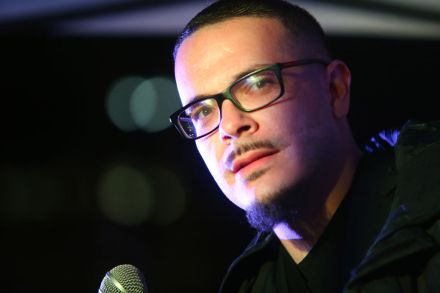
Outspoken Black Lives Matter activist Shaun King has unleashed his Grassroots Law PAC campaign finance disbursements, and it appears he used $40,000 of donor money to buy a dog for his family. The financial disclosures reveal that the “PAC” paid Potrero Performance Dogs in California a total of $40,650 over the course of two months. The Washington Free Beacon reports that a few days after the second and final payment was made, “King welcomed a ‘new member of the King family’: an award-winning mastiff bred by Potrero named Marz.” (King’s Facebook post about the pup is now gone.

Where is Ruja Ignatova, the self-styled cryptoqueen, hiding?

From our UK edition

This is a depressing book. It’s a reminder of everything that is sick, broken and generally maledicted about the human condition. It’s also a book based on a podcast, which brings difficulties of its own. To cut a very long story short, The Missing Cryptoqueen tells the true story of a Bulgarian crook named Ruja Ignatova, the self-styled cryptoqueen of the book’s title. In 2014, she set up a pyramid scheme-cum-multi-level-marketing scam based on a fake cryptocurrency called OneCoin. In 2017, having swindled people out of billions of pounds, dollars, euros and just about every other currency on the planet, and with the authorities closing in, Ignatova suddenly went missing. Her whereabouts remain unknown. It’s a great story and a spectacular con.

Letters: Banning Russia’s culture only benefits Putin

From our UK edition

Don’t ban Russia’s culture Sir: It is uncouth, illiterate and actually beneficial to Putin when theatres, opera houses and other cultural institutions in Britain and across the globe block access to these heights of culture (‘Theatre of war’, 14 May). During Stalin’s last decade and throughout the Cold War, Isaiah Berlin was a superb help to this country and to Russia through his connection with Anna Akhmatova, including the award to her of an honorary doctorate at New College, Oxford, in June 1965, the year before her death. Censorship and blocking of the free flow of culture between Russia and western society is what the Soviet Union enforced.

Fraud victim? Don’t bank on getting your money back

From our UK edition

Lloyds Bank has been running a new advertising campaign which updates its long-standing black horse corporate branding. The horses no longer thunder along a beach, but interact with people who we assume are actual or potential customers. The soothing payoff slogan goes: ‘Lloyds Bank. By your side.’ The latest episode features a girl who slightly puts me in mind of our 17-year-old daughter. She happens to bank with Lloyds, but there the happy parallel ends. On a Saturday afternoon in March, a person unknown withdrew £440 from our daughter’s account via an ATM. At that precise time, our daughter was playing her clarinet during an audition for a London orchestra.

The fall guy: Tom Hayes, Libor and a miscarriage of justice

From our UK edition

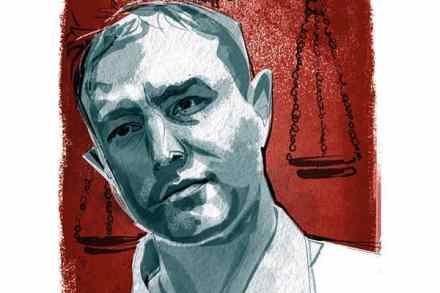
In August 2015, Tom Hayes, then aged 34, was sentenced to 14 years’ imprisonment after being found guilty on eight charges of conspiracy to commit fraud when working as a yen derivatives trader in Tokyo. Hayes was alleged by the Serious Fraud Office to be the grand ‘ringmaster’ of a group of traders who sought to enrich their banks and themselves by rigging Libor, the rate charged for interbank loans. His sentence was reduced to 11 years on appeal but it is still one of the longest--ever jail sentences handed out by a British court for a white-collar crime. A subsequent court hearing ordered the seizure of assets worth more than £800,000, while legal fees consumed the remains of his personal wealth including the proceeds from the sale of his family home.

Audits restore faith in elections

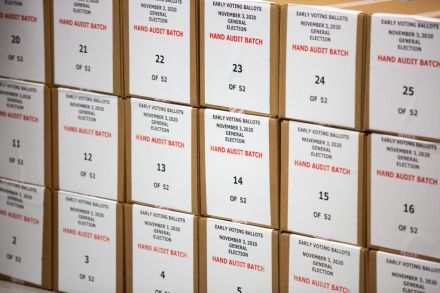
Election audits of the 2020 election are under attack in the media. It’s easy to see why some calls for audits have drawn criticism. But audits can serve a very useful purpose. Glenn Youngkin, the Virginia Republican nominee for governor, is calling for an ‘audit’ of the state’s voting machines. The former co-CEO of the Carlyle group says: ‘I grew up in a world where you have an audit every year, in businesses you have an audit. So let’s just audit the voting machines, publish it so everybody can see it.’ Kari Lake, a former Phoenix news anchor whose candidacy for governor of Arizona has been endorsed by Donald Trump, said she would not have certified the 2020 election results in the state. She cited ‘serious irregularities and problems with the election’.

audits

W.G. Sebald’s borrowed truths and barefaced lies

From our UK edition

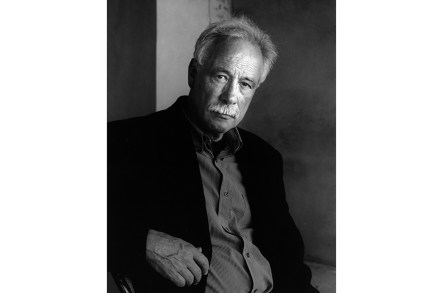
W.G. Sebald is the modern master of the uncanny — or perhaps that should be ‘was’, as he died in a car crash near Norwich in 2001 at the age of 57. Deciding which tense to use depends on whether you mean ‘W.G. Sebald’ as a shorthand for his body of work, which outlives him, or to refer to the man who wrote it, known to his acquaintances as Max. The question poses its own Sebaldian conundrum, reflecting his strange crepuscular writings with their meditations on the dead and the living, past and present, culture and identity. His ghost lives on in the flickering half-light, the most enigmatic, perhaps, of his characters.

Glasgow gangsters: 1979, by Val McDermid, reviewed

From our UK edition

Like a basking shark, Val McDermid once remarked, a crime series needs to keep moving or die. The same could be said of crime writers themselves, who work in a genre that has an inbuilt tendency to encourage repetition, often with dreary results in the long term. McDermid herself, however, has a refreshing habit of rarely treading water for long. Over the past 34 years, she’s published four very different crime series, a clutch of standalones, two books for children, a modern reworking of Northanger Abbey, and several non-fiction titles. And now comes 1979, the first in a planned five-book series set at ten-year intervals up to the present. It’s the story of Allie Burns, a young woman from a working-class Fife family who has a job as a reporter on a Glasgow tabloid.

The disappearing man: who was the real John Stonehouse?

From our UK edition

November 1974 was the month to disappear. On the 7th, Lord Lucan went missing, and a fortnight later John Stonehouse MP dis-appeared from a beach in Miami. Lucan was never found, so remains prominent in our national mythology. Nothing endures like a mystery. Stonehouse, on the other hand, was discovered in Melbourne six weeks later, living under an assumed name. His vanishing trick, so carefully rehearsed, had unravelled — partly due to Lucan, as it happened. Having been alerted to a suspicious Briton by a beady bank clerk, the Australian police thought he might be Lucan. Their first act after arresting their suspect was to lift his trouser leg to look for the missing earl’s telltale scar. Stonehouse had long had a tendency to vanish.

Is any song more lucrative than ‘Happy Birthday’?

From our UK edition

Last orders The new tier restrictions have made life difficult for pubs. How many are closed? — According to the British Beer and Pub Association, 16,500 of England’s 37,000 pubs have had to close for everything except takeaway owing to their being in Tier 3 areas. — Of the 21,000 pubs in Tier 2 areas, 14,000 have had to remain closed because they are unviable if they can’t serve drinkers without also serving a substantial meal. — That leaves 732 pubs in Tier 1 areas which can open more or less as normal. — The number of pubs has fallen by 22 per cent this century. However, 2019 saw the first year-on-year rise, with a net gain of 320 pubs across the country.

A 13th-century guide to fraud and skulduggery

From our UK edition

Eight centuries ago in Turkey, at a gathering of intellectuals, a Muslim sultan insisted that one of his courtiers write a book about an unlikely subject: thieves and con artists. The sultan, Rukn al-Din, had secured another such book from Spain, but he wondered: ‘What’s left out of it?’ The set-upon courtier was Jamal al-Din Abd al-Rahim al-Jawbari, and the commissioned Arabic work, Kashf al-asrar (Exposing Secrets), his only surviving text. But why would a powerful ruler such as Rukn al-Din, presumably safe from street-level scammers, order a guidebook about the medieval Islamic underworld?