Frank herbert

Dune: Prophecy is much worse than you will believe possible

From our UK edition

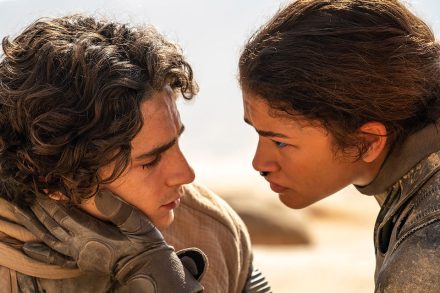
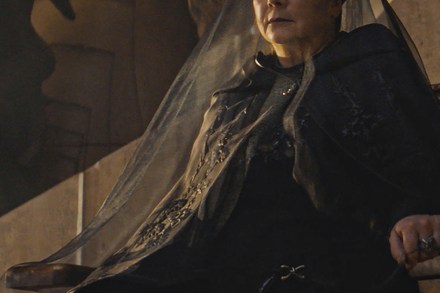
Do you remember that nagging sense of mild disappointment as you sat through Dune 2? You’d been impressed by Dune: bit of a recondite plot if you hadn’t read the book but great to look at, with an austere art-house aesthetic, like Star Wars for people with an IQ. But then the sequel sold out. It turned a minor character from the book into the heroine of a stereotypical Hollywood romance, which not even the excitement of the sandworm-riding scenes could quite redeem. No disrespect to Brian Aldiss,but I think of ‘Brian’as a sort of joke name Anyway its latest screen incarnation, Dune: Prophecy, is worse, much worse.

Dune: Part Two and Paul’s struggle

At a moment when words like “jihad” and “genocide” fall perpetually from the lips of pundits, professional activists, and policy makers, Denis Villeneuve’s Dune: Part Two seems a rather subversive spice to sprinkle into our combustible culture. While both parts of Dune comprise a complex film that defies simplistic one-to-one allegory, at times Villeneuve’s richly imagined epic places a finger on the familiar, the historical, just as it points its others toward a fiction set amongst the stars.  In the second half of this adaptation of Frank Herbert’s 1965 novel, Paul and his mother, Jessica, have escaped the initial assault on House Atreides to shelter with Fremen insurgents, but Harkonnen death squads pursue them.

dune paul

Dune, an enduring monument to cultural appropriation

One of the Ukraine war’s minor celebrities is Ramzan Kadyrov, a Russian politician and Islamic hardliner who rules his native province of Chechnya as a personal fiefdom. Kadyrov and his combative underlings have been active on social media from the beginning of the conflict, posing with guns and trophies and boasting about their martial prowess.  Before they became villains in the Western press, tarred by their association with Russian aggression and Islamic fundamentalism, the Chechnyan mountain clans’ struggle for independence was a Victorian cause celebre, akin to Western support for Ukraine today.

dune

How to snare your reader: the secret of a good blurb

From our UK edition

It sounds disingenuous, not to say dis-respectful, but as a writer of 40 books, give or take, I never read blurbs. I can’t bear to. I love stories and am terrified of them being spoiled. There is no obvious twist or murderer so clearly signposted that I will ever try to guess them as I read. I never look at the end first. One of the great joys of books (and of life, more or less the same thing) is being happily surprised. I did accidentally read the blurb of Karen Jay Fowler’s superb We are All Completely Beside Ourselves, which gave away the (gorgeous) twist in the first line.