France

A bit of French stock in play

From our UK edition

Describing foreign dignitaries as ‘castrated’ and ‘autistic’ is terribly Gallic. As a rule, British politicians tend not to invoke ‘sensitive conditions’ to aid their critiques and the force of their rhetoric. I can’t imagine Chris Bryant, for instance, describing David Cameron’s euroscepticism as ‘autistic’ – he’d probably even baulk at describing it as ‘political halitosis’, preferring wink-wink, nudge-nudge gags about “cast-iron guarantees”. It is because this expansive sensationalism is so alien to our political culture that Pierre Lellouche’s comments sound so provocative and make Mr Cameron’s ambitions look unrealisable, with Europe seemingly united against him.


Sarkozy revs up Franco-German motor, leaving Britain behind

From our UK edition

Last week, French President Sarkozy spoke to the annual gathering of his country’s ambassadors. Since he came to power, the French leader has used the annual event to welcome his countrymen back from their holidays and garner a few headlines. This year proved no different with an attack on the Iranian regime receiving the most attention. In a powerful line, the French president pointed out: "It is the same leaders in Iran who say that the nuclear programme is peaceful and that the elections were honest. Who can believe them?" He went on to say that he thought tougher sanctions would have to be discussed if Tehran does not change its position. But the speech was boilerplate Sarkozy – expansive, energetic, and ambitious.

The race to recovery is looking bad for Brown

From our UK edition

Oh dear.  Another blow to Brown's economic credibility this morning, as France and Germany announce that they've come out of recession already.  Both economies grew by 0.3 percent in the second quarter of the year - in contrast to the UK economy, which shrank by 0.8 percent. Whatever the factors behind it, this spells trouble for Brown.  A poor performance in the race to recovery not only calls his management of the economy into question, but it also undermines his anticipated "green shoots strategy".  The PM will find it hard to brag about our "green shoots" when other countries already have full-grown plants.

When Bad History Meets Warmongering

From our UK edition

I should probably be inured to articles arguing that even though europe endured "two twentieth-century apocalypses that left it depopulated and permanently traumatized" it is wrong for europeans to have drawn any conclusions, or learnt any lessons, from the First and Second World Wars. And yet, I'm afraid, I continue to be irritated by such pieces, not least because they invariably demand that europeans prove their moral seriousness by going to war more frequently, regardless of the cost or even the cause involved. Equally, it's startling quite how many people never met a war they couldn't embrace and champion. Michael Oren, historian and prospective Israeli ambassador to Washington, seems to be one such chap.

Are You Smarter than a French Teenager?

From our UK edition

The Bac began today with, as is traditional, the philosophy paper. Via Charles Bremner and Art Goldhammer, here are some of the essay questions our French friends had to answer: For the Literature Stream: 1) Does objectivity in history suppose impartiality in the historian? 2) Does language betray thought ? For the Science Stream: 1) Is it absurd to desire the impossible? 2) Are there questions which no science can answer? Well, is it absurd to desire the impossible? Have at it, Spectator readers...

Tour de France: Prison Edition

From our UK edition

The Giro d'Italia isn't the only cycling story around right now. Not by a long shot! Consider this: Close to 200 prisoners will cycle around France next month, watched by scores of guards on bicycles, in the first penal version of the Tour de France. The 196 prisoners will cycle in a pack and breakaway sprints will not be allowed. They will be accompanied by 124 guards and prison sports instructors. There will be no ranking, the idea being to foster values like teamwork and effort. "It's a kind of escape for us, a chance to break away from the daily reality of prison," said Daniel, a 48-year-old prisoner in the western city of Nantes, at the official launch of the event. His last name was not given.

Petain, de Gaulle and Patriotism

From our UK edition

As part of an excellent back-and-forth with Daniel Larison on the question of patritism, Noah Millman asks: Can one hold that both Marsall Petain and General de Gaulle were French patriots? I think the answer to this one has to be “yes.” You can’t hold that both were right, but you can believe that both were acting sincerely out of patriotic motives – that both were doing what they felt was best for France as France. I rather agree with this, but would go further and argue that you can hold that both Petain and de Gaulle were right.

France’s Spring

From our UK edition

People protest during France's second nationwide strike in two months, to demand a boost to wages and greater protection form the crisis, on March 19, 2009, in Marseille, southern France. Photo: GERARD JULIEN/AFP/Getty Images It's springtime which means that even if there weren't an econmic crisis our friends in France would be taking to the streets. This is as it should be. My one year old godson, I'm pleased to say, is already a veteran of street action, having been wheeled out to protest against proposals for primary school reforms. Even rites of passage happen earlier these days. Anyway, the good news for Sarkozy is that the Socialists are in no position to benefit from the public's sour, fretful mood.

Mysteries of Paris

From our UK edition

Fred Vargas — nom-de-plume of the French archaeologist and historian Frédérique Audoin-Rouzeau — took to writing crime novels in 1991. Among the many unusual aspects of her books is the English take on the French titles. L’Homme à l’envers appears as Seeking Whom He May Devour, Pars vite et reviens tard as Have Mercy on Us All while Sous les vents de Neptune becomes Wash This Blood Clean From My Hand. These English versions possess a sort of genius which I find irresistible. The novels have also been translated out of the order in which they were written.

From palace to cowshed

From our UK edition

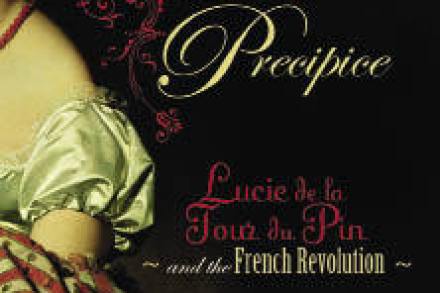
Madame de la Tour du Pin’s Journal d’une Femme de Cinquante Ans, with its vivid descriptions of her experiences during the French Revolution and the Napoleonic Empire, is one of the most enthralling memoirs of the age: a hard act, one would think, for a biographer to follow. Caroline Moorehead succeeds in doing so triumphantly in a rich and satisfying book which not only adds to our appreciation of her story but brings the whole tumultuous period and its characters to life. Born in 1770 into the highest reaches of the French nobility, Lucie-Henriette Dillon spent a lonely and unhappy childhood, brought up by a tyrannical grandmother after her mother’s death when she was 12.

World Gone Mad: French Division

From our UK edition

Things you never thought you would see: the French government advising against wine consumption... In the midst of the winter gloom, President Sarkozy's administration  has chosen this moment to tell its people to stop drinking wine. You are hearing right. The Ministry of Health has issued rules for reducing the risk of cancer and one of the main ones is never drink alcohol.  "The consumption of alcohol, and especially wine, is discouraged," say guidelines that are drawn from the findings of the National Cancer Institute (INCA). A single glass of wine per day will raise your chance of contracting cancer by up to 168 percent, it says. A you might expect, the wine industry is not happy...

Marie Antoinette is traduced again

From our UK edition

Like King Canute, Marie Antoinette is a much-misunderstood and, generally speaking, a much and unfairly maligned figure. Disappointingly, this time the guilty party is my old boss Iain Martin. For shame. Iain hazards that Peter Mandelson's suggestion that everyone try and keep their heads in these turbulent times since there is "no value in creating frenzy" is but the latest "Marie Antoinettish" comment from the noble lord. In the first place, Marie Antoinette probably never said "Let them eat cake". Secondly, if she had she would scarcely have been the first to suggest that the populace switch to brioche in times of shortage.

Nicolas and Carla

From our UK edition

This account of how Nicolas Sarkozy wooed Carla Bruni is both amusing and gruesome. For instance: “My reputation is no worse than yours,” he told her. “I know you well without ever meeting you. I understand everything about you ... You make love because no one makes love to you. I know everything about you because I am so much you.” With a hush around the table, Mr Sarkozy promised to be in the front row of a forthcoming Bruni concert. “We will announce our engagement. You will see, we will do better than Marilyn and Kennedy,” he told her. Given how matters ended for Kennedy and Monroe, you would have to hope Sarko and Bruni will indeed "do better". Anyway, who talks like this and who, even more improbably, could take it seriously?

France’s Sorry Decline

From our UK edition

Photo: Keystone/Getty Images Once upon a time Citroen produced the DS - driven here by Lord Hailsham -  as revolutionary and beautiful a car as anyone has produced in the last 50 years. More importantly, it was cool. So, what better way for the marque to make a statement than by reviving the old DS brand? After all, the success of the new retro-styled Mini Cooper and Fiat's Cinquecento have shown that there's a demand for cars that look fun and pay homage to the best of their makers' histories. So how has Citroen fared? Answer: about as badly as could be imagined. I mean, look at this monstrosity, this betrayal of all things French and stylish and wonderful...

To the barricades!

From our UK edition

There's something splendid about this. Brent Whelan, an American in Paris, runs, as you do, into yet another demonstration. There was the... sound truck and chants, flags and banderoles, a regular labor action. But I missed the front of the cortège where the leafleters and signs were, so I couldn't tell what it was about. So I asked a guy on the corner, who told me, "It's the archaeologists."  And that's just who it was: several hundred archaeologists marching down the street, shouting and chanting, demanding that the government withdraw plans to disperse the headquarters of its national archaeological service from Paris. Only, I think, in Paris. And long may this remain the case. There's a serious point here too, however: everyone wants to sty in the capital.

Chalk and cheese

From our UK edition

The British in France: Visitors and Residents since the Revolution, by Peter Thorold Peter Thorold has not written an orthodox history of French and British political cultural and social relations. He sees them through the eyes of Britons who settled in France or tourists who trod its soil for a brief holiday. French aristocrats who had seen their friends’ and relations’ heads stuck on poles and paraded through the streets of Paris sped to Britain. When the Terror passed, they returned to France and showed little propensity to settle in or revisit a cold climate. Most Britons came to stay. Why did they come? Some were successful economic migrants. Charles Worth, ‘a native of bucolic Lancashire’, came from a ruined middle-class family.

Caption Contest!

From our UK edition

Whatever one might say about Sarah Palin, this photograph is disturbing on many, many levels... And, for the people who pay attention to these things, it's a blunder too. Because, you know, seeing Sarah Palin perched on a sofa chattering away with Henry Kissinger emphasises rather than reduces the validity of concerns about her experience and knowledge. Daft.

Caption Contest! | 23 September 2008

From our UK edition

I remain perplexed. People are still talking about David Milliband as Gordon Brown's successor. I just don't see it. Miliband's the sort of kid who was always picked last in a game of playground football. Even if he's better than some of the other kids, you still wouldn't want him on your side. He's that irritating. Anyway, what's Gordon saying to him here?

Life in a Green Suit

From our UK edition

Visiting friends or family with small children? Stuck for a present (toy drums and trumpets are not, I believe, generally considered thoughtful)? Well, my default gift is a collection of Jean de Brunhoff's wonderful Babar books. You cannot, in my view, and that of most tiny children, go wrong with Babar. So, amidst all the sturm und drang on Wall St and the hurly-burly of the American presidential campaign, it was a relief to be able to turn to Adam Gopnik's lovely essay on Babar in this week's edition of the New Yorker. It's a fine, perceptive piece, not just on Babar, but on French culture, colonialism, the bourgeoisie and the differences between British, American and French children's literature.

Babies Everywhere…

From our UK edition

More baby news: Rachida Dati, the 42 year old French Justice Minister, is, like Bristol Palin, pregnant. As Art Goldhammer says, however, they do things differently in France. Dati says she has no intention of revealing the father's identity and offers this marvellous comment: "I have a very complicated private life, and that's where I draw the line with the press. I won't have anything to say on that subject." Meanwhile, the Times' Charles Bremner has a pop at French hypocrisy vis a vis privacy and the coverage of the Sarkozy administration: The complete silence on the identify of Dati's partner looks more like old-fashioned deference to the governing class. There was another, related, example of the deference phenomenon today.