France

The art of the Covid protest song

On February 14, Prime Minister Justin Trudeau issued an edict granting himself emergency powers to rule Canada by martial law with the intent of making all those trucks back up. He wants to confiscate them along with freezing truckers’ bank accounts. His soldiery is not altogether with him. Ottawa’s chief of police, Peter Sloly, abruptly resigned. Things aren’t looking bright for North America’s newest autocracy. But, OK.  Let’s back up. On December 18, 2020 a French musician known as HK (Kaddour Hadadi) and his group the Saltimbanks released on video a song titled “Danser encore” (“Dancing Again”).

protest song

Is President Macron’s re-election as safe as it looks?

From our UK edition

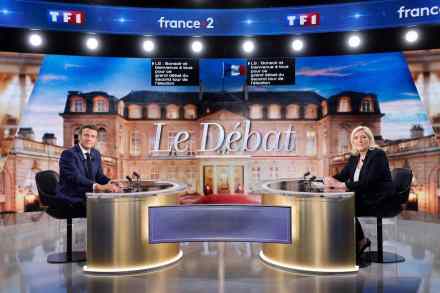
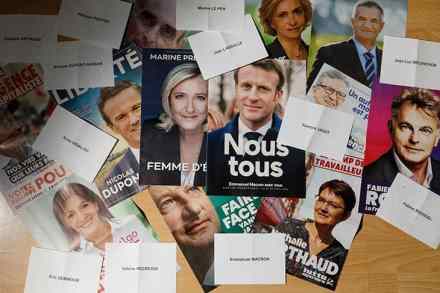
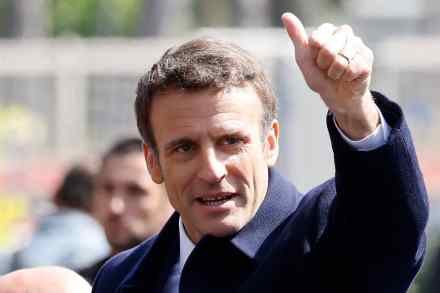
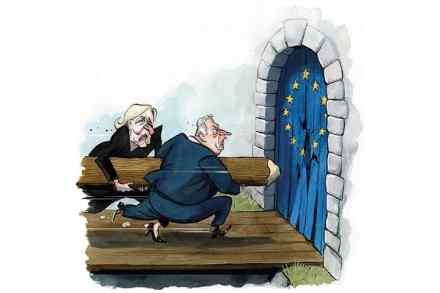
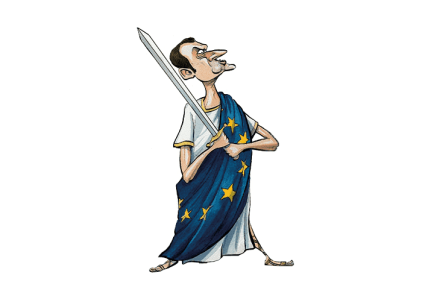
In February 1995, Jacques Chirac was at 12 per cent in the polls. Two months later he was president. Two months is precisely the time remaining before the first round of voting in the 2022 presidential election. At the moment, President Macron’s advantage looks unassailable: the Economist’s tracker puts his chances of being re-elected at over 80 per cent. But just how unpredictable might this election be? After a few weeks of relative inertia, there are signs that the traditionally volatile French electorate are beginning to rumble. Last weekend, the campaigns shifted into a higher gear, and not necessarily to the advantage of the incumbent.

How democratic are the French elections?

From our UK edition

There are just 59 days to go until voters turn out for the first round of the French presidential election and it is not even clear who will make the starting gate. For now, all the pundits and the bookies are predicting the re-election of President Emmanuel Macron. But the real story is about how French democracy operates. General de Gaulle designed the Fifth Republic to keep extremists out of the Elysée. So, to get into the presidential election, a candidate must present the Conseil Constitutionnelle with 500 sponsorships (parrainages) from geographically dispersed senior elected officials. The real story is about how French democracy operates Previously this was not a problem.

Shadows of Macron: could Valérie Pécresse become France’s first female president?

From our UK edition

Paris Perhaps the best thing that can be said about Valérie Pécresse’s presidential election campaign is that it’s better than the Socialist party’s. Which is to damn with faint praise. The French left are in such a dire state that if the opinion polls prove correct, their candidate, Anne Hidalgo, the mayor of Paris, won’t pass the 5 per cent mark in the first round required for candidates to recoup half their campaign costs. Pécresse has no worry on that score but she has failed to inspire the electorate since she was selected as the nominee for the centre-right Les Republicans (LR) in December. An opinion poll this week had her trailing Emmanuel Macron and Marine Le Pen, with Éric Zemmour only one point behind her on 14.

The healing power of medieval austerity

From our UK edition

Eighty yards west of the high terrace where I’ve sat for three weeks recuperating is a hospice built for Napoleon’s veterans. Solidly constructed high up in the south-facing cliff-face, it comprises a complex of walkways and balconies interconnected by precipitous staircases. It is easy to imagine the battered survivors of Leipzig and Borodino perched up there on those ledges exposing their sabre cuts and bullet wounds to Dr Sun. Which we’ve had plenty of lately. Sun-worshippers of an envious disposition look away now: the year so far has been almost cloudless. Every day the same pale blue horizon. Freezing nights, though. At sundown I ferry my collection of pot-grown cacti into the house and return them after breakfast.

Can Macron really lecture Putin about democracy?

From our UK edition

A penny for the thoughts of Vladimir Putin on Monday as he stared at Emmanuel Macron from the end of a very long table. If the Russian leader has a sense of irony he might have been struggling to suppress a smirk as he welcomed the President of France to Moscow to discuss the situation in Ukraine. Macron was in his element as he played the international statesman representing the EU, but the President will be dismayed to learn that his grandstanding has not impressed the folks back home. Of the 140,000 who have so far responded to an online poll in Le Figaro, 60 per cent considered his visit to Moscow a failure. It doesn't appear to have yet dawned on Macron and many other western leaders that the days of dispensing lessons in democracy to despots are over.

Kudos to Macron for going to Moscow

Landing in Moscow on February 7, French President Emmanuel Macron had a twinkle in his eye and a spring in his step. There he was, taking it upon himself to be the first European head-of-state to meet Russian President Vladimir Putin since over 130,000 Russian troops massed on Ukraine’s border from three sides. Macron's mission was to explore whether a de-escalation with Russia was possible. “I believe that our continent is today in an eminently critical situation, which requires us all to be extremely responsible,” he told reporters before his five-hour session with Putin began. The other option, what could be the largest land war in Europe since World War II, would be far worse.

Le Pen, Zemmour and the two French far rights

From our UK edition

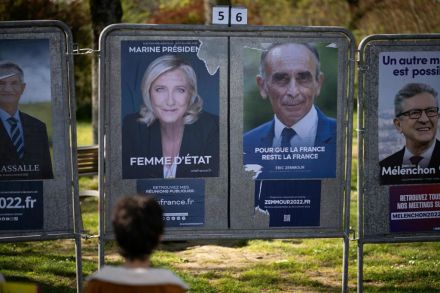
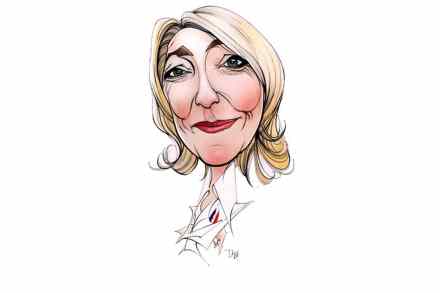
Just about two months ahead of the French elections, a first poll for Le Parisién suggests that Marine Le Pen and Eric Zemmour are at the same level: 14 per cent. This is one out of many polls, most of which still show Le Pen ahead. But polls have been bad predictors in the past, and they can create their own momentum. Both Le Pen and Zemmour held big rallies this weekend. We now see two different economic visions emerging: one social, one liberal. The only economic point that the two have in common is that they both want social services to be accessible only to the French, not to immigrants. Le Pen’s vision is aimed at the electorate of Jean-Luc Mélenchon. Zemmour’s appeals to conservative France On everything else, the candidates are miles apart.

Eric Zemmour isn’t to blame for France’s anti-Semitism crisis

From our UK edition

Emmanuel Macron sees anti-Semitism everywhere except where it really lurks. Earlier this month his government accused protesters opposed to the Covid Passport of giving the Nazi salute, a charge that was disproved by video footage and this week dismissed by the public prosecutor’s office in Paris. Yesterday, in a speech to mark International Holocaust Day, Macron warned of the return of ‘an ill wind’ blowing through the continent in some ‘political discourse’. He vowed that France would never cease to honour the memory of the six million Jews murdered in the Holocaust ‘particularly when some try to falsify it.

It’s my ninth – and final – chemotherapy session

From our UK edition

‘Sorry I’m late,’ I said to the big unit stationed behind her computer. She’s the chief, this one. She shows no fear or favour. ‘It’s not grave. Room two,’ she said without looking up. ‘Today’s my last one,’ I said. ‘I know,’ she said. Room two comprises three cubicles. Two were already occupied. I was piggy in the middle. I took off my shoes and coat, hung the coat over the back of the chair and climbed up on to the padded recliner. Then the raven-haired black-eyed nurse, who invariably looks searchingly into the depths of my soul before asking whether I would like apple or orange to drink, came in. ‘My last one,’ I said. I thought that she at least would smile or offer congratulations.

Macron’s vaccine culture war

From our UK edition

When French prime minister Jean Castex and health minister Olivier Véran held a press conference last week, they outlined the timetable for a gradual easing of the country's many Covid-19 restrictions. Véran talked of an 'encouraging evolution' in the fight against the virus, despite the fact that France had in the previous week recorded an average of over 300,000 daily cases.  As of 2 February, the wearing of masks outdoors will no longer be mandatory; a fortnight later, the French will be able to experience once more the pleasure of standing at a bar with a glass of whatever takes their fancy. Since the start of this month, this practice has been outlawed.

The other Camus

Nearly two-thirds of French citizens say they fear that Muslim immigrants threaten white Christians with “extinction.” That bodes well for Éric Zemmour, France’s ubiquitous right-wing polemicist, candidate for its presidency — and prominent popularizer of the concept of le grand remplacement, the conspiracy theory that a cabal of Jews and globalist elites are conniving to “replace” Europe’s native population with Africans and Arabs. This paranoid thesis has inspired white supremacists across the world, and is an increasingly popular import on the American right. The man who coined le grand remplacement is the seventy-five-year-old novelist and travel writer Renaud Camus — no relation to Albert, but a kind of philosopher nevertheless.

camus

Secret France: the hidden havens worth discovering

From our UK edition

Vive la France! Our beloved Gallic neighbour has reopened its borders to the casual tourist once more and, as travel slowly yawns its way back to something resembling normalcy, it is the perfect time to hop across the channel. France, in my half-French-totally-unbiased opinion, is never a bad idea. The diversity of the country is staggering – offering you undulating valleys dotted with vineyards, luxurious beach breaks or quaint Provençal villages; the eternal allure of Paris and majestic snow-capped peaks. But why not discover its lesser known enclaves? Seasoned Francophiles may like to take this opportunity, after a miserable time apart, to discover hidden France.

The fate of the French Socialists is a warning for Boris Johnson

From our UK edition

The defection of Christian Wakeford to Labour has put a spring in the step of the left-wing party. Apparently it marks the start of their revival. Give it two years and Keir Starmer will be waving from the steps of Number 10. That’s one scenario. A more likely one is that the good people of Bury South will unseat Wakeford at the next general election as Labour suffer another humiliating defeat. What so many in the Westminster bubble don’t get is that for the average voter in Bury, Basildon or Blyth Valley, ‘partygate’ is not top of their grievances with Boris Johnson. It’s often immigration, tax rises and the nonsense of net zero.

Has Macron shot France’s energy industry in the foot?

From our UK edition

Gas prices are soaring. Europe could be about to witness electricity shortages. Power companies are collapsing by the day, and, on top of all that, the government is set to phase out traditional energy to meet its net zero target.  So might think that a cable to ship in cheap, greener electricity from the other side of the Channel is something of a knight in shining armour. Yet the government blocked the proposal today, and it was absolutely right to do so. Britain may need all the electricity it can get its hands on right now — but the last thing it should do is increase its dependence on Macron and Putin.

The joie de vivre of Emily in Paris

The hit series Emily in Paris is being eviscerated by the media. Despite labeling it “Netflix’s most-hated show,” “a catastrophe of culture,” and “inedible tripe,” high-minded critics sure are spending a lot of time and website space talking about it. I am all about scrutinizing art (if we can call Emily “art”) to extract something meaningful. But in the following analysis, I will argue why we should absolutely stop analyzing Emily in Paris. First of all, I don’t understand why critics are disappointed not to find the answer to some weighty Descartian theory in a show whose descriptor reads: “After landing her dream job in Paris, Chicago marketing exec Emily Cooper embraces her adventurous new life while juggling work, friends and romance.

Portrait of the week: No. 10’s garden party, Djokovic’s visa row and France’s vaccine protests

From our UK edition

Home Boris Johnson admitted to attending evening drinks for about 40 staff in the garden of 10 Downing Street on 20 May 2020, when lockdown regulations made social gatherings illegal. ‘We thought it would be nice to make the most of the lovely weather and have some socially distanced drinks in the No. 10 garden this evening,’ said an email from the Prime Minister’s principal private secretary, Martin Reynolds. ‘Please join us from 6 p.m. and bring your own booze!’ Mr Johnson said that he had been talking to Rishi Sunak, the Chancellor of the Exchequer, about how people could be helped with soaring energy bills.

Will Le Pen’s niece join Éric Zemmour’s campaign?

From our UK edition

Is Marion Maréchal, granddaughter of Jean-Marie Le Pen and niece of Marine, about to emerge from political retirement to support the presidential election campaign of Éric Zemmour?  Normally the answer to any question posed by a journalist is ‘no’ but maybe not this time. Marion could give new momentum to Zemmour’s campaign, which seems recently to be stuck in a rut. Marion could be the right figure to lure National Front voters — who have been disgruntled with her aunt, Marine Le Pen — towards Zemmour.

Antony Blinken’s soundtrack to failure

Antony Blinken, the secretary of state and first guitarist, has broken with the tired protocols of the past, faced the complexities of the multipolar twenty-first century world, and issued a Spotify playlist. This may be a better way of reaching new audiences than bombing them. But shouldn’t public figures be judged on their records, not their record collections? “The thread that runs throughout my life is probably music,” Blinken told Rolling Stone last year as he meditated his mixtape. Hitler would probably have said the same about painting had Rolling Stone been around to profile the Viennese amateur who was turning the art world upside down.

Why we keep getting North Korea wrong

Kim Jong-un is focused first and foremost on managing his country’s lingering food crisis. But that doesn’t mean the thirty-seven-year-old dictator has any intention of siphoning off resources from North Korea’s weapons programs. He made that abundantly obvious this week, when Pyongyang conducted its second ballistic missile test using hypersonic technology in four months. According to North Korean media, the missile traveled 435 miles to the east, hitting the designated target. The response to the latest test was predictable. South Korea called an emergency meeting to discuss the launch. The US State Department quickly issued a statement to reporters reminding them that the tests are a violation of multiple UN Security Council Resolutions (as if North Korea cared).

north korea