Football

Game over | 28 January 2016

From our UK edition

[audioplayer src="http://rss.acast.com/viewfrom22/whysexmatters-thedeathofsportandistheeusinkingwhetherbrexithappensornot-/media.mp3" title="Simon Barnes and Alex Massie discuss the crisis in sport" startat=830] Listen [/audioplayer]Like religion, sport can take any amount of passion in its stride. It’s indifference that’s the killer. Sport can be bubbling with incontinent hatred, poisonous rivalries, ludicrous injustice and the most appalling people doing the most appalling things: but as long as people still care, as long as the sporting arguments still echo, as long as newspapers are read from back to front, then sport’s future is safe.

Three sides to our success

From our UK edition

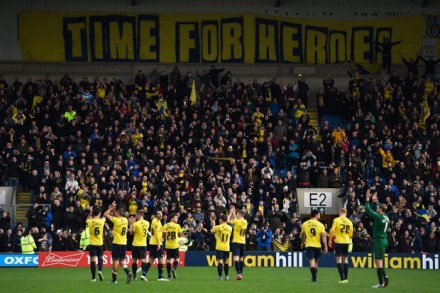
In the middle of Oxford is a socking great cinema: once the Ritz, it’s now an Odeon multiplex. Back in 1962, in the intermission of, I think, The Longest Day, the curtain moved and on walked a group of men, young I suppose, though to my 15-year-old eyes they seemed impossibly grown-up. It was the Oxford United team, led by their manager Arthur Turner, and including such titans as Ron ‘The Tank’ Atkinson, his brother Graham, John Shuker and Maurice Kyle. They had just won promotion from the Southern League to the Fourth Division (today’s League Two). They were introduced to the audience, and I have been a fan ever since.

High life | 31 December 2015

From our UK edition

This is going to be one hell of a year, hell being the operative word. It will be the year the greatest Greek writer since Homer turns 80 (but we’ll keep quiet about that for the moment). Our world is so stuck in reverse that a woman who was stabbed in Miami during the Art Basel shindig, and was bleeding and begging for help, was mistaken for an artwork and ignored. The woman survived but will art? Conceptual art must be the biggest con since Bernie Madoff and then some. And speaking of con artists, I’ve never had any respect for Mark Zuckerberg, someone who is reputed to have copied the idea for Facebook from a couple of ex-classmates, and who now pledges the majority of his $45 billion fortune to charity thereby generating a public relations bonanza.

Musical maestros and football managers have more in common than you think

From our UK edition

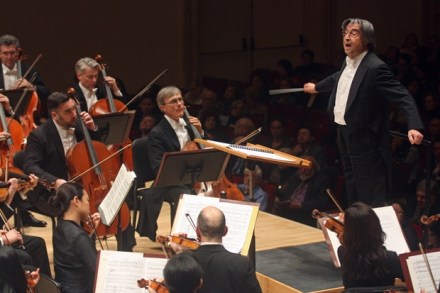
You don’t have to be a follower of Liverpool Football Club, or football at all, to spot the difference. Two months ago the Reds were running about headless as a newly wrung chook; today they are putting the fear of perdition into the best teams in the land. Or take Leicester City. Last season they were locked in an epic, desperate small-town struggle for Premiership survival. Today, they are top of the League. What changed? Both teams have the same players as before, same strip, roughly the same formation. The only new face is the manager’s. Change the boss and — presto — the mood picks up, tempi get faster, goals are scored, confidence rises and everyone charges around with a smile on their chops.

The Davis Cup will be one final flourish for Andy’s Barmy Army

From our UK edition

There’s nothing quite like a sporting celebration, but the lash-up after Britain’s (almost) inevitable victory in the Davis Cup tennis final against Belgium this weekend should be unique. For a start, there will be hardly anyone there: just Judy Murray and Andy, with Jamie popping his head in: ‘Have some Irn-Bru boys, and, take another teacake.’ It’s a funny old team, with -pretty much only one man in the team, but it will be a huge personal triumph for Andy, every bit as special as Wimble-don and the Olympics. What a -triptych! And now David Lloyd is -having a go at him for ‘not giving enough back’ to tennis. Oh please: he’s not a product of the Lawn Tennis Association, thank heaven, but Andy Murray is a great British hero.

Why I didn’t sing La Marseillaise last night

From our UK edition

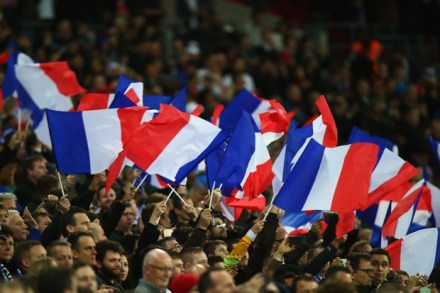
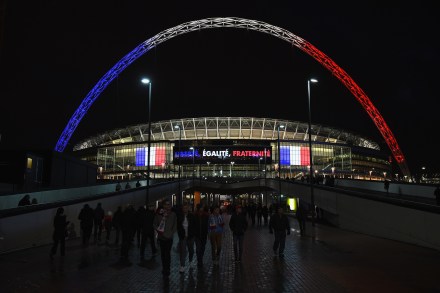
When Patrice Evra and the French national football team lined up at Wembley last night, it was a moment of poignant defiance which earned an instant place in sporting iconography. I shed a tear, but I didn’t sing La Marseillaise. When horrendous things like the attacks on Paris happen, our first instincts are to offer solidarity and what help we can. And, yes, to hit back. The night after the attack, France launched 20 separate air strikes on what it said were Isis strongholds in Syria. And at home, an extra 115,000 gendarmes were deployed across France, leading to hundreds of raids with dozens of arrests.  In the days following attacks on the West, there’s often a security snatch and grab, and this time was no different.

The England vs France match was a glorious response to terrorism

From our UK edition

Ain’t it rum? Last week sport was morally bankrupt, finished, no longer worthy of taking up an intelligent person’s time for a single minute. This week it’s shining out as one of the glories of the human spirit. And yet sport can cope with the contradiction quite effortlessly. It’s hard to know the worst thing in athletics right now, but it’s either the fact that Russia has been implicated in a state-run doping programme or the possibility that the former president of the sport’s world governing body is accused of taking bribes to cover it up. In football the acronym of Fifa, football’s world governing body, means corruption: nothing more, nothing less.

The strange relationship between Islam, violence and French football

From our UK edition

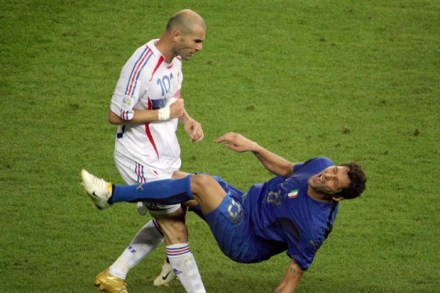
It is not so surprising if the jihadists in Paris were targeting an international football match. There has for years been a strange relationship between football, Islam and violence in France. The French football team, les bleus, have long been held up as an emblem of harmony and hope in an otherwise bleak multicultural landscape. The world cup winning team of 1998 consisted largely of the children of African immigrants and was celebrated as a great symbol of how the modern multicultural fifth republic could work. Zinedine Zidane, a Muslim boy from Marseilles, was the star of that tournament.

Barometer | 12 November 2015

From our UK edition

A marathon of cheats Russian athletes may be stripped of the medals they won at the 2012 Olympics, but what of the earliest-known drug-taker in the modern Olympics? Thomas Hicks won the 1904 marathon in St Louis after taking two doses of brandy laced with strychnine. —Hicks collapsed on the finishing line and had to be revived. There being no rule at the time against drugs, he was allowed to keep his gold medal. — Not so a man who reached the finishing line ahead of him, fellow American Fred Lorz. He was disqualified after admitting that he had taken a car most of the way. Police, camera, revenue The police and crime commissioner for Bedfordshire is thinking of turning on speed cameras on the M1 24 hours a day. On which roads do most fatalities occur?

Germany’s dark night of the soul

From our UK edition

As Angela Merkel approaches her tenth anniversary in power, Germans are talking about a possible Kanzlerinnendämmerung — a ‘twilight of the chancellors’. Anger is growing at Merkel’s handling of the migration crisis. Germany, which has only recently reconciled itself to the idea that it is a ‘country of immigration’, must now integrate vast numbers of asylum seekers, beginning with the million who are expected to arrive this year. At the same time, the country has been hit by two huge corruption scandals, involving Volkswagen and the DFB, the German football federation. The odds are that Merkel will survive — it’s hard to see at the moment who can replace her.

Was BBC1’s Rooney hagiography more scripted reality than documentary?

From our UK edition

Close to the Edge (BBC4, Tuesday) feels very much like an idea conceived during a particularly good night in the BBC bar. Why not take the ‘scripted reality’ methods of such youth hits as The Only Way Is Essex and apply them to a group of over-65s living in Bournemouth? So it is that the chosen oldies are given one main characteristic each, and required to act out events from their own lives — events that might or might not have happened if the cameras weren’t there. Or as Tuesday’s opening caption rather optimistically put it, ‘Some of the scenes have been constructed purely for your enjoyment.’ Which scenes these were, the programme didn’t of course specify.

Jonathan Meades on god, football and brutophilia – and why his memoir was 17 years late

From our UK edition

This is a transcript of a talk, 'Composing the Past', given by Jonathan Meades at the Assembly Rooms in Edinburgh on 26 August 2015, about writing An Encyclopaedia of Myself, which won the Spears Memoir Prize and was shortlisted for the PEN Ackerley award The most recent film I made was on the sculptural neo-expressionistic architecture of the late 50s, 60s and early 70s - known as brutalism after the French for raw concrete, beton brut or bru, depending on how costive with consonants the speaker is. This film has had bizarre and unintended consequences. Forty years ago two fine comic actors, both now dead, John Fortune and John Wells, collaborated on a novel called A Melon For Ecstasy. The title comes from a Turkish proverb: 'A woman for duty, a boy for pleasure, a melon for ecstasy'.

Captain Cook proves good guys can triumph

From our UK edition

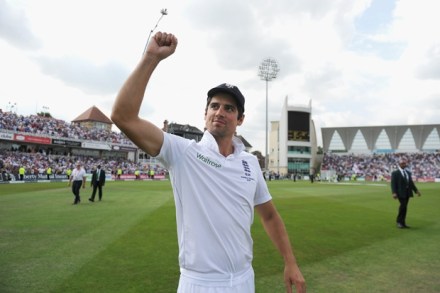
The roar of the Premier League is beginning to drown out everything else in sport (there’s even Friday night football now: another blissful resting place occupied. Shouldn’t we ring-fence some time — greenbelt-style — that football can’t colonise, say 2 a.m. on a Monday, that’s preserved from football’s endless development?) But while there’s a chance, let’s not lose sight of a great Englishman and a great English achievement. This Ashes series has not been a good contest; they often aren’t. But with his modesty, determination and resilience, it has been a personal triumph for the captain Alastair Cook.

Letters | 13 August 2015

From our UK edition

Islington isn’t indifferent Sir: I was shocked to read Mary Wakefield’s article accusing Islington’s middle classes of ‘extreme indifference’ to the death of our young people (1 August). As the local MP and a resident of N1, I can assure you that all these losses are deeply felt. It is provocative to suggest that there is a ‘strange apartheid’ in my constituency — and profoundly offensive to try to link this to the deaths of black and white youngsters. I can assure you that both I and my constituents are deeply saddened by the deaths of any Islington lads, such as Alan Cartwright, Stefan Appleton, Joseph Burke-Monerville and Henry Hicks. We are particularly disgusted by a boy such as Henry being labelled a thug, on no evidence whatsoever.

The perfect storm: a right-on charity run by a right-on woman and a right-on BBC executive

From our UK edition

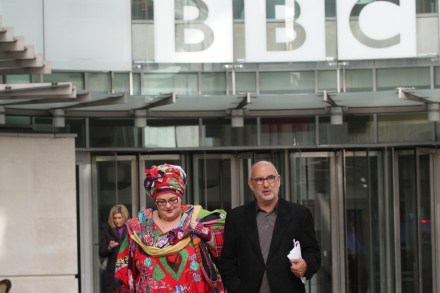
The BBC’s Creative Director, Alan Yentob, seems to have spent the last week or so dashing from studio to studio in an attempt to influence the corporation’s broadcasters from saying nasty stuff about a charity of which he was, until it imploded, chairman. The incompetently-managed Kids Company is now mercifully defunct. Yentob has subsequently admitted to having contacted Newsnight before the programme broadcast an investigation into the charity. He also harangued BBC correspondent Lucy Manning and stood in the cubicle watching as Today attempted to cover the story. If anyone else in the BBC had demonstrated such a magnificently brazen conflict of interest, they’d be out. But as a former senior exec told me: 'Yentob is Teflon.

The ugly game

From our UK edition

What a terrific summer of sport it’s been: a wonderful Wimbledon, a rollicking Royal Ascot, an absorbing Ashes series that still has the best part of two Tests to go. And now along comes football, barging its way on to the back pages, shoving the other sports aside, sniggering all the way to the bank. Every August, the ‘beautiful game’ reasserts itself as the playground bully. Football is the most popular sport in this country — and the nastiest. It has become a cesspit of greed, debauchery and racism, especially in Britain. It is crude and overbearing and has all the subtlety of a disco at Holy Communion. I feel bad about this because I love football.

Caught offside

From our UK edition

It’s not surprising that politicians have such an on-off relationship with the broadcast media. One slip. One casual comment. One lapse of memory. Even the immaculate, armour-plated Nicola Sturgeon was caught out by Jane Garvey last Wednesday as the Woman’s Hour presenter congratulated her on her latest elevation. It had just been announced that Scotland’s First Minister was top of the Woman’s Hour ‘power list’ of the top ten women for 2015 (beating Angelina Jolie and Caitlyn Jenner) and Sturgeon was doing a live telephone interview on the Radio 4 programme from her office in Edinburgh. Garvey then lobbed a question, oh so casually, but oh so deliberately, like a lioness waiting to pounce. ‘The Big Game tonight?

Own goal

From our UK edition

For nine years Patrick Marber has grappled with writer’s block (which by some miracle doesn’t affect his screenplay work), but the pipes are now ungummed and wallop! his new bolus of creativity splatters across the Dorfman stage. It’s a wordy three-hander set in the swamp of non-league football. Marber brilliantly captures the grubbiness and despairing optimism of ageing sportsmen who inhabit a golden age that never was. We meet Kidd, a hopeless but garrulous manager, as he tussles with Yates, a lugubrious old kit-man, for a controlling stake in a dazzling young talent, Jordan. The emotional terrain is lifted directly from Pinter and Mamet: male losers fighting over scraps of nothing.

Low life | 11 June 2015

From our UK edition

On Sunday morning, I was kicking a football in the back garden with my grandson. I had bought him his first pair of football boots, Optimum Tribals, junior size 11, blue and orange, each boot furnished with six very adult-looking steel studs: four on the sole, two at the back of the heel. We were shirtless. With a football at his feet and his shirt off, my grandson is transformed from an intelligent, biddable boy who is perhaps overly concerned with questions of right and wrong into an arrogant, argumentative liar given to pettish sulks. He tackles like a terrier gone berserk during a rat hunt. It wasn’t long before I was rolling around on the grass clutching my ankle bone after a two-footed studs-first challenge. I sat up and rolled down my sock to inspect the damage.

The Spectator’s notes | 11 June 2015

From our UK edition

Two beautiful volumes in a cloth-bound case reach me. They are Speeches and Articles by HRH The Prince of Wales 1968-2012, published by University of Wales Press. The explanatory list of abbreviations and acronyms alone gives a charming sense of the range of subjects covered — ‘Foot and Mouth Disease, Foreign Press Association, Forest Stewardship Council … Myalgic Encephalopathy, Member of Parliament … Non-Commissioned Officer … Not In My Back Yard! … Roundtable for Sustainable Palm Oil’. Among the many speeches on the environment, however, I cannot find his speech in Rio de Janeiro in March 2009, entitled ‘Less Than 100 Months To Act’.