Film

Film protests in Middle East

From our UK edition

It’s about time we revamped the rather stale format of the BBC film review show, the one that has that Nina Simone signature tune and was presented by Barry Norman and more latterly Jonathan Ross. I don’t even know if the programme is still extant. Anyway, my idea is for a new review show which would be set in a branch of the KFC franchise and presented by fundamentalist Muslims. Any film they didn’t like they’d burn down the restaurant and decapitate the manager, or manageress. Are these people running riot in Khartoum, Cairo and Tripoli just very stupid, or mentally ill? Or both?

Government, the enemy

From our UK edition

‘I should not have written the book,’ said Anthony Burgess in 1985 of his most famous work, A Clockwork Orange (which celebrates its 50th anniversary this year). Burgess’ disavowal was total. The novel, he said, had been ‘knocked-off for money in three weeks’. The book was overhyped, 'misinterpreted'. That alleged misinterpretation owes much to Stanley Kubrick’s film adaptation, or at least that is what Burgess claimed. He said that Kubrick’s interpretation was ‘interesting’, which was not a complete compliment.

The end of the affair?

From our UK edition

Of those caught up in the 1963 Profumo affair, the only winner seems to have been that blithe spirit Mandy Rice-Davies. Everyone else lost. Profumo’s family bore the brunt, of course, especially his son David, archetype of the boy sent crying home from school, who wrote a brilliant book about it, Bringing the House Down (2006). Harold Macmillan and the Conservative party were driven from office. Yevgeny Ivanov was recalled to Russia. Stephen Ward was hounded to death.

Loves, hates and unfulfilled desires

From our UK edition

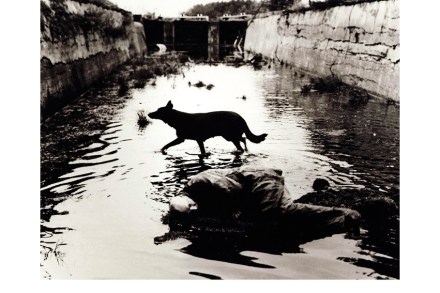
Montaigne, who more or less invented the discursive essay, had a method which was highly unmethodical: ‘All arguments are alike fertile to me. I take them upon any trifle . . . Let me begin with that likes me best, for all matters are linked one to another.’ Geoff Dyer could say very much the same thing, and it follows that Zona, though nominally a book about Tarkovsky’s maddening 1979 masterpiece Stalker, goes off in any number of directions. There are other ways of describing a circle than setting out to draw all its tangents, but that is Dyer’s preference. If the style of approach hasn’t changed, then the cultural context certainly has.

Stronger than fiction

From our UK edition

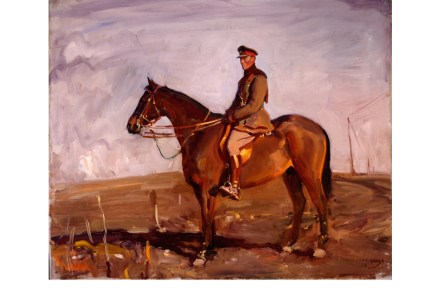
I think it was a Frenchman — it usually is — who observed that the English love their animals more than their children. At first glance, General Jack Seely’s Warrior: The Amazing Story of a Real War Horse — originally published as My Horse Warrior in 1934 — is striking proof of this. In an entire book devoted to the exploits of his horse, the author’s final mention of his son Frank is stunning in its brevity: We had a last gallop together along the sands, Warrior and [Frank’s charger] Akbar racing each other; then I drove him in a motor-car to rejoin his regiment .… He asked me to take care of Akbar, and I replied that Warrior would take care of that. He was killed not long afterwards while leading his company.

Who’s the real monster?

From our UK edition

‘The first monster that an audience has to be scared of is the film-maker. They have to feel in the presence of someone not confined by the normal rules of decency.’ Thus decreed Wes Craven, that maestro of horror who gave us, among other gems, The Last House on the Left (1972), in which a girl is forced to urinate on herself by a gang of rapists. And on some level, he is obviously right. But as Jason Zinoman points out in his deft study of the rise of New Horror — that is, horror movies of the late 1960s and 1970s, which were more realistic, and so a hell of a lot scarier, than the Hammer-style schlock that had gone before — the pioneers of the style actually tended to be mild-mannered, geeky types, at least to outward view. Peaceniks. Film buffs.

Lights, camera, education

From our UK edition

Earlier this year I went as a reporter to cover Julie Walters’ return to her hometown of Smethwick, where she was talking to schoolchildren as part of the FILMCLUB charity’s Close Encounters programme. The town where Oswald Mosley was MP, and where Malcolm X once came to challenge racist election campaigning, remains a place struggling with deprivation and poverty. However what I saw in that room, organised by teachers and pupils in their spare time, was the power of a simple idea: to use film to improve aspiration and educational achievement. Walters shared experiences of her difficult grammar school days, her career change (from nursing) and most importantly the idea of ambition and hard work.

Switching off the spotlight

From our UK edition

Having tea with Gillian Anderson is a thoroughly pleasant business — a splash of muted glamour in a fairly drab London autumn. I thoroughly recommend it, as a more engaging companion it would be a challenge to find. We meet in the studiously bijou surroundings of the Zetter Townhouse in St John’s Square, chosen, I suspect, because no one there has the slightest clue who she is. She is wearing the no-make-up disguise, and glides serenely under London’s radar, something she clearly enjoys. She is a tad jetlagged, she says, having just arrived home from a three-week stint ‘doing press’ in LA. We are talking in the Games Room downstairs when there is an unexpected rattling at the window. We are momentarily flustered – is it a stalker?

From the archives: “The bugger’s bugle”

From our UK edition

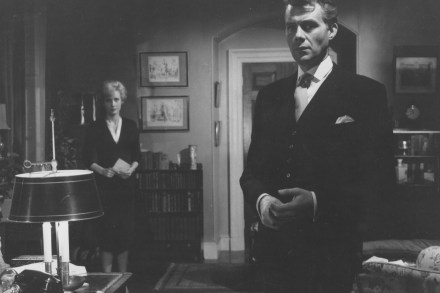
Today marks 50 years since the release of Victim, a ground-breaking film about homosexuality that was granted an X-certificate. Writing in the latest issue of the Spectator (subscribers click here), John Coldstream explains the significance of this frank and truthful film and its contribution to the national debate about decriminalising homosexuality. It was made four years after the publication of Sir John Wolfenden’s report into ‘Homosexual Offences and Prostitution’, which recommended that homosexual acts between consenting adults in private should be decriminalised. This contentious reform was not secured until 1967.

Scenes from the Mad Hatter’s tea party

From our UK edition

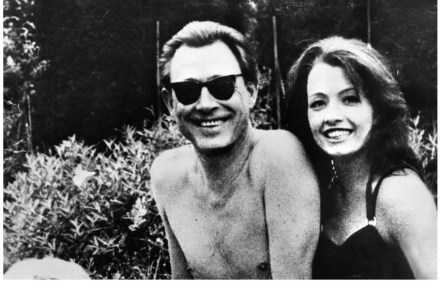
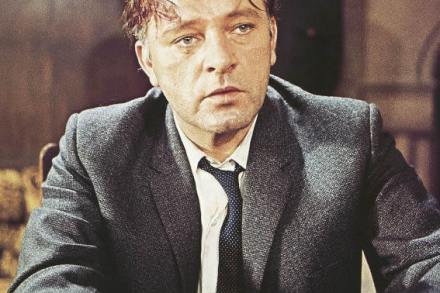
I only ever heard my mother admit twice to fancying other men. One, remarkably, was Saddam Hussein, the other was Richard Burton, and of each she said, ‘He’s a good-looking old man.’ She said this the way only a Welsh Baptist matron could: grimly, and because she was secure in the knowledge that she was not likely to meet either in chapel or on the streets of Carmarthen. Richard Burton, once of Port Talbot, later of the Dorchester Hotel, was cat-nip to women. He had a face ravaged by acne and his feet smelt, but he managed to sleep with the most beautiful leading ladies of his time, something his latest biographer quotes Stanley Baker, his fellow thespian and Welshman, as saying was ‘absolutely essential’ for an actor. Sadly, Baker did not say this.

The Midas touch

From our UK edition

Now that we can read on Kindle and some people fear that paper-and-ink books will become extinct, one’s first impulse might be to say hurrah for this mighty production. Now that we can read on Kindle and some people fear that paper-and-ink books will become extinct, one’s first impulse might be to say hurrah for this mighty production. But then doubts creep in: isn’t it a bit OTT? It is by far the largest book I have ever reviewed, or indeed handled. A monster of a book, a juggernaut, a Leviathan. And it has a whopping price to match: 400 smackers. I had the sneaking thought: do the publishers, Reel Art Press, really (or reely) expect to sell the limited edition of 1,500 for a total of £600,000?

Still life | 12 February 2011

From our UK edition

I didn’t go and see the Coen brothers’ remake of True Grit this week because I couldn’t get excited about it and don’t like westerns anyhow. I didn’t go and see the Coen brothers’ remake of True Grit this week because I couldn’t get excited about it and don’t like westerns anyhow. I don’t think women do, generally. They are too masculine; they are like those competitions to see who can urinate farthest up a wall, but with spurs, guns, a broken lawman who rallies honourably at the end, and tumbleweed rolling by. It’s just not our thing. Women could never, for example, have made High Noon.

Steps to destruction

From our UK edition

I have always suspected that, if you look for the black swan within yourself, it will end in tears, and now Darren Aronofsky has proved me right. It will end in tears, as well as bloody gashes, horrors glimpsed in mirrors, warped hallucinations of a sexual nature and breaking your mother’s hand in a door jamb. If you think you may have the black swan within you, just leave well alone. Go shopping. Play Scrabble. Clear out the hall cupboard, as you have been meaning to do for ages (I don’t think you can squeeze another thing in there, although, God bless you, you will keep trying). And if you don’t want to listen to me, then at least take this film as a warning. This is an intensely compelling film which you might well want to see, but you would not want to live it.

Neither here nor there

From our UK edition

Conviction is yet another film based on ‘an inspirational true story’ because, I’m assuming, Hollywood has now run out of made-up stories. Conviction is yet another film based on ‘an inspirational true story’ because, I’m assuming, Hollywood has now run out of made-up stories. (There isn’t a limitless supply, you know; it’s not as if you can just magic them out of the air.) This story is a remarkable story but, alas, this film is not a remarkable film. It is competently executed, and it isn’t total torture to sit through, but it suffers from what I would call ‘chronic plod’.

Film: Farewell to arm

From our UK edition

Unless you’ve been living under a rock — in which case, keep it to yourself; I’m done with rocks — you’ll have already heard about 127 Hours. Unless you’ve been living under a rock — in which case, keep it to yourself; I’m done with rocks — you’ll have already heard about 127 Hours. It’s the latest film from Danny Boyle and is based on the true story of Aron Ralston, the poster boy of survival who, as a 27-year-old in 2003, went climbing in the Bluejohn Canyon in Utah and got his forearm trapped between a boulder and the canyon wall. After five days of shoving, tugging, chiselling, screaming, reminiscing and hallucinating, he eventually looks at his blunt penknife, looks at his arm, and cuts it off between elbow and wrist.

A paean to the people

From our UK edition

There's so much junk on the box at Christmas that yesterday I tweeted a link to a seven-minute video that I thought would be much more memorable: an American's film on England in Christmas 1940. The film is above, and speaks best for itself. The great thing about Twitter is the response: positive and negative. And while many people retweeted the link (one guy said he'd forced his kids to watch it), it provoked fury from one David Walker. His words: "@frasernels - this Tory dares extol this film - a paean of praise to the state and common sacrifice. What hypocrisy.

From the archives: Mark Steyn’s Christmas film selection

From our UK edition

To help that Christmas lunch go down, here's a sprinkling of Christmas films selected by the incomparable Mark Steyn in 2004. To see more of his writing for The Spectator click here. Otherwise, just read on...  Christmas Classics, Mark Steyn, The Spectator, 18 December 2004 ’Twas the night before Christmas and all through the house/ Not a creature was stirring, not even a mouse. At which point, Sylvester the cat looks up from his long fruitless vigil outside the mouse hole in the baseboard and sighs with feeling to the narrator, ‘You’re not jutht whithlin’ Dickthie, brother.

The wow factor

From our UK edition

‘Nothing succeeds like excess,’ quipped Oscar Wilde, and Franco Zeffirelli’s production of Aida at La Scala, Milan in 2006 bears him out: for sheer jaw-dropping, applause- garnering theatrical bling, I have never seen anything like it and I doubt I ever will. ‘Nothing succeeds like excess,’ quipped Oscar Wilde, and Franco Zeffirelli’s production of Aida at La Scala, Milan in 2006 bears him out: for sheer jaw-dropping, applause- garnering theatrical bling, I have never seen anything like it and I doubt I ever will. People talk of empty spectacle, but this was full, full to the brim, exploding with colour, glittering with gilt, and jam-packed with near-naked extras.

All the lonely people

From our UK edition

Whereas Sofia Coppola’s directorial breakthrough, Lost in Translation, featured two lonely souls rattling about in a Tokyo hotel, her latest film, Somewhere, features one lonely soul holed up in a Californian hotel, and isn’t half so good. Whereas Sofia Coppola’s directorial breakthrough, Lost in Translation, featured two lonely souls rattling about in a Tokyo hotel, her latest film, Somewhere, features one lonely soul holed up in a Californian hotel, and isn’t half so good. It’s not bad. It’s not hateful. It’s not evil. You won’t want to hunt it down and bring it to trial. But a second film about ennui suffers from ennui itself. And I’m not sure I can buy into the ‘emptiness of celebrity’ shtick any more.

Mastering the k-word

From our UK edition

The film The King’s Speech, which is due to appear in the UK in January, tells the story of George VI’s struggle to overcome his stammer. The film The King’s Speech, which is due to appear in the UK in January, tells the story of George VI’s struggle to overcome his stammer. The speech therapist who cured the King was an Australian called Lionel Logue, and Mark Logue is his grandson. This book grew out of the researches that he began when the film-makers approached him for information. Lionel Logue was an amateur actor and elocution teacher who made a career teaching Australians how to speak correctly, back in the long vanished days when they were ashamed of their lazy diction and half-open mouths.