Film

Cold frames

From our UK edition

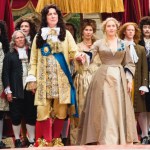
A Little Chaos is a period drama directed by Alan Rickman and starring Kate Winslet as a woman charged to design and build a grand fountain garden for Louis XIV at Versailles. The film is, I noted from the poster, ‘the official film of RHS Gardening Week’, which may or may not be a hotly contested title, I just don’t know. All I can tell you is that it is, in fact, more of a love story than a horticultural story, and while it has occasional pleasing moments, and is lavishly costumed, it manages to do what I do whenever I try my hand at gardening. That is, despite my best intentions, and slogging my guts out, I somehow kill everything stone dead.

Fighting fear with fear

From our UK edition

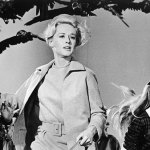
‘Do it with scissors’ was Alfred Hitchcock’s advice for prospective murderers, though a glance at these two biographies reminds us that scissors are also the chosen implement of the silhouettist. Hitchcock’s profile —beaky nose, protuberant lips, conjoined chin and neck — is emblazoned on both dustjackets like a logo. A logo is what it was. You don’t get to be the most famous movie director in the world merely by directing movies. Hence the wordless walk-ons Hitchcock made in almost every one of his 53 pictures. Hence the city gent uniform (blue suit, white shirt, black tie) worn throughout even the most stifling Californian summers. Hence, one sometimes suspects, the pendulous jowls and gargantuan gut — trademarks made flesh.

The dreamer

From our UK edition

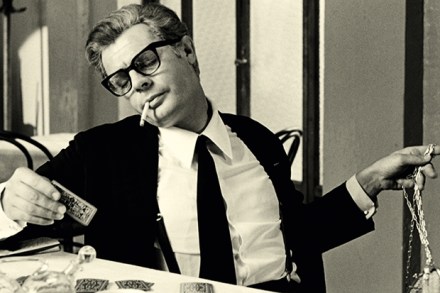
Federico Fellini’s La Dolce Vita was a box-office triumph in Italy in 1960. It made $1.5 million at the box office in three months — more than Gone With the Wind had. ‘It was the making of me,’ said Fellini. It was also the making of Marcello Mastroianni as the screen idol with a curiously impotent sex appeal. No other film captured so memorably the flashbulb glitz of Italy’s postwar ‘economic miracle’ and its consumer boom of Fiat 500s and Gaggia espresso machines. Unsurprisingly, the Vatican objected to the scene where Mastroianni makes love to the Swedish diva Anita Ekberg (who died earlier this year at the age of 83) in the waters of the Trevi fountain. Sixties Rome became a fantasy of the erotic ‘sweet life’ thanks in part to that scene.

All that glitters is not gold

From our UK edition

Woman in Gold feels rather like a Jewish version of Philomena as this too is about an older woman seeking justice for what has been stolen from her in the past but, unlike the Jewish version of almost everything, this is not in any way superior, and may even be a dud. It is based on a true story, which is an excellent and fascinating story, but it’s the storytelling that counts, and the storytelling here is not only familiar and pedestrian, but so emotionally manipulative that it doesn’t come with one sentimental ending, but several in quick succession. ‘Oh good, it’s over,’ you will think to yourself, as you make to rise from your cinema seat, but what’s this coming at you? Yet another sentimental ending? Every character gets their own?

Lily James’s Cinderella is more of a doormat than my actual doormat

From our UK edition

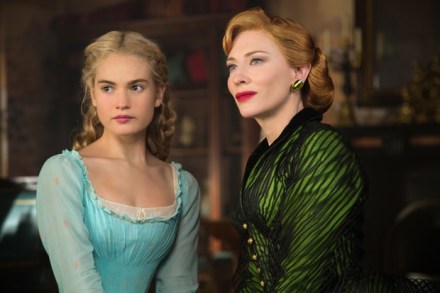
Kenneth Branagh’s Cinderella is a Disney film based on a Disney film, so is double Disney, if you like. It is a live-action adaptation of the 1950 animated version, and an entirely faithful retelling. As such, it comes with no irony, no modern winks aimed at a modern audience and no smarty-pants updating of the smarty-pants kind. It is lush, with dazzling costumes by Sandy Powell, but without any reinvention whatsoever this is a film that, at some point, should have asked itself, ‘OK, I’m all dressed up, but do I actually have anywhere to go?’ It stars Lily James (from Downton, apparently) as our heroine, Ella. Ella had a childhood as golden as her hair. Ella, as we see, lived in a heavenly house with a mummy and a daddy who loved her very much.

The Voices review: a hateful, repellent, empty film

From our UK edition

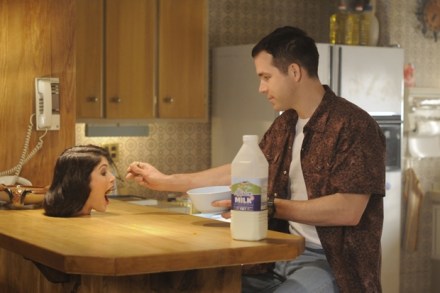
The Voices is ‘a dark comedy about a serial killer’, which is not an overcrowded genre, and I think we can now plainly see for why. I was up for it, initially. The buzz around the film had been good. ‘Unexpectedly pleasurable’, GQ. ‘Wild and hilarious’, Hollywood Reporter. Which just goes to show: never, ever trust reviews. This is a hateful and repellent and empty film. This is not pleasurable, unexpectedly, expectedly, or otherwise and it is neither wild nor hilarious. I bitterly resent each of the 104 minutes I gave to it, and I say that as someone who never has anything better to do. It may even be that I’ll never read another review again.

Suite Francaise review: what is this film playing at, when it comes to Jews in attics?

From our UK edition

Suite Française is being billed as a second world war romance about ‘forbidden love’ and, in this regard, it is handsome, solid, well played and probably fine, if you haven’t read Irène Némirovsky’s novel, but if you have? Then you may have been hoping and praying for something deeper, something more special. As you know — because I have been nothing if not repetitive down the years — I desperately try not to compare films with their source material. Let a film live or die by its own merits. But this book nags like nothing else on earth. What? Really? No! And where did that Jew in the attic come from? What is this film playing at, when it comes to Jews in attics? Can anyone put a Jew in an attic, whenever they so fancy?

How Ridley Scott’s sci-fi classic, Blade Runner, foresaw the way we live today

From our UK edition

In 1977 a journeyman actor called Brian Kelly optioned a science-fiction novel called Do Androids Dream of Electric Sheep? The book’s author, Philip K. Dick, had been writing science fiction since the early 1950s. He was 49 years old, with 30 novels behind him. He had a cult reputation, but he barely scraped a living. Kelly only paid him $2,500, but Dick was happy with this windfall. He’d written this book for half as much, back in 1968. After five more years, and many rewrites, Dick’s book finally became a film. Directed by Ridley Scott and renamed Blade Runner, it’s now commonly — and quite rightly — regarded as one of the greatest science-fiction movies ever made.

All radio drama should be as good as this Conrad adaptation

From our UK edition

The aching hum of crickets. The susurrus of reeds. The lapping of waves. The unmistakable noise of a sound technician ripping a duster in two as the heroine’s dress was torn, thuggishly, by a character in the heat of passion... The sound effects for Harold Pinter’s adaptation of Joseph Conrad’s Victory (which started life as a screenplay and has now been dramatised by Radio Four, Saturday)transported us to a private island in the Java sea.

Still Alice review: you can see why Julianne Moore won an Oscar but the film’s still boring

From our UK edition

There’s always seemed something masklike about Julianne Moore’s face: she seems walled in by her beauty. When she smiles, the only thing that moves is her mouth; that superb fenderwork of bone remains as impassive as a sphinx. This very inexpressiveness gives her an air of trapped intelligence, which she used to great effect in the early part of her career playing a string of numbed-out beauties— her coked-up porn actress in Boogie Nights; her neurasthenic housewives in Safe and Far from Heaven, all dying behind the eyes. More recently, she has cut loose to channel something of Diane Keaton’s scatterbrained comedy in The Kids Are All Right, in which her performance was a revelation: Moore has never been so loose or so funny.

Jeffrey Archer: Bollywood plagiarised my books

From our UK edition

Jeffrey Archer is none too impressed with the Bollywood film industry. In an interview with India's DNA Newspaper, he said that several Bollywood films have ripped off his books without his permission. The comments came after the convicted perjurer was asked whether his novels have the potential to translate into Hollywood films: 'Well, forget Hollywood, just look at your Bollywood! These bunch of thieves have stolen several of my books without so much as a "by your leave".' According to Lord Archer, his books Not A Penny More, Not A  Penny Less and Kane and Abel have both inspired successful Bollywood films. In the interview Archer goes on to say that he has found Indian film producers difficult to work with.

The Boy Next Door reviewed: a terrible new J-Lo movie that’s disturbingly enjoyable

From our UK edition

Stateside critics, who panned Jennifer Lopez’s new film The Boy Next Door on its US release last month, may be unaware of the ability of the British to enjoy a film so bad it’s almost good. I suspect many Brits will shamefacedly delight in this so-called erotic thriller’s camp silliness, its truly dreadful script and its almost mockingly implausible premise. This is a film where a bespectacled Jenny from the Block plays a classics teacher (yes) who receives a pretty copy of Homer’s 3,000-year-old poem ‘The Iliad’ as a gift and quite sincerely exclaims, ‘Wow, is this a first edition?’ How can you follow a gem like that? The answer is with many more inadvertent jokes of a similar ilk, made all the funnier for their intended gravitas.

Oscars 2015: Neil Patrick Harris took it too far

From our UK edition

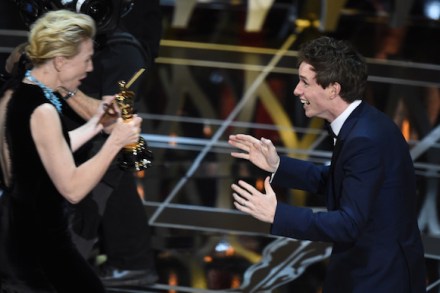
Birdman soared past longtime favourite Boyhood at the 87th Academy Awards, as Alejandro González Iñárritu's hilarious Hollywood satire unexpectedly took both of the top prizes - best picture and director - and joint top number of awards overall, in a slightly awkward ceremony where many of the host's razor-edged jokes drew clear disapproval from the audience. While many were predicting a slightly irreverent evening, Neil Patrick Harris, a veteran host of the Tony Awards, arguably took his jokes at the podium too far.

Emir Kusturica interview: why Slavoj Žižek is a fraud

From our UK edition

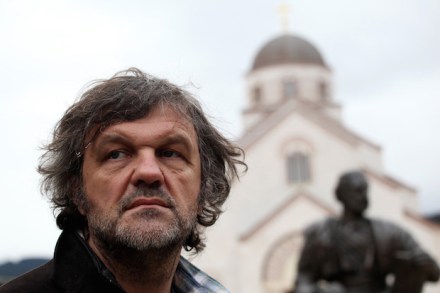
Last month I was invited on a press trip to Serbia. The whole thing sounded great; free accommodation, free food, free travel. I said yes, obviously. But there was a catch; it involved an interview with the film director Emir Kusturica. Now, the first thing you should know about Emir Kusturica is that he’s huge, a proper man-mountain. His hands look like they could do more damage than your average battle tank, and at 6'3", he must be at least a head taller than me. Not that I’m thinking this lucidly when finally the interview moment comes. Before I begin my questions, I’m more than a little scared that, at any moment, he might grab my throat and make himself two heads taller than me.

Fifty Shades of Grey, review: ‘Use a condom!’ my sister shouted

From our UK edition

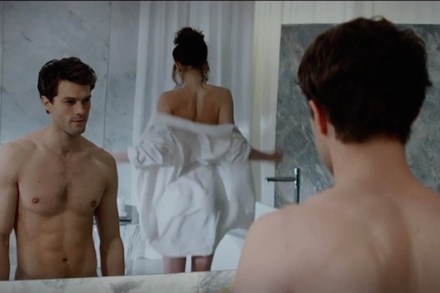
And so, in the end, I went with my sister, Toni, to see Fifty Shades of Grey and we saw it at noon on Valentine’s Day at the Odeon in Muswell Hill. In the audience on that particular day at that particular time there were eight other women, all around our age, and all on their own. The Fifty Shades phenomenon has been described as ‘soft porn for middle-aged housewives’ and it’s said as an insult, but it sounds rather good to my sister and me. Indeed, after what feels like a lifetime of pairing socks and putting meals on the table and basically performing the role of main drudge at Drudge Central we feel we deserve a little soft porn and who knows, if we like it, we could work our way up to hard porn?

The Kremlin is dictating Russian culture once more – and it’s neo-Soviet and anti-Western

From our UK edition

It’s suddenly gone icy-cold in Russia’s arts relations with us and the US. Last year’s Russia-UK Year of Culture just snicked under the wire before the political chill started building up ice in all sorts of unexpected places. The international acclaim for the epic Russian film Leviathan, up for a Best Foreign Film Oscar, was sneered at by the feverishly nationalistic culture minister Vladimir Medinsky. Recently he denounced the film as 'perfectly calculated to pander' to western views of a bleak modern Russia, and he has previously proposed that only movies properly celebrating today’s Russia should be allowed either public funding or a release.

From Umbrella Man to the Coughing Major, the truth is often very strange

From our UK edition

Are you sitting comfortably and wearing your tinfoil hat? If so, open YouTube and watch a full-screen version of the Zapruder film, in particular the section after frame 215 where the presidential limousine passes behind the Stemmons Freeway sign. What you will see, partly obscured by the sign, is a man’s opened umbrella 30 feet from the presidential car when the first shot is fired. Yet it hadn’t rained in Dallas since early morning; Dealey Plaza was bathed in sunshine. As you can imagine, many conspiracy theories formed around ‘Umbrella Man’ — who also appears in still photographs of the scene.

My moment of mortification with Saint Joan Collins

From our UK edition

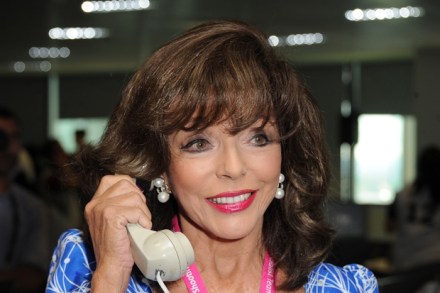
I did a film with Dame Joan Collins once. No no, not The Stud. It wasn’t as good as that. It was called The Clandestine Marriage. And although it wasn’t that fun to watch, it was really fun to make. We filmed it one autumn in someone’s stately home. I had a lovely fling with a woman in the art department, who, in order to hide the fling from friends of her faraway boyfriend, came up with the brilliant ruse of pretending to have a fling with the third assistant director to confuse everyone. At least that’s what she told me she was doing. I was definitely confused, but I believed her. It was years later that someone explained to me that she really was having a fling with the third assistant director. But I never minded. She was so nice.

Selma review: rich, nuanced, heartbreaking

From our UK edition

Selma, the civil rights film that stars David Oyelowo as Martin Luther King, undoubtedly contains the best and most powerful performance of the year as not nominated for an Oscar. Oyelowo has said this is because Hollywood prefers black actors when they play ‘subservient roles’ and aren’t ‘the centre of their own narrative, driving it forward’, which, alas — and before I could help myself — immediately made me think of Driving Miss Daisy (nine nominations, and winner of Best Picture over Spike Lee’s Do the Right Thing). So, a useful reminder that, in congratulating ourselves on how far we have come, we should not forget how far we still have to travel. (And that is your lesson for this week.

How Japan became a pop culture superpower

From our UK edition

There is an island nation, just off the main body of a continent. It gained an empire from the force of its military and the finesse of its trading contracts. The empire withered, as they all do, under the gaze of history. But that didn’t finish the island nation off. It simply took over the world in a different way, with something greater than arms and economics: popular culture. Its territory is now the television in your lounge, and the headphones in your ears. Sounds like Britain, doesn’t it? We often boast of how, from the Beatles to this year’s Oscar nominations, our country punches above its weight culturally. But I had another island nation in mind. One with twice as much weight, in terms of population, and a hell of a lot more punch: Japan.