Film

Citizenfour: the paranoia of Snowden & co will bore you to death

From our UK edition

In simple entertainment terms Citizenfour isn’t as interesting as watching paint dry. It is more like watching someone else watching paint dry. People with opinions on Edward Snowden tend to divide into those who think he’s one of the biggest heroes of all time and those who think he’s at least one of the worst patsies or traitors of all time. Either way it’s hard to imagine why either party would want to watch two hours of footage of him typing on a keyboard. And then typing some more. While the camera focuses on him from the other side of the keyboard. For a very long time. Neither is it obvious why we should wish to watch footage of him staring out of a window. Or gelling his hair.

The Imitation Game: a film that’s as much in the closet as Alan Turing was

From our UK edition

The Imitation Game is a biopic starring Benedict Cumberbatch as Alan Turing, the brilliant mathematician who broke the German’s Enigma code during the war, created the blueprint for the modern computer and was then hounded to death by the authorities for being gay, the bastards. It’s a fascinating story, as well as one of those stories that needs to be told, over and over if necessary, but I just wish it had been told here with a little more guts and flair. This is solid, sturdy and offers a few great moments. But it is rather formulaic, and as much in the closet as Turing ever was.

Leviathan: the anti-Putin film the Russians tried to ban that’s tipped for an Oscar

From our UK edition

The funny thing about a film like Leviathan, which many expected to win the Palme d’Or at Cannes earlier this year (it didn’t), is that suddenly an awful lot of people become experts in things they knew nothing about before reading the press notes. Some people may be familiar with the Bible’s Book of Job, of course, and with Leviathan, the sea monster used to demonstrate to Job the futility of questioning God. Several may even have read Thomas Hobbes’s tome of the same name about conceding power to the state. A few may genuinely be well-versed in both. A big pat on the back to them. They read a lot.

Interstellar: like Star Trek – but dumber and more tiring

From our UK edition

Christopher Nolan’s futuristic epic Interstellar isn’t a clever film, or even a dumb film with a clever film trying to get out. Instead, and no matter what the hype may say, this is a dumb film with an even dumber film trying to get out. Even the tag line, which is also the basic premise, is super-dumb. It goes: ‘Mankind was born on earth. It was never meant to die here.’ Who says? How can anyone know what nature’s intentions might be? What did it intend for dinosaurs, for example? The golden toad? The use of ‘mankind’, rather than ‘humankind’, is also telling, as this is very much in the tradition of the alpha-male American superhero who single-handedly saves us (ladies too!; thanks!

Mr Turner: the gruntiest, snortiest, huffiest film of the year – and the most beautiful too

From our UK edition

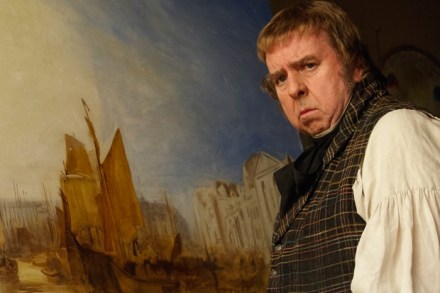
[audioplayer src="http://traffic.libsyn.com/apollomagazine/Apollo_final.mp3" title="Tom Marks, editor of Apollo magazine, talks to Mike Leigh"] Listen [/audioplayer]Mr Turner may be the gruntiest film of the year, possibly the gruntiest film ever. ‘Grunt, grunt, grunt,’ goes Mr Turner (Timothy Spall) as he sketches, paints, gropes his housekeeper, woos a Margate landlady, winds up John Constable something rotten. But what I now know is that when you have Spall doing the grunting, and Mike Leigh at the helm, as both writer and director, such gruntiness can be quite sublime, as can snorting and huffing. This is a biopic of the painter J.M.W. Turner, ‘master of light’, and the greatest painter that ever lived according to many, but it is not a regular biopic.

Fury: the men blow stuff up, then Brad Pitt takes his top off

From our UK edition

Fury is a second world war drama that plays with us viscerally and unsparingly — I think I saw a head being blown off; I think I saw a sliced-off face, flopping about — but is still just another second world war drama. That is, Americans good, Nazis bad, and a man doesn’t become a man until he has abandoned all mercy and learned how to kill. ‘It’s Saving Private Ryan, but with tanks,’ I heard someone say as I left the screening, and although I would never steal someone else’s opinion, it is Saving Private Ryan, but with tanks, and also sliced off faces. I added that last bit myself. Written and directed by David Ayer (Training Day, End of Watch), this stars Brad Pitt as battle-hardened Sergeant Don ‘Wardaddy’ Collier who commands a Sherman tank.

Mike Leigh interview: ‘A guy in the Guardian wants to sue me for defamation of Ruskin!’

From our UK edition

[audioplayer src="http://traffic.libsyn.com/apollomagazine/Apollo_final.mp3" title="Tom Marks, editor of Apollo magazine, talks to Mike Leigh"] Listen [/audioplayer]Mike Leigh is in a cheerfully bullish mood when I meet him at the Soho Hotel. ‘Have you read today’s Guardian?’ Dammit — I should have seen that coming. ‘A guy in G2 would like to sue me for defamation of Ruskin!’ He seems almost pleased. His characterisation of the great critic as silly and effete in his new film, Mr Turner, does seem a little ungenerous. Ruskin did more for Turner than anyone. ‘That’s true,’ says Leigh. ‘Working with the brilliant young actor Joshua McGuire, I started to think how Ruskin was incredibly spoiled and cosseted by his parents… He was a prig!

The Best of Me is more of a sleepie than a weepie – especially when our old friend No Sexual Chemistry makes an appearance

From our UK edition

Take tissues to The Best of Me, I’d read, as it’s such a weepie, so I took tissues, being a weeper at weepies — I still dab my eyes whenever I even think about War Horse — but it was rubbish advice. You don’t need tissues for this film. Instead, you need to line up several triple espressos, as many cans of Red Bull as you can reasonably manage, two matchsticks (one for each eye, obviously), replacement matchsticks for when the weight of your eyelids proves too much and they snap, plus a small hammer to knock yourself in the side of your head when you find yourself bored out of your mind and dropping off anyhow. Actually, this may be rather unfair, as I did laugh inappropriately on a few occasions, so I must have been slightly awake for some of it.

Why everyone wants what Nora Ephron was having

From our UK edition

I have come late to Nora Ephron — a little too late for her, anyway, as she died in 2012. Indeed, it was just after she breathed her last that I read her only novel, Heartburn, a copy of which had been pressed on me by a writer friend with a mad glint in her eye. It is that sort of book, and I now press copies on other friends with the same mad glint. A brutal dissection of Ephron’s disastrous marriage to the Watergate journalist Carl Bernstein, it’s also a brilliantly sustained piece of comic writing, as good as anything you’ll find outside Wodehouse. Nigella Lawson loves it, as well she might. Why no other novels? Maybe Nora never again felt the need in quite the same way, or maybe she was too busy writing everything else.

Without sci-fi, there would be no cinema

From our UK edition

Do you know what’s hateful? The snobbery that film fans have to contend with. There’s the ‘it’s only a movie’ snobbery, by which cinema is suitable only for wastrels and dogs. And there’s the ‘if it ain’t Danish and silent, then it ain’t no good’ snobbery. Proponents of both should spend less time blowing conjecture through their Sobranie smoke, and more time watching the Hollywood films of John Ford, Nicholas Ray and William A. Wellman. Now that’s off my chest, here’s one way in which cinema is relatively free from snobbery. For decades, novelists and literary types have wrangled over whether science fiction books are anything more than — to use Margaret Atwood’s snooty description — ‘talking squids in outer space’.

Effie Gray can effie off

From our UK edition

Effie Gray, which has been written by Emma Thompson and recounts the doomed marriage of Victorian art critic John Ruskin to his teenage bride (he refused to consummate it), has a blissful cast. It stars Dakota Fanning, Ms Thompson herself, plus Julie Walters, David Suchet, Greg Wise, James Fox, Derek Jacobi and Robbie Coltrane. So it is period drama heaven, in this respect. It’s a cast you could watch all day, whatever, which is handy, as this is probably quite dull otherwise. It is adequate. It does the job. It gets us from A to B. But it feels as if it is missing something crucial, and I don’t just mean a stiffie. It also doesn’t deliver emotionally.

David Fincher plays Gone Girl for laughs – at least I hope he is

From our UK edition

Gone Girl is David Fincher’s adaptation of the bestselling thriller by Gillian Flynn, a relentless page-turner which I’ve heard people say they read ‘even though it’s not that good’ — you were hooked; get over it; don’t be snotty — and which I read, even though it’s not that good. The twists and turns are there, but all psychological heft is ultimately thrown out the window in a way you’d never, for example, find in a Patricia Highsmith. And this screen version fully exposes the limitations of the original material. In fact, the final act is so outlandishly absurd and ridiculous and trashy that Fincher plays it for laughs. Or at least I think he plays it for laughs. Actually, the worst scenario would be if he hadn’t played it for laughs.

David Cronenberg’s Map to the Stars: threesomes, incest, a dead dog and whiny farts

From our UK edition

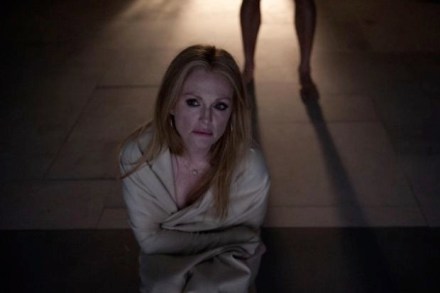
In a scene that sticks from Map to the Stars, David Cronenberg’s Grand Guignol of a Hollywood satire, Julianne Moore, playing an ageing Hollywood never-has-been, sits on the loo in front of her PA, expelling tired whiny farts from her arse, while listing – her trout pout doing its best impression of a quivering anus – the names of the laxatives and prescriptive drugs she needs as if they were old friends. Except she doesn’t have any friends; the only people she knows are casting directors who don’t call back. And it’s no wonder Havana Segrand’s bodily functions have stalled (surely a first for Cronenberg).

Outnumbered: The Movie (But Crap)

From our UK edition

What We Did On Our Holiday is written and directed by Guy Jenkin and Andy Hamilton, the pair who created the hit BBC sitcom Outnumbered, and this is like an extended episode of Outnumbered minus anything that made it good in the first instance. This is Outnumbered: The Movie (But Crap). Hard to explain, considering Jenkin and Hamilton have more than proved their worth over the years (they also created the brilliant newsroom satire Drop the Dead Donkey) but we all have our off days, I suppose. And our supremely off days. We must put this down to a supremely off day, particularly as it even has one of those forced, saccharine endings where the violins go mad and everyone’s learnt An Important Life Lesson and hugs on a beach.

The Disappearance of Michel Houellebecq: French chin-stroking at its very best

From our UK edition

Just when you thought Bernard-Henri Lévy had taken a chin-stroking national stereotype as far as it could possibly go, you open Le Monde‘s business pages and see this. Bernard Maris, one of France’s most respected financial correspondents, has written a 160-page book entitled Houellebecq Économiste. Maris’s book sets out its stall as an economic reading of the writer’s oeuvre, promising amongst other delights, a Malthusian interpretation of his 2005 novel The Possibility of an Island and an analysis of the division of labour in The Map and the Territory. Imagine Robert Peston writing a Hobbesian study of Irvine Welsh and you’re halfway there. I like Houellebecq’s novels.

In praise of Den-zel

From our UK edition

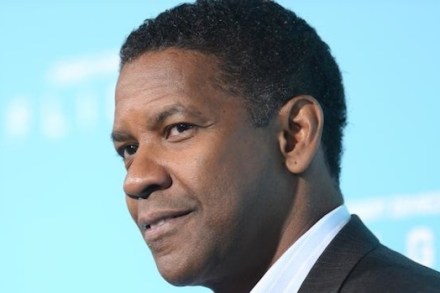
His Christian name is only two syllables, with the stress (following the African-American pronunciation) on the second. Two syllables that are a byword for urbane cool. A mellifluous shibboleth - the quintessence of all that is decent and upstanding. You see, I've grown up on Denzel’s films. From boyhood to manhood, from teenage recalcitrance to adult responsibility, he has accompanied me on my life’s journey like a Virgil to my wayfaring Dante. As father figure, older brother, man of probity and moral rectitude, Don Juan and all round Mister Nice Guy, he has been my consummate companion. Many men of a certain age will have derived much of their moral compass from Denzel’s protagonists.

20,000 Days On Earth: is Nick Cave the missing link? Or the next stage in evolution?

From our UK edition

Inspired by Justin Bieber’s Never Say Never (2011), Katy Perry’s Part of Me (2012) and One Direction’s This Is Us (2013), Nick Cave has released a documentary about himself. No doubt he wanted to prove that this old dog has new tricks. The whole movie is shot in candy-crushed 3D to appeal to the emteevee-ohmigod generation. He talks about how great it was to work with Rihanna and Ludacris: ‘The thing about thoseguys is...’ Nah, sorry, I’m just kidding with you. None of that is true, apart from the bit about Nick Cave releasing a documentary about himself. It’s called 20,000 Days on Earth. And, much like the man himself, it is gloriously oblique. It takes place — apparently — over the course of a day spent recording his last album with the Bad Seeds, Push the Sky Away.

Ignore the simplistic politics, Pride will make you laugh and cry

From our UK edition

1984 and all that. Which side were you on? The side of Margaret Thatcher, her hairdo and person standing rigid against a rising tide of industrial activism and British declinism? Or the side of the miners, socking it to the Tory scum and their jackbooted adjutant, Johnny Law? There’s no doubting which side this new movie Pride is on. It’s about a curious episode in community relations when a group of gay people from London decided to fundraise and rabble-rouse on behalf of the striking miners in Wales. It starts with a shot of a red banner — ‘Thatcher Out!’ — hanging from a council-block window. And it ends with a discussion of which phrase will work best on a placard: ‘Screw you, Thatcher!’ or ‘Fuck you, Thatcher!’ They go with the former.

How dare this author trash one of the great screenwriters of the 20th century?

From our UK edition

Should one say ‘vicious circle’ or ‘vicious cycle’? That’s a question that just goes round and round inside my head. In the case of the American novelist and screenwriter William Goldman, he has always abhorred reviewers (‘whores and failures’, in his eyes), and the reviewers have returned the compliment. When he was paid $400,000 for the script of Butch Cassidy and the Sundance Kid in 1969, it was the highest price ever for a screenplay, and the pundits were quick to pan it. The public differed, and the film was a smash hit (the script, of course, is a masterpiece). But it’s interesting to consider why Goldman has always been quite so critical of the critics.

Before I Go to Sleep prefers creepy car parks to feelings

From our UK edition

Before I Go To Sleep is Rowan Joffe’s adaptation of S.J. Watson’s bestselling thriller of 2011, but whereas the book was smart, gripping, ingeniously plotted and had psychological depth — who are we, when we can’t remember who we are? — this is a disappointment on so many levels. It’s not as if it’s even set in Crouch End, north London, any more. According to my press notes, Crouch End was not deemed sufficiently ‘cinematic’, which has to be upsetting, if you live in Crouch End, as I do, and have always said to people, ‘Come on over. You’ll love it. It’s just so very cinematic round here’, but there you are. I suppose I’ll learn to live with it, as uncinematically as I can.