Film

This will end badly

From our UK edition

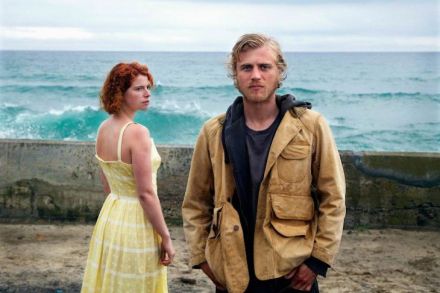
On Chesil Beach is an adaptation of the Ian McEwen novella set in 1962 when ‘conversation about sexual difficulties was plainly impossible’ and a young couple suffer a disastrous wedding night from which there will be no return. This is surefooted, mostly, and literary and tasteful and sad and English, and it also stars the ever-remarkable Saoirse Ronan. But it does take a giant misstep at the end — the ending is plainly horrible — plus the book’s frustrations don’t magically disappear. One crap shag and that’s it, it’s over? It worried you then and it will worry you now.

On another planet

From our UK edition

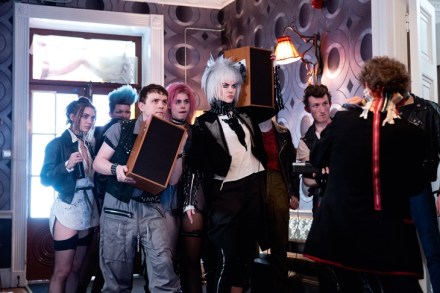
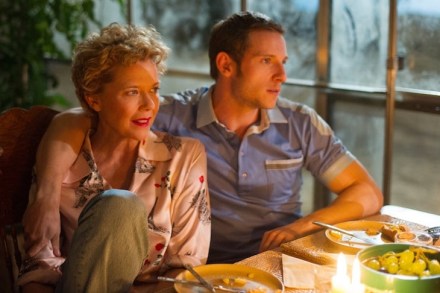
How to Talk to Girls at Parties is set in the 1970s and has punk as the backdrop and an excellent cast (Nicole Kidman, Ruth Wilson, Elle Fanning). It also features what could be a decent premise (boy who treats girls as if from another planet meets actual girl from another planet). But everything it has going for it is undone by what it doesn’t have going for it, which is substantial. This could, in fact, have been titled How to Stay Awake Once You’ve Lost All Patience because, I now know, staying awake once you’ve lost all patience makes talking to girls at parties look like a walk in the park, frankly.

Tokyo through the lens

From our UK edition

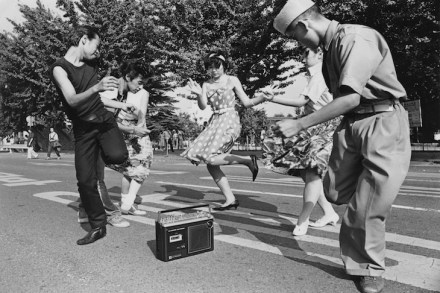
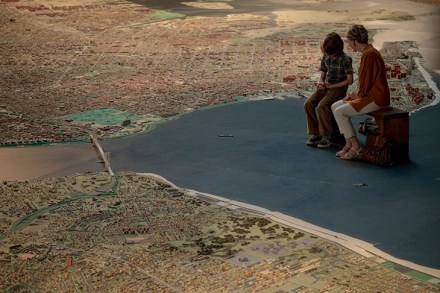
In 1975, the 24-year-old Ian Buruma (now an award-winning essayist and historian, and the editor of the New York Review of Books) left his native Holland to study film at the Nihon University College of Art in Tokyo. It was a bold move. The 1970s was a wild, tumultuous decade in Japan, often known as the Showa Genroku, after the hedonistic period at the end of the 17th century, and Tokyo came as a shock to the few Westerners who went there: a teeming, neon-strafed megalopolis, where the trappings of hypermodernity jostled with elements of a sublime tradition, and the whole culture was drenched in eroticism.

The horse and his boy

From our UK edition

Andrew Haigh makes inaction films. Weekend (2011) tells of two young homosexuals getting to know each other in Nottingham. In the wintry marital drama 45 Years (2015) two old heterosexuals get to unknow each other in Norfolk. The canvases are miniature, the resonances crevasse-deep. His third film, Lean on Pete, brings a change of scene and scope. And volume. Hooves thunder. A fatal gunshot goes off. Ornery men bawl and holler. There is a devastating road accident, and a climactic act of hideous violence. It’s as if Haigh has contracted ’roid rage. What he’s actually done is get on a plane to Oregon to adapt a novel by Willy Vlautin. Haigh is intrigued by the often silent space between two characters.

Review: Godard Mon Amour

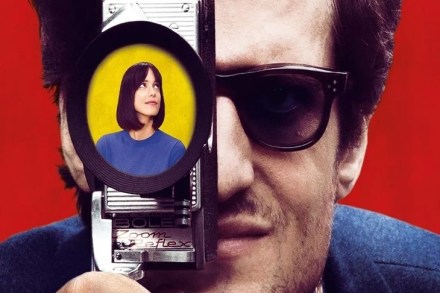
It is now fifty years since the événements of May 1968, when young Parisians lobbed onobble stones at the police, occupied the Sorbonne, and launched the Boomers’ long march through the institutions. That makes it fifty years since Jean-Luc Godard lost the plot—never a good idea if you are a film-maker. Godard has made plenty of films since 1968, but no one cares. You can see some of Godard’s post-1968 films on YouTube. They’re all terrible—didactic and boring. Perhaps Godard admitted as much when he called his split-screen analysis of middle-class family life Number Two. The split in the screen, like the one in Godard’s mind, was dialectical. Many people lost their minds in 1968 through psychedelic drugs.

Animal magnetism | 26 April 2018

From our UK edition

When I first read that Beast is a serial-killer thriller my heart sank like a stone — yet more women raped, butchered, murdered; splendid, bring it on. But it is, in fact, fascinating and brilliant, and not like any serial-killer thriller you’ve seen before. This is because a woman owns it. Psychologically and emotionally. Not because she’s the actual killer, although if she were the killer would she need to work four times as hard to achieve the same notoriety as a man? Kill eight to his two? But we mustn’t allow that to hold us up. Beast is a feature-length debut for writer/director Michael Pearce and it stars Jessie Buckley, who is phenomenal.

Peake performance

From our UK edition

Two films about women this week. One, Funny Cow, is about a woman who daringly takes on men at their own game while the other, Let the Sunshine In, is dressed up in French art-house garb but basically has Juliette Binoche tirelessly running round Paris in thrall to every fella she encounters. I certainly know which I preferred. However, if you look at review aggregate sites, like Rotten Tomatoes, you’ll see Sunshine achieves the far higher score. But then most film critics are male and probably wouldn’t mind Juliette Binoche tirelessly chasing them round Paris, or anywhere else. (I have just asked a man if this is so and he has confirmed: ‘I wouldn’t mind at all. And it could be Bournemouth.

Home is where the heartbreak is

From our UK edition

Custody is both social realism and a thriller and it’s terrific. It is smart, beautifully acted, never crass about the subject in hand (domestic abuse), and is one of those films that will have you totally gripped while you’ll also be longing for it to end, as it’s so unbearably tense. I swear my heart as good as stopped several times. It’s written and directed by Xavier Legrand, who handles both genres with supreme elegance. Or, to put it another way, it’s like a Ken Loach film that’s been hijacked by Stephen King, but seamlessly. (‘Mind if I have a go, Ken?’, ‘Be my guest, Steve’.) This is Legrand’s second film after Just Before Losing Everything (2013), which was only 30 minutes long, but earned him an Oscar nomination.

Plenty to wonder at – like who thought it was a good idea to make it: Wonderstruck reviewed

Wonderstruck is a film by Todd Haynes and you will certainly be struck by wonder, often. You will wonder at its painful slowness. You will wonder at the way it strains credulity until it snaps. You will wonder if the violins will ever give it a rest. You will wonder if it will ever end. And you will wonder at the ending, when it does finally come, as it is so stupid. So it does not short-change on the wonder front. Whatever the price of your cinema ticket, you will be getting limitless wonder in return. Haynes is usually such an immaculate, thoughtful, winning filmmaker (Carol, Far From Heaven, Velvet Goldmine, that Karen Carpenter short told with Barbie dolls — Superstar) that you will also wonder: how could he have helmed such an unholy mess? ‘Is it for children?

Plenty to wonder at

Wonderstruck is a film by Todd Haynes and you will certainly be struck by wonder, often. You will wonder at its painful slowness. You will wonder at the way it strains credulity until it snaps. You will wonder if the violins will ever give it a rest. You will wonder if it will ever end. And you will wonder at the ending, when it does finally come, as it is so stupid. So it does not short-change on the wonder front. Whatever the price of your cinema ticket, you will be getting limitless wonder in return. Haynes is usually such an immaculate, thoughtful, winning filmmaker (Carol, Far From Heaven, Velvet Goldmine, that Karen Carpenter short told with Barbie dolls — Superstar) that you will also wonder: how could he have helmed such an unholy mess? ‘Is it for children?

All bark and no bite | 28 March 2018

From our UK edition

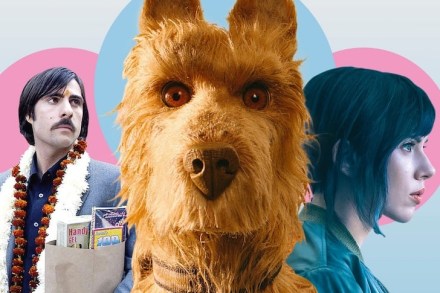
The latest film from Wes Anderson is a doggy animation set in a fantasy Japan and as there was a screening in London earlier this week for owners and their dogs I took my own dog, Monty. He said he liked it. It was ‘good’, he said. I did not especially trust his opinion so investigated further. As good as, say, drinking from the toilet? ‘No,’ he said, ‘not as good as that, obvs.’ As good as this tennis ball here? ‘No’, he said, ‘because a tennis ball is always AMAZING!’ As good as cheese? ‘Nothing is as good as cheese. Fair play, you caught me out there.

Time and motion

From our UK edition

Andy Warhol would probably have been surprised to learn that his 1964 film ‘Empire’ had given rise to an entire genre. This work comprises eight hours and five minutes of slow-motion footage of the Empire State Building during which nothing much happens. Warhol remarked that it was a way of watching time pass or, you might say, the Zen of boredom. Much the same could be said of the films in Tacita Dean’s two exhibitions, Portrait and Still Life at the National Portrait Gallery and National Gallery respectively.

Mad about Claire Foy

From our UK edition

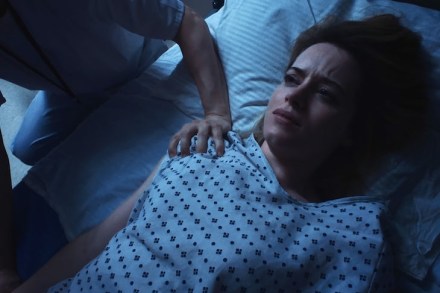
Steven Soderbergh’s latest film, Unsane, is a psychological thriller about a woman who is incarcerated in a psychiatric hospital even though she claims to be perfectly sane. But is she? It was filmed fast, on an iPhone 7, and some aspects are worryingly thoughtless — its treatment of mental-health patients, for example, is remarkably Unsensitive. And it does descend into a plainly ridiculous, sub-par farce. But it is also, in parts, deliciously schlocky and it stars the wonderful Claire Foy, whom one hopes was paid decently. So shocking that she earned less than Matt Smith for The Crown, but as a positive person who likes to look on the bright side might I suggest that we celebrate the fact men are still doing so well? And throw a party or something?

The subtly savage world of filmmaker Ruben Ostlund

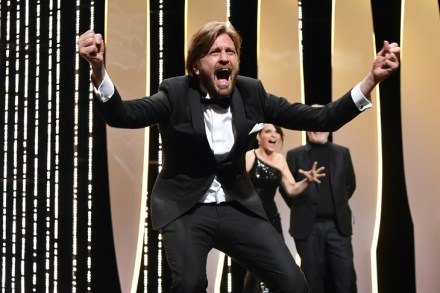
There is a culty YouTube video shot three years ago on the laptop camera of Ruben Ostlund. It shows the film director listening live as the nominations for the Academy Awards are announced from Los Angeles. The tension mounts as they approach the foreign film category. Alas, Force Majeure from Sweden isn’t nominated. Ostlund disappears off screen to sob and mewl. This year, there was a sequel to the video, but with a happier ending: the director’s latest film The Square was nominated for an Oscar. These mini-movies, like the rest of Ostlund’s oeuvre, are funny but subtly savage. He is a provocateur who trades in discomfort. You watch with your toes knotted. In Play (2011) a group of black teenagers inflict psychological torment on two white kids and (to complicate things) an Asian.

Wild at heart | 15 March 2018

There is a culty YouTube video shot three years ago on the laptop camera of Ruben Ostlund. It shows the film director listening live as the nominations for the Academy Awards are announced from Los Angeles. The tension mounts as they approach the foreign film category. Alas, Force Majeure from Sweden isn’t nominated. Ostlund disappears off screen to sob and mewl. This year, there was a sequel to the video, but with a happier ending: the director’s latest film The Square was nominated for an Oscar. These mini-movies, like the rest of Ostlund’s oeuvre, are funny but subtly savage. He is a provocateur who trades in discomfort. You watch with your toes knotted.

Original sin | 15 March 2018

From our UK edition

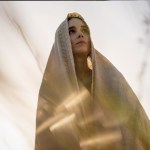
This biopic of Mary Magdalene is a feminist retelling that may well be deserved but it’s so dreary and unremarkable that the fact it is well intentioned and even, perhaps, necessary can’t come through and win the day. Or even part of the day. Just the morning, say. Directed by Garth Davis (Lion), and written by Helen Edmundson and Philippa Goslett, this is, according to the bumf, the Mary of the original gospels rather than the repentant sinner and ‘prostitute’, which is what, in truth, I always had her down as, but then I did get most of my learning from Jesus Christ Superstar.

Hammer horror

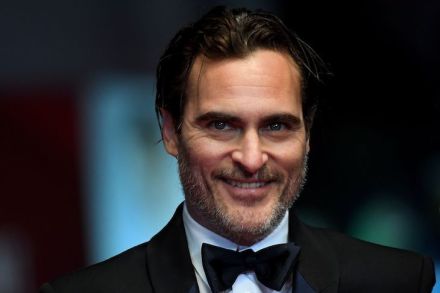
You Were Never Really Here is a fourth feature from Lynne Ramsay (Ratcatcher, Morvern Callar, We Need to Talk About Kevin) and the first thing to say is that it is exceptionally violent. I don’t say this disapprovingly but if your threshold for violence is as low as mine — I incurred a paper cut the other day and passed clean out — it will prove an 89-minute ordeal. Still, it has been described as ‘the Taxi Driver for the 21st century’, if that is of help while you’re bracing yourself for the next hammer blow. Personally, I found it of no help at all. Also, it’s untrue.The film stars a bulked-up Joaquin Phoenix as Joe, a tortured hit man, and it opens as it means to go on. That is, not prettily.

I, Tonya is not quite a gold-medal masterpiece

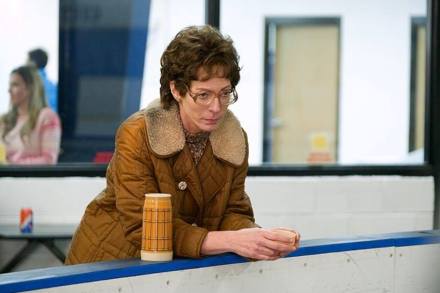
Films about the Winter Olympics don’t grow on conifers. Twenty-five years ago there was Cool Runnings about the Jamaican bobsleigh team. It took many years for Eddie the Eagle to reach the screen. Both were cockle-warming comedies about implausible Olympians who embody the ideal that participation is all. Only last week Elise Christie, the British speed skater who kept tumbling in Pyeongchang (and Sochi), hoped that ‘Reese Witherspoon’ would play her in the movie. In the mean time, the latest Olympiad has flushed out two more biopics on ice. I, Tonya tells of Tonya Harding’s catastrophic career. Like Monica Lewinsky, Harding is a public figure whose epitaph, thanks to a single headline, has already been carved.

In from the cold | 1 March 2018

Films about the Winter Olympics don’t grow on conifers. Twenty-five years ago there was Cool Runnings about the Jamaican bobsleigh team. It took many years for Eddie the Eagle to reach the screen. Both were cockle-warming comedies about implausible Olympians who embody the ideal that participation is all. Only last week Elise Christie, the British speed skater who kept tumbling in Pyeongchang (and Sochi), hoped that ‘Reese Witherspoon’ would play her in the movie. In the mean time, the latest Olympiad has flushed out two more biopics on ice. I, Tonya tells of Tonya Harding’s catastrophic career. Like Monica Lewinsky, Harding is a public figure whose epitaph, thanks to a single headline, has already been carved.

Heavy-going

From our UK edition

Dark River is the much-anticipated third feature from British writer/director Clio Barnard and it is one of those bleak, rural- England dramas featuring cement-coloured skies, wind, rain, mud, rusted old farm machinery and dead animals — do people who move out from the city know what they are letting themselves in for? — as well as the aftermath of childhood sexual abuse. (Should we pull them aside and have a word?) Apologies for sounding glib about such a heavy subject but this is, ultimately, so heavy-handed about that heavy subject it left me cold. I should point out, however, that other critics are available, and some are saying it is ‘powerful’ and ‘affecting’. So you pays your money and takes your pick.