Fiction

Setting sail

From our UK edition

The sea has always been a powerful stimulant for the literary imagination, most famously, of course, for the likes of Messrs Hemingway and Melville. Both, indeed, are name-checked in Monique Roffey’s novel Archipelago, a new addition to the canon of ocean-inspired work, taking the trope of the waters and recasting it for the twenty-first century. Gavin Weald has had his family torn apart by a flood, his Trinidad house ruined and, worse still, losing his son and seeing his wife incapacitated. He is left alone with his six-year-old daughter, Océan, to try and rebuild a life. At the start of the novel he returns to his refurbished house but realizes he can’t yet face the site of his tragedy.

Similar, but very different

From our UK edition

Richard Ford published his debut novel A Piece of My Heart in 1976.  But it was The Sportswriter — which introduced the world to Frank Bascombe, and other marginalised characters trapped on the edge of the American Dream — that distinguished Ford as a serious literary force. The two books that followed, Independence Day, which won him the Pulitzer prize in fiction, and Lay of The Land, completed the Frank Bascombe trilogy. Canada, his seventh novel, begins in Montana in 1960. It’s narrated by Dell Parsons, the son of a retired Air Force pilot, and a schoolteacher. The novel begins when Dell’s parents, Bev and Neeva, are sent to jail for robbing a bank, leaving him and his twin- sister, Berner, to fend for themselves.

Porn season

From our UK edition

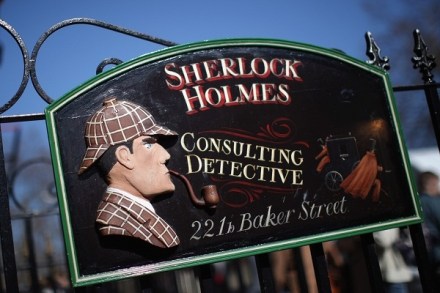
EL James has a lot to answer for. Yesterday brought news that a British publishing house, Total-E-Bound Publishing, will sex-up some of the classics in the hope of cashing in on the Fifty Shades of Grey phenomenon. In the forthcoming editions: Cathy and Heathcliffe will do a little bondage. Sherlock Holmes will bed down with Dr. Watson (you’ll have to read the books to find out what Mrs Watson makes of that). And Jane Eyre, of course, will get rogered by Mr Rochester, presumably while St. John Rivers plays with himself in his cottage, or perhaps even the schoolroom — the perverse possibilities are almost endless where poor, conflicted St. John is concerned.

Across the literary pages | 16 July 2012

From our UK edition

Any idea what an Ouroboros is? It's not the name of the cloud hanging over London at the moment but, according to Will Wilkinson, in his review of Joseph Stiglitz's The Price of Inequality on the Economist blog, a perfect symbol for the ‘progressive master narrative’ championed by a new technocratic coterie (which also counts Paul Krugman among its members). An ancient image of a snake consuming its own extremity, the Ouroboros is a fitting symbol for ‘progressives dizzy from chasing their tails’.

Kevin Barry’s magic

From our UK edition

Reading a short story by Kevin Barry is a bit like listening to a kraut-rock-record from the 1970s. The foundations are built on a solid rhythm. Then every so often, the form veers left-field, unveiling a portal to a world of magic. In this sense, you could argue that Barry is an experimental writer. He spends considerable time wrestling with language, bending each turn of phrase and piece of dialogue into shape, until he’s convinced he can make it sing. As far as modulating with the form itself, Barry works from tradition: giving his readers short vignettes of isolated individuals — mostly men, who have failed in one way or another.

Gray’s anatomy

From our UK edition

Reading a new John Banville novel is like walking into a house you know but finding the dirty old armchair has moved. The shelf, still stacked with the same books, is now bathed in dusty light. The rug has shifted from right under your feet. Time and memory, ‘a fussy firm of interior decorators’, have rearranged the furniture. Whenever a Banville character peers into the recesses of their mind — and introspection is the norm — they experience a similar feeling of disorientation. We last met Alexander Cleave in Eclipse when the former thespian had retreated to wandering around his late mother's house in an attempt to gather his wits following a break down mid-performance.

Across the soft-porn pages

From our UK edition

Hearing that rope sales were going through the roof in New York, many of us naively assumed it was bored housewives wanting to recreate scenes from 50 Shades of Grey. Now, after another weekend of wall-to-wall broadsheet analysis of the least sexiest bonkbuster of all time, you have to wonder whether it might have been bought for another purpose.   The Guardian dedicated their usually reliably highbrow Review section to the phenomenon, persuading some hilariously unexpected writers (Will Self! Jeanette Winterson! Lol!) to have a go at their own sex scenes. I couldn’t face reading them, but you can here. And if you’re really into masochism, here’s an angry blogpost Alastair Campbell wrote about how ‘crap Guardian editing’ ruined his own effort.

Nabokov’s true love

From our UK edition

When Vladimir Nabokov’s unfinished book (not quite a novel, not quite a novella) The Original of Laura was posthumously released in 2009, consternation over whether it was right to publish the work at all — Nabokov had instructed that it be destroyed after his death — swiftly gave way to consternation over what the work contained. And what the work contained was yet more evidence that Nabokov’s interest in very young girls was, well, something rather more than an interest.   Here was a figure who was not so much possessed of the ability to send planets spinning (Nabokov’s definition of the real writer) as he was the ability to elicit from the literary world not very much more than a collective shake of the head.

Government, the enemy

From our UK edition

‘I should not have written the book,’ said Anthony Burgess in 1985 of his most famous work, A Clockwork Orange (which celebrates its 50th anniversary this year). Burgess’ disavowal was total. The novel, he said, had been ‘knocked-off for money in three weeks’. The book was overhyped, 'misinterpreted'. That alleged misinterpretation owes much to Stanley Kubrick’s film adaptation, or at least that is what Burgess claimed. He said that Kubrick’s interpretation was ‘interesting’, which was not a complete compliment.

Better in Black

From our UK edition

It is almost twelve months ago, following the below-par A Death in Summer, that I wondered aloud on these pages whether Benjamin Black (aka Booker-winner, John Banville) had what it took to write a crime series. A resounding yes comes in the form of the fifth instalment — sixth novel overall, after the 2008 stand-alone The Lemur — of the Quirke series, Vengeance. Black has finally rediscovered the formula that made his debut, Christine Falls, so memorable.   To be sure, crime fiction purists will still bemoan the absence of standard clue-laying.

Across the literary pages: Of life, love and death

From our UK edition

John Banville's reputation as a master stylist and serious novelist wasn't done any harm by the weekend reviews for his latest book Ancient Light. Familiar riffs on his usual leitmotifs guaranteed the standard standing ovation. 'It is written in Banville's customary prose, rhythmic and allusive and dense with suggestive imagery,' Alex Clarke commended in the Guardian. While Patricia Craig in the Independent applauded that: 'Many of John Banville's customary concerns are present in this bedazzling new novel: memory and invention, questions of identity and make-believe, names and aliases, transgressions and transformations'. More unexpected however — given the rather dour face he sports for photo-ops - was his rather fun interview in the Guardian.

Wanted: A British comic book industry

From our UK edition

Viz magazine. The Beano. Judge Dredd. 2000AD... But that's about it. Why doesn’t Britain have a comic book industry? Try an extended metaphor: Think of all English literature, laid out like a vast library. Ten thousand Romantic novels by Trollope. Cupboards crammed with textbooks on Shakespeare. Ubiquitous thumbed paperbacks of Harry Potter, Narnia, the Lord of the Rings. And enough soft porn to fill an Olympic swimming pool. But the shelf - if there was even a shelf - of British comic books would be nasty, brutish, and short. Why is this? Are we somehow less talented than our square-jawed American cousins? Certainly, there is no shortage of appetite here in Blighty. Our sales figures are positively stellar.

In the service of Mammon

From our UK edition

The Libor scandal continues to shock, prompting bewilderment as well as disgust. The mood has turned against the City, with the FT suggesting that it ‘may be necessary to retire this generation of flawed leaders.’  In the piece below, Geraint Anderson, a former stockbroker and whistleblower, explains why his latest book, Payback Time, a story of people taking revenge on a bank they blame for their friend’s suicide, was inspired by the self-loathing caused by working for Mammon and the divisiveness which the crash has caused.      I did not write Payback Time for the money.

A dirty, weaselly word

From our UK edition

The word ‘reboot’, is the most weaselly term I've heard in film since people started talking about scripts needing ‘edge’ twenty years ago. A reboot is not a remake or a prequel or sequel or any of that cheesy commercial fare; it’s a reboot, a subtly different, very sophisticated, creative endeavour that has been employed to bring an old film to life, usually by making it in 3D. Remember when Sellafield was called Windscale or even Calder Hill?   I owe my new career to that horrible word, reboot. I was a screenwriter but recently crossed to writerly shed to become a novelist — or, in deference to the pigeon-holing world in which we live, a ‘young adult historical novelist’.

Martin Amis and the underclass

From our UK edition

New Martin Amis novels haven’t always received a fine reception of late. So much so that even tepid praise now reads generously. In the current magazine Philip Hensher reviews the latest, Lionel Asbo, and closes by declaring it, ‘not as bad as I feared.’ Having just finished it I think there is much more to recommend it than that. Not least because it is such a good attempt at satirising our almost un-satirise-able modern Britain. There aren’t many novelists who can make you laugh at the strange thing this country has become. But Amis does, and often.

Interview: John Irving on writing sexuality

From our UK edition

John Irving’s latest novel, In One Person is narrated by a bisexual writer, Billy Abbot, who recalls his high school days from the 1950s, in the small New-England town of First Sister — where the majority of the cross-dressing residents are more likely to celebrate polymorphous perversity than puritanical punishment. Billy takes a fancy to various people, including: his stepfather; his friend’s mother; the captain of the school wrestling team; and the local librarian, Miss Frost — who reveals to Billy a secret regarding her own identity. The mood of the latter half of the book darkens when Billy moves to New York in the 1980s, witnessing the AIDS epidemic. Irving published his debut novel Setting Free the Bears in 1968.

F. Scott Fitzgerald’s other ‘great’ character

From our UK edition

It is perhaps fitting — given his lack of fame and success — that many of you will have never heard of Pat Hobby. Hobby was a character who featured in a number of F. Scott Fitzgerald short stories towards the end of the author’s life, when he was working in Hollywood. Hobby is a forty-nine year old scriptwriter whose best days are long behind him. Rather than reaching out for a green light at the end of a dock in Long Island, Pat is forever scrabbling around for his next ten dollars in order to buy another drink or pay off his bookie. Regardless of whether he employs honest means to attain his ends, Pat’s adventures invariably end in failure.

Amis: Porn is an attack on love

From our UK edition

Pornography is in the news, and Martin Amis has been thinking about pornography. Those two facts are not related, not necessarily. Tomorrow’s issue of the Spectator contains an interview with Amis, who is on vintage form. Pornography, he says, is an attack on love; it is the repudiation of significance in sex. Pornography has, he says, created a ‘big disconnection for human beings’ between their conceptions of sex and its biological realities. He says, ‘There is no more talk of love in porn than there is about having babies. It’s as if you made babies by some other way, like sneezing.

Across the literary pages: Amis Asbo special

From our UK edition

The promotional tour for Lionel Asbo: State of England has been suspiciously quiet. The fact that Martin Amis hasn't sworn, bitched or nominated the queen as guinea pig for euthanasia booths stirred the press into feverish levels of anticipation. Had the OAP (Old Age Provocateur) finally lost his teeth? Or was he simply biding his time before biting back? A satire on Lionel Asbo - Wayne Rooney look-alike and dedicated chav -  and his lottery win, it seems written to offend ... even without subplots involving teenage pregnancy (she &"was six months gone when she sat her Eleven Plus”), incest with a thirty-something year old granny, pit bulls and acid attacks. As a loyal Amis disciple, Nicola Barker in the Observer.

Right thinking

From our UK edition

David Frum has spoken for American conservatism for a generation – now he despairs of it David Frum has been a major force in American conservatism for more than 20 years. He was a speechwriter in President George W. Bush’s first administration and is said to have coined the phrase ‘axis of evil’. In the last few years, however, he has fallen out with the leading conservative magazine, National Review, the leading conservative think tank, the American Enterprise Institute, and the leading conservative TV network, Rupert Murdoch’s Fox News. He is an active political blogger at Newsweek and The Daily Beast, where he regularly deplores Republican intransigence and bloody-mindedness.