Fiction

Back to the start – Train Dreams, by Denis Johnson

From our UK edition

Train Dreams, the Pulitzer nominated novella by playwright, poet and U.S National Book Award winning novelist Denis Johnson, is the life story of Robert Grainer, a man who ‘had one lover... one acre of property, two horses, and a wagon... [had] never been drunk... never purchased a firearm or spoken into a telephone.’ Born at the end of the nineteenth century and dead a year before the Summer of Love, Robert labours in the American West, cutting timber for railroad tracks and then, when he’s too old for that work, carting people’s possessions around the countryside. The book’s chronology is loose, or, rather, Grainer’s whole life comes at us at once.

To take or not to take a pseudonym

From our UK edition

Literary pseudonyms have been on my mind lately, for a couple of reasons. The first is Salman Rushdie’s revelation that he chose ‘Joseph Anton’ as his cover name when in hiding during his fatwa, in tribute to Messrs Conrad and Chekhov. The second (and brace yourself, because this is going to hurt like pluggery) is that my own literary alter ego, Charlie Croker, has a new book out. Why do writers use pseudonyms, and how does it feel to see a book you’ve written get published with someone else’s name on the cover? Strictly speaking this isn’t what happened to Rushdie. Joseph Anton was his actual pseudonym rather than his literary one; his fictional books continued to appear under his real name, while his real life was lived under a fictional one.

Your guide to the Booker Prize

From our UK edition

Assorted literary grandees will squeeze into their tuxes this evening to compete for the Booker Prize. Of the debut novelists, one previous winner and a brace of old-timers, who stands the best chance of winning? Swimming Home by Deborah Levy This is a coiled, unsettling work. A group arrive at their French villa only to find a woman, Kitty Finch, swimming in the pool. Having nowhere to go, she is invited to stay. The book charts the way Kitty’s mental instability wriggles its way into the fabric of the group’s relations: the poet Joe, Isabel (his war-reporter wife), Nina (his teenage daughter) and tag along friends Mitchell and Laura. Written in taut prose, Levy wraps her world in claustrophobia, clinically detailing the depression and friction that ends in tragedy.

Ian McEwan’s novel questions

From our UK edition

Brevity does not imply levity. That, at least, is the view of Ian McEwan. The national treasure was speaking at the Cheltenham Literary Festival over the weekend when he crowned the novella, which he defined as a book of roughly 25,000 words, as the ‘supreme literary form’. He challenged publishers and critics who believe the novella to be inherently inauthentic and frivolous, arguing that the compact form brings out the best in the greatest writers. 'Somehow . . . the prose is better, more condensed, more rigorous. Characters have to be established with a great deal of economy. All this makes demands on a writer that brings them to a better calibre of prose. They don’t relax, it’s much more focused.

The great shroud of the sea rolled on – reading Moby-Dick

From our UK edition

mobydickbigread.com is a website. It adapts Herman Melville’s novel Moby-Dick into an online audiobook. The content is rich: what tech executives might call “trendily interactive”, in that there are Facebook groups, hipster cultural events, academic podcasts, and so on. The Guardian is heavily involved. David Cameron, Tilda Swinton, Stephen Fry and Simon Callow have all “jumped aboard”. There will be a “Whale-Fest” in Brighton. This kind of thing doesn't have to be your cup of tea, to admit at least that the effort is genuine. It is a fanzine for Ahab-enthusiasts, self-described as 'an online version of Melville’s magisterial tome'.

Should literature be political?

From our UK edition

‘Should literature be political?’ Njabulo S Ndebele asked Open Book Cape Town the other day. Ndebele, a renowned academic in South Africa, has written a précis of his speech for the Guardian. He draws a distinction between political novels, which dramatise activism, and other forms of literature that ‘politicise’ by deepening awareness. His point is often sunk by his own loquacity (‘These two books [The African Child and God’s Bits of Wood] reveal the continuations between political literature and literary politics. Both achieve transcendence through art that politicises and depoliticises all at once.

China bans Haruki Murakami’s ‘1Q84’: George Orwell would have seen the irony

From our UK edition

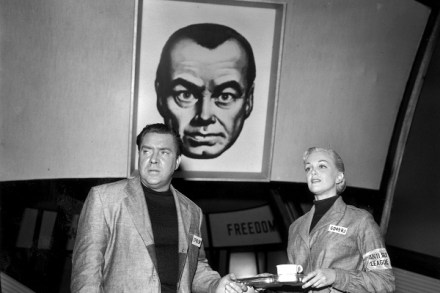
Books – or lack thereof – are the latest manifestation of anti-Japanese sentiment in China. The escalating dispute over the Senkaku/Diaoyu Islands has provoked some Beijing bookshops to remove Japanese books from their shelves. The most prominent book to be made to disappear is Haruki Murakami’s recent novel 1Q84, a critically acclaimed worldwide bestseller. Rather ironically, given the circumstances, the title echoes Orwell’s 1984 – in Japanese, ‘Q’ and ‘9’ are homonyms. Orwell has an uncanny knack of turning up at the choicest moments. Remember the glitch in July 2009 when Amazon deleted 1984 from everyone’s Kindles?

Review – John Saturnall’s Feast, by Lawrence Norfolk

From our UK edition

Lawrence Norfolk has always liked to centre his novels around a mixture of existing and constructed myth, and then let the action which happens centuries later be informed by or feed back into this network. His first book in twelve years, John Saturnall’s Feast, explores how the Civil War affected the career of a 17th century chef, the kitchens of great country houses and the symbolism of food. Its mythic centre is a pagan rite belonging to a pre-Christian British people, in which serving and eating food was the basis of an egalitarian community. In Charles I’s reign the one person left alive with the key to this feast is an orphan called John Saturnall, who has gone to work as a kitchen boy at the local manor.

Of snobs, nobs and plebs

From our UK edition

The muggles of Tutshill, Gloucestershire, have a bone to pick with J.K. Rowling. Tutshill is where Rowling spent her unhappy teens and apparently it is the model for Pagford, the snob-ridden village in Rowling’s anticipated foray into “grown-up fiction”, The Casual Vacancy. The villagers (who I assume cannot have seen an advance copy of the book, which is in solitary confinement until its release on Thursday) are livid at the rumoured insult they are about to be paid. One resident quipped: ‘She is a fantasy writer after all. This sounds like another of her fantasies.’ Rowling’s fantasies, though, have usually contained a small measure of social realism.

‘Story of O’ and the Oral Tradition

From our UK edition

A fascinating case was recently brought before the Italian courts. After six years of conjugal submission to her padrone (far better than master, give it that) a woman has filed for divorce with accusations of abuse. The slight snag is that prior to marriage she signed a contract with her lover agreeing to offer herself slavishly to his every whim, if not whip – some may be surprised to learn that physical marking and asphyxia were strictly forbidden. Tedious and predictable comparisons have been made with 50 Shades of hot air, but somewhat more interestingly, also, with Story of O (1954) by Pauline Réage (Anne Desclos). Réage’s novel is hugely erotic, but is all the more discomforting for being so.

Salman Rushdie’s ‘The Satanic Verses’ revisited

From our UK edition

The publication of Joseph Anton (tomorrow), Salman Rushdie’s much anticipated memoir, has given newspapers cause to revisit The Satanic Verses. The commentary focuses on the bloodthirsty and backward response that the book continues to provoke. The novel has become a totem in various political and religious ‘debates’ (a word that is hopelessly misplaced in this perverse context of fatwahs and feeling). It is appropriate that Rushdie is celebrated as a champion of liberalism and rationality. There is no doubt that The Satanic Verses is among the most important books ever written. But, is it one of the finest? Despite the reams of brilliant and brave writing on the Rushdie affair, the question is seldom asked.

Review: Zoo Time by Howard Jacobson

From our UK edition

Winning the Booker can do strange things. For one, critics tend to become noticeably shyer around authors with some bling in their trophy cabinets, hyperbole blunting their edge. But if ever there was a writer primed to dismantle automatic appreciation it is Howard Jacobson. Zoo Time, his first novel since The Finkler Question won the 2010 Booker Prize, does everything short of physically assaulting the reader to excuse itself from being a bland follow up. In fact, its very obnoxiousness is both its weakness and its strength. I must confess to both liking and loathing it, pushed between extremes depending on the subject matter.

Review – Sebastian Faulks’s A Possible Life

From our UK edition

In a promotional video clip, Sebastian Faulks describes his new novel, A Possible Life, as like ‘a symphony in five movements... or an album in which the tracks are separate but the whole thing adds up to more than the sum of its parts.’ The idea of the musical novel – held together by themes, motifs and echoes rather than a linear plot – has been discussed or attempted by authors from Flaubert to Kundera. So what has Faulks, with his bestseller know-how, brought to this fragile form? We are given five separate stories with a large historical and geographical range.

An introduction to Javier Marías

From our UK edition

The fundamental purpose of the literary critic is to incentivise his audience to read books of which he approves. He has two means at his disposal. The first of those means is the recommendation by virtue of excellence, which can be reduced to the basic formula ‘look at this, this is very good, to read this will give you pleasure, excite you, improve you.’ It is very difficult, when writing about Javier Marías, a man who can lay defensible claim to being the greatest novelist above ground, to resist the temptation to simply copy out a lengthy passage of his prose and ask the reader to look at that, rather than at your stilted attempts to convey how good it is through elaborations on the formula above.

The language of criminals

From our UK edition

The English language is, as English would have it, an odd duck.  Its nuances are capricious — to the non-native, maliciously so — but its lyricism widely praised. My preoccupation with language possibly stems from my first profession, that of a stage actress (throughout the course of this esteemed career, I made literally hundreds of dollars). Trained to mimic accents from public school Brit to Dixieland Southern belle, I was continually delighted by regionalisms. When I ceased auditioning and commenced scribbling, my fascination with ripe local slang never left me.

Booker Prize shortlist announced

From our UK edition

The 2012 Booker Prize shortlist has been announced. The runners and riders are: Tan Twan Eng, The Garden of Evening Mists (Myrmidon Books) Deborah Levy, Swimming Home (And Other Stories/Faber & Faber) Hilary Mantel, Bring up the Bodies (Fourth Estate) Alison Moore, The Lighthouse (Salt) Will Self, Umbrella (Bloomsbury) Jeet Thayil, Narcopolis (Faber & Faber) The Booker longlist was ambitious, a challenge to readers that was high-brow and out of touch as the world went mad for E.L. James's easy mix of spanking and wanking. The judges have continued in this high-minded vein with the shortlist, self-consciously so.

A tale of two Smiths: Zadie Smith and The Smiths

From our UK edition

It is lit-fiction season: that time of the year of when the premier novelists of the age dominate the market. Ian McEwan, Pat Barker, Zadie Smith, Sebastian Faulks and Rose Tremain all have new books out, and Salman Rushdie’s much anticipated memoirs are to be launched this week, so many newspapers are devoting themselves to regurgitating stale observations about The Satanic Verses ahead of the main and keenly guarded event. Of the new books, Zadie Smith’s NW is garnering the most plaudits, or at least that seems to be the case.

F. Scott Fitzgerald’s unfinished business

From our UK edition

It’s hard enough convincing people to read finished novels much less unfinished ones — though perhaps our cultural obsession with The Great Gatsby is reason enough to republish F. Scott Fitzgerald’s The Love of the Last Tycoon. The partial manuscript now appears alongside his personal essay The Crack Up in one slim volume. Read the former but discard the latter. I loved Tycoon the first time I read it, though I’m a Fitzgerald addict and was once mistaken for his grandson one summer while drinking champagne at the Trois Couronnes in Vevey. I claim no relation and attribute the mistake to my Puritanical upbringing: that is, my being overdressed and having combed my hair.

Do we need to know what a character looks like?

From our UK edition

How much attention do you pay to the physical descriptions of characters in novels? Interviewed on Five Live recently about her latest book NW, Zadie Smith said that she never really bothers with them, either as a reader or a writer. ‘Descriptions of how people look – how many of them have you read?’ she asked. ‘They go on and on. They never really add much, though. I usually pass over them.’ My initial reaction was: really? They never add much? I haven’t read NW yet, but my mind went back to The Autograph Man, Smith’s second novel. It only struck me halfway through that I didn’t know much, if anything, about the characters’ appearances, even whether they were black or white.

Shelf Life: Patrick Hennessey

From our UK edition

Patrick Hennessey was a founder member of the Junior Officers' Reading Club, formed when the Grenadier Guards toured Iraq in 2006. He is the author of The Junior Officers' Reading Club — the story of how a ‘wise-arse Thatcherite kid’ became a thoughtful soldier. It is among the best examples of British military witness written since 1945. Hennessey, now a barrister, has recently penned a sequel of sorts, called Kandak: Fighting With Afghans. It is published by Penguin tomorrow. He has answered this week’s Shelf Life questionnaire.  1) What are you reading at the moment? I’m finally getting round to reading Life and Fate which is, so far, living up to its impressive reputation. 2) As a child, what did you read under the covers?