Festival

In defence of Notting Hill Carnival

From our UK edition

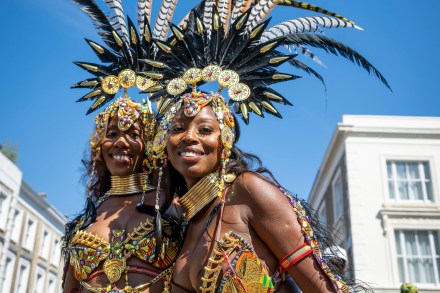
This isn’t going to be a piece celebrating the rich cultural tapestry of London’s Afro-Caribbean community, sombrely expressing the importance of preserving its heritage and history. I just like going to Carnival. I see it as an opportunity to make the most of the last dregs of the summer. I’ll meet my friends, dance to a grizzled Rasta’s tunes with a Magnum or two (a syrupy, 16.5 per cent alcohol, Jamaican tonic wine), watch the steel drums and befeathered dancers, before decamping with a box of jerk chicken and fried plantain. There’s no £499 VIP Platinum wristband you can buy to have the premium Carnie experience I spent the first decade or so of my life in London, and returning here as an adult is a disillusioning experience.
The delicious schadenfreude of Burning Man

From our UK edition

If any readers are having those September, back-to-work blues perhaps I might offer them a sure-fire palliative? Just go online and watch videos of this year’s Burning Man. For anyone who doesn’t know, Burning Man is a week-long festival of music and ‘self-expression’ which takes place in the Nevada desert. It is especially popular among libertarians and Silicon Valley types. Think Glastonbury, if you must. Like the Somerset atrocity, it is a place where people pay huge sums of money to take drugs and imagine that they have had some unique insight into the world. Often they come away believing that if only all of life could be like this, the world would be cleaner and kindlier.

The best autumn festivals to book ahead for

From our UK edition

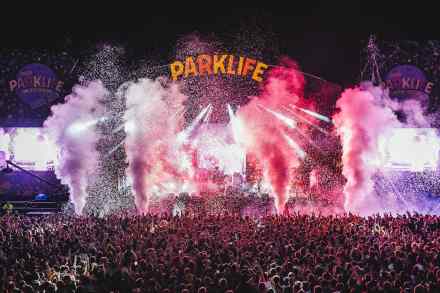
There is no denying that we’ve been starved of our usual festival fix this summer. Although many have managed to go ahead, we’ve missed out on some usual favourites, such as Glastonbury, Boomtown, WOMAD, Cropredy and more. It seems fitting, therefore, to look ahead to this autumn, when many festivals that have previously looked unlikely have been rescheduled to, or when other festivals will manage to go ahead without many of the restrictive social distancing rules that we’ve become so used to. There will be slight changes to many festivals this year – many event organisers have limited ticket numbers and ensured that small tents are spaced further apart, for example, but otherwise we’re in for as close to normal an experience as possible.

Sundance memories

In 1969 Robert Redford purchased 5,000 acres of land in the mountains of Utah and built a ski resort. In 1981 he founded the nonprofit Sundance Institute to cultivate new voices in American independent film through annual directing and screenwriting labs (alumni include Quentin Tarantino and Paul Thomas Anderson) and to provide financial support for select projects. In 1985 Redford took over the US Film Festival, based in nearby Park City, and brought it under the Sundance umbrella. In 1989, the festival had its breakthrough with Sex, Lies, and Videotape. Sundance became a film-industry fixture for talent scouts, acquisitions executives and journalists, particularly those inclined to go skiing in their downtime.

sundance

Why the lessons of Purim remain relevant for Jews today

Over the course of tonight and tomorrow, Jews around the world will eat a lot of hamentaschen, dress up in costumes, listen to the megillah, and give charity and gifts of food and drink to their friends. Some of us will also get quite drunk; partly because it’s fun, and partly because the Talmud says that on Purim, a person should be so drunk that they cannot distinguish between Haman (villain of the Purim story) and Mordecai (one of the heroes of the Purim story). As far as Jewish holidays go, Purim is a fun one which means that many of its crucial lessons often go unappreciated. Americans tend to know that on Passover, we celebrate the Exodus from Egypt, and that on Rosh Hashanah and Yom Kippur, we atone and hope to be inscribed in the book of life.

purim

Paul Simon says farewell with a daring and inventive show

Early in 1987, a middle-aged woman approached me on the record counter of the Slough branch of Boots. ‘What do you have by Ladysmith Black Mambazo?’ she demanded. Nothing. Boots in Slough wasn’t big on South African isicathamiya choral music. ‘Well,’ she suggested, ‘you really ought to get their records in. They’re going to be huge.’ She was wrong, but I knew why she was so sure. Ladysmith Black Mambazo had been among the standout guests on Paul Simon’s Graceland, released a few months before. Graceland made Simon, by my reckoning, the first pop star who had emerged from the rock’n’roll era to make a major cultural impact across three decades. By the 1980s, the Stones had become just a touring machine.