Feminism

Fire and fury

From our UK edition

Everyone behaves badly in The Polyglot Lovers — no saving graces. It’s a complex, shifting structure of sex, self-hatred and misogyny, examining what the author calls ‘the violence in the male gaze’. Its blithe disregard for social norms and finer feelings is exhilarating; it’s pitiless and scathingly funny. The women invariably make wincingly bad decisions. Feminism for the Fleabag generation? Nothing is simple here, in a world as disorientating as a hall of mirrors. The novel has three parts, each with a narrator and the story is told backwards as it teasingly reveals its leading character — not a person, but a manuscript that will change all three narrators’ lives.

It’s time for feminists to call it quits

From our UK edition

You would think that the British Film Institute’s sponsorship of a month-long festival celebrating some of the most memorable female characters in cinema would draw plaudits from feminists. You would be wrong. Featuring the likes of Nicole Kidman in To Die For, Meryl Streep in Death Becomes Her and Bette Davis in The Little Foxes, the BFI’s programme ‘Playing the Bitch’ is meant to explore the female anti-hero. But in a petition originating with academics at King’s College London, 300 signatories have objected that the festival’s theme ‘uncritically parrots rather than questions the misogynist logics that inform so much Hollywood cinema… The women of Bitches do not subvert gender norms, they inhabit stereotypes’.

Not him, too

From our UK edition

Over a drink recently I sat next to a man who announced, barely before he’d taken his first sip, that he was a feminist. ‘Like you,’ he added ingratiatingly. Like me?!? Poor sap. Did he imagine that this creepy statement would actually endear me to him? That I admired his courageous stand and was prepared to hang on his every word? Not a bit of it. From that moment, I despised him. Firstly, I’m no feminist and never have been. Like Mary Wollstonecraft, I’m an equal-but-differentist, or would be if such a thing existed. And I have no desire to get my own back on women’s oppressors, if indeed, today, in western society, they are oppressors. I’ve never experienced them as such.

Twitting the twits

From our UK edition

Titania McGrath is the alter ego of the schoolteacher Andrew Doyle. A perpetually enraged ‘activist, healer and radical intersectional poet’, her job was to lampoon the imbecilities of the achingly ‘woke’ middle class left, and expose the manifest contradictions in what they were spouting. Her forum for this was, of course, that vast lagoon of hastily jabbered nonsense, Twitter — and it was very effective. So effective that for a while Twitter users could not be sure that it was a joke at all — an understandable confusion, given the real-life existence of people such as the journalists Laurie Penny and Suzanne Moore, for example, or the French academic Myriam François-Cerrah.

Medieval girl power

From our UK edition

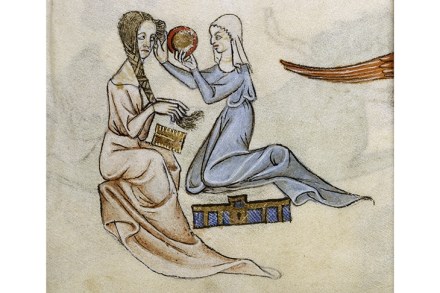
Women who can — however tenuously — be described as ‘rebel girls’ are big in publishing now. Goodnight Stories for Rebel Girls sold 3.5 million copies in hardback, reflecting a huge cultural push to discover and venerate women in history who kicked over the traces. To publishers, real-life rebel princesses have cool hard-cash value. In this context we come to this book, a scholarly work effortfully seeking out the ‘you-go-girl’ moments of the notoriously woke 13th century. Kelcey Wilson-Lee, who has a doctorate in medieval history from Royal Holloway and works in the development office at Cambridge University overseeing regional philanthropy, has an underlying agenda.

Jacinda Ardern’s hijab shows what New Zealanders really think of Muslims

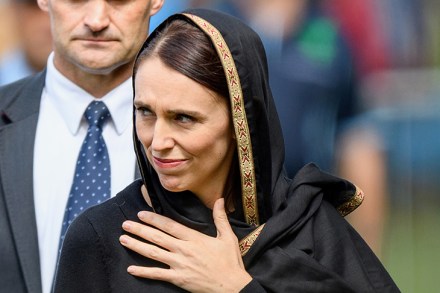
The reaction of New Zealand’s vast non-Muslim majority to the terrorist attack at the Al Noor mosque in Christchurch is both inspiring and alarming. Inspiring because, faced with a group of mostly recent arrivals who constitute a mere 1 percent of New Zealand’s population, the other 99 percent have chosen not to ignore their loss and distress, but to commiserate and console at a time when liberal democracies are beset by factional resentments. What is alarming is the form the reaction has taken. When New Zealand’s prime minister Jacinda Ardern observed Friday prayers in the park outside the mosque, she and many other non-Muslim women wore a hijab.

jacinda ardern

Brideshead revisited

From our UK edition

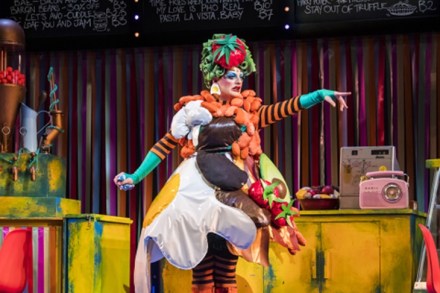
Nicholas Hytner’s new show, Alys, Always, is based on a Harriet Lane novel that carries a strong echo of Brideshead. A well-educated journalist, Frances, becomes entangled with the wealthy Kyte family (the closeness to ‘Flyte’ is doubtless intentional), and she befriends the silly daughter, Polly, before setting her sights on the enigmatic father, Laurence, a famous scribbler who never gives interviews. This slow-moving tale is intercut with scenes from Frances’s day job at a failing newspaper where the staff keep getting the boot. But Frances, mystifyingly, retains her post. How come? Floppiness is her most conspicuous quality.

Now, that’s better

From our UK edition

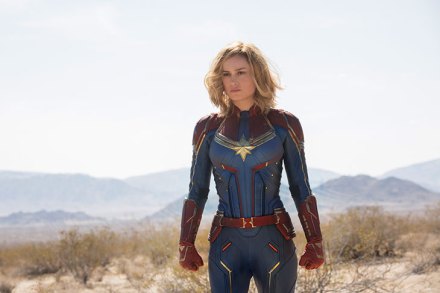
Captain Marvel is the 654th film in the Marvel franchise — the figure is something like that, I think — and as the first one to be female-led it was mercilessly trolled before its release by the fan boys. ‘This movie is gonna bomb like no other and they only have themselves to blame,’ was one typical remark. The nastiness escalated further when the film’s star, Brie Larson, said she was sick of being interviewed by ‘white dudes’ while doing promotion and asked why so many film critics are white and male. (78 per cent are, according to the latest research.) I don’t know why I’m telling you all this except to say that I’m one of the 22 per cent and this is the first of these films that hasn’t entirely bored the pants off me.

Women’s site Babe.net closes US office

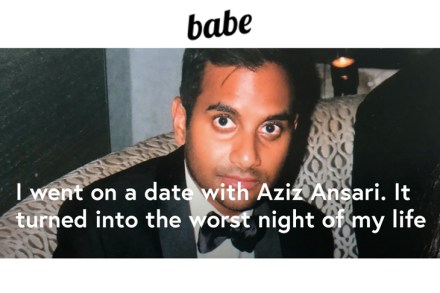
babe dot net has closed its US office, Cockburn has learned. The controversial website which published the Aziz Ansari sexual misconduct article is winding down operations, after its parent company Tab Media failed to secure further funding from American investors. At its peak, Babe.net had an average staff age of 24. The site, whose slogan was ‘for girls who don’t give a fuck’, published ribald stories aimed at young American women such as ‘Power ranking every US president by their dick size’, ‘Was Snape an incel?

babe dot net aziz ansari

Under cover of darkness

From our UK edition

It was World Hijab Day earlier this month. You probably missed it, but you can imagine the idea: ‘global citizens’ of all faiths and backgrounds were asked to cover their heads for a day ‘in solidarity with Muslim women worldwide’. It is done in ‘recognition of millions of Muslim women who choose to wear the hijab and live a life of modesty’. Wearing a hijab is not such an abstract cause for me: I used to wear one a few years ago when I was at school in Iran. And in the spirit of solidarity, I’d like to tell you a bit more about the world I left behind when I moved to Britain in 2011 when I was nine years old. I was six when I was first made to wear the hijab to school.

Let’s hear it for the girls

From our UK edition

Whether by accident or design, Zoë Ball took over the coveted early-morning slot on Radio 2 this week just as Radio 4 launched another of its Riot Girls series, celebrating ‘extraordinary’ women writers, those who have overturned convention, risen up against the status quo, proved themselves to be just as capable as their male oppressors (if not more so). Ball launched herself on to the airwaves on Monday morning at a pace it was hard to keep up with when it was still dark outside and the house had not yet warmed up. Her first track, that key statement of how she intends to reshape the breakfast show, give it a woman’s own makeover, was of course from Aretha Franklin. It just had to be. And the track — ‘Respect’.

Should we all write ‘feminist’ stocking fillers? | 23 December 2018

From our UK edition

I arrived at Waterloo, half an hour before my train departed. Needing to buy a birthday card, I popped into Oliver Bonas, a shop which sells ‘lifestyle gifts’. I came across marble cheeseboards and gin-and-tonic scented candles. If you are looking for a lemon juicer shaped like a cactus, you will find one in Oliver Bonas. The shop also sells ‘gift books’. Most are aimed at women and quite a few have the word ‘feminist’ in their title. There is one called Vajournal: An Interactive Diary for Feminists. It invites the reader to engage with ‘thought-provoking activities’ and describe their ‘worst and best sexual experiences’ as well as any instances of ‘everyday sexism’.

Should we all write ‘feminist’ stocking fillers?

From our UK edition

I arrived at Waterloo, half an hour before my train departed. Needing to buy a birthday card, I popped into Oliver Bonas, a shop which sells ‘lifestyle gifts’. I came across marble cheeseboards and gin-and-tonic scented candles. If you are looking for a lemon juicer shaped like a cactus, you will find one in Oliver Bonas. The shop also sells ‘gift books’. Most are aimed at women and quite a few have the word ‘feminist’ in their title. There is one called Vajournal: An Interactive Diary for Feminists. It invites the reader to engage with ‘thought-provoking activities’ and describe their ‘worst and best sexual experiences’ as well as any instances of ‘everyday sexism’.

Truth, lies and trans rights

From our UK edition

On 21 November, a debate took place in the House of Commons about proposals to reform the Gender Recognition Act to make it easier for transgender people to self-identify as men or women. Among the public, this is a widely discussed issue, with most echoing the concerns of feminists about the risks of allowing biological males to enter women’s changing rooms, etc. But until last week the issue hadn’t been debated in the Commons, partly because MPs who have reservations about changing the law are afraid to speak out. Sure enough, nearly all the backbench MPs who contributed to the debate toed the line of the trans-rights activists.

Secrets and lies | 29 November 2018

From our UK edition

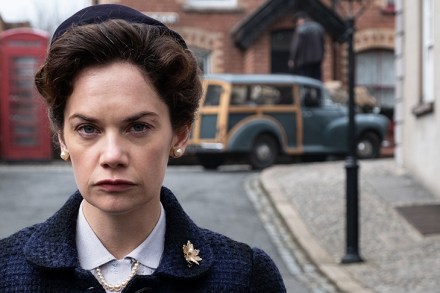
Shortly before her husband’s funeral, the undertaker told the eponymous main character in Mrs Wilson (BBC1, Tuesday) that, ‘We’re here to make this tragic time as straightforward as possible.’ By then, though, we already knew this remark was the kind that, in a school set book, would soon be underlined with the words ‘Dramatic irony!!’ written in the margin. That’s because in its quiet way — devoid of both globetrotting locations and international terrorism — Mrs Wilson is as tangled and morally ambiguous as The Little Drummer Girl. The opening episode began in the far-off days of 1963: so far off, in fact, that Alison Wilson (Ruth Wilson) was first seen nipping home from her office typing pool to make lunch for her husband Alec.

‘I don’t want to explain myself’

From our UK edition

There is an African bird called the ox-pecker with which Germaine Greer, conversant as she is with the natural world, will doubtless be familiar. Oxpeckers ride on the backs of large mammals — giraffes, buffalo, wildebeest and the like — feeding off their lice. Once thought an example of mutualism, the relationship between diner and host is now understood to be more complex than this. On the one hand oxpeckers reduce the larvae, and on the other they jab their beaks into any open wounds on the hide in order to keep the blood fresh. Elizabeth Kleinhenz is Germaine Greer’s ox- (or rather Oz-) pecker.

Science is on the side of the trans activists

From our UK edition

Some interesting scientific research on gender differences was published last week. Two social scientists studied the preferences of 80,000 people in 76 countries to determine whether there’s a link between the attitudes of men and women to risk-taking, patience, altruism, trust and so on, and how advanced a country is in terms of economic development and gender equality. If gender is a social construct, as many feminists claim, you’d expect men and women’s preferences to be more divergent in places like Pakistan, Malaysia and Nigeria, where gender roles are quite traditional and women have fewer economic opportunities, than in the Nordic countries. However, the opposite is true.

Girls from the black stuff

From our UK edition

‘They did not look like women, or at least a stranger new to the district might easily have been misled by their appearance, as they stood together in a group, by the pit’s mouth.’ As opening sentences go this is a cracker, but few modern readers of Frances Hodgson Burnett’s That Lass O’Lowrie’s get far beyond it because the novel’s characters speak in a Lancashire dialect that makes Mark Twain’s Huck Finn sound like a Harvard preppy. In real life, though, it wasn’t the Lancashire pit girls’ lingo that put contemporaries off so much as their costume.

Virtuous vice

From our UK edition

It hasn’t always been easy being a progressive-minded man who prides himself on his sensitivity to issues of race, gender, feminism and sexual exploitation — and still gets to walk on the wild side. Political principles tend to get in the way of politically incorrect passions. You like to watch porn, but as a good feminist man you know that porn exploits women. You like to take cocaine, but it exploits poor Latin American farmers and enriches corrupt drug cartels. And maybe you have a secret passion for prostitutes, but you hate the idea that you’re paying for sex with some underage Albanian who’s been trafficked for your gratification. No porn. No drugs. No sex. What’s a poor would-be decadent to do? Take up golf? Knitting? Stamp collecting?

This is a man’s world

From our UK edition

Sir David Hare’s weird new play sets out to chronicle the history of the Labour movement from 1996 to the present day. But it makes no mention of Corbyn, Momentum, the anti-Semitism row or rumours of a breakaway party. The drama is located in the dead-safe Miliband era and it opens with talk of a leadership election. The two best candidates, Pauline and Jack, are old lovers from university. Pauline is a doctor who entered politics when budget cuts threatened the hospital where her mother was being treated for cancer. Jack is a colourless Blairite greaser, a sort of Andy Burnham without the mascara, who is still besotted with Pauline despite being newly married to Jessica.