Feminism

The Stepford Wives and today’s empty feminism

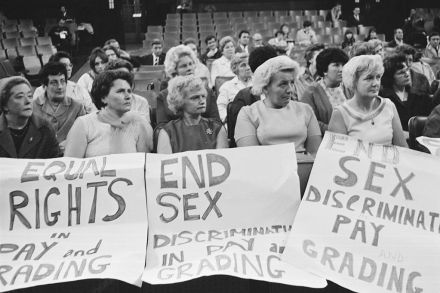
When you think of 1972, what comes to mind? Corduroy flares, President Nixon and the first installment of The Godfather? Or bra-burning, feminist “consciousness-raising” meetings and debates about abortion and birth control? America in the early 1970s was not just a nation of Vietnam War vets and oil crises, but one of significant feminist liberation. Betty Friedan published The Feminine Mystique in 1963 and helped found the National Organization for Women in 1966, and the decade after saw a whole host of similar organizations, such as the Women’s Radical Action Project (WRAP) and the catchily named Women’s International Terrorist Conspiracy from Hell (WITCH).

The trans debate shows we’re all supremacists

Why did Lia Thomas bother changing his name? According to the gender-studies mavens, it wasn’t strictly necessary. A trans woman doesn’t need a vaginoplasty or breast implants. He doesn’t even need to wear dresses. He doesn’t have to date men, or watch Downton Abbey or merge into traffic without checking his blind spots. Those are all socially constructed ideas of femininity. Trans women don’t have to conform to these sexist, patriarchal norms. Womanhood is a state of mind. The question, of course, is: what kind of state? The LGBT lobby refuses to answer that question. The official line is that anyone who identifies as a woman is a woman. If Hugh Jackman came out today and said, “Oi, mate, I’m a sheila,” a sheila he’d be. Fair dinkum.

Was Penelope really a ‘silenced’ woman?

Problems about the misuse of history, especially on subjects such as race and colonialism, have been running for a long time. But when it comes to the ancient world, there are also problems about the misuse of literature. Dame Mary Beard’s “manifesto” Women and Power (2018) contains an example of the problem. Her thesis is that women’s voices in the public sphere (my emphasis) have been “silenced” by men ever since the West’s first literature (Homer’s Iliad and Odyssey) gave us our first access to “Western” thoughts, deeds, beliefs, hopes and fears (c. 700 BC). The problem exists in the first example of her thesis, to which she returns four times — Penelope, the wife of Odysseus.

Penelope
psychopath

Femmes fatales in fiction and life

In her memoir written from a prison in New York, Dorothy Daniels gives readers a whistle-stop tour of “flashy female psychopaths” who have existed throughout history. Daniels is a food critic and a cannibal, a woman who exhibits an acute awareness of her own commercial value as a true-crime story. Before being caught by police, she considered the most humiliating moment in her life to be when she was fired from the masthead of a popular food-and-drink magazine: an experience, she bemoans, that belongs to “ordinary people.” Dorothy Daniels is, of course, fictional.

Fatherhood is a risk men aren’t willing to take

From our UK edition

Recent reports that half of women in England and Wales are now childless by their 30th birthday reveal a worrying new attitude amongst Gen Z. Parenthood, to the younger generation, is the enemy of unfettered frivolity. Young women, we are told, would rather live for the moment than plan for the future. 'Being present' has become the mantra of the 'mindful' generation who see autonomy as the ultimate expression of a life well lived. But how complicit are men in this myopic 'me-only' utopia we have created for ourselves? Are women actively rejecting the sort of men who would like to settle down or have the sort of men who once yearned to settle themselves become cynical about taking the plunge?

Julie Burchill has found a new way to provoke: she’s turned sincere

From our UK edition

The greatest ever social media spat took place before the first tweet was sent, and was conducted via fax, which was like email but with the satisfyingly tangible tear of a fresh missive just arrived from across the planet. It was early 1993 and Julie Burchill, then of the Modern Review, was locked in a war with Camille Paglia, then of any US talk show you cared to tune into. The conflict began with a disobliging review Burchill filed of Paglia’s Sexual Personae, before shifting to the Xerox front, where Paglia made the mistake of questioning her interlocutor’s working-class credentials. Burchill brought hostilities to an abrupt close with her final communiqué, which read in toto: ‘Dear Professor Paglia, Fuck off, you crazy old dyke. Always, Julie Burchill.

Margaret Atwood seems embarrassed by the sheer volume of her output

From our UK edition

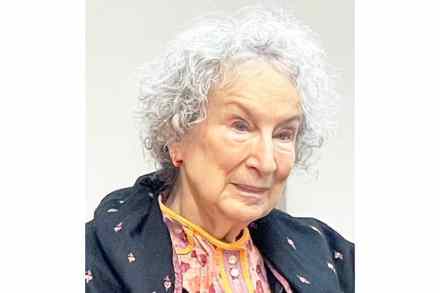
Margaret Atwood is among the major writers of English fiction of our time. This is a very boring way to start a review, but it is true. Atwood, now 82, is prize-winning, popular and prolific. She’s won two Bookers. Several of her books have attained totemic status with readers, most obviously the reproductive dystopia of The Handmaid’s Tale, but also Cat’s Eye, for its steely portrayal of girlhood cruelty, and The Blind Assassin, which combines feminist grit with genre-straddling swagger. And there are so many books.

Is it an exaggeration to talk of a ‘gender war’?

From our UK edition

According to Nina Power’s forceful and rather unusual What Do Men Want?, we in the West are currently engaged in a ‘battle over sex’. And while that has been going on, ‘another war is being waged. This one is against men, the whole damn lot of them!’ To back up this ‘war on men’ idea, Power cites, among other examples, I Hate Men, a book by the French writer Pauline Harmange in which she damns men as ‘violent, selfish, lazy and cowardly... men beat, rape and murder us’. Power’s argument is that the all-out assault on men has gone too far. The mistake, she says, is in ‘treating people as mere examples of a negative category, rather than as complex individuals in their own right’.

The march of South Korea’s anti-feminists

From our UK edition

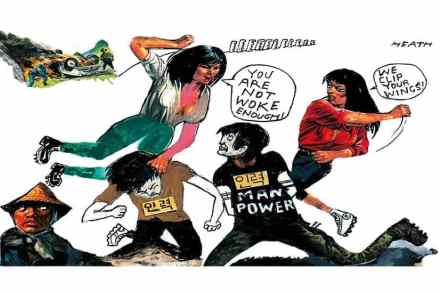
The two leading candidates for South Korea’s presidential election in March, Lee Jae-myung of the incumbent Democratic party and Yoon Suk-yeol of the conservative People Power party, have both made men’s rights central to their campaigns. They hope to appeal to the growing constituency of outraged men’s groups who vent their frustration at feminist overreach on internet message boards and sometimes even protest on the streets. And this is no fringe community: in a poll in May, more than three-quarters of South Korean men in their twenties claimed they had suffered gender discrimination. The ostensible provocation for this anger is the outgoing president Moon Jae-in’s self-declared ‘feminist’ administration.

Blackpill: inside the incel death cult

Young men are giving up. They are the losers of the endless beauty pageant that is online life, dating in particular. Their failure to attract women or find rewarding employment is the stuff of jokes: they are “incels” (involuntary celibates), basement-dwellers, forty-year-old virgins. Meanwhile, they sink into a digital swamp of gloom and isolation that leads to resentment, radicalization, murder and suicide. In their internet forums, they call this “taking the blackpill.” The blackpill had yet to be named in 2014, when twenty-two-year-old Elliot Rodger rampaged through Isla Vista, California, killing six people and injuring fourteen more before his suicide, but he was fueled by its spirit of nihilism.

blackpill

Who’s to blame if Britney Spears has been ‘devoured’ by celebrity?

From our UK edition

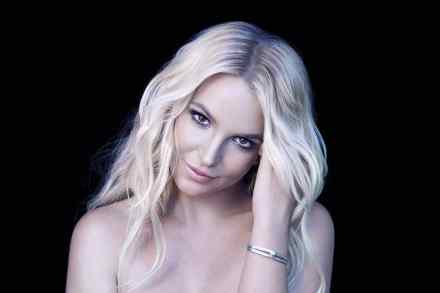
All the questions around Britney Spears can be condensed into this one: who should we blame? For a long time, there was a comfortable narrative that the pop star’s decade-long descent — from virginal queen of teen in 1998, to junk-food scarfing, twice-divorced single mother, to broken woman being transported to hospital in restraints — was wholly her own doing. Britney was a train wreck, white trash, a hot mess and, all in all, no better than she ought to be. The fact that her career recovered dramatically after she was placed under a conservatorship arrangement in 2008 (giving her father ultimate control over her life and finances) seemed to prove that the under-lying problem had been her freedom.

Gender is contentious. The BBC is pretending it isn’t

From our UK edition

The BBC has produced its annual 100 Women list, a showcase for women who have done interesting, important things. There’s a lot to like about this year’s list: half the women on it come from Afghanistan; some of them, tellingly, can’t be pictured for their own safety. Perhaps if fewer British resources had been deployed getting Pen Farthing's dogs out of Kabul in the summer, some of those women wouldn’t live in fear for their lives. But that’s another debate. There’s something else interesting about the BBC’s 100 Women, which says something about the Corporation’s ongoing struggle for impartiality. At least two of the people on the 100 Women list were born male and now identify as transwomen.

When did traditional masculinity become toxic?

From our UK edition

It’s hard for privileged white men to stay relevant in this age of identity politics but a number of fail-safe strategies have begun to emerge. Prince Harry and, to a lesser extent his older brother, have captured the mental health market by publicly discussing their issues. William’s school pal Eddie Redmayne, and pretty much the entire cast of the Harry Potter films, have spoken out in defence of the transgender community. Benedict Cumberbatch is going down the feminist route. Cumberbatch is calling time on ‘toxic masculinity’. Interviewed by Sky News ahead of the release of his latest film, a Netflix Western in which he plays the part of a rancher, Cumberbatch took the opportunity to chastise men.

How having babies fell out of fashion

From our UK edition

With all of our institutions now firmly under the iron fist of progressivism it was only a matter of time before social justice mission creep slipped under the doormat and into the home. You can only promulgate the idea that we live under a tyrannical patriarchy for so long before young people take notice and begin to lose trust in the whole idea of intimate relationships with the opposite sex. Fourth wave feminism has shifted its focus from the work place to male/female relationships and a growing underclass of men is turning its back on women by joining poisonous underground groups such as INCELS and Men Going their Own Way (MGTOW). Why would any young person choose to settle down and have kids against such a toxic backdrop? Well, increasingly they aren't.

Women don’t ‘consent’ to their own deaths

From our UK edition

A ruling by the Court of Appeal last week has further enshrined the notion that women can consent to their own death if the man responsible puts forward a defence that she died during ‘rough sex gone wrong’. In February this year, Sophie Moss, an extremely vulnerable woman suffering from a range of mental and physical health problems, was choked to death during sex by Sam Pybus. Although some press reports described the pair as ‘lovers’ there was nothing romantic about the relationship between the two. Pybus would occasionally visit Moss for sex, leaving his wife Louise Howitt asleep. There were no illicit candlelit dinners, no walks in the park, just sex with a woman often so drunk when Pybus turned up at her door that she would have been incapable of speech.

Why should art have ever been considered a male preserve?

I’m a lady, I kept thinking, reading these two books. More: I’m a lady art historian. Oughtn’t I to like books by other lady art historians about lady artists and ladies in art? Why don’t I? Why so out of sync with the sisterhood? Start with the positive. Jennifer Higgie’s The Mirror and the Palette follows an interesting, original line: ‘If she had access to a mirror, a palette, an easel and paint, a woman could endlessly reflect on her face and, by extension, her place in the world.’ Higgie, editor-at-large at frieze magazine and the host of the (excellent) art history podcast Bow Down, considers the lives and ambitions of a series of women artists in the light of the self-portraits they painted.

art women
progress

Feminism has failed us

I’ve lost count of how many seminars I’ve had to sit through on Diversity & Inclusion, how many times I’ve been asked for my preferred pronouns and expected to discuss what I think ‘bringing my whole self to work’ really means. Conservatives mock these practices and complain that our lives seem to be dictated by a new moral order to which we did not consent. But we’re missing the forest for the trees. The problem with virtue signaling goes far beyond its annoying and unwelcome intrusions into our lives. We have been utterly hoodwinked. Or at least, I was. Sitting in my bathroom last week in the middle of my third miscarriage, blood, tears and expletives pouring out of me, I felt frustrated and stressed out.

The woke are abolishing women

Last week, the Lancet medical journal became briefly internet-famous when it published the following sentence on its Twitter account: ‘Historically, the anatomy and physiology of bodies with vaginas have been neglected.’ The sentence is a pullquote from a bigger article, but boy does it capture the imagination on its own. Like a Hieronymous Bosch painting, you can return to it again and again, always finding something new and surprising to appreciate. There’s the musicality of it, all those four- and five-syllable words that roll pleasantly off the tongue. There’s the faintly macabre invocation of ‘bodies’, followed by ‘with vaginas’, suggesting a collection of corpses accessorized with (but not necessarily attached to) a bunch of birth canals.

vaginas

Into the lioness’s den: why higher education is skewed against men

Are you ready to 'challenge man box culture?' asks the University of Wisconsin-Oshkosh’s Women’s Center. Or maybe that special man in your life suffers from 'privilege' and needs rehab through Brown University’s Masculinity Peer Education program. But what about young men looking for meaningful, non-confrontational connections on campus? That scene is awfully dry. While groups like Women in STEM and Women in Business boost female students’ confidence by treating them as capable and competent professionals, college-aged men are often left with little to give their lives direction. Don’t expect these trends to change anytime soon either. According to the Wall Street Journal, women now make up nearly 60 percent of the college population, an all-time high.

men

Thoroughly modern Marie: Matrix, by Lauren Groff, reviewed

From our UK edition

It is 1158. A 17-year-old girl, born of both rape and royal blood, is cast out of the French court and condemned to spend her days in a threadbare abbey in England. She will go on to become abbess and one of the dominant forces in the land, transforming her abbey from a shack into an institution grown fat on holy power. The girl is Marie de France, loosely based on the 12th-century poet, about whom very little is known. Into history’s silence steps the American novelist Lauren Groff, who imagines a character who seems remarkably familiar. For Marie is a strong, feminist lesbian, who doesn’t fit into her era’s gender roles, considers much religious teaching to be laughable and who worries about global warming.