Feminism

Great! Another podcast about feminism 

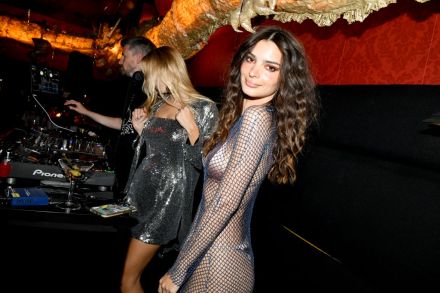
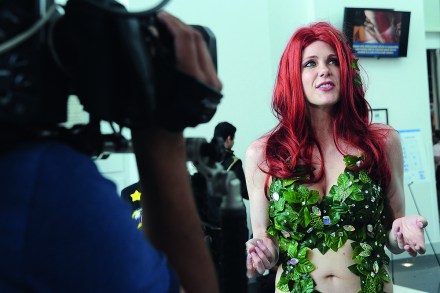
Politics, feminism, sex, TikTok. These four topics will form the heart of Emily Ratajkowski’s new podcast High Low with Emrata. Doubtless Cockburn speaks for everyone when he says: praise the gods, a podcast about feminism is just what the market is missing. The new Sony-produced series will consist of two episodes per week. One will see the model and swimwear entrepreneur sit down for intimate conversations with special guests. Perhaps she'll diverge from the Meghan Markle playbook and actually let her guests speak. The second will have Ratajkowski’s own commentary on current events. Cockburn is sure you’re just as excited as him to hear what the model has to say about the Electoral Count Act of 1887 and ballot harvesting.

emily ratajkowski

Loretta Lynn’s music celebrated tough wives

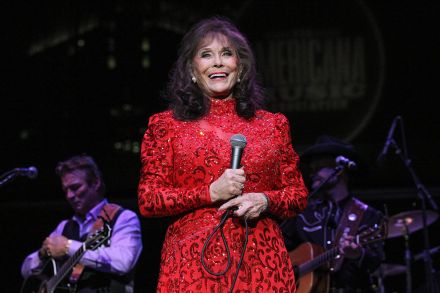
Country music superstar Loretta Lynn died last week at the age of 90. Many in the media are remembering her as a feminist and several of her songs as feminist anthems. Yet Lynn herself said, “I'm not a big fan of Women’s Liberation, but maybe it will help women stand up for the respect they’re due.” It’s not surprising that the left wants to claim Lynn as one of their own — she was a badass and extremely successful. But in listening to her music and digging deeper into Lynn’s life, I’ve come to view “The First Lady of Country Music” not as a typical man-hating feminist, but rather as someone who was proud of the heritage that made her a tough woman and who wanted to use her remarkable musical gifts to uplift millions of women who shared her experiences.

Don’t Worry Darling was almost interesting

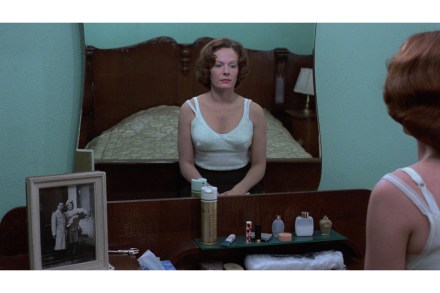
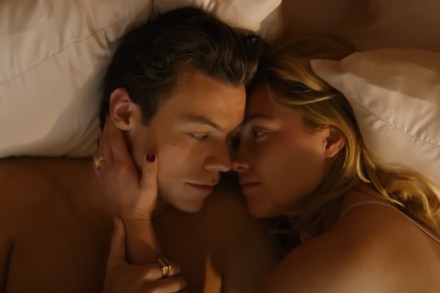
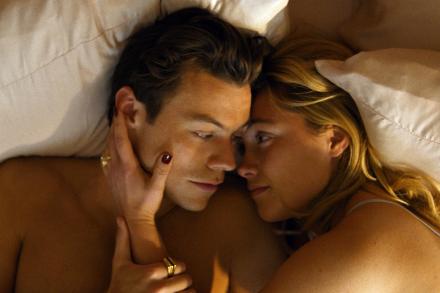
Olivia Wilde’s Don’t Worry Darling is a film more likely to be remembered for its offscreen drama than its substance. If only the final product that made it onscreen was as spicy: here, a promising premise and intriguing themes are let down by languid pacing, scattershot performances, and a willingness to lapse into preachiness that borders on misandry. Don’t Worry Darling is set in the planned community of “Victory” somewhere in the American West, a town led by self-help guru Frank (Chris Pine, playing a mixture of Joe Rogan, Jordan Peterson, and a televangelist — really, he wouldn’t be out of place on The Righteous Gemstones).

Don’t Worry Darling’s flawed feminism

From our UK edition

Don’t Worry Darling, the highly anticipated psychological thriller directed by Olivia Wilde, has arrived in cinemas after months of online gossip and speculation about its production. The controversies include: an alleged affair between the director and main actor, Harry Styles, who also happens to be one of the most famous pop stars on Earth; the firing – no, sorry, ‘replacing’ – of the originally cast main character (Shia LaBeouf was switched for Styles); a reported fall-out between lead actress Florence Pugh and Wilde, which led to Pugh not doing any publicity for the film; and a bizarre TikTok theory that Kiki Layne and Ari’el Stachel were hired to meet the Oscars new diversity requirements only to have most of their scenes end up on the cutting room floor.

Porn again

The virtue of chastity is often confused with the state of virginity, or the practice of abstinence. For the Christian man or woman, chastity is more a frame of mind, an integrated approach to love and sex. While virginity or abstinence can result from chastity, they are themselves beside the point. Naturally, these distinctions are lost on the “sex-positive” movement, which tends to reject religious views of sex out of hand as repressive and weird. In her memoir Rated X: How Porn Liberated Me from Hollywood, Maitland Ward tells the story of how she went from being a struggling, miserable actress to a successful, “happy” porn star.

porn

The Hillary and Chelsea Clinton docu-series of your wildest dreams

Cockburn has endured his fair share of listening to insufferable rich women banging on about "female empowerment" lately, so when he was sent the trailer for Gutsy, a new Apple TV+ series starring Hillary and Chelsea Clinton, it almost proved to be the final straw. https://twitter.com/ChelseaClinton/status/1562172557369004032 The two-minute trailer begins with Hillary, fresh from sidestepping the Department of Justice, and Chelsea, fresh from ruining the end of Derry Girls, jumping into a car and setting off on their super-fun-girls’-trip. Hillary tells us: “We’re hitting the road to shine a light on women that inspire us to be bolder and braver.

gutsy hillary clinton chelsea

Bryce Dallas Howard’s throwback femininity

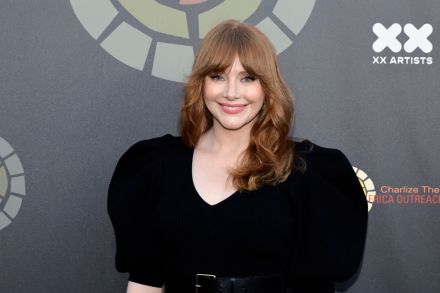
When Bryce Dallas Howard signed her contract for the Jurassic World franchise, she didn’t get as big of a deal as her co-star Chris Pratt. This is not shocking news. At the time, Pratt was already an established star, whereas Howard’s résumé was much thinner. She’d played some unnamed roles in a handful of movies and portrayed supporting characters in two Twilight films and Spider-Man 3, but had yet to break out in a starring role. Jurassic World changed all that. This prompted Pratt to step in for Howard and handle the negotiations for licensing deals related to the franchise, guaranteeing that he and Howard would be paid equally.

Rivals Wagatha Christie for its lowbrow twists: FT’s Hot Money – Who Rules Porn? reviewed

From our UK edition

It was recently reported that almost 8 per cent of global internet traffic is to pornographic websites. The rise of working from home may make this statistic less startling than it might have been three years ago, but still, that’s an awful lot of procrastination and, well, not much WFH. Given the dominance of the porn industry, it’s a wonder there hasn’t been an exposé of the kind produced by the Financial Times before now. The newspaper’s investigation into who lurks behind the webcams and controls this business took more than six months to complete and has now been turned into a riveting eight-part podcast series. Hot Money: Who Rules Porn? rivals Wagatha Christie for lowbrow twists.

It’s time for feminists to say #MenToo

From our UK edition

Let me be clear: I am a committed feminist and a passionate supporter of the Enlightenment and its ideals. Indeed, I have been the beneficiary of those ideals in ways unimaginable to most people in the western world. I travelled from a genuinely patriarchal society poisoned by Islamism to a free, secular society where women, whatever issues we might still have, were equal to men under the law and able to pursue opportunities I could scarcely have dreamed of growing up. As I have written before, however imperfect western civilisation might be, we haven’t seen anything like it anywhere else in human history. The progress we have made is dizzying. One of western civilisation’s greatest achievements is the emancipation of women.

Why can’t a woman be a man?

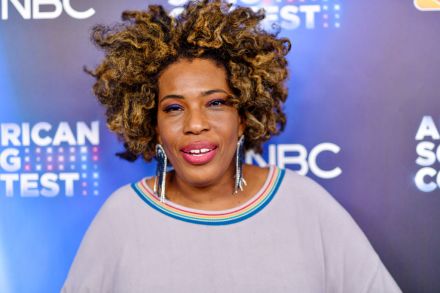
Sex and gender were supposed to be allies in the identitarian march of the feminist left. But gender, it appears, keeps butting up against the reality of sex. "I will say this and everyone's gonna hate me,” singer Macy Gray recently told Piers Morgan, “but as a woman, just because you go change your (body) parts, doesn't make you a woman, sorry.” (She subsequently apologized for her comments.) Bette Midler also elicited censure for her recent tweet: "WOMEN OF THE WORLD! We are being stripped of our rights over our bodies, our lives and even of our name!" (She later qualified that her comments were not intended to be “transphobic.”) Women, generations of feminists have been telling us, are supposed to be powerful. They’re supposed to be capable.

Sheryl Sandberg leans out

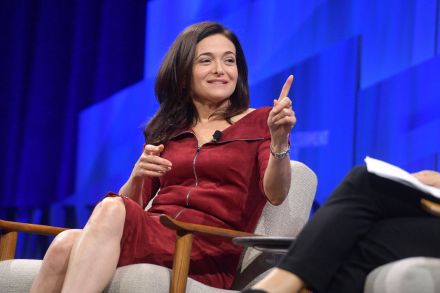
There’s a revealing moment at the very end of “Why We Have So Few Women Leaders,” a 2010 TED talk delivered by Facebook’s then-chief operating officer, Sheryl Sandberg. After expounding on her vision of a world in which 50 percent of CEOs and heads of state are women, Sandberg shares a more personal dream: “I want my daughter to have the choice not just to succeed, but to be liked for her accomplishments.” Now, as Sandberg leaves Facebook’s parent company Meta after fourteen years, she leaves behind a mixed and controversial record in her public life. Sandberg has earned success, but she hasn’t won much public admiration.

Why should advocating sexual restraint be ridiculed?

From our UK edition

Louise Perry is on a mission: ‘It wasn’t enough just to point out the problems with our new sexual culture,’ she declares at the start of her punchy first book The Case Against the Sexual Revolution. So she offers advice as well to the young women she believes have been ‘utterly failed by liberal feminism’. That’s because contemporary sexual mores have exposed them to risks, the most serious of which are linked to some men’s propensity for violence. Women, Perry argues, have in recent decades been conditioned to repress their desire for attachment. They have learned instead to behave in ways more typical of men, with their greater (on average) appetite for casual sex or ‘sociosexuality’.

If you see this show you’ll want to see it again – directed properly: The Glass Menagerie, at the Duke of York’s Theatre, reviewed

From our UK edition

The Glass Menagerie directed by Jeremy Herrin is a bit of an eyeball-scrambler. The action takes place on a huge black platform flanked by 1930s antiques: a typewriter, a broken piano, a reel-to-reel tape recorder and a smattering of Anglepoise lamps. This cryptic setting suggests that the play is being developed in a Museum of the Great Depression, and the show we are seeing is the latest rehearsal. It’s not clear what purpose is served by this fiddly imposture. And although the act of sabotage doesn’t quite destroy the show, it’s touch and go during the opening 20 minutes. Herrin has shared the role of Tom between two actors. Tom Glynn-Carney is a character who participates in the action and Paul Hilton is a narrator who explains the drama to us.

The fall of feminism led to the fall of Roe

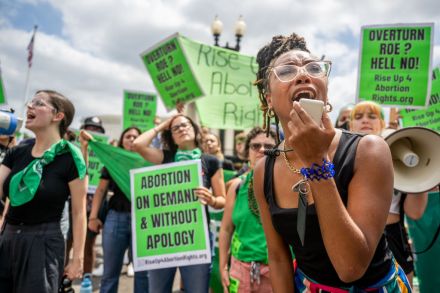
It would be too much to say that wokeness lost Roe for progressives. There is of course a contingent in American politics and the population at large that views abortion as murder or murder-adjacent, and this is the camp that has, for the time being, gotten its way. But if you’re looking to sort out how the ostensibly pro-choice side got complacent enough to let the right to choose get overturned, look no further than the sorry state of contemporary feminism. If even so-called feminists think the typical American woman has it too easy, what hope is there for the fight for women’s rights?

feminism

No genre of storytelling is more formulaic or more exhausted than true crime

From our UK edition

Nothing new under the sun. Or at least it feels that way these days, doesn’t it? The movies are TV shows are comic books are children’s toys. The TV series are podcasts are non-fiction books are magazine articles. The radio shows are real-life stories are Twitter threads are TV series. Even the interesting movies are remakes now. Intellectual property is king, franchises rule the entertainment world and audiences are left to chew the cud from a hundred-stomached cow. Sunrise, sunset and nothing new to offer. So it is with radio, and especially with true crime, the staple crop of narrative radio. No genre of storytelling is more formulaic or more exhausted. No narrative form more consistently fails to deliver what it promises. Yet on it goes.

The feminist case for marriage

From our UK edition

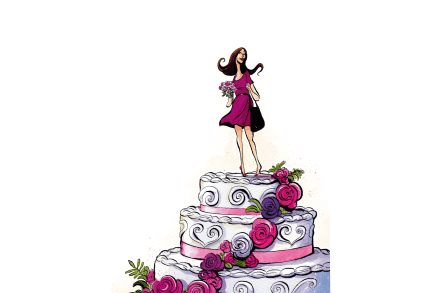
I regret to inform you that your kitten heels and morning suits will probably not be seeing service this wedding season: once again, marriage rates are down. In fact, this year the rate for heterosexual marriages is the lowest on record. What’s more, fewer than one in five of these marriage ceremonies are religious, in keeping with a downward trend of several decades standing. As a wedding guest, I slightly regret this turn towards the civil ceremony, only because the secular liturgy is so oddly anaemic.

Michel Houellebecq may be honoured by the French establishment, but he’s no fan of Europe

From our UK edition

For many years, Michel Houellebecq was patronised by the French literary establishment as an upstart, what with his background in agronomy rather than literature, his miserable demeanour, his predilection for science fiction and his gift for unyieldingly saying the unsayable, especially about relations between the sexes. That’s all changed now. He won the Prix Goncourt in 2010 for The Map and the Territory and in 2019 was elevated to the Légion d’Honneur. The Nobel cannot be long delayed, the committee after all having honoured the equally ornery V.S. Naipaul and J.M. Coetzee.

Standing with J.K. Rowling

When Roland Barthes wrote his 1967 essay “The Death of the Author,” he probably didn’t intend that, fifty-five years later, a major American news outlet would be provocatively suggesting that the world’s bestselling author should be de-personed, de-platformed or de-materialized from history. And yet that is exactly what has happened with the New York Times. They recently ran a series of advertisements on the subway featuring a reader named “Lianna” who is, as much of their subscriber base now are, “breaking the binary,” experiencing “queer love in color” and meditating on “heritage in rich cues.” So far, so predictable. But the ads took a grimmer turn when one suggested that Lianna was “imagining Harry Potter without its creator.

Rowling
picasso

Blues for Pablo

What is there left to say about Picasso? This question, posed by a colleague apropos of Picasso: Painting the Blue Period, an exhibition on display at the Phillips Collection in Washington, DC, is inevitable. There are few cultural figures whose life and accomplishments have been as exhaustively accounted for as the man born — take a breath! — Pablo Diego José Francisco de Paula Juan Nepomuceno María de los Remedios Cipriano de la Santísima Trinidad Ruiz y Picasso. Innumerable exhibitions, books, scholarly tracts and films have been devoted to this relentlessly protean artist. Even after his death almost fifty years ago — Picasso died in 1973 at the age of ninety-one — he looms large in the public consciousness.

women

I am woman. Watch me push

My husband and I recently attended the virtual childbirth classes offered by the hospital where I am registered to deliver our first child. We are classic first-time parents. We have no idea what to expect. Excited and terrified, we’re aware that no matter how much we prepare, there is really no way to. So we signed up for the six-hour class on a Saturday, hoping to get some sense of what labor would be like and the standard procedures at the hospital. The three nurses who taught the class had been bringing babies into the world for well over a decade. They seemed funny and capable. However, it wasn’t long into the training before they started referring to us as variations on a theme of pregnant: “pregnant people,” “pregnant persons,” “birthing persons.