Feminism

The Blue Origin lady spaceflight was desperate, sad and tasteless

I was determined to write something positive about Blue Origin’s “historic all-female spaceflight.” The spectacle was an all-American underdog story. Jeff Bezos worked his way up from dorky book salesman to buff billionaire who can launch his busty bride-to-be into space alongside some celebrities — because hey, why not? Then I saw the group photos of the girl gang, and I just couldn’t. My resolve dissolved faster than the lip fillers in Khloé Kardashian’s fake face. All I could think was, “Vanity of vanities! All things are vanity!

Girl parents should be grateful for the Caitlin Clark effect

The NCAA women’s big championship game takes place on Sunday. A lot of people will tune in – a ton more, in fact, than have historically given women’s basketball the time of day. This year, the Athletic reports, “Heading into the Final Four, all games have averaged 967,000 viewers, up 47 percent from 2023.” Television networks can thank “the Caitlin Clark effect” for these remarkable viewership numbers. And girl dads and moms across the country should be thanking Caitlin Clark for putting women’s sports on the map and inspiring more youth sports participation, the benefits of which extend beyond physical health to include increased emotional, mental and social wellbeing.

caitlin clark

We need to talk about femcels

From our UK edition

Women’s expectations are off. They want men with advanced degrees, but on university campuses, women outnumber their male counterparts. They want men with above-average incomes, but the gender pay gap has been reversed – young women now out-earn men. They want men who share their politics, but in almost every western country over the past decade or so, women have slid to the left while men have remained centrist. NEW: an ideological divide is emerging between young men and women in many countries around the world.I think this one of the most important social trends unfolding today, and provides the answer to several puzzles. pic.twitter.

The mystery of the missing man: Green Ink, by Stephen May, reviewed

From our UK edition

Stephen May used to write contemporary novels about men who ‘live outside big cities, lack self-confidence and rarely feature in contemporary fiction’, as he once put it, adding: ‘Even Nick Hornby’s characters are more sorted than mine.’ But a chance discovery of a Wikipedia page about the three weeks that a young Stalin spent in Edwardian London sent May’s imagination hurtling back through the decades. The result was Sell Us the Rope (2022), his sixth novel, which imagined what Koba, the Georgian then better known as Joseph Dzhugashvili, got up to in 1907 while attending the Fifth Congress of the Russian Social Democratic Labour party. May mixed the real with the fictional to great acclaim.

The wonder of the human body

From our UK edition

Gabriel Weston is an extraordinary writer. An ENT surgeon who now prefers to carry out excisions of skin cancers, she has found a niche in exploring moral dilemmas in medicine. Her first book, Direct Red (2009), examined such clashes as a patient’s need for empathy and a surgeon’s requirement to be steely. A serious problem at the time was how the punishing schedules of junior doctors made it virtually impossible for them to give patients the attention and compassion they so often needed. Weston’s second book, Dirty Work (2013), was a novel – and no less ethically probing. Nancy, its female gynaecologist protagonist, takes on her department’s unpopular abortion lists, telling herself she is performing an essential feminist service.

Why Roman gladiators were the first feminists

From our UK edition

Chiselled out of stone in around the 1st century AD, the scene in this image gives a powerful snapshot of the excitement of gladiatorial combat. In this carving found in Turkey – once a key part of the Roman empire – the opponents face each other head-on, with a look of grim determination. From behind their curved rectangular shields, both appear ready to lunge with short stabbing swords. However, this gladiatorial fight differs from what you might expect in one crucial way: both opponents are women. Look closely enough and you will see the gladiator on the left has her long hair in a plait which snakes down to a bun at the bottom of her neck.

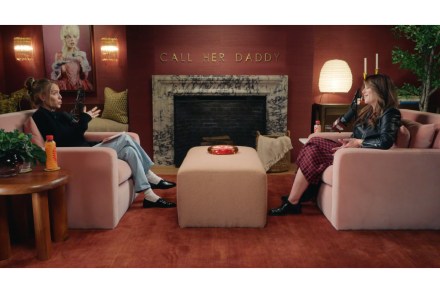
Monica Lewinsky discusses ‘power imbalances’… on Call Her Daddy

Monica Lewinsky, the woman at the center of the scandal that led to the impeachment of President Bill Clinton, opened up about her journey and how America has changed in its understanding of power dynamics and owning one’s sexuality on the Call Her Daddy podcast Tuesday. Lewinsky walked through how she processed the power imbalance involved with the scandal over time. When it was happening, she didn’t think about it much. “I thought it was something it wasn’t. My feelings were real,” she told host Alex Cooper. It wasn’t until later that she was fully able to digest what she was going through at the time. “I'm very clear that this was not sexual assault. And therefore, there is a level of consensuality that was there.

alex cooper monica lewinsky

If you have two hours to spare, spend it anywhere but here: The Years reviewed

From our UK edition

The Years is a monologue spoken by a handful of actresses, some young, some old enough to carry bus passes. They stand in black costumes on a white stage explaining to us the significance of memory, history and feelings. Then the story begins. The narrator is a precocious chatterbox born in France during the war who has no aim in life other than sensual gratification. She’s not a human being, just a cluster of nerves, like a taste bud, that registers nice or nasty, sweet or bitter. And that’s it. She has no morality. She doesn’t develop personally because her nature isn’t capable of emotional growth. Yet the audience is expected to admire everything she says about her experiences. Sex is her obsession. As a teen, she brings herself to orgasm on the corner of a table.

Trump scores feminist victory with trans sports Executive Order

File this under sentences that shouldn’t have to be written, but President Donald Trump just signed an executive order barring biological males from participating in women’s sports. The Keeping Men Out of Women's Sports order, reports ESPN, “gives federal agencies, including the Justice and Education departments, wide latitude to ensure entities that receive federal funding abide by Title IX in alignment with the Trump administration's view, which interprets ‘sex’ as the gender someone was assigned at birth.” The move seems like a no-brainer, and most Americans will likely roll their eyes, turn on the Super Bowl this weekend to watch the most testosteroned of muscley, macho men bash each other to the ground and not give the chromosomes a second thought.

women's sports

Don’t believe the ‘Believe Her’ movement

From our UK edition

I never expected to have strong feelings for a member of Germany’s Green party, but I really do feel extremely sorry for Stefan Gelbhaar, once (but not now or ever again) an MP for Berlin. Women should hang together, say some feminists. I couldn’t disagree with this more  Gelbhaar is a 48-year-old criminal defence lawyer who was, until very recently, running to be a candidate in the 23 February elections. He’s reasonably handsome if you like a Timothy Dalton chin dent. He has two young children and he’s a moderate, centrist Green, which is probably the root cause of his troubles.

The rediscovery of the art of Simone de Beauvoir’s sister

From our UK edition

An exhibition of the art of Hélène de Beauvoir (1910-2001), sister of the great Simone, opened in a private gallery near Goodge Street last week. It was the first time Hélène’s work had been shown or received any attention in London, and young people in alternative clothing gathered to sip orange wine and listen, rapt, to the 75-year-old biographer and friend of the de Beauvoir sisters, Claudine Monteil, as her recollections helped elucidate Hélène’s abstract paintings. The reclamation of a new ‘lost’ artist was under way. De Beauvoir’s cubist self-portrait is quite good – but ‘Simone in red jacket’ must never be seen It is possible, these days, for gallerists to do good work – self-defining as allies and activists – while making a good fortune.

The next best thing to visiting a really clever friend in New York

From our UK edition

I was on the phone to a friend recently, who asked me what I was reviewing. ‘It’s a book by a lady intellectual,’ I began. ‘Oh my God,’ she said, ‘I hope you don’t put that in your review.’ ‘I’m not that stupid,’ I replied, ‘but it is very important that she’s a woman.’ A self-described radical feminist in the 1960s and 1970s, Vivian Gornick says that that flame has died down a bit now (she was 79 when this book was first published ten years ago). Her perspective in this meandering, delightful memoir-cum-essay is still, obviously, feminine – yet there is a kind of detachment; and from what she says about her past life, and her experiences with men, and with love, there always was, in a way. Hence the ‘odd’ in the title.

Why Alice Neel remains a vital presence

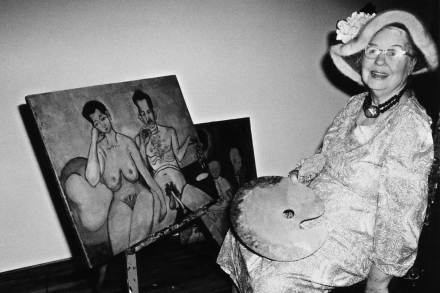
There is no portrait by Alice Neel quite as radical as her own. The artist was one of the first octogenarian women to exhibit a nude of herself with 1980’s “Self-Portrait.” In the painting, Neel grasps her paintbrush and sits exposed at the edge of a blue-and-white striped armchair. There’s no doubt about it; this is a woman of conviction who demands, “Look at me, in all my senescent glory: my silver hair, wrinkled face, sagging breasts, this is a life lived and here are its marks.” It’s only in the last decade or so that Neel has risen from relative obscurity to be acknowledged as one of the twentieth century’s greatest portraitists.

Neel

Not for the squeamish: The Substance reviewed

From our UK edition

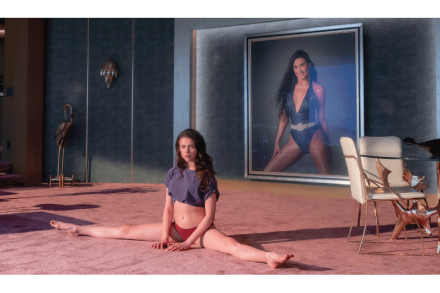
Both horribly familiar and wonderfully shocking, this body-horror film written and directed by Coralie Fargeat does a very traditional thing – turning the scramble for youth and beauty into a monster of immeasurable disgust and immorality – in a huge way. There is nothing minimal or restrained or overly clever here; nothing of the nuance in language or wit that makes its forerunner, The Picture of Dorian Gray, so haunting. This is a presentation of the horror of ageing for the bombastic mash-up age, melding vampire, sci-fi, feminist tragicomedy and dystopian genres. It’s like a reverse Barbie but with lashings of Poor Things, Blonde, the uncomfortably up-close Marilyn Monroe biopic, and plenty more.

The power of the brown American diva

From our UK edition

‘Please don’t let this be a scolding!’ I thought as I moved past this book’s tempting title to read the author’s bio, noting that she is ‘the chair of the Writing Programme at Columbia University’. Sure enough, the very first line of the prologue – ‘The sound of a diva’s voice was how I knew we were Mexican’ – made me fear that this might be the case. Funnily enough, my mother was also fond of the diva in question, Vikki Carr – especially the sob-fest ‘It Must Be Him’ – and my family weren’t Mexican as far as I know.

Tory men are letting down women

From our UK edition

Some of my good male friends, Tories, are sick of terfs. I can see it in their shifty eyes, in the way they won’t quite look at me when terfy issues creep into conversation, but stare gloomily at the skirting board. Terf stands for Trans Exclusionary Radical Feminist, and terfs are women who insist that you can’t change your biological sex, and that the whole notion that some humans are born in the wrong body is not only daft, but catastrophic for our culture and our children.

The ups and downs of the long road toward workplace parity

In late 2019, for the first time ever, American women outnumbered men in the college-educated labor force. Women now earn bachelor’s degrees and doctorates at a higher rate than their male counterparts, and they account for more than 56 percent of law students. They lead more than 10 percent of Fortune 500 companies. Has the United States come a long way in equalizing opportunities for men and women? Definitely. Do we still have a long way to go? Absolutely, says Josie Cox in Women Money Power, her compelling analysis of the ups and downs of the long road toward workplace parity.

women

Consider the tradthot

In the sinister annals of the men's rights activist internet back in 2017, an alt-right personality called Matt Forney popularized the term, or depending on your outlook, slur, “tradthot.” According to Forney, a “tradthot” (a portmanteau of “tradwife” and “thot”) was a woman who entered the alt-right pretending to believe in traditional gender roles but, in reality, wanted to exploit a male-dominated audience by catering to their fantasies.  Forney, although not well-known for his charitable views about women at the time — he's since repented, naturally — may have been onto something.

tradthot

How the tradwife killed the girlboss age

The tradwife smiles as she feeds her sourdough starter, wearing a long dress and a baby and wrangling the occasional toddler underfoot. She beams at her husband as he comes in from a long day on the ranch, or from the hedge-fund trenches. She makes salt-dough modeling clay for the little ones, whether her stove is from Lowe’s or La Cornue. The Cut describes her Instagram account as both “dangerous” and “stupid.” CNN experts lament that too many girls are turning to her as a “Band-Aid with ideological cover,” and fret about the sourdough-starter-to-White-Supremacy pipeline. Tradwives, both self-identified and smacked with admiring or hostile labels, are the latest cultural phenomenon in media crosshairs.

tradwife women
Whedon

The loss of Joss Whedon

Cheerleaders save the world. Vampires gain souls. Ellen Ripley comes back to life as a half-alien. In the case of Willow Rosenberg, Buffy the Vampire Slayer’s geeky, lesbian BFF, she’s a good witch one year, Southern California’s equivalent of the Wicked Witch of the West the next, and only a year later, the key to stopping an apocalypse. One season, you’re good; the next, you’re bad; then, finally, you’re the savior. This is the world Joss Whedon envisions across six television shows (Buffy the Vampire Slayer, Angel, Firefly, Dollhouse, Marvel’s Agents of S.H.I.E.L.D.