Fatwa

The courage of Salman Rushdie

I know that our readers have led varied and colorful lives, but I would suggest that few, if indeed any, of you have spent decades cowering under the daily terror of a fatwah imposed upon you by a totalitarian state because of a literary novel that you once wrote. I would also suggest that, when Salman Rushdie — for he had that dubious privilege — emerged from a lengthy, frightening and tedious period of hiding, he chose to immerse himself in the social life of both London and the United States to show that he was not afraid, and that the threats and grimacing of extremists did not mean that he was not entitled to lead his own version of his best life. He was right to do so.
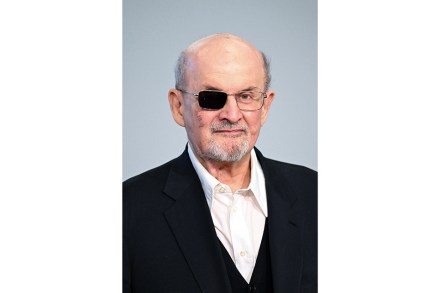
salman rushdie

Free expression after the Rushdie attack

In an interview with Stern magazine at the end of July, Sir Salman Rushdie was asked about the current circumstances of his life. Given that this is a question that he has faced since 1989, Rushdie might have been expected to respond with boredom, even irritation — as, understandably, he has done in other public conversations, when the subject of the fatwa that he has been under for nearly three and a half decades has been raised by an inquisitive or prurient journalist — but he responded with reasonably good cheer. Describing his everyday existence as “very normal,” he even ventured a light-hearted remark, saying, “A fatwa is a serious thing. Luckily we didn’t have the internet back then. The Iranians had to send the fatwa to the mosques by fax.

Rushdie

The attack on Salman Rushdie is an ominous warning

The news coming from New York State that the author Salman Rushdie has been stabbed onstage is both frightening and grim. It is frightening because, without full details of how seriously injured Rushdie has been, it is tempting to fear the worst. Media reports initially suggested that Rushdie was well enough to walk off stage, but the news that he has been transported by air ambulance to a hospital after being stabbed in the neck suggests his injuries are severe. It is grim because any violence being done to a public figure is abhorrent, but in the case of Rushdie, it is almost inevitable that this particular incident has been occasioned by one of the most notorious cause celébrès that has ever been seen in the publishing world, namely the publication of The Satanic Verses in 1988.

The wisdom of Salman

‘Things that would have seemed utterly improbable now happen on a daily basis,’ Sir Salman Rushdie tells me. ‘The implausible has now become everyday.’ Isn’t this a problem for a writer whose books derive from the fantastical traditions of magic realism and science fiction, where crazy stuff happening is what sets them apart? ‘It is.’ The active threat to Rushdie’s life from radical Islam is two decades behind him. His novels have a way of dealing in sour, sometimes apocalyptic ironies. His latest, the Booker-shortlisted Quichotte, is set in what it describes as ‘the Age of Anything-Can-Happen’.

salman rushdie