Family

Dear Mary: What should my wife and I do with the risque photos we took in our youth?

From our UK edition

Q. I hesitate to bring you this problem, but I suspect it is not that uncommon. Early in our very successful marriage we privately took photographs of each other which neither of us would like our children, or indeed anyone else, to see. They were intended for our old age and now that has arrived we take the greatest pleasure in them; indeed they did much to enliven our most recent Christmas spent on our own. Those of my wife I find quite enchanting: she was extremely attractive in her youth and remains very good-looking to this day. It would be such a shame to destroy them prematurely but at some stage we will surely have to deprive ourselves. Or is there a solution you can suggest, Mary?— R., Watlington A.

The diversity dinner

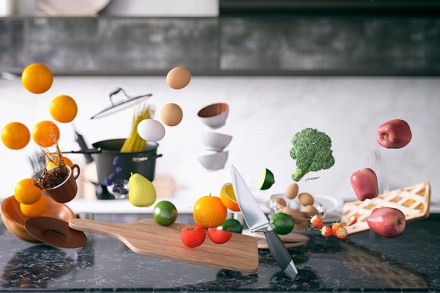
Growing up in a mixed American household of Indian, Italian and Puerto Rican descent, I never questioned the varying menu each night for dinner. Until I was a teenager, I hadn’t realized my family’s weekly meals were different from those of my friends — until they began begging me to eat at my house on weekends after I told them what was being cooked. For me, dietary normalcy meant chicken curry on Mondays, arroz con habichuelas on Wednesdays and lasagna on Fridays. My Puerto Rican and Italian American mother Loretta had married my father Roop, an Indian immigrant, in 1981. I always admired my mother for her fearlessness in crossing cultural lines during an era when interracial marriage was less common than it is today.

family diversity dinner

How middle-class is your dad?

From our UK edition

Not all Facebook groups are forums for insurrection, anti-vaccine propaganda and rude remarks about Bill Gates. Some are just places where people talk about their dads. ‘Middle Class “Your Dad” Talk’ is a group where some 23,000 members share observations and witticisms that all follow the same format: ‘your dad is extremely specific about how the dishwasher is loaded’; ‘your dad judges others’ success by how big their kitchen island is’; ‘your dad was building up the courage to confront the postman about leaving the garden gate open until he saw he had a tattoo on his arm’. Mums are generally left alone.

Abstinence makes the heart grow fonder

From our UK edition

The wine has been flowing in the Young household this week. The reason I’ve been celebrating is because I managed to get through January without a drink. Like many people, I try to do this every year, but it felt like a particular achievement this year because of the lockdown Boris announced on 4 January. Almost everyone I know used that as an excuse to fall off the wagon. ‘There’s no way I can get through another lockdown without a drink’ was the general refrain. One thing that helped was joining the Wine Society and loading up on bottles throughout ‘dry’ January. It had never occurred to me to join until my neighbour Mark Beaumont, who’s been a member for 30 years, told me you had to be proposed by an existing member.

The art of mourning well

From our UK edition

Malindi, Kenya I’ve learned that mourning must be tackled ever so gently. As a younger man, when friends were killed in Africa’s wars I’d become angry and drink. When Dad died I cut adrift in Yemen for a time. Following Mum’s death a month ago, I decided to stay quietly at her home on the beach. The Kaskazi monsoon whirls through the house and white horses roar on the reef. Soon after dusk the memories appear more vivid than in daylight and these parade through my fitful sleeps until dawn, when I can at last get up and trek along the foreshore among ghost crabs and sandpipers. Each morning I box with my coach Amani, before starting work. I run the Laikipia farm by telephone and spend my days on Zoom calls to England.

Minority groups should ignore the anti-vax charlatans

From our UK edition

My great-great-grandmother, born on a Barbadian plantation and transported to what was British Guiana in the 19th century, gave rise to a tribe that has spread across the globe. Weirdly, Covid has brought us together (via Zoom) in a way that used to be reserved for weddings and funerals. My New Yorker nephew found a time of day that could accommodate the Californians, the Canadians and the English rump in London, Cambridge and Nottingham. Harlem’s lights glimmered from another nephew’s screen, while the Florida gang kept their windows shut just in case the neighbours not so far away in Mar-a-Lago decided to drop by. Sadly, someone forgot to let the Trinis, the Bajans and the Welsh know about the meet-up, and it was way too early for Jakarta.

Farewell to my dear friend Richard, the very best of us

From our UK edition

I heard the shocking news last week that one of my oldest friends — Richard Edwards — had died suddenly of a stroke. He was just 54 and a picture of health. I met Richard in 1988 when we were both PhD students at Cambridge. He had got the second-highest First in English in his year and was thought to have a brilliant academic career ahead of him, but as the year wore on it became clear that neither of us were particularly attracted to the scholarly life. Instead of dragging ourselves off to the library every day to ‘do the reading’, we would sit in his room drinking wine, making each other laugh and luxuriating in our mutual dissipation.

Meal kits are a recipe for mayhem

From our UK edition

Caroline was pretty heroic during the first lockdown. She’s used to having no children to deal with between the hours of 8 a.m. and 4 p.m., into which she crams her part-time job, food shopping, exercise classes, tennis lessons, dog walks and a hundred other things. But during our children’s three-month break from school they would appear in the kitchen at 1 p.m. and ask what was for lunch and, in spite of her other commitments, Caroline would always do her best to rustle something up. ‘I’m like Nigella Lawson on steroids,’ she said at the time. But she has drawn the line at repeating this Stakhanovite labour during the third lockdown.

A dog is not just for lockdown

From our UK edition

The Dogs Trust charity received 114 calls on 27 and 28 December from people wanting to offload their puppies. No, these weren’t unwanted Christmas gifts, but dogs they’d bought during the first lockdown. According to the RSPCA, demand for dogs soared last year, with breeders and rescue centres reporting unprecedented levels of interest. But some new owners have already become disillusioned. In the past three months, the Dogs Trust has received 1,800 calls from people begging them to rehome their puppies. She darts around with lightning speed hoovering up any stray morsels like a turbo-charged rat On some days, I’m tempted to contact the charity myself. The Young family’s new pet isn’t strictly speaking a lockdown dog.

Most-read 2020: Quarantine with our new puppy will send me barking

From our UK edition

We're closing 2020 by republishing our ten most-read articles of the year. Here's No. 7: Toby Young on his lockdown nightmare When the news leaked at the weekend that the government was considering telling those aged 70 and over to self-quarantine for 12 weeks to protect them from catching coronavirus, I began to worry about my elderly neighbours. How will they get essential supplies, particularly if the supermarkets’ home delivery services get backed up? What if they’re not on Netflix and have gone through all their box sets? Who will walk their dogs? It was time to summon up that famous Dunkirk spirit and create a network of volunteers willing to muck in until the crisis is over.

The unlikely Schindler who saved my wife’s family

From our UK edition

As I gaze at my four children on Christmas morning, clambering on to the bed with their stockings, I will think of one particular person to whom, in a roundabout way, they owe their lives. He was a colonel in the first world war and, had it not been for his generosity, my children, their mother, her brothers and sisters, their children, their aunts, uncles and cousins — the entire Bondy clan, in fact — would not exist. The story begins in 1918, as the conflict was nearing its end. Karel Bondy, my wife’s paternal grandfather, was a young Czech officer in the Austro-Hungarian army who had miraculously survived heavy fighting in Albania.

The wonderful ghosts of Christmas past

From our UK edition

The past shifts about like clouds, now dense, now parting for a memory to shine out, perhaps randomly, but bright as the sun. Here is the Sheffield Christmas when I was four and slept in Great-Aunt Florence’s room, on an eiderdown beside her bed, in the terraced house that smelled of coal smoke — the Christmas of worrying about how dirty Santa must get, going up and down the sooty chimneys. Home was Scarborough: the bracing sea air and howling gales where I missed the coal dust smell, though it brought back the cough I had had since nearly dying of whooping cough, aged two — the cough that has never really left me, so that many a Christmas since has smelled of Vicks, camphor, Friars’ Balsam.

We don’t want pandemic novels – we want gentle escapism

From our UK edition

I’m often asked when I’ll write a pandemic novel. I’m not sure I’d ever be tempted, though the backdrop of Edinburgh’s deserted streets at the height of the (first) lockdown certainly provided food for the imagination. I dare say novels will arrive — some may even be good. But I find that fiction concerning momentous events usually benefits from the dust having settled. Only then can we begin to comprehend the human costs, stresses and implications, by which time there may also be an audience ready to relive the experience. In the near future, however, I foresee a hunger for escape to a gentler and more reasonable world.

My kids think my move into the garden shed means divorce

From our UK edition

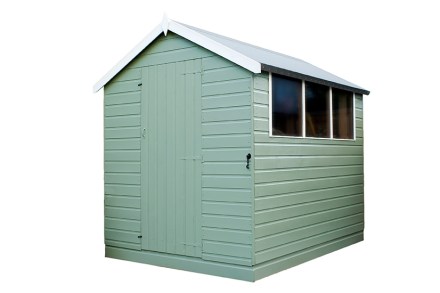
I’ve moved out of my home. No, Caroline and I haven’t broken up. It’s just that we’re having the house rewired, which means we have to be out of our bedroom by 8 a.m. Ordinarily, that wouldn’t matter but about eight months ago I started a blog about lockdown and I’m usually up until 4 a.m. working on it. We have almost 7,000 subscribers to our daily newsletter and I want it to be waiting for them when they wake up. And superhuman though I am, I can’t survive on four hours’ sleep a night. I haven’t gone very far. I’ve stuck a blow-up mattress in the garden shed that doubles as my office. But, weirdly, the children seem to think this is a prelude to divorce.

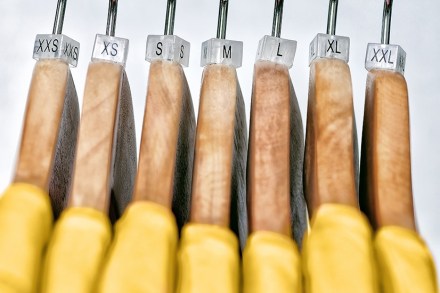
Dear Mary: Will my friend be offended if I buy her an XL dress?

From our UK edition

Q. My son has moved his girlfriend into our fairly small house for the second lockdown. I am grateful for their company, but unfortunately his girlfriend has started addressing me in a baby voice. My son either hasn’t noticed or doesn’t seem to mind. Mary, as I suspect she is a little nervous of me, how can I tactfully let her know how annoying this is without ruffling feathers? She also ‘pony-trots’ between rooms, but I don’t mind that nearly as much as the baby voice.— Name and address withheld A. Collude with a good friend to call you on your mobile, timed for a moment when the three of you are assembled in the kitchen. Tell the friend that you can chat while you cook if she doesn’t mind being on loudspeaker so you have your hands free.

What lockdown means for families with disabled children

From our UK edition

When lockdown starts, all kinds of things stop. The first one, in March, was the worst time of my life as a parent, not because of my daughter’s severe disabilities, but because of the lack of support. Elvi is 19. She has a mental age of three, sleeps four hours a night and can’t walk. She has to be showered, dressed, fed and physically moved around our home. I have learned so much from my beautiful, funny daughter. She works incredibly hard to achieve the smallest things. We were told Elvi wouldn’t live past two and that she was unlikely to speak. In the summer she said her first five-word sentence: ‘I want crisps please, Mummy.’ Through necessity, being Elvi’s mum has made me resilient and resourceful.

My Aunt Beryl’s zinc-lined trunk revealed extraordinary family secrets

From our UK edition

Bexhill-on-Sea My Aunt Beryl taught me to love books and paintings. When I’m at a loose end in London, lonely, or even rather boozed up, I still nip into one of the galleries she raised me on to say hello to pictures that have been my lifelong friends. Out of an envelope fell an original poem scribbled and signed by Rudyard Kipling Beryl never missed birthdays and Christmas, she wrote postcards and adored her nephews and nieces. She never married, but globe-trotted with easel and pencils, lived in a cave in Petra, went skydiving and skating, made a living from portraits and illustrated 52 children’s books — many of which she read to me when I was small. She cared for my grandparents and inherited their home in Sussex.

Today’s undergraduates are customers – and the customer is always right

From our UK edition

If you’re looking for a sign of the academic times, you could do worse than consider the image, published in newspapers recently, of Mr Chan King Wai at a solemn ceremony in China last year. There is Mr Chan, grinning stiffly but with real pride, dressed in a scholar’s cap with a gold tassel, and a red and shiny purple gown. Around his neck, a little incongruously, is a stripy Brideshead-type scarf. He looks like he has presented himself for Oxbridge theme week on RuPaul’s Drag Race. He is showing a certificate to the camera. Holding the other end of the certificate, and mustering more of a grimace than a grin, is Alan Hudson — recently retired director of programmes in leadership and public policy at Oxford’s China Centre.

Babies on demand: the nasty side of surrogacy

For the cover of its June ‘Pride’ issue, People magazine chose the image of a newborn baby being cuddled by his father. Apparently, Wyatt Morgan Cooper’s birth marks the latest celebratory milestone for LGBTQ+ liberation: the right to biological children. His father, CNN anchor Anderson Cooper, told People how grateful he was for ‘all the lesbian, gay, bisexual, transgender and queer people who struggled for generations and have died never thinking this was a possibility’. As for raising Wyatt, Cooper is not taking paternity leave and is hiring a nanny recommended by his friend Andy Cohen, another gay dad. His ex- partner will also be on hand to help since, Cooper explained, ‘it’s good to have two parents, if you can’.

surrogacy

Princess Beatrice’s new palazzo: The story behind the Mapelli Mozzis’ family pile

From our UK edition

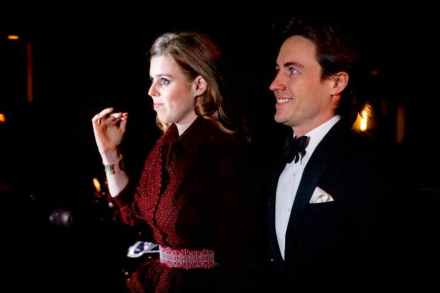
With her marriage to property developer Edoardo ‘Edo’ Mapelli Mozzi, Princess Beatrice – the Queen’s fifth eldest grandchild – becomes part of one of Italy’s oldest aristocratic families. As well as becoming a ‘Contessa’ (a purely symbolic title in post-war Italy) Her Royal Highness’s husband will also inherit the family’s grand residence – a large neoclassical palazzo widely regarded as one of the finest in Italy. The palace sits in Ponte San Pietro, a small town in the province of Bergamo. Around an hour’s drive from Lake Como, it has reportedly been part of the family estate since the 13th century.