Falstaff

Player Kings proves that Shakespeare can be funny

From our UK edition

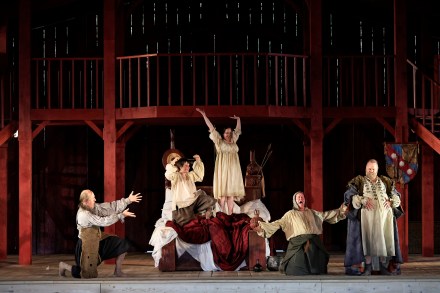
Play-goers, beware. Director Robert Icke is back in town, and that means a turgid four-hour revival of a heavyweight classic with every actor screaming, bawling, weeping, howling and generally overdoing it. But here’s a surprise. Player Kings, Icke’s new version of Henry IV, Parts 1 and 2, is a dazzling piece of entertainment and the only exaggerated performance comes from Sir Ian McKellen who plays Falstaff, quite rightly, as a noisy, swaggering dissembler. Those who imagine ‘Shakespearean comedy’ to be an oxymoron will be pleasantly surprised Small details deliver large dividends. The tavern scenes are set in an east London hipster bar with chipped wooden tables and exposed brickwork. Richard Coyle’s Henry IV has been costumed to resemble the chain-smoking George VI.

The finest Falstaff you’ll see this summer

From our UK edition

Comedy’s a funny thing. No, seriously, the business of making people laugh is as fragile, as mercurial as cryptocurrency — a constellation of shifting risk factors, many beyond control, any of which can kill a joke deader than Dogecoin. Opera is already at a disadvantage. Timing — comedy’s accelerant of choice — is predetermined, dictated by the demands of unwieldy choruses and slow-moving sets, pinned down to the second by a score whose creator may be anything but a natural comedian. Just ask Verdi, whose early farce Un Giorno di Regno was such a comprehensive flop that he gave up the genre altogether for almost an entire career. But at 75, all but retired after a sequence of bloody tragedies, the composer returned for one last shot at comic victory.

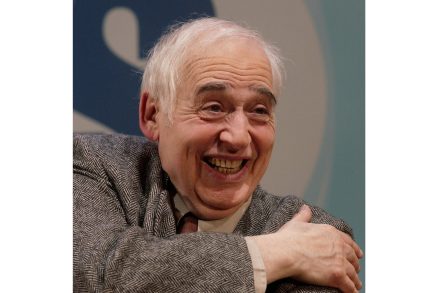
Harold Bloom, the Falstaff of lit crit

In a time when literature is held to be futile, it is cheering that some literary values persist. One of those values, confirmed by T.S. Eliot in ‘The Function of Criticism’ (1923), is that writing a book is almost invariably less futile than writing a book about books. Criticism, Eliot wrote, could not be ‘autotelic’, expressing only itself, because criticism was about other things, like ‘the elucidation of works of art and the correction of taste’. The critic, then, performs a kind of clean-up operation after the party.Harold Bloom, who died yesterday at 89, was a rare exception to that rule. For Bloom, criticism was the vehicle of spiritual autobiography.

harold bloom