Exhibition review

Witnessing Humanity: The Art of John Wilson is a must-see show

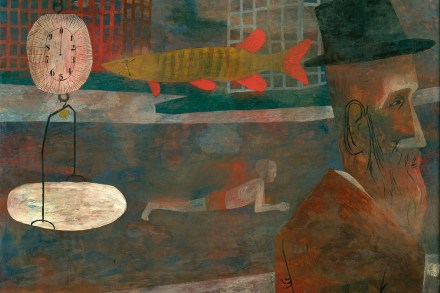
The Metropolitan Museum of Art’s Witnessing Humanity: The Art of John Wilson is a must-see show. Originating as an exhibition at Boston’s Museum of Fine Arts, the Met’s show is certainly the museum’s largest solo exhibition of an African-American artist’s work in recent memory, perhaps ever. It’s definitely the biggest-ever showing of Wilson’s work, but the Met is not patting itself on the back on these points. The show is a tribute to a fine artist of boundless talent, a painter of deeply felt and expertly rendered works, even if it will not rewrite any narratives of art history. Wilson (1922-2015) was an African-American artist of Guyanese descent who had a long and many-chaptered career.

Wilson

Ben Shahn’s work remains as timely as ever

How can an artist express social and political dissent in a polarized, volatile time? Look no further than the sobering and rousing Ben Shahn: On Nonconformity. Throughout his decades-long career, Shahn (1898-1969) crafted paintings, murals, posters, drawings, photographs and prints chronicling the news of the world, with a focus on the suffering of society’s most wounded. This is the first major retrospective of his work to appear in the US since 1976. The country has changed, and yet Shahn’s work remains as timely as ever.  His social-realistic approach fell out of fashion as critics came to prefer abstract and pop art. But Shahn remained true to his own aesthetic, as the show’s 175 works demonstrate.

Shahn

Emil Sands’s unique body of work

Jet lagged, frozen, wrapped in multiple layers against the polar winds of a New York January storm, it was a thrill to walk into a gallery space full of sun-drenched summer scenes. At first glance, these are beautiful paintings of beautiful young people on beaches, but look again and you realize they are a meditation on the fragility of body image and how illusory perfection is. This is a topic Emil Sands is uniquely qualified to portray — more on that later. But first, the paintings: a longer look reveals that the beaches are serving as stage sets and mindscapes for an exploration of vulnerability and exposure — an experience intrinsically tied to the act of sharing space with other near-naked bodies.

emil sands

Edward Hopper’s America

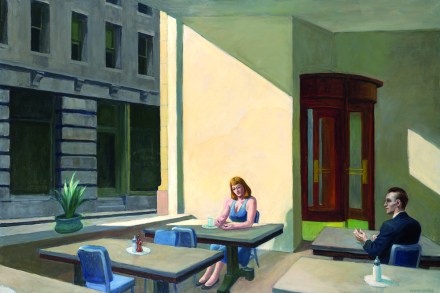
With a new show at the Whitney, Edward Hopper’s New York; a new documentary film from director Phil Grabsky, Hopper: An American Love Story; and a recent exhibition organized by the Virginia Museum of Fine Arts and the Indianapolis Museum of Art, the work of one of the most popular yet seemingly inscrutable American artists of the twentieth century is receiving a great deal of renewed attention. In his paintings, Hopper’s hard-edged realism, impressionistic plays of light and passages of intensely saturated color compete for attention. What has always captured the public imagination is the relative isolation of the figures that appear in his work. Search for articles about Edward Hopper online, and many will describe his art as an exploration of loneliness.

hopper

Murillo the masterful

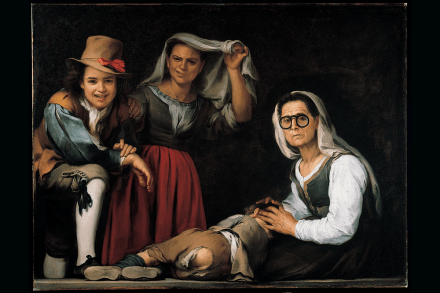
Murillo: From Heaven to Earth, an exhibition at the Kimbell Art Museum in Fort Worth, Texas, is, at its core, a cunning display of institutional braggadocio. How much better to amplify a mainstay of the permanent collection — that would be “Four Figures on a Step” (c. 1658-60) — than to mount a show dedicated to the artist responsible for it? “Four Figures on a Step” is, if not Murillo’s masterpiece, then a distinctive painting all the same. It is distinctive because it is odd: though attempts have been made to peg the image as some-or-other lesson in morals, the canvas has consistently resisted explication. The title, a bland descriptor superimposed by an outside source, points up how the picture’s thematic basis remains firmly contained within its own peculiar logic.

Murillo

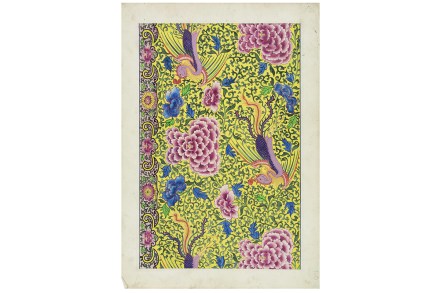
Chroma chameleon

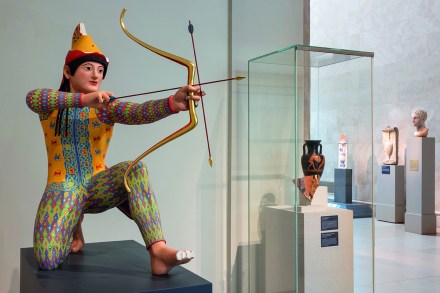
"Who knew the Greeks had such bad taste?” This comment was overheard at the preview for Chroma: Ancient Sculpture in Color, a head-turning exhibition at the Metropolitan Museum of Art. This slight wasn’t targeted at the current denizens of Greece, but, rather, their ancestors of yore. You remember the type: chiton-clad Athenians — let’s not forget the ladies in their peploi! — sauntering through the agora, pondering the nature of reality or, perhaps, the role of hoi polloi within a democratic society. They’re the folks whose aesthetic sensibilities were found wanting, at least to one denizen of twenty-first-century museum culture. What most of us know about life in antiquity is, I dare say, as broadly conceived as the above description.

chroma
white

Not your average Jo

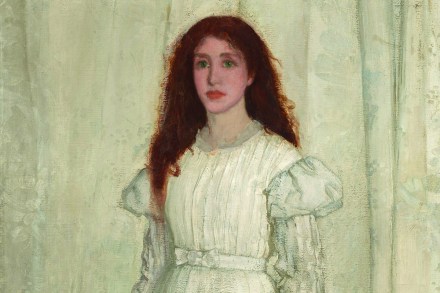
She appears in one of the most beloved paintings in Washington’s National Gallery of Art — “Symphony in White, No. 1: The White Girl” (1862) — but few people know her name. No longer. Joanna Hiffernan is now at the center of The Woman in White, an exhibition at the NGA that explores the close working relationship between James McNeill Whistler and his Irish model and mistress that produced some of the most beautiful and enigmatic paintings of the 1860s. “The White Girl” is a haunting full-length portrait of a young woman, with large blue eyes and Titian-red hair, in a white linen dress. She stands on a rug made from the pelt of a wolf (or is it a bear?

SoHo’s downtown drawings

Pity the poor Drawing Center. Founded in 1977 — or, rather, “born into the petri dish of the SoHo art scene in the 1960s and 1970s” — the Center was the pet project of Martha Beck, a former curator at the Museum of Modern Art. She felt that the medium of drawing, being underserved by the arts establishment, needed its own specialized venue. Over the years, this downtown gallery has proved its mettle, mounting a variety of historical and contemporary exhibitions, as well as making a point of reaching out to working artists, some of whom later went on to greater recognition. But that petri dish? It’s changed mightily since the heyday of industrial lofts rented on the cheap.

ornament

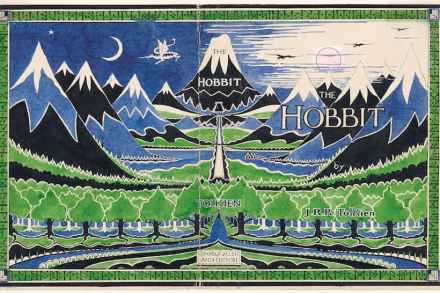
A Hobbit-sized exhibition about Tolkien as pipe-smoker and parent

To no one’s surprise, the Tolkien: Maker of Middle-earth exhibition was a huge success when it opened last October at the Bodleian in Oxford, the library where J.R.R. spent so much of his time. Had tickets been on sale, Tolkein would have been be a sell-out, but the Bodleian had made it free. The visitors book was peppered with observations such as: ‘It made me cry with joy… sensationally splendid.’ There’s also a less hyperbolic view, in a childish hand: ‘It was interesting to see how he made The Hobbit and Lord of the Rings.’ Tolkien, Maker of Middle-Earth is now at the Morgan Library, New York City. It is rather a small show, almost Hobbit-sized.

tolkien