Evelyn waugh

David Lodge, the master of Anglo-American campus humor

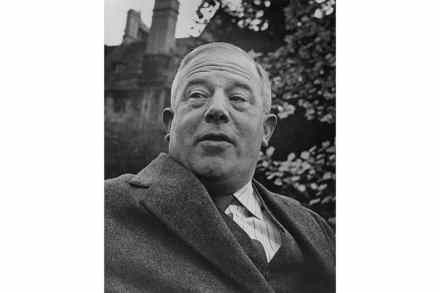
"Literature is mostly about having sex and not about having children.” So said the British novelist, occasional screenwriter and literary critic David Lodge, who died at the beginning of 2025 at the age of eighty-nine. Lodge, who had suffered from encroaching deafness for several decades, had not, in truth, been a major literary figure for a considerable period before his death. This retreat into obscurity had not been helped by a trio of memoirs, beginning with 2015’s Quite a Good Time To Be Born, which perplexed critics — including this one — with their dour, downbeat and decidedly un-humorous tone. Few would have known, from reading them, that their author had once been regarded as one of the late twentieth century’s most accomplished comic novelists.

Lodge

The wonder of cooking with coal

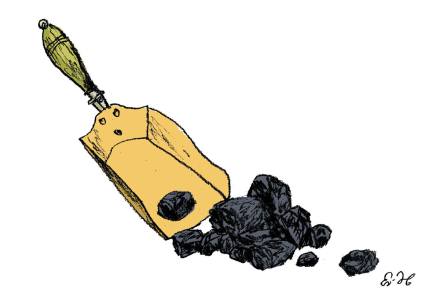
The grandest compliment ever paid me came near the end of a small dinner party last winter from guest and friend Jeffrey who, on settling into an old wing chair as his host stoked the fire with coal, remarked: “I feel like I’ve just stepped into an Evelyn Waugh novel.” It was, he said, the coal. About as close as anyone these days will have come to a domestic coal fire is the screen image of one in Downton Abbey or its predecessor, Upstairs Downstairs. Those television “fires” were all actually gas ones made to imitate the look of coal. In Waugh’s time in houses like that, they all would have burned the real thing.

coal

Evelyn Waugh’s sincerest form of flattery

T.S. Eliot once made the significant point, in an essay on Philip Massinger, that “Immature poets imitate; mature poets steal; bad poets deface what they take, and good poets make it into something better, or at least something different.” Eliot knew exactly what he was talking about (himself). However, change “poets” to “novelists” and the same pertinence applies. In fact, this wholesale, covert purloining may be true of all artists in all ages in all the seven arts. Let’s start with some backstory. Evelyn Waugh (1903-66), as they say, needs no introduction. William Gerhardie (1895-1977) is almost wholly forgotten today, but in the 1920s he was the luminous young wunderkind of English literature — a kind of Donna Tartt or Sally Rooney of his times.

gerhardie

Searching for the American summer novel

I am convinced that the sweet-smelling tycoons that run candle-making companies must have read too much Proust when they were younger. With scents like “Inspire,” “Bohemia,” and “Sunny Daydream,” they cannot be aiming for something as cheap and transitory as mere tawdry olfactory pleasure. They must have become all but obsessed by À la Recherche du Temps Perdu, and be aiming for something akin to his narrator’s nostalgic odyssey upon tasting a madeleine: “and at once the vicissitudes of life had become indifferent to me, its disasters innocuous, its brevity illusory.” Rather pretentious, oui — but what other excuse can there be for a candle that proclaims it can smell like a cool library at midnight, or the depths of some dreamy reverie?

Waugh in Hollywood

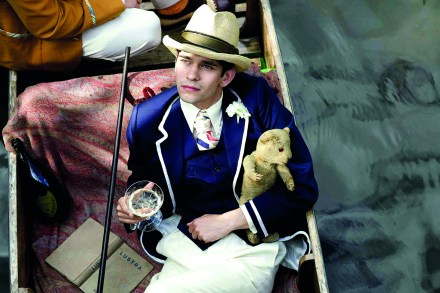
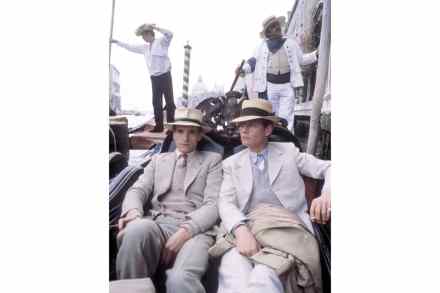
The English author and curmudgeon Evelyn Waugh (1903-66) is today best known for his 1945 novel Brideshead Revisited. A luxuriant evocation of the beauties of pre-World War Two Oxford, coupled with a cautionary narrative about the destructive power of Catholic guilt, it has remained a constant favorite with everyone from college students to literature scholars. It was memorably filmed for British television in 1981, and it launched the careers of Jeremy Irons and Anthony Andrews as, respectively, the novel’s narrator Charles Ryder and the flamboyant aesthete Sebastian Flyte.

waugh

Why we should venerate Evelyn Waugh

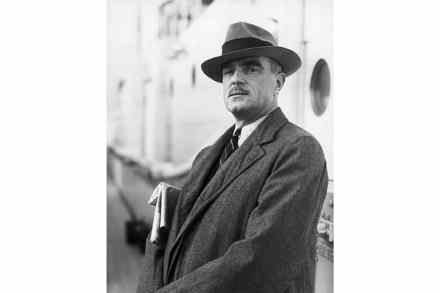
Evelyn Waugh is popularly known today as a comic author, despite the fact that Brideshead Revisited, made famous by the eponymous 1981 television series, is certainly not a comedy. Not everyone agrees. Years ago, a well-read friend of mine remarked to me that he was not fond of Waugh’s work. When I asked why, he replied, ‘Because I don’t think he’s that funny.’ I answered that the way to appreciate the exquisite wit of Evelyn Waugh is to approach him in the expectation of something other than humor, in which case the absurd incongruities, outrageous juxtapositions and ludicrous extremes that occur throughout the novels are in fact supremely funny. Waugh never set out to write comedic stories in the manner of P.G.

waugh

Perry Mason was America’s Sherlock Holmes

I was well into my thirties when my parents acquired a television set, for no good reason that I could discern after they’d gone so many years without one without obvious damage to their health or intellects. Growing up in the Fifties and Sixties, my sister and I were permitted to watch two television shows while visiting with relatives. One was Topper. The other was Perry Mason, which they occasionally joined us for: a small family grouping that was the closest thing the Williamsons ever came to resembling a painting by Norman Rockwell. Over the past year and a half, I have been re-watching episodes of the original show starring Raymond Burr as Mason, Barbara Hale as Della Street, William Hopper as Paul Drake, Ray Collins as Lieutenant Tragg and William Talman as Hamilton Burger.

mason

Hidin’ Biden’s basement convention

Not everyone appreciates the extent to which the Democrats pushing Joe Biden for president are students of Samuel Taylor Coleridge. For those of you who think low, let me say straight away that I am not thinking of Coleridge’s penchant for laudanum. No, I am thinking of that other goad to fantasy, Coleridge’s idea, articulated in his book Biographia Literaria (1817), of ‘the willing suspension of disbelief’. (But speaking of thinking low, if we enlarge our gaze to encompass Joe himself, we might also trespass upon the subject of plagiarism. Coleridge cribbed wantonly from the German philosopher Friedrich Schelling just as Joe did from Neil Kinnock and others.

biden basement

Finding the Lost Girls

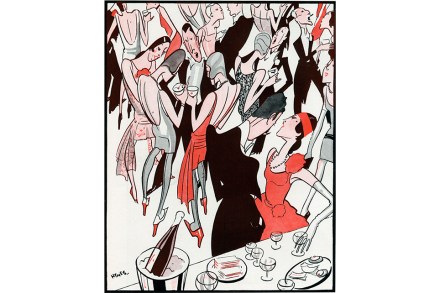
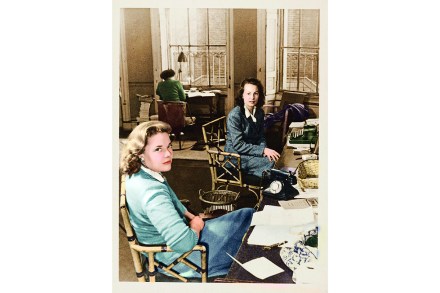
This article is in The Spectator’s February 2020 US edition. Subscribe here. Encapsulations of a particular art-world demographic nearly always fall wide of the mark. Just as there were plenty of people on hand in the 1950s to protest that the Angry Young Men were neither especially angry nor exclusively male, so countless chroniclers of interwar social life complained that the Bright Young People were neither bright nor young. But the critic Peter Quennell’s phrase ‘Lost Girls’ to describe the gang of female twenty-somethings who worked on the magazines and populated the parties of Blitz-era literary London carries an unmistakable tang of conviction.

lost girls

Why do Americans and Brits write about alcohol so differently?

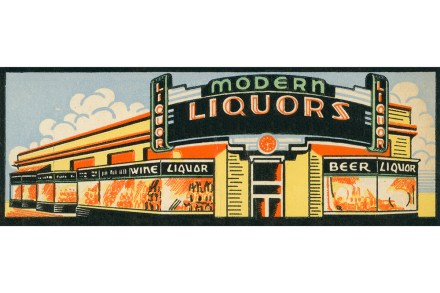
This article is in The Spectator’s inaugural US edition. Subscribe here to get yours. ‘No nation is drunken where wine is cheap,’ Thomas Jefferson famously said, laying the blame for insobriety firmly on ‘ardent spirits’. The third president was a notorious wine-fancier with a particularly soft spot for Sauternes, yet it is true that countries with a long history of winemaking tend towards more easeful drinking. Despite the ghastly interregnum of Prohibition, America has become a serious wine-producing nation — and yet ardent spirits seem to have left far stronger a mark, on the national mindset and on the nation’s prose.

liquor american alcohol

Novel advice for incoming STEM freshmen

When college and university students arrive on campus this month, they will choose their courses with an eye on future summer internship and postgraduate career opportunities. Enrollment in the humanities is in free-fall, while the rapid growth of American technology companies suggests that STEM is the only path to a prosperous career. But as the novelist Sigrid Undset writes, 'there is nothing in the experience of man which shows that the raw material of human nature has ever changed.' My advice to students interested in a career in investing or technology: read more novels. Business school courses offer practical case studies to learn from others’ strategy success in key functions and industries.

novel books

Anthony Powell gets the superb new biography he deserves

Great novelists come in all shapes and sizes, but one thing they all share is a status of half-belonging. If they had no foot in the world at all, they could hardly understand it; if they completely belonged, they could hardly understand what was distinctive. One of the pleasures of this excellent biography is fully appreciating the peculiar, liminal, not-quite-successful position Powell wrote from, and described with great exactness. In half a dozen social and professional milieux, he was a tolerated, perhaps useful minor presence, like a spare man at dinner. From the standpoint of a rather failed editor, screenwriter, soldier, socialite, he stood by and watched the world. In each case, one suspects, the subjects hardly realized they were being observed.

anthony powell