Europe

Cameron leaves Cannes with an IMF headache

From our UK edition

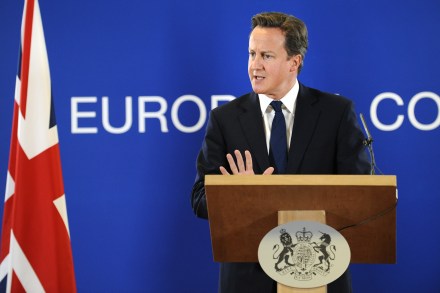
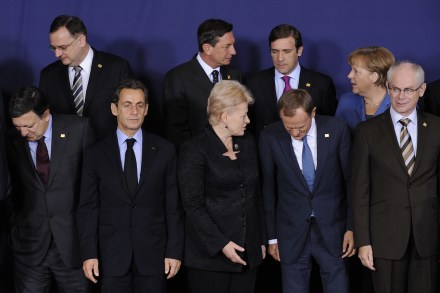
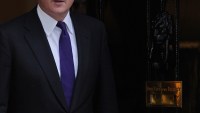
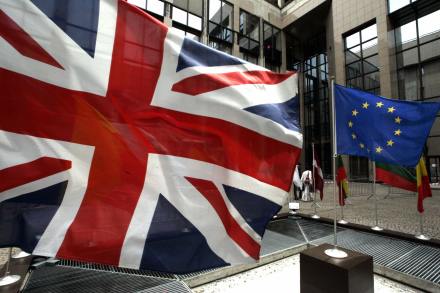
https://www.youtube.com/watch?v=Qm6yP-5RGK8 The Cannes summit leaves the world no further forward on its quest for some kind of solution to the Eurozone crisis. Strikingly, the Germans still won't agree — despite huge diplomatic pressure — to the ECB fulfilling the traditional emergency function of a central bank and acting as lender of last resort. This is a blow when you consider that Cameron thought there was a real possibility Merkel would budge on this after last week's European Council meeting. It also provides Cameron with a domestic political headache. For if the ECB won't act, the IMF will have to take more of the strain — and increasing Britain's contributions to the IMF in the current political climate is not going to be easy.

Envoy for repatriation

From our UK edition

A few days ago Douglas Carswell laid out a way for the Prime Minister to regain the eurosceptics' trust. One of his ideas was to replace the UK's new chief diplomat in Brussels with someone directly accountable to Parliament. This idea has a snowball's chance in hell of succeeding. First, the PM has resisted all sorts of political appointments – he's even limited the number of Special Advisers – and I don't think he's about to start. Second, doing so would upend a constitutional principle: that officials report to the government, not the legislature. For this reason even generals are not approved by Parliament, as they are in the United States.

BREAKING: Greek PM Papandreou offers his resignation

From our UK edition

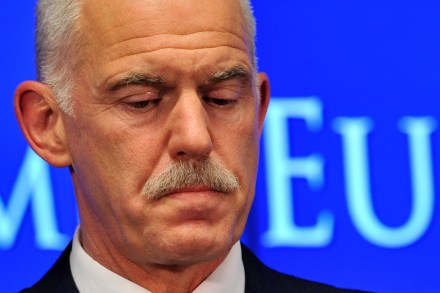
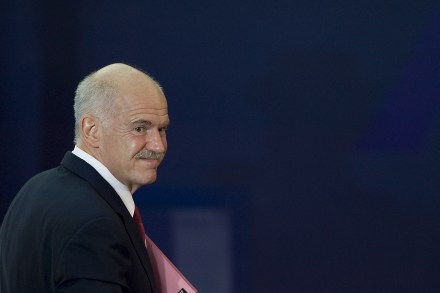
The BBC reports that Papandreou will resign today and ask the Greek president to approve a new coalition government, with former ECB vice president Lucas Papademos likely to take over as Prime Minister. Opposition leader Antonis Samaras has said: "I'm asking for the formation of a temporary, transitional government with an exclusive mandate to immediately hold elections. And the ratification of the bailout deal from the current parliament." This is now the main question: will Papandreou's replacement approve the bailout before new elections are held? UPDATE: It now seems Papandreou might not be resigning after all.

The euro is destroying Europe

From our UK edition

This week's issue of The Spectator hits the newsstands today. Here, for CoffeeHousers, is James Forsyth's Politics column from it: Last week’s rebellion by David Cameron’s backbenchers in support of an EU referendum ended eight years of peace in the Tory party on the European question. Now, the offer by the Greek Prime Minister of a referendum on the bailout package — designed to appease nervous Greek Socialist party backbenchers — means that the uncertainty surrounding the eurozone will drag on into the New Year. George Osborne regards the confusion surrounding the future of the single currency as the single biggest obstacle to a British economic recovery.

Merkel and Sarkozy try to hold the euro together

From our UK edition

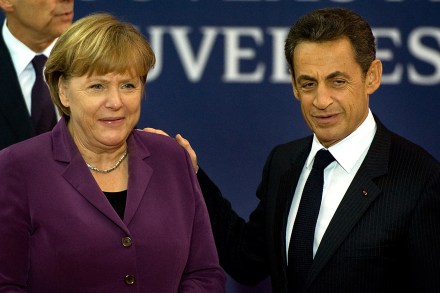
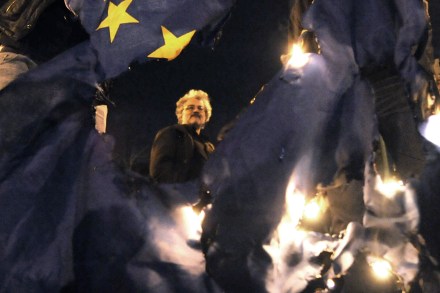
Right about now, Nicolas Sarkozy and Angela Merkel are having George Papandreou for dinner. There have been all sorts of rumours today about what Sarkozy and Merkel will demand from him. Thankfully, they seem to have abandoned plans to tell him to cancel the referendum. But they still seem keen to dictate the question and the timing to him. How that will go down with the Greek demos remains to be seen. One thing is clear, though: the euro is now destroying the whole European project. The European Union’s claim to be a force for peace, stability and democracy in Europe is rapidly disappearing into the Athens smog. The wholesale sacking of senior Greek military officers shows that there are real fears in Athens of a military coup.

The Greek land mines that Cameron must avoid

From our UK edition

When the topic of Greece comes up at PMQs, David Cameron will need to avoid stepping on three land mines. The first task is not to say anything about what is going on in Athens, or Rome for that matter, that will exacerbate market anxieties. The second is a diplomatic challenge, to avoid anything that would sour Britain’s pitch ahead of the G20. The third, and perhaps most difficult one, is to keep his own backbenchers on side.   An ever growing number of Tories doubt that a 17 member Euro and fiscal union is in Britain’s, or Europe’s, interests. Already, some Tory backbenchers are talking about going to Greece, if invited, to campaign for a No vote. Cameron will need to avoid antagonising this group.

A Damoclean sword hovers above Papandreou

From our UK edition

This is not Greek tragedy, it is a farce. Prime Minister George Papandreou's idea to hold a referendum on the Greek deal has done the exact opposite of what he must have intended. Instead of giving him a new mandate, it seems it will take the existing one away from him. Several MPs and PASOK officials have called for his resignation or for the formation of a National Unity Government. Some have even resigned, reducing the government's majority in parliament. European reaction has arranged from studied politesse to outrage. Ireland's Europe minister has called the referendum idea a "grenade". Privately, European politicians are seething. The Greek PM must know he has stepped in it, as his closest allies are busy briefing the press about his decision.

The wisdom of Eurosceptic crowds

From our UK edition

How much does public opinion on Europe matter? A poll for today's Sunday Times found that 41 per cent want out of the EU and on the BBC1 Politics Show today, Jon Sopel confronted Douglas Alexander with this statistic. Wee Dougie replied that, on Monday's vote, he was in the "no" lobby with the leaders of all British political parties – so of course he was in the mainstream. This raises a crucial issue: the vast disconnect over Europe between the political elite and the masses. To declare my hand: I'm in favour of our EU membership and regard the free movement of people, goods and services as a noble endeavour (albeit one which the EU has yet to live up to). But I'm in the minority.

American isolationism and its consequences

From our UK edition

I've spent the last couple of days in the United States, far away from the brouhaha in Europe. What has struck me most during meetings with US officials is how low down their list of priorities Europe — and indeed Britain — comes. This is an Asian Century, and the US means to focus inwards and eastwards but not elsewhere. As an official put it to me, "we see Britain moving away from Europe and being distant to us." There is even talk of closing down US European Command. This new focus will have a number of consequences. Take Libya, for instance. The UK and France could have fought the war, and won, without the US, but American involvement allowed casualties and collateral damage to be minimised.

The Great Repatriation Question

From our UK edition

And the word of the weekend is ‘repatriate’. Not only do we have yet another poll showing that the British public, when asked, would prefer to tug powers back from Brussels, but there's also this eyecatching story in the Daily Telegraph. No.10, we're told, is pushing Whitehall departments to determine just exactly where Europe's influence could be counteracted. There is also a backbench group of Tory MPs providing covering ideas.  So why hasn't this been happening before now, particularly given how frustrated those around David Cameron have become with the constant torrent of EU directives? Part of the answer is that the events of the past week have made all this more urgent. But part of it is that, actually, this work has already been going on in Whitehall.

From the archives: Cut off in Brussels

From our UK edition

Let's end the working week how it began: with talk of a European referendum. The talk, in this case, is provided by Daniel Hannan, who wrote an article for us in 2008 about his efforts to promote a referendum on the Lisbon Treaty from within the European Parliament. Here it is, our latest excavation from the Spectator archives: For MEPs, public opinion is merely an inconvenience, Daniel Hannan, The Spectator, 22 November 2008 I’ve just done the most pointless thing an MEP can do: I’ve delivered a speech to the European Parliament. Actually, ‘speech’ is rather a grand word for my little soliloquy which, under the rules, had to be squeezed into 60 seconds.

Europe’s new battlefield

From our UK edition

The long flight from Australia should give David Cameron plenty time to think about Europe, and how it just won't go away. He didn't want this battle — not now, not ever. But in the Daily Telegraph today, the first in what will be a weekly column, I lay out the battlefield that awaits him on his return. First, this bailout is not the end. A trillion Euros needs to come from somewhere, and today the Chinese are being tapped up — God knows what we'll agree to in return. But that doesn't address what is, as Mervyn King has said, a solvency issue rather than a liquidity issue. And the tighter these Eurozone countries squeeze together, the more tension we can expect.

The government’s European tribulations continue

From our UK edition

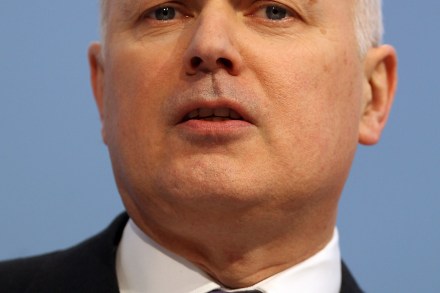
It has been a fraught and ill-tempered week in Westminster. And — whether it is the rumour that Tory backbencher Andrea Leadsom told George Osborne to "f**k off", or David Cameron's dismissal of Ed Miliband as a "complete mug" — most of it has had Europe at its root.  So it is, too, with the latest news of government strife. Iain Duncan Smith, it's reported, had a ferocious row with the Tory chief whip, Patrick McLoughlin, over the EU referendum . Apparently, he warned that, “If you ever put me in this position again, that’s it”. As it happens, there is more on IDS's disgruntlement in Charles Moore's column for the latest Spectator, out today.

Summit for nothing?

From our UK edition

The punchline to yesterday's eurosummit comes in the very first paragraph of the official statement, released in the darkness of morning: "The euro continues to rest on solid fundamentals." Now that you've brushed away the tears from that one, what was it that was actually agreed upon in the end? The main measure is effectively a fiscal target for Greece: its national debt, expected to peak at around 180 per cent of GDP in 2013, will come down to 120 per cent by 2020. And this will be achieved by cutting the value of bonds held by private investors in half, alongside further waves of privitisation and Greek frugality. Brussels will strengthen its "monitoring capacity on the ground," to ensure that Athens abides by these strictures.

Ellwood returns as PPS to the Minister for Europe

From our UK edition

Tobias Ellwood has been appointed as PPS to the Europe Minister David Lidington. The vacancy had been created when Adam Holloway decided to resign from the job so that he could vote for the EU referendum motion. This appointment is a nifty piece of party management. Ellwood was Liam Fox’s PPS but when Fox resigned, the new Defence Secretary Philip Hammond decided, to the resentment of some Tory backbenchers, not to keep him on. Instead, Hammond chose to appoint Clare Perry, a member of the 2010 intake who had worked for George Osborne and Hammond in opposition. Some Tory MPs, and particularly those who felt passed over, saw this as evidence that the party was being run by a clique. Ellwood’s return will be seen as an olive branch from the Cameroons to the party.

Italian comic opera

From our UK edition

Politics is serious business, especially when the world’s economy is at stake, but so much of what’s going on in the eurozone now – especially in Italy - resembles opera buffa. Today in Rome, amid rumours that Berlusconi would throw in the towel in January (but not because of bunga bunga, because of bungling over economic reform), a few deputies in parliament came to blows.   The fisticuffs was over that hotly contended if not-very-sexy issue – the retirement age. At least two members of the Northern League, a key party of Berlusconi’s coalition, fought with members from the opposition FLI. ‘Two deputies grabbed each other by the throat as other parliamentarians rushed to separate them,’ reports Reuters.

Miliband fails to connect

From our UK edition

Easy-peasy at PMQs today. All Ed Miliband had to do was slice open the Coalition's wounds on Europe and dibble his claws in the spouts of blood. But his attack had no sense of bite or surprise. And his phraseology was lumpen. He used all six questions gently stroking the issue of Europe rather than driving a nail through it.  He asked about growth. He asked about the '22 committee. He asked about Nick Clegg's "smash-and-grab" phrase to describe the repatriation of powers. He asked about the social chapter. He asked about everything he could think of, and it was clear he couldn’t think of the right thing to ask. At the climax he sounded like a nursery-assistant scolding Cameron for "pleading not leading" on Europe. Desperately flaccid oratory.

Cameron battles it out

From our UK edition

David Cameron came out swinging today at PMQs. Knowing that Ed Miliband would try and exploit the Tory rebellion over Europe on Monday night, Cameron went for the Labour leader. He called him a "complete mug" and mocked him as being detached from reality. At the end of the exchange, Osborne gripped Cameron's shoulder in congratulation – a sign that the pair knew that they needed a strong performance today to calm their backbenches. The other notable aspect of PMQs was its emphasis on the new political battleground: women. The Labour MP Gloria Del Piero asked the PM why the government was more unpopular with women than men, which gave Cameron a chance to rattle off the government's female-friendly initiatives.

Why this is not the time for an EU referendum

From our UK edition

Having spent five hours in the debate last night, one thing was absolutely clear: we are all Eurosceptics now. So why did I choose to vote against the motion? It is because I believe that anger and frustration alone will not resolve our justifiable grievances towards the EU; we need a clear-eyed strategy to move forward.    We can all agree that Europe in its current form is not working for us. We have passed powers to Brussels at the cost of undermining the sovereignty of Parliament. Regulations that hinder our growth have not only been adopted but gold-plated, and with the Lisbon Treaty we are saddled with a constitution that no-one wanted and no-one voted for.