Europe

Barometer | 25 August 2016

From our UK edition

Golden years How many Olympic events would Team GB have to win before we could earn back the gold reserves sold by Gordon Brown? — Olympic gold medals are in fact gold-plated silver and contain only 6g of gold. Between 1999 and 2002 Gordon Brown sold off 395 tons of gold — enough to mint 64.7m medals. Assuming the number of golds on offer at the summer Olympics remains 812, as at Rio, that would mean winning every event at 79,679 Olympiads, taking us to the games of ad 320736. — It would be a different story if, as last happened in 1912, the medals were solid gold. With 500g of gold in each medal, we could achieve the feat by ad 5848.

High life | 11 August 2016

From our UK edition

Gstaad   ‘He flies through the air with the greatest of ease, that daring young man on the flying trapeze.’ As everyone knows, life’s unfair, but this is ridiculous. An American daredevil falls out of an aeroplane at 25,000 feet without a parachute and manages to land on a postage-stamp-size net without a scratch. The poor little Greek boy falls off a balcony ten to 15 feet high, lands on gravel and breaks many bones in his body. Being encased in plaster is similar to living under a strict dictatorship, North Korea, for example. There’s no crime, no muggings, but as far as doing what comes naturally, fuggetaboutit. Self-doubt and cultural pessimism are twinned to physical immobility and pain.

Why an early election would be bad for the Tories

From our UK edition

Ten points ahead in the polls, Theresa May regarded as the best Prime Minister by a majority of voters and both Labour and Ukip in disarray. It is little wonder, as I say in The Sun today, that some Tories are beginning to get excited about an early election. But going for an early election would be a massive mistake for the Tories. First, what the public seem to like about Theresa May is that she is a no nonsense politician who gets on with the job in front of her. Voters appear to like her refrain that politics isn’t a game. But calling an early election would destroy all this for it would be game playing on an epic scale, a move designed to take advantage of Labour weakness. Next, you can’t know how long a honeymoon is going to last.

Money digest: Britain braced for ‘Super Thursday’ interest rate cut

From our UK edition

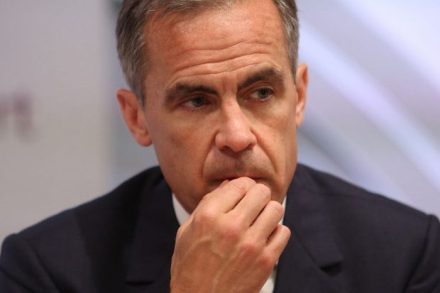
Britain’s financial status could be downgraded this week amid reports the Bank of England will cut interest rates on Thursday. The Guardian says that the Bank's Monetary Policy Committee will examine the latest growth forecasts and inflation report, and then make a decision on whether to cut interest. If they do, it will be the first time the rate has changed since it was set at 0.5 per cent in March 2009. Mark Carney, the governor, warned that a vote for Brexit could tip the UK into recession and the figures seem to back up this pessimism, according to the paper. In May, growth was forecast at 2.3 per cent, but economists now believe that it could be as little as less than one per cent. It is expected that the bank will cut interest rates to 0.25 per cent.

Terror is the new normal for Germany and France

From our UK edition

Update: This piece was written yesterday and so is already out of date. This morning two armed men entered a church near Rouen during Mass.  They took the priest, two nuns and a number of congregants hostage. It appears that they slit the priest's throat before themselves being killed by French security forces.  Nobody can think of any possible motive, though people claiming that attacking Christians at prayer is not a traditional Islamist practice have clearly not paid attention to Iraq, Syria, Nigeria, Pakistan, Egypt or any number of other countries around the world. Well this is all going very well isn’t it?

Theresa May gets a warmer than expected reception in Paris, and a pledge on the border

From our UK edition

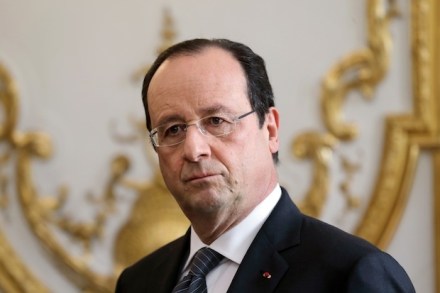
Paris was meant to be the more difficult leg of Theresa May’s first European tour as Prime Minister. But May’s press conference with Francois Hollande was far more cordial than expected. The French President was at pains to stress all the forms of cooperation that would continue between the two countries after the UK  left the EU. He continued to back the Le Touquet agreement which keeps the UK border at Calais.  However, he still wants Article 50 served quickly; ‘the sooner, the better’ was how he put it. There was, though, a tiny bit of softening on the question of talking about things before then. May, for her part, turned in a crisp performance.

Brexit won the battle. But now we’ve lost the war

From our UK edition

When Jonathan Swift wanted to mock the immeasurable superficiality of British politics, he imagined it as a contest between the Big--Endians and the Little-Endians. That is, between those who believed fervently that the only way to open a boiled egg is at the pointier end; and those certain that the only proper way to attack it was from the larger, more rounded end. But that was in the 1720s and Swift was joking.

Theresa May has just shown she really is serious about Brexit

From our UK edition

‘Brexit means Brexit’ has been Theresa May’s message since she started running for the Tory leadership. But Brexit could mean a whole variety of things. For example, a Norwegian-style deal with the EU would, technically, be ‘Brexit’. But now, Theresa May has shown real intent. She has demonstrated that she really is serious about this. She has appointed three leavers to the key Brexit-related jobs in government. David Davis will be Secretary of State for exiting the EU, Liam Fox gets the International Trade job and Boris Johnson the Foreign Office. The David Davis appointment is particularly striking. He resigned, unexpectedly, from David Cameron’s shadow Cabinet.

Merkel tells Juncker: Britain needs plenty of time to invoke Article 50

From our UK edition

Der Speigel has published a fascinating write-up giving last week’s extraordinary events from Angela Merkel’s perspective. Specifically, it seems, she’s had enough of Jean-Claude Juncker, the egregious president of the European Commission, and has told him to bow out from future negotiations with the UK. She’s fed up of him insisting that Britain rushes to invoke Article 50. Indeed, her “utmost concern,” says the magazine, is “giving Britain as much time as possible” for an orderly transition. Here’s an extract:- At 1 p.m. on the Friday after the Brexit referendum, Merkel makes a statement to Berlin journalists in which -- in contrast to Schulz -- she does not demand a rapid British withdrawal.

The Brexit test

From our UK edition

Stephen Crabb made a passionate plea this morning for Tories to stop thinking in terms of Remain and Leave when it comes to picking a leader. He warned that if people carry on doing this, it will lead to the party splitting. But all things being equal, I do think it would be best for the next Prime Minister to be a Leaver. After all, David Cameron resigned because he had campaigned for Remain and the country had voted to leave and he thought that made it impossible for him to chart the country on the new course it must now follow. There are two main reasons for thinking a Leave PM preferable. First of all, this would provide some accountability for what Vote Leave promised in the referendum.

Forget the fighting. We’re entering a period of unparalleled opportunity for the Tories

From our UK edition

Auf wiedersehen, Boris. He’ll be back, like a blond, bloated Voldemort inhabiting another life form – Top Gear host? Archbishop of York? Or endless BBC camping tours of Britain on a bike, the Portillo of the Portacabin? As Boris’ agent collects the offers – and his publishers are still owed a Shakespeare biography by the end of this anniversary year - he leaves behind him a Conservative Party scarred but resilient. There’ll be recriminations this week. Yet there’ll also be enduring relief, as one of Britain’s oldest institutions finds itself finally free of wrangling Etonians, chaps whose Brobdingnagian entitlement so undermined the gospel of One Nation inclusivity that both presumed to preach.

Disunited Europe: Brexit exposes cracks in EU relations

From our UK edition

Much of the media attention in recent days has been focused on the vacuum of leadership in Westminster. However, Britain’s momentous decision to leave the EU has exposed deep cracks in relations with the European Union. Almost immediately after the Brexit vote, nations across continent woke up to the new possibility of leaving the bloc. This has left Europe’s leaders scurrying to prevent the so-called 'Brexit contagion'. The Eurosceptic charge was led by Marine Le Pen who called for a referendum in France and all other EU states. President Hollande has since rejected her calls, however, it would seem that Le Pen is echoing concerns of the majority in France.

Jo Johnson backs Boris

From our UK edition

Jo Johnson has declared his support for his brother’s leadership bid. In a statement to The Spectator, the minister for universities and science says: ‘Boris and I were on different side of a hard fought referendum campaign. But it is time to move on, time to unite and time to deliver. I have known my brother for longer than anyone in parliament. He is the great communicator—and I have no doubt at all that he is the person best placed not just to secure a new settlement for Britain in Europe but also to provide the optimistic, confident and outward-looking leadership we will need in months and years to come.’ Now, on the one hand Jo backing his brother is not that surprising.

Brexiteers need to act now, or become the most hated people in history

From our UK edition

The British constitution is built on compromise and moderation; it's one of the main reasons why this country enjoyed a period of relative domination in the 19th century while our neighbours tore themselves apart. Referendums do not encourage compromise, which makes them such bitter devices, and why the last few weeks have been so painful. But now that the British people have made their choice – and I have no idea if it was the right one – we have the opportunity to make a compromise that will cause the least amount of pain. I'm talking about the Norway option, which an increasing number of Conservative MPs are coming around to. This is a half-way house between membership of the EU and separation.

No, Brexit wasn’t a defeat for humanist values – or for love

From our UK edition

Perhaps the most important pundit to have emerged from the earthquake is Giles Fraser. As a left-wing vicar and longstanding anti-racism campaigner, he makes it harder for people to depict the Brexiters as closet racists. He disrupts the defeated Remainers’ assumption that they represent progressive values, humanism. The same applies to the handful of pro-Brexit Labour MPs, but MPs can be assumed to have murky motivations. On last night’s Question Time, Fraser quoted Galatians (one of the readings in churches yesterday): Love your neighbour as yourself. We need to get beyond our current divisions, and trust in this supra-political principle, he said. Contrast this with today’s offering from Zoe Willams, his fellow Guardian columnist.

At least the howls of Remain cry-babies give us something to snigger at

From our UK edition

A very good piece by Libby Purves on the petulance, whining and spite of our liberal elite. Libby got there before I did, annoyingly – and has some terrific examples in her column. I bought Saturday’s Guardian for the sole purpose of harvesting a bunch of tantrums from the letters page – and it did not disappoint. 'Utterly ashamed to be English' and 'I’m moving to Scotland' (good) and a hugely pompous encomium from an idiot called Michael Rundell, of Canterbury, about the 'stupidity, mendacity and xenophobia' of the Leave campaign. Long may they howl – these are somewhat fraught times and it’s nice to have something to snigger at.

Set out your Brexit model, Foreign Secretary tells Tory leadership contenders

From our UK edition

This morning, Philip Hammond has insisted that those running for the Tory leadership explicitly set out how they intend to leave the EU. The Foreign Secretary told Robert Peston that he wanted to know how they would manage the trade-off between single market access and free movement. Hammond himself appears to favour a version of the Norwegian model; in the single market and accepting free movement. Now, I think we can take this as meaning that Hammond won’t back Boris Johnson. Hammond accused Boris and other Leavers of making ‘contradictory promises’ in the referendum campaign.

Jonathan Hill’s resignation is an act of gross irresponsibility

From our UK edition

The UK’s EU Commissioner, Jonathan Hill, has resigned today saying that he couldn’t carry on as ‘though nothing had happened.’ This strikes me as an act of gross irresponsibility. Britain has not yet invoked Article 50, the two-year process for leaving the EU, and Hill staying on would have provided some continuity at a time of uncertainty. Supporters of his argue that his resignation was the honourable thing to do as Britain is no longer part of the team in Europe. It might have been right that Hill should have volunteered to move to another portfolio. But an outright resignation seems excessive and an over-reaction. Even Jean-Claude Juncker tried to persuade Hill to stay on.

Will Boris, Gove and the Brexit band of brothers run for No 10 together?

From our UK edition

Westminster is still digesting what happened on Thursday night. But before Britain can turn itself to the big question of how to leave the EU, a new Prime Minister has to be chosen by the Tory party. Nearly every Tory MP I’ve spoken to since Friday morning is of the view that the new PM will have to be an Outer. They argue that the public would find it find odd to vote for Britain to leave, and then have a new PM chosen who was on the losing side in the referendum. There are, as I report in The Sun this morning, Cabinet Ministers who want Michael Gove to run. They think he would be the best PM of the Outers and that he would find it easier to reunite the party than Boris. But, I understand, Gove is not planning to put himself forward.

The Spectator’s Notes | 22 June 2016

From our UK edition

Commentators have complained about this referendum — its ‘lies’, bad manners, bitterness. Without exactly disagreeing, I would nevertheless argue that it has performed at least one of the roles intended, which is to encourage people to consider the issue. If you are actively engaged in political debate, as candidate, activist, journalist etc, you believe (often erroneously) that you have thought through the big questions. If you are an unpolitical voter, you often haven’t. This is particularly true of the European question because, for 40 years, enormous efforts have been made by all the political parties to discourage you. David Cameron only finally conceded to us the right to have our say because, for internal party reasons, he was desperate.