Europe

Losing our religion

From our UK edition

Sir James MacMillan’s European Requiem, performed at the Proms on Sunday, isn’t about Brexit. The composer had to make this clear in a Radio 3 interview just before the broadcast, because the BBC was just itching to cast the work — a melancholy score, despite its thunderous drumbeats — as a lament for us leaving the EU. That would have been neat, given that the second half of the concert consisted of Beethoven’s Ninth, whose ‘Ode to Joy’ has been clumsily appropriated by Brussels. Incidentally, some Remainers in the audience chattered through the symphony’s first three movements, impatient for their Big Tune.

Poor conduct

From our UK edition

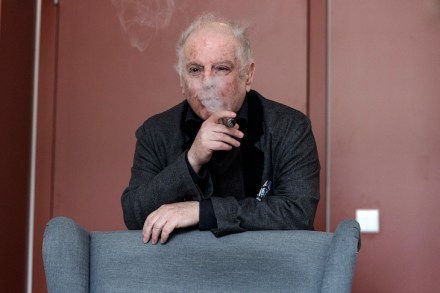
Last weekend Daniel Barenboim brought the Staatskapelle Berlin to perform at the BBC Proms for a cycle of Elgar’s symphonies. As Elgar only finished two of the things, it is among the easier symphonic cycles to pull off. But the Staatskapelle played beautifully over two nights at the Albert Hall, with moments of outstanding musicianship. They were let down only, at the end of the second evening, by their conductor. Turning around on the podium to face the audience, he announced that there was something he wanted to say. ‘I don’t know whether all of you will agree with me, but I would really like to share that with you.’ And then he began to spoil the evening.

The public vs the politicians

From our UK edition

These are difficult times across Europe. From the endless iterations of the eurozone crisis to the Brexit negotiations beginning in earnest — these and many more challenges will face our continent for years to come. But underneath them all, lies a whole set of other ructions: subterranean events which lead to subterranean public concerns and subterranean public discussions. Foremost among such deep rumblings are the anxieties of the European publics on matters to do with immigration, identity and Islam. These things are closely connected (so closely that I recently put them together in the subtitle of my book, The Strange Death of Europe), but they are unarguably stifled discussions.

Pew poll shows most Europeans want to take back control from Brussels

From our UK edition

Many in Brussels are anxiously looking out for any sign of what has been termed 'Brexit contagion' – the idea that the Brits might encourage others towards leaving the EU. The findings of a major Pew survey of European opinion does not point to a rush towards the exit, but it certainly does flag up dissatisfaction with the EU and its handling of many of the most pressing issues facing the continent.  Take, for example, trade policy: should a country set its own alliances or leave it to the EU? This is, in effect, a question about the Customs Union – staying in this union is often taken to define 'soft Brexit'.

Why do the British have such terrible taste in voices?

From our UK edition

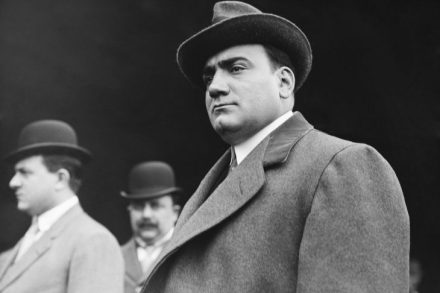
When it comes to voices, the words of the apocryphal Times headline come to mind: ‘Fog in the Channel; Continent cut off’. It’s one sign of the deep cultural differences between ‘us’ and ‘them’, which maybe made Brexit inevitable. You might not think a taste in voices would have any connection with this cultural divide. But for me, an Italian-born and trained soprano, who speaks opera’s mother tongue, it seems blindingly obvious. It strikes me that Brits in general have very different ideas of what an operatic voice should sound like, compared to the Italians, Spanish, French, Germans and also, interestingly enough, the Americans.

Erdogan keeps winning because his opponents never learn

From our UK edition

Istanbul President Erdogan hardly swept to victory yesterday. But with 51 per cent of the electorate turning out in favour of his plans to transform Turkey into a state ruled by a hugely powerful presidency rather than the parliament, he now has his mandate to reshape the country in his own image – more religious, more authoritarian, and set to swivel away from Europe while forging new relations with its old Ottoman territories. His supporters celebrated well into the night, lighting flares, driving around the cities with their horns blaring, and waving flags bearing the face of their hero. Meawhile, thousands of distraught people took to the streets in my Istanbul neighbourhood, a proudly secular district which delivered an 81 per cent no vote.

Remainers must learn from the optimism of the Brexiteers

From our UK edition

In an age when people pride themselves on their cynicism, it's almost touching to remember that one of the most powerful forces in politics is still optimism. We may routinely dismiss politicians as self-serving vermin, but when the time comes, we generally choose the self-serving vermin who tell the best story of a brighter tomorrow. Better a smiling cockroach than a gloomy one. Optimism is one of the great fault-lines that run beneath the Brexit debate, one that helps explain why the Brexiteers are making the running and why those who still stand opposed to Brexit still have a lot to learn. Simply, the Brexiteers are setting the pace because they realise people want to hear good news, want to be told a story of improvement and success.

Berlusconi is back – and his eurozone idea isn’t completely barmy

From our UK edition

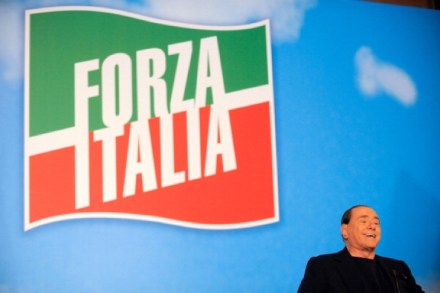
A potentially significant moment in the travails of the EU was lost in the drama of John Major’s (re-)intervention into the Brexit debate on Monday. Over in Italy, another former prime minister, Silvio Berlusconi, also made an intervention. He called for Italy to introduce a separate currency alongside the euro which would allow it to 'recover monetary sovereignty'. Berlusconi half floated a suggestion along these lines back in 2014. But now he says he is 'completely convinced' by it. He suggests that Italy should keep the euro for imports and exports, while using a different currency – a new domestic money supply – for state payments to 'help the left behind'.

High life | 23 February 2017

From our UK edition

From my chalet high up above the village, I look up at the immense, glistening mountain range of the Alps, and my spirit soars. Even youthful memories receding into sepia cannot bring me down from the high. Mountains, more than seas, can be exhilarating for the soul. Then I open the newspapers and the downer is as swift as the onset of an Alpine blizzard. Television is even more of a bummer.

The House of Commons votes for Brexit

From our UK edition

The drink will be flowing in the government whips’ office tonight. For the Brexit Bill has passed through the Commons unamended and with an absolutely thumping majority at third reading of 372. This means that a clean bill will go to the House of Lords. This will strengthen the government’s hand there as peers will be more reluctant to make changes to a clean bill and one that has passed the Commons with such a large majority. Despite all the talk of knife-edge votes, the government’s majorities tonight were pretty comfortable—30 or above on all the amendments.

Don’t bet on Trump putting a stop to the hounding of British banks

From our UK edition

President Donald Trump is demolishing his predecessor’s legacy as fast as he can sign executive orders, but one thing for which the Obama administration will be remembered is its zest for imposing fines on UK and European banks. In a flurry of Department of Justice activity ahead of the transfer of power, Deutsche Bank agreed to pay $7.2 billion and Credit Suisse $5.3 billion for misleading investors in mortgage-backed securities before 2008, while Deutsche also copped a $630 million penalty (from UK as well as US regulators) for alleged money-laundering on behalf of Russian clients. Meanwhile, Royal Bank of Scotland set aside another $3.8 billion, making a total provision of $8.

My pick for the pious political hypocrite of the week award

From our UK edition

I would like to propose Labour MP Tulip Siddiq as the winner of the pious political hypocrite of the week badge for her response to President Trump’s temporary immigration halt. From today’s Guardian we learn that Ms Siddiq is one of a number of Labour MPs who have warned that the UK Prime Minister’s allegedly ‘feeble’ response to President Trump’s recent immigration order risks making UK Muslim communities feel ‘disenfranchised and disillusioned.’ Apparently the consequences of this failure could be ‘played out on our streets’ and ‘turning a blind eye to the reality of this ban we run the risk of losing the trust of an entire generation of young British Muslims.

A US / UK free trade deal is the big prize for Theresa May

From our UK edition

Theresa May’s team will be basking this morning in the write-ups of her successful visit to Washington. As I say in The Sun this morning, the big prize for her is a US / UK free trade deal. Government ministers think that, given the political will on both sides, the deal could be negotiated in just eight months. There is also confidence in Whitehall that the US will be prepared to grant an exemption for public services which would ‘protect’ the NHS. This should do much to reduce the intensity of the opposition to the deal. Trump’s protectionist rhetoric is often cited as a reason why a US / UK deal won’t happen, or will be very limited.

Why the Germans are so worried about the Trump administration

From our UK edition

One of the advantages for Theresa May in being the first foreign leader to visit the Trump White House is that other European government are eager for information about what he actually plans to do. Both Handelsblatt and Spiegel have good pieces detailing the German government’s concerns about its lack of contact with, and information about, the new administration. Spiegel reports that an offer from Angela Merkel’s team for her to travel to the US at short notice to meet the new president has not yet received a reply. While the German Ambassador to the US’s last meeting with Jared Ksuhner, Trump’s son in law and—by general agreement—the most powerful figure in the new White House, ended with Kushner asking, ‘What can you do for us?

What does President Trump do to Brexit?

From our UK edition

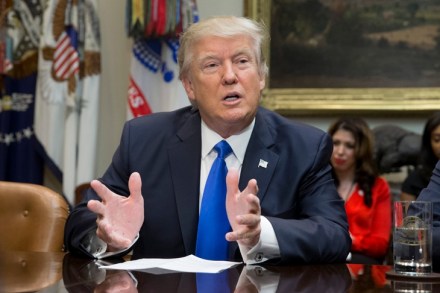
With Theresa May expected to head to Washington next week to see President Trump, I have a look at what the Trump presidency might mean for Brexit in my Sun column this morning. Despite his protectionist rhetoric, on full show again yesterday, Donald Trump is keen on a US / UK trade agreement. He has told people that he would like to get personally involved in negotiating the deal. I understand that his transition team has done more work on it than they have for any other agreement. Squaring the circle between Trump’s protectionist rhetoric and his enthusiasm for a US / UK deal isn’t as hard as it first looks. The UK is not one of the low wage economies that Trump rails against the US doing deals with.

Trump Team preparing US / UK trade deal

From our UK edition

Boris Johnson returned from the US this week boasting that the UK was now ‘first in line’ for a trade deal with the US. He said that the Trump team and the new Congress ‘want to do it fast’. But as I write in The Sun this morning, the situation is even more advanced than this. I understand that the Trump team is already working on the outlines of a US / UK trade deal. Interestingly, they want the deal to be pencilled in before the UK leaves the EU, though the UK could not formally sign it until it has left the bloc. The US’s keenness for a trade deal with the UK strengthens the case for the UK leaving the customs union. Inside the customs union, Britain is not able to do its own comprehensive trade deals.

Leak suggests EU will seek ‘special’ deal to access the City post-Brexit

From our UK edition

The Guardian has a very significant story on its front page tomorrow. It has obtained notes of a meeting that Michel Barnier, the EU’s chief negotiator, had with senior MEPs this week. These notes show that Barnier told them that he wanted a ‘special’ deal that would guarantee access for the EU firms and countries to the City of London’s financial markets. Interestingly, Barnier also said—according to The Guardian’s account—that ‘There will need to be work outside of the negotiation box … in order to avoid financial instability.” This suggests that Barnier shares Mark Carney’s view that there are financial stability risks for Europe if the EU cuts itself off from the City of London.

Inflation creeps back like the forgotten whiff of cigarette smoke

From our UK edition

From supermarkets to superyacht builders, sales figures are remarkably buoyant: consumer debt may be rising too, but no one can say the New Year economic mood is markedly downbeat. This column feels obliged to find something on the horizon to worry about, however, and my telescope is focused on inflation. If deflation was a real threat to developed economies in recent years, the pendulum is now swinging the other way. UK inflation is expected to hit 3 per cent by late 2017, what with higher import costs generally thanks to the weak pound, fuel-price rises as a result of Opec’s effort to restrict oil production, the pass-through to consumers of higher business rates in London and the south-east, and higher rail fares for no good reason at all.

The other lesson that Theresa May must learn from Cameron’s failed EU negotiation

From our UK edition

Theresa May has clearly learnt one lesson from David Cameron’s failed negotiation with the EU. As I write in The Sun this morning. she has realised that if she just asks for what cautious officials think she can get, then she won’t get enough to satisfy the voters—hence Sir Ivan Roger’s resignation as the UK representative to the EU. But an even bigger problem for Cameron’s renegotiation was that the other side never believed he would walk away from the deal. Cameron compounded this problem when he made clear that he wanted the whole thing done quickly, further reducing his negotiating leverage.

Joining the dots

From our UK edition

A new website, radio.garden, lets us browse radio stations across the globe. Nothing new about that. That’s been a key feature of wireless since the days of valves and crystals. Turning a knob and stopping off at Hilversum, Motala, Ankara or Reykjavik, if and when short-wave reception was possible, is part of radio’s magic, listening in to life elsewhere without having to leave the house. Now, though, with radio.garden (developed in Amsterdam by Jonathan Puckey for the Netherlands Institute for Sound and Vision, and part-funded by the EU), it’s possible to turn the globe that appears on your computer screen as soon as you log on to the site and to sweep across India, Africa or Australia, stopping off wherever you find a green dot.