Eu

Cyprus: This isn’t a tax, it’s a bank raid

From our UK edition

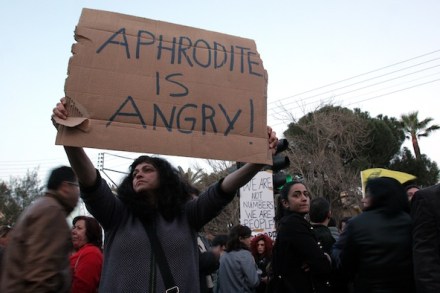
You know this levy on Cyprus bank deposits? It’s not a levy. A levy is a kind of tax, and what is happening to the people with bank deposits in Cyprus is no kind of tax, although today the European Commission spokesmen have been insisting it is. How can it be a tax when the depositors are going to be ‘compensated’ with shares in the bank? I mean, when you pay your income tax, George Osborne doesn’t compensate you with shares in RBS.

Spectator Debate: Britain’s future lies outside the EU (with audio)

From our UK edition

It was a clash of the Euro titans at our latest sell-out Spectator debate: "Britain's future lies outside the EU". Nigel Farage led the team for the motion and the former president of France, Valéry Giscard d'Estaing, led the opposition - with Andrew Neil in the chair. Patrick Minford and James Delingpole supported team Farage, while Steve Richards and Richard Ottaway MP spoke for the EU. And there was all to play for.

Tory pressure for EU referendum bill grows

From our UK edition

David Cameron and Lynton Crosby are holding a meeting with Conservative MPs this week to discuss 2015 strategy, I understand. The party held a similar meeting with Andrew Cooper in January. One of the major topics that is likely to come up from the floor is whether the party should be trying to get legislation on an EU referendum into parliament at some point. There is of course already an opportunity for the party to do this, as there is a backbench bill already before parliament proposing just that. It's from John Baron, who was the first Tory to break ranks and criticise David Cameron's EU referendum pledge, writing on Coffee House that without legislation, the party would suffer at the hands of voters not quite ready to trust politicians on Europe.

Germany realises the limits of the EU project

From our UK edition

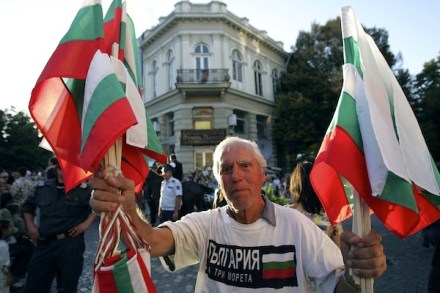
Britain isn't the only country whose politicians are getting just a little bit jittery about an increase in Bulgarian and Romanian migrants. In this week's Spectator, Rod Liddle examines the German and Dutch response to the lifting of transitional controls. We were enjoined by the Romanians to believe that our fears of being ‘flooded’ or ‘swamped’, or whatever emotive term you wish to use, were greatly overstated, and that the citizens of Romania would prefer to travel to places with which the home country had historic links. Such as, for example, Germany. But that simply isn’t going to happen, is it? The Germans won’t let it happen.

Isn’t Germany’s attitude towards Romania a little at odds with the EU project?

From our UK edition

‘Can you imagine anything worse,’ a Hungarian once said to me, ‘than a Slav who thinks he’s Latin?’ He was referring to the Romanians, of course. There is a certain degree of tension in Romania between the ethnic Romanians, who run the place, and the ethnic Hungarians, who feel that they have been press-ganged into a chaotic and useless country and, worse, forced to learn a stupid language. The Hungarians hole up in the beautiful wilderness of Transylvania, yearning for the old empire and metaphorically spitting upon their political masters. But the enmity dissolves entirely when a third racial group is brought into the equation: the gypsies.

Europe’s cap on bankers’ pay is merely a harbinger of the Great Persecution to come

From our UK edition

‘Possibly the most deluded measure to come from Europe since Diocletian tried to fix the price of groceries across the Roman Empire,’ was Boris Johnson’s assessment of the proposal to cap bankers’ bonuses at 100 per cent of base salary, or 200 per cent with shareholders’ approval. This blunt exercise in market interference was tabled by a committee of MEPs led by a British Lib Dem, Sharon Bowles (perhaps in revenge for the fact that she didn’t win the Bank of England governorship, for which she applied) as a condition of agreeing a new set of bank capital reforms. With the support of all member states other than the one most affected — that’s us — and despite token resistance from George Osborne, it will now pass into EU law.

The Spectator’s Notes | 28 February 2013

From our UK edition

On the BBC television news on Monday night, the first three items concerned alleged misbehaviour by the famous — Cardinal Keith O’Brien, Lord Rennard and Vicky Pryce, the ex-wife of the ex-Cabinet minister, Chris Huhne. I begin to wonder if an accidental revolution is in progress. There is no revolutionary political doctrine, just a wish to believe that anyone in any position of power or fame is corrupt and should be exposed. Sexual misbehaviour is probably the most fun way of doing this, but stuff about money or lying works too. In theory, we should welcome this. The accusations often turn out to be true. Power corrupts. But actually there is something vile about it. It is to do with the righteousness of those doing the exposing.

Beppe Grillo: Italy’s new Mussolini

From our UK edition

The stand-up comedian Beppe Grillo, like the fascist dictator Benito Mussolini before him, has a craving to take over the piazza and mesmerise the crowd. Where once young Italians chanted the mantra ‘Du-ce! Du-ce!’ now they chant  ‘Bep-pe! Bep-pe!’. But it is not just a shared need to rant and rave at large numbers of complete strangers that hirsute Beppe and bald Benito have in common. Worryingly, for Italy and also for Europe (where democracy seems incapable of solving the existential crisis), there is a lot more to it than that. Beppe Grillo founded the MoVimento 5 Stelle (M5S) in Milan on 4 October 2009. The capital ‘V’ stands for his signature slogan ‘Vaffa!’ which roughly speaking means ‘Fuck off!

Scotland’s position in europe is weaker than the SNP would have you believe

From our UK edition

Nicola Sturgeon, arguably the SNP's most effective asset at present, went to Brussels today to deliver a speech about Scotland's future relationship with the EU. Most of it was as bland and unobjectionable as you might expect. Move along, not very much to see here. And with some reason. I think it is all but inconceivable that the EU would make it difficult for an independent Scotland to join the club. I also think Spanish (and perhaps Belgian) fears that letting Scotland join would set a dangerous precedent are, for the most part, exaggerated. At the very least I doubt that the threat of a Spanish veto is a good argument for voting No. Nevertheless, the process of admission might not be quite as straightforward as the nationalists (understandably) suggest.

What the government must do to prepare for Romanian and Bulgarian migrants

From our UK edition

Ministers and MPs are nervous about a mass influx of Romanian and Bulgarian migrants putting the benefit system under strain next year. But ministers should beware, and learn from the political mistakes of the past. The failure to predict the scale of post-2004 migration to the UK from the EU caused major political problems for the Labour government. The public were left with the impression that the government was not in control of immigration and that Labour were contemptuous of public views and that they were even deliberately misleading them. The Conservatives have less to worry about on the second point – polling suggests the public broadly support them on immigration - but they have plenty to worry about on the first.

The Myth of the Immigrant Benefit-Moocher, Part Two

From our UK edition

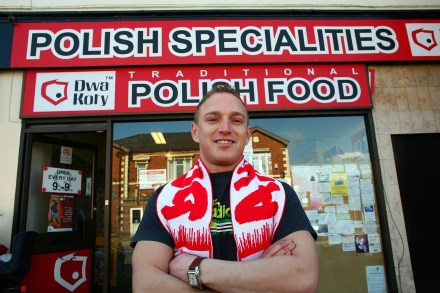
I am afraid, dear reader, that I have misled you. Yesterday's post on immigrants and benefit-claimants contained an inaccuracy. I repeated a claim I'd seen in the Telegraph that there are almost 14,000 Polish-born people claiming unemployment benefit in Britain. This is not the case. The true picture of Polish benefit-dependency is very different. There are, in fact, fewer than 7,000 Poles claiming the Job Seekers' Allowance. Indeed, there are fewer than 13,000 JSA claimants from the "Accession Eight" countries (Poland, Czech Republic, Hungary, Slovakia, Lithuania, Latvia, Estonia and Slovenia). Whatever else these eastern europeans have been doing in Britain, they've not been mooching off the benefits system. And it is a lie - dirty and simple - to suggest they are.

Will Nick Clegg take advantage of Britain’s growing EU and immigration anxiety?

From our UK edition

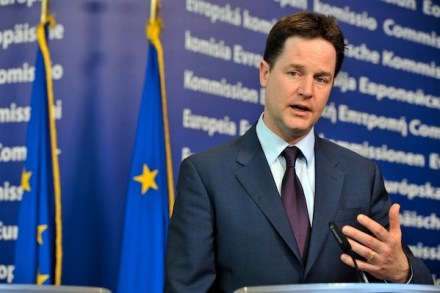
Today’s Financial Times paints a poor picture for pro-Europeans: half of those polled want to leave the EU and just a third want to remain in. Plus, 41 per cent of those in favour of a Brexit will ‘definitely’ vote no even after a renegotiation, which suggests a tough challenge for the In campaign to swing some opinions. However, it’s also worth noting that the EU only ranks 15th on the FT’s list of important issues; healthcare and education are at the top of the list, with immigration coming in at eighth. YouGov has recently carried out some polling on immigration, with some interesting findings in the European context.

Horsemeat scandal: four key questions

From our UK edition

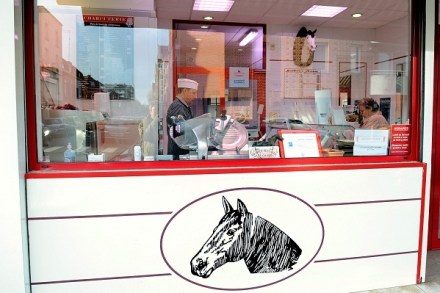
The ongoing horsemeat scandal has opened up a hugely complicated web stretching across the EU, highlighting the difficulty of tracing the origins of the meat on sale in this country. Even now, almost a month after it was announced that horse could be in beef products, no one is entirely sure of how the horses entered the food chain. There are other big questions, too: here are four that need answers: •       The matter of dodgy horse passports – which I wrote about last month - is something that still hasn’t been fully investigated. It has now emerged that up to 7,000 unauthorised passports have been in circulation in the UK since 2008, highlighting the chaotic state of the passport system.

Are the Tories united on Europe? Pull the other one.

From our UK edition

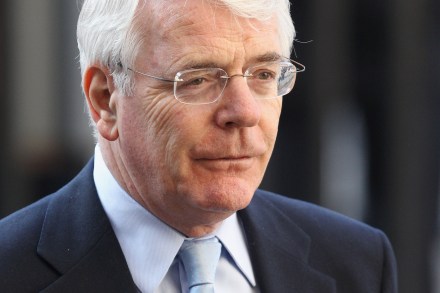
Party unity is one of those things you can measure by the frequency with which the idea is mentioned. The more often it is talked about, the less it exists. When a political party is actually united there's no need to mention party unity. As Isabel notes, Sir John Major has long, wearying, experience of this. The speech he gave yesterday is full of sound advice. Like many other leading politicians, Sir John seems more impressive - and commands more respect - as the years roll on and the memory of his own time in office fades. At Conservative Home Harry Phibbs responds to Major's speech with a piece that notes, in its headline, this "strange outbreak of Tory unity on Europe".

Owen Paterson worried by risks of Mexican horsemeat in British food

From our UK edition

The horsemeat scandal illustrates just how much of our daily government now takes place in Brussels. Owen Paterson is heading there today, for any real action on this crisis will have to be taken at a European level. One of those involved in the government’s response to this crisis tells me the problem is that once products are inside the European single market they are very few checks on them. This figure called it, ‘a faith based system that isn’t working'. This is particularly alarming because the horsemeat that is turning up in British food could not be from here or even Romania but the US via Mexico. In 2007, court judgments led to the last equine abattoirs in the US shutting down. But some American horses were still killed for food.

Victorious PM paints himself as Camileo the EU heretic

From our UK edition

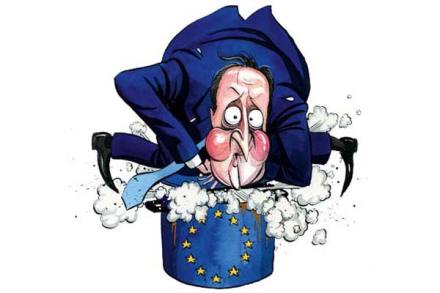
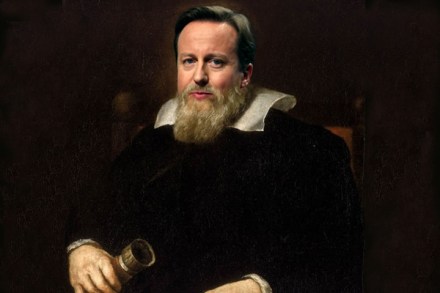
In his victory address after the successful EU Budget deal this afternoon, David Cameron sought to paint himself once again as a Galileo-style EU heretic who spoke truth to power. This was all about what Cameron himself had achieved: his press conference statement was full of first person references to what he had 'slashed' and 'achieved'. At one point he even said 'at last someone has come along' to sort the EU's 'credit card', again clearly referring to himself. This echoes the Prime Minister's Europe speech last month where he talked about Europe's 'experience of heretics who turned out to have a point'. Today he was Camileo, the heretic who did have a point and won the argument.

EU budget victory: What does Cameron do next?

From our UK edition

The Haribo they were eating all night clearly worked: European leaders have just agreed on the first budget cut since the EU's formation. All credit to David Cameron for getting more than even he'd imagined was possible. But what does the Prime Minister do next? Well, he could do what he did after his historic EU speech, which is to make a rather paltry attempt at capitalising on the excellent mood in the Conservative party by organising an afternoon Commons debate with William Hague congratulating his leader on being so eurosceptic and poking fun at Labour.

Historic EU Budget cut on the cards for Cameron

From our UK edition

EU leaders have just left their negotiations over the EU budget for a two hour break and so far it's looking very, very positive for the Prime Minister. Perhaps David Cameron should pick a bracing walk rather than a car into every summit from now on because in the early hours of this morning, EU president Herman Van Rompuy tabled a package that would answer Cameron's demands for a reduction in spending. This €34.4 billion cut for the spending limits in the multi annual financial framework billion would be the first cut in the budget in the EU's history. As I said yesterday, the PM was in a tight spot, not wanting to irritate EU leaders too much, or come back to his own parliament empty handed.

Cameron in tight spot as he refuses to budge on EU Budget

From our UK edition

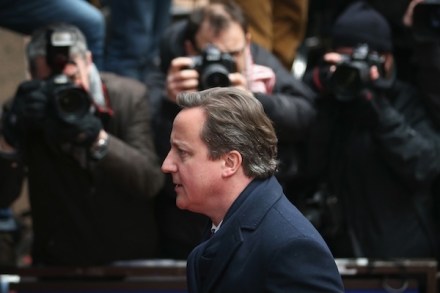
David Cameron caused a stir today by walking, yes, walking, into the meeting of European leaders in Brussels to discussed the multiannual financial framework. Other leaders arrived in their cars. Perhaps he was trying to make a point about the EU's excesses as he seeks a reduction in the spending plans currently on the table, but in case they didn't get the hint, he gave this broadcast clip on arrival, saying: 'Frankly the European Union should not be immune from the sorts of pressures that we've had to reduce spending, find efficiencies and make sure that we spend money wisely that we're all having to do right across Europe.

Bus bomb: It Was Hezbollah

From our UK edition

The report of the Bulgarian authorities into the bus-bombing which killed a local bus driver and five Israeli tourists in Burgas last summer has confirmed what so many of us suspected: it was Hezbollah. Commenting on the release of the report, and the identity of the bombers, Interior Minister Tscetan Tsvetanov has said: 'We have established that the two were members of the militant wing of Hezbollah... There is data showing the financing and connection between Hezbollah and the two suspects.' Now that it has been confirmed that it was Hezbollah that carried out this suicide bombing against a target in the EU, the EU cannot possibly persist in its refusal to ban Hezbollah in its entirety. Can it?