Eu

David Cameron’s ‘milk and honey’ intervention on the EU could be a mistake

From our UK edition

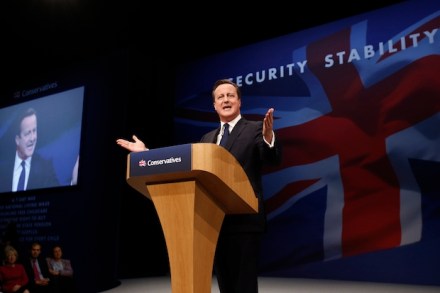
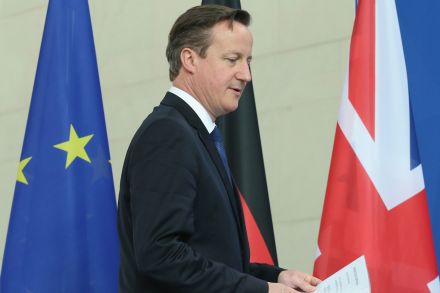
David Cameron’s decision to wade into the EU debate by dismissing the Norway option and warning that there is no ‘milk and honey’ alternative to EU membership is one of the most significant political moments of this parliament. It is Cameron entering the referendum fray, and long before the renegotiation has been concluded. On one level, Cameron is correct. There are Eurosceptics who have advocated the Norway option. In his keynote speech on Europe last year, Owen Paterson — who is on the parliamentary planning committee of Vote Leave — declared: ‘This brings us to the only realistic option, which is to stay within the EEA agreement. The EEA is tailor made for this purpose and can be adopted by joining EFTA first.

Poland’s shock election result has just made the EU even more of a mess

From our UK edition

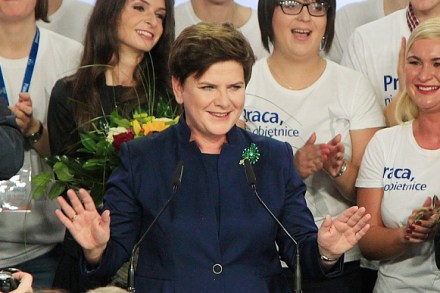
European politics hardly needs more excitement, but that’s what in store after the crushing victory for the Law and Justice party (PiS) in Poland’s general election. The party is not just pretty far off the European mainstream; its politics breathe what Adam Michnik, the legendary dissident, has called 'a combination of an inferiority and superiority complex'. Its redeeming quality now seems to be that it is, nowadays, less nutty. But its politics still have a scent of its past: a social conservatism occasionally lashing modern liberties, a confused and populist economic agenda, and schizophrenia over Germany that swings between pride and feeling of cultural inadequacy.

How Stella Creasy helped boost Bernard Jenkin’s Eurosceptic cause

From our UK edition

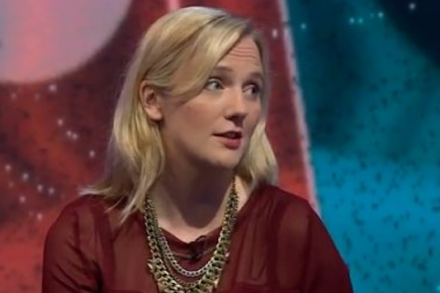
Although Stella Creasy has proved to be one of the most vocal pro-European politicians, the Labour MP may have unwittingly managed to convince one Tory MP of the cons that come from remaining in the EU. David Cameron is facing a potential Commons defeat over the 'tampon tax' after a group of Eurosceptic Tory MPs decided to vote with Labour to demand an end to the EU regulated tax on sanitary items. While the amendment is tabled by Labour's Paula Sheriff, Bernard Jenkin is one of several Tory MPs who have jumped on it, in the hope that they can use it to gain a wider renegotiation of the UK's relationship with the European Union.

The clock towers bigger than Big Ben

From our UK edition

Bigger Bens Big Ben will have a £29m refurbishment. Who has the biggest clock tower? Kremlin Clock: Installed on the 232ft Spasskaya Tower. Clock has a diameter of 20ft. Big Ben: Installed on 315ft Elizabeth Tower. Clock faces are 24ft across. Metropolitan Life Insurance Building, New York: 700ft high (although the clock is only two-thirds of the way up). Clock is 26ft 6in in diameter. Abraj Al-Bait Towers, Mecca: Clock is on 1,972ft tower and visible from 15 miles away. Clock faces are 151ft in diameter. Brussels clout How important is the EU as an export market? Britain’s top ten export markets by value in August this year: Value US £3.2bn Switzerland £2.3bn Netherlands £1.5bn China £1.4bn Ireland £1.

Exclusive: Boris declares that Japan is relaxed about Britain leaving the EU

From our UK edition

Boris Johnson has recently returned from a tour of Japan. His diary of the trip appears in this week's issue of The Spectator: Frankly I don’t know why the British media made such a big fat fuss last week when I accidentally flattened a ten-year-old Japanese rugby player called Toki. He got to his feet. He smiled. Everyone applauded. That’s rugby, isn’t it? You get knocked down, you get up again. And yet I have to admit that I offered a silent prayer of thanks that I didn’t actually hurt the little guy. They aren’t making many kids like Toki these days; in fact they aren’t making enough kids at all. If you want proof of the rule that nobody knows anything, look up a 1988 bestseller called Yen!

The new East-West divide: multiculturalism vs sovereignty

From our UK edition

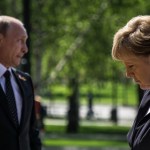
We all know that relations with Russia are at their lowest ebb since 1991, when Boris Yeltsin brought down Communism during one of his alcoholic blackouts. What’s becoming increasingly clear, though, is that there is a new ideological cold war – and I’m not sure we’ll win this one. The German approach to dissent over these past few months has been revealing. Earlier this month, a leading eurocrat chided the Hungarians for refusing to accept that ‘diversity is inevitable’, using that strange Marxist language these people love. Another accused that small central European country of being ‘on the wrong side of history’. Meanwhile Angela Merkel compared those who lock others out to the Communists who once locked their own people in.

A British Bill of Rights would protect our liberty

From our UK edition

David Cameron struggles to repatriate powers from Brussels. Yet Britain can reclaim one sovereign power without negotiation. Other EU members never relinquished the right to say ‘non’, ‘nein’, ‘oxi’ to European law that violates the constitution. Should Britain do the same? Italy and Germany’s Constitutional Courts first set constitutional limits to EU law in the 1970s. The Luxembourg-based European Court of Justice was not amused. It recently raged against the Spanish Constitutional Court which had the chutzpah to say the European Arrest Warrant might violate due process. 'Rules of national law, even of a constitutional order cannot … undermine the effectiveness of EU law,' thundered the Luxembourg judges.

Four great demolition disasters

From our UK edition

Bang goes the plan The demolition of six tower blocks in Glasgow failed when the top half of two of the blocks settled upright on rubble. Some more demolitions which went wrong: — A girl of 12 was killed and several people injured in 1997 when the Royal Canberra Hospital toppled rather than collapsed in on itself. Debris, which was supposed to stay within a 50-metre zone, spilled over more than 200 metres. — A 300ft power station chimney in Springfield, Ohio, toppled onto power lines, cutting off electricity to 4,000 people. — A 80ft flour mill at Cankiri, Turkey, toppled onto its roof and came to rest against a block of flats. No one was hurt.

Portrait of the week | 15 October 2015

From our UK edition

Home Two groups were launched, one in favour of remaining in the European Union and the other in favour of leaving. Vote Leave drew support from Conservatives for Britain, from Labour Leave and from Business for Britain. Lord Rose, chairman of the new group Britain Stronger in Europe, said: ‘To claim that the patriotic course for Britain is to retreat, withdraw and become inward-looking is to misunderstand who we are as a nation.’ The Metropolitan Police withdrew officers stationed outside the Ecuadorean embassy in London where Julian Assange sought refuge in 2012, a watch that had cost £12.6 million. Marlon James from Jamaica won the Man Booker Prize for A Brief History of Seven Killings, based on an attempt to assassinate Bob Marley in the 1970s.

The EU is sucking up to Turkey to help reduce migration – but it could seriously backfire

From our UK edition

You might have thought, mightn’t you, that a million arrivals in a year to a single European country, Germany – well, more than 800,000 and counting – would be enough to be going on with, wouldn’t you? After that, you wouldn’t actually be going out of your way to solicit more incomers into Europe in the long term, even if you were going to be sensible about the influx and were admitting refugees on a purely temporary basis until they could safely return home? But that’s not how the EU works. Turkey at present hosts about two million refugees, mostly from Syria.  EU governments would obviously prefer them not all to come here.

When will the EU referendum be?

From our UK edition

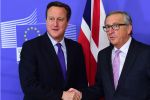
David Cameron is in Brussels today with the European Commission not hiding its irritation at the slow pace of the British renegotiation. One member of the Cabinet committee handling the renegotiation admits that ‘We were hoping to be further ahead than we are now’. Though, they blame the hold-up not on Britain being unclear about what it wants but on the migrant crisis taking up the time and attention of European leaders and the EU institutions. The upshot of all this, though, is that the date for the referendum is slipping back. At the moment, autumn 2016 is the government’s preferred date. But members of the Cabinet, including those on the Europe committee, are increasingly talking about a 2017 date.

OK: I’m convinced: one EU referendum might not be enough

From our UK edition

We now have to take seriously the possibility that in the EU referendum Britain will vote to leave. I had hardly contemplated that. At the time (in January 2013) I saw the Prime Minister’s pledge to consult the electorate as a tactical move, designed to conciliate his party. It may well have helped David Cameron hold off the Ukip at the last general election, and secure the winning edge his party achieved. But those of us who supposed (as did I) that the electorate would never vote to leave, so a referendum was a pretty low-risk gamble with our membership of the EU, may wonder now if we were right.

Jean-Claude Juncker accused of saying that the UK doesn’t need the EU

From our UK edition

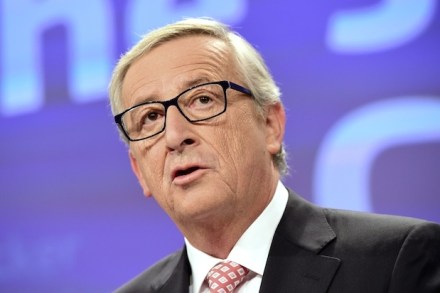
The 'Out' campaign in the EU referendum has seized on comments made by Jean-Claude Juncker where he appears to say that Britain doesn't need the European Union. He 'appears' to say it in the sense that the key word is rather muffled - and his team are insisting he said Britain does need the EU. You can listen to his comments in the European Parliament below, and it’s worth listening as it’s not clear whether he said ‘personally I don’t think that Britain needs the European Union’ or ‘personally I do think that Britain needs the European Union’. https://soundcloud.com/spectator1828/jean-claude-juncker-says-that-britain-does-not-need-the-eu His aides are insisting that he meant that Britain does need the EU.

Tory harmony is threatened by the EU referendum

From our UK edition

For all the leadership positioning, one of the striking things about Tory conference in Manchester was the level of agreement about what the party’s strategy should be. There was almost no one calling for the party to move right. Instead, the emphasis was on how the party could expand its electoral coalition. Boris Johnson and George Osborne may have very different styles, but the argument of their speeches was essentially the same: the Tories have to show that they are the party for low paid workers. This determination to look for new converts, which was the defining feature of David Cameron’s speech too, is a product of the election campaign.

BoJo gets his mojo back

From our UK edition

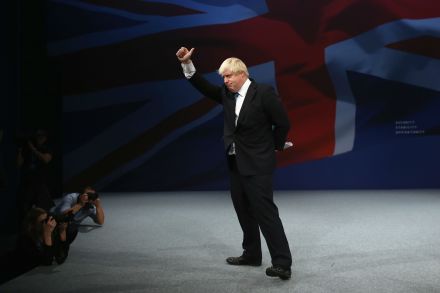
The Tories had a good few days in Manchester. But one Tory had a particularly good week, Boris Johnson. A week ago, Boris looked becalmed. As we said in the Spectator, he was struggling to make the transition from being Mayor of London to being both the Mayor and an MP. But this week, he has delivered the best speech of his political life, shown new Tory MPs his talents, and renewed his relationship with Tory activists. It was telling that when Cameron paid tribute to Boris during the leader’s speech, the hall gave him a standing ovation. Now, the tricky thing for Boris will be coming up with a follow up to this and he still has several months where he has to be in two places at once, City Hall and the Commons. But he finds himself in a far better position than he did a week ago.

Has Boris just set an impossible bar for Cameron’s EU renegotiation?

From our UK edition

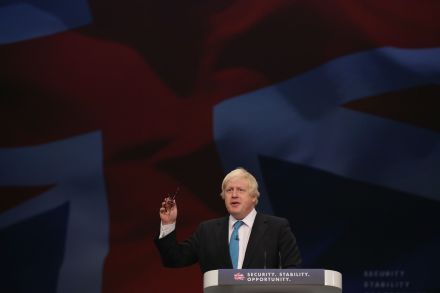
Boris Johnson’s speech today was the best that I have ever heard him give. It was a potent cocktail of political vision, humour and optimism. But the most significant line it was about Europe. He declared that: ‘It should be up to this parliament and this country – not to Jean-Claude Juncker – to decide if too many people are coming here’ It is impossible to read this as anything other than a demand that freedom of movement rules are fundamentally altered as part of the UK’s renegotiation with the EU.

Facebook posts about the migrant crisis should be the least of Angela Merkel’s worries

From our UK edition

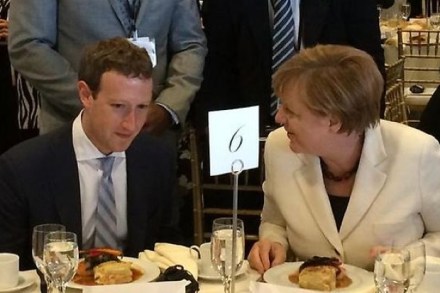
So the German Chancellor has just been caught on microphone talking with Facebook CEO Mark Zuckerberg: German Chancellor Angela Merkel was overheard confronting Zuckerberg over incendiary posts on the social network, Bloomberg reported on Sunday, amid complaints from her government about anti-immigrant posts in the midst of Europe's refugee crisis. On the sidelines of a United Nations luncheon on Saturday, Merkel was caught on a hot mic pressing Zuckerberg about social media posts about the wave of Syrian refugees entering Germany, the publication reported. The Facebook CEO was overheard responding that "we need to do some work" on curtailing anti-immigrant posts about the refugee crisis. "Are you working on this?

Europe’s ever-looser union

From our UK edition

Europhiles have warned us for years of the dangers of Britain leaving the EU. But all the while a different spectre has crept up on their other flank: which is that even if the UK votes to stay in the EU in 2017, we might be one of the only countries left. It’s a radical thought, but if they’d like to consider it, the Europhiles should look at what is happening across the continent. Pro-EU countries are proving harder and harder to find. The eastern European countries may still be financial net receivers, but they are now having to weigh up their honey pot against the demands that come with it. A project which was meant to bring free movement of labour for themselves is now forcing them to take in thousands of migrants they do not want from across Africa and the Middle East.

If only middle-class liberals would shut up, we might get a proper debate

From our UK edition

Why are the audiences for political debate programmes so unrepresentative of the voting population? By which I mean, why are they seemingly always stuffed to the gills with Corbynista maniacs? On Any Questions? and Question Time, the best way to get a loud cheer from the crowd is to suggest we should decapitate the Queen, or invade Israel. Is this because of BBC bias? Two contrasting views in the papers these last few days. One from the right-wing journo Allison Pearson, who had to suffer a 'leftie hell' on Any Questions?, and who wants the BBC to make a better effort to balance the audiences. And one from media consultant Chris Birkett, an old mucker of mine back when we were at the BBC. Both are partially right, both partially wrong, I think. Let me explain.