Eu

Can we really trust the economists on EU immigration?

From our UK edition

A recent Coffee House blog quite rightly noted that many British people are concerned that high levels of immigration have hurt their jobs, wages and quality of life, and noted too that this anxiety is understandable as workers have had a rough ride in recent times. Yet the authors, self-styled data-crunchers from the LSE, say that 'the bottom line is that EU immigration has not significantly harmed the pay, jobs or public services enjoyed by Britons'. One might think that the lack of harm, let alone significant harm, is a poor argument for anything. On pay, real wages are little different from a decade ago.

Is the Brexit campaign ‘morphing into Ukip’?

From our UK edition

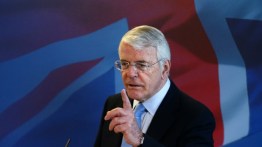
Is the Brexit campaign 'morphing into Ukip'? That's what Sir John Major will say he fears is happening later. In a speech at Oxford University, he'll argue that those calling for Britain to leave the EU are 'fuelling prejudice on immigration'. He'll also say that: 'As the leave arguments implode one by one, some of the Brexit leaders morph into Ukip and turn to their default position - immigration. I urge them to take care, this is dangerous territory that - if handled carelessly can open up long-term divisions in our society'. So does he have a point? It's definitely credible to see how some elements of the leave camp are focusing their positions around the immigration debate.

Vladimir Nabokov wades into the Brexit debate from the grave

From our UK edition

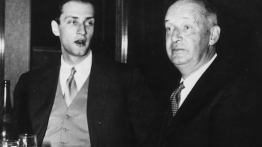
So far in the Brexit debate, a range of figures -- from David Cameron to David Icke -- have chipped in to offer their two cents' worth. However, no-one was expecting the latest literary figure to enter the discussion. In this week's TLS, a talk by the late Vladimir Nabokov -- given in 1926 -- has been translated into English for the first time. In the talk -- titled 'On Generalities -- the Lolita novelist discusses Europe. Nabokov appears to struggle with the concept of Europe -- concluding that when people utter the word 'Europe' with 'metaphorical, generalizing intonation', he sees 'precisely nothing': 'That is how history is treated.

Letters | 12 May 2016

From our UK edition

Europe is already divided Sir: The Archbishop Emeritus of Westminster writes eloquently about the historical purpose of a ‘union’ in Europe as being primarily to eliminate the wars that for centuries had characterised Europe (‘Let’s renew the EU’, 7 May). He, and Pope Emeritus Benedict, both point to the shared Christian beliefs that defined all nations of Europe. But the EU, as it has evolved, is now no expression of such an underlying faith — in fact, the opposite. As he points out, it has removed any official reference to Europe’s common heritage, and is increasingly set on a shallow, utilitarian course. Europe is now more divided than ever, and it will become more so under its present policies.

The Spectator’s notes | 12 May 2016

From our UK edition

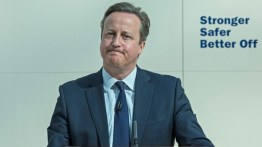
One of the many problems with David Cameron’s threat that leaving the European Union could plunge us into war is that it sits so strangely with how he spoke about the EU before he called a referendum. In those days, he was studiedly cool about the union: he had no sentimental attachment to it, he told us, just a pragmatic weighing of the advantages for Britain, depending on what he could obtain. His ‘deal’ for a ‘reformed Europe’, supposedly essential to recommending a Remain vote, contained no Tolstoyan themes at all, just stuff about when migrant EU workers could claim benefits and suchlike. When he now says, ‘By the way, if we leave we’re all going to die,’ one feels he should have thought of that earlier.

The English right’s Putinesque conspiracy theories

From our UK edition

The right, as well as the left, is home to the kind of flaming conspiracy nut who, in Bertie Wooster’s words, make ‘strong men climb trees and pull them up after them’. In another life, the activists for Vote Leave might have joined the thousands of hollowed-eyed onanists who post abuse under newspaper articles from their parents’ spare rooms, or become columnists for the Mail; fringe figures, best ignored. But just as on the left of politics the fringe is becoming the mainstream, so on the right, brooding paranoids, who cannot face a hard fact or uncomfortable argument squarely, are moving in to take over the Conservative Party.

Mark Carney isn’t butting out of the Brexit debate any time soon

From our UK edition

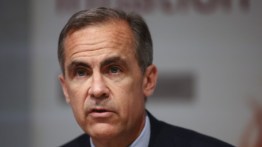
The Bank of England isn’t going to butt out of the Brexit debate any time soon it seems. Today’s interest rate decision produced few surprises with the Bank sticking at 0.5%. But the headlines are focusing instead on its warning about the consequences of a vote to leave the EU. The wording about the dangers of Brexit was the starkest yet. The Bank of England said: ‘A vote to leave the EU could materially alter the outlook for output and inflation and therefore the appropriate setting of monetary policy. Households could defer consumption and firms delay investment, lowering labour demand and causing unemployment to rise’ As doomsday scenarios go, excluding the Prime Minister’s warning about World War three, they don’t come much darker than this.

Bus battle! Row brewing over Labour’s ‘corporate’ EU bus

From our UK edition

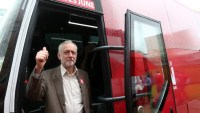
Throughout the EU referendum campaign, Labour figures have been somewhat underwhelmed by the efforts of their party leader to fight for Britain to remain in the EU. However, progress did appear to be made on Monday when Jeremy Corbyn launched Labour's big EU battle bus. The bright red bus will tour Britain for six weeks as they try and rally support for remain. Alas word reaches Steerpike that behind the scenes things are not so rosy. A little birdy tells Mr S that the Labour leader has raised concerns that the bus is not to his taste and is 'too corporate'. The Labour leader apparently takes issue with the sheer size of the vehicle as well as the branding. However, the jury's still out when it comes to whether he is happy with the 'vote remain' message.

The Spectator podcast: Boris needs you!

From our UK edition

To subscribe to The Spectator’s weekly podcast, for free, visit the iTunes store or click here for our RSS feed. Alternatively, you can follow us on SoundCloud. Boris Johnson has kickstarted his battle bus tour of Britain which he hopes will convince people to vote out of the EU. But before he hit the road, he made a direct pitch to Spectator readers in an exclusive interview. The former mayor of London set out his Brexit battle lines, as he spoke to James Forsyth and Fraser Nelson, saying: ‘It is unquestionably true that I’ve changed. But so has the EU. And of the two of us, it’s the EU that has changed more than me.’ Speaking on the podcast, James Forsyth tells Isabel Hardman that: 'He knows that he is in the fight of his political life.

Vaping’s appeal isn’t about the nicotine. It’s about the gadgets

From our UK edition

Probably you never visited the flats of middle-class student drug dealers in the 1990s, because crikey, neither did I, and look, let’s just move along. Even so, were there ever to be found a Platonic form of such a place, or, as the beer adverts might put it, If Heineken Did the Flats of 1990s Middle-Class Student Drug Dealers, then I now know precisely what such a place would look like. It would look like a vape shop. To be more specific, it would look like the vape shop I visited a few weeks ago in north London. It was perfect down to the last detail. Paraphernalia all over the place. The main wallah — the dealer, I suppose — had dreadlocks and bohemian clothes, and the bearing of an alpha male, and almost no vocabulary whatsoever.

Have we sacrificed a quarter’s growth to answer the European question?

From our UK edition

Has the shadow of Brexit already cost us a slice of GDP — and if so, is it a blip or an omen? The Office for National Statistics says UK growth was 0.4 per cent in the first quarter of this year, down from 0.6 per cent in last year’s final quarter. And we can’t blame the neighbours, because the eurozone upped its game from 0.3 per cent to a positively breathless 0.6 per cent — with even France trotting in ahead of us at 0.5 per cent. We still look stronger on the jobs front, mind you, with our unemployment rate, at 5.1 per cent, well down on a year ago and at half the rate for the eurozone. And our service sector continues to perform quite well.

Britain is selling less to Europe but the EU is still hugely important

From our UK edition

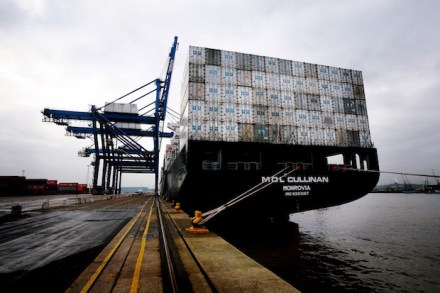
Britain’s trade deficit - the gap between what the UK imports and exports - is now at its biggest since the financial crash in 2008. The latest figures out today show that the difference between the two is now £13.3bn for the first four months of 2016. That’s a jump from £12.2bn at the end of 2015. So what do the figures actually mean? City analysts have described the trade deficit as ‘truly horrible’. The British Chambers of Commerce said the gap between imports and exports was ‘unacceptably large’. It’s not only those from the business world having their say on the latest figures though. As ever, these statistics are also being interpreted through the lens of the upcoming EU referendum.

IDS’s claim about Germany’s hidden EU renegotiation role is hugely damaging for ‘Remain’

From our UK edition

Yesterday, David Cameron was all talk of ensuring peace in our time and preventing world war three by staying in the EU. But today, as the EU debate rumbles on, he'll have come crashing back to earth after reading the front page of The Sun. The paper quotes Iain Duncan Smith as saying that Germany was secretly in control of David Cameron's EU renegotiation throughout. The former Work and Pensions secretary, who quit the cabinet in February, is set to add in a speech this morning that: “There was a spare chair for them - called the German Chair. They have had a de facto veto over everything.” IDS goes on to make a fairly explosive claim, suggesting that the 'red line' demand for an emergency brake was watered down following intervention from Berlin.

Today in audio: Boris vs Dave

From our UK edition

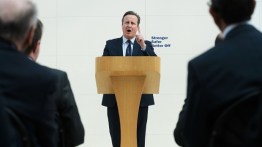
With the May elections over, the EU referendum campaign is now in full swing. David Cameron started the day warning that Brexit could put peace in Europe at risk. In his speech at the British Museum this morning, the PM also asked whether leaving the EU was a risk worth taking. Here's what he said: Boris hit back by making his case for voting out, saying that negotiating on behalf of the EU is like 'trying to ride a vast 28-man pantomime horse': He also sung 'Ode to Joy' in German: And Boris even appeared to forget the name of the city which, until a few days ago, he was the Mayor of: Whilst on the subject of the EU referendum, Tory MP Crispin Blunt said after careful consideration he was backing Brexit: But it wasn't all about the European Union.

Was Spain’s ‘new political era’ just a mirage?

From our UK edition

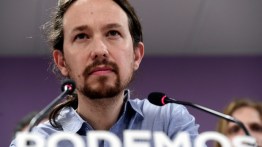
More than four months on from Spain’s December general election, optimism has given way to fatigue and cynicism among the electorate. Coalition negotiations between leading parties have failed, and a repeat election will now be held in Spain on 26 June, a few days after Britain's EU referendum. But there is little enthusiasm for this second-take. Many Spaniards are now saying they will register disappointment with their politicians by abstaining. And what of the supposed new breed of Spanish politician represented by Albert Rivera, the leader of Ciudadanos (‘Citizens’) and Pablo Iglesias, leader of Podemos (‘We Can’)?

Does anybody actually think the EU guarantees ‘peace and stability’?

From our UK edition

According to David Cameron this morning, if Britain votes to ‘Leave’ the EU on 23 June, the Germans will invade Belgium, the Russians will invade Crimea (again), and we’ll all have to spend the coming years re-learning the finer details of the Schleswig-Holstein question. The Prime Minister’s latest attempt to warn of apocalypse in the case of Brexit has one huge flaw.  In his latest scare-speech this morning he said: ‘Can we be so sure that peace and stability on our continent are assured beyond any shadow of doubt? Is that a risk worth taking? I would never be so rash as to make that assumption.’ Well nothing is ever assured.  But how could anybody still think that peace and stability in Europe are remotely assured by the EU?

David Cameron is now in full ‘Project Fear’ mode

From our UK edition

David Cameron's speech this morning about the EU referendum will succeed in doing one thing: infuriating the hell out of Eurosceptics. The Prime Minister is set to warn that peace and stability could be at risk if Britain walks away from Europe. He'll also go on to say that the European Union has brought together countries previously 'at each others' throats for decades'. In the Project Fear brand, it's certainly a classic in the genre. But will it work? One of the interesting aspects of his line of argument is the appeal it is likely to have to younger people. Those under the age of 34 are generally much more in favour of remaining in Europe, with only a third (29 per cent) of those aged 18-34 backing Brexit, according to an Opinium poll.

Why the FT’s Martin Wolf is wrong about the EU

From our UK edition

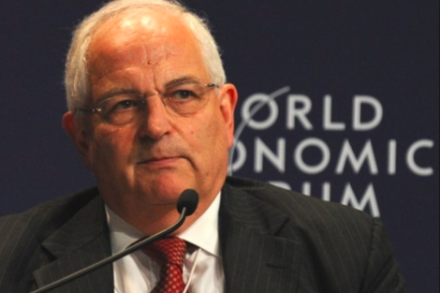
Last week, I wrote about the fevered state of mind of the Financial Times as British voters threaten to throw off their EU chains. Here is another example. Martin Wolf, usually the best columnist in the paper, wrote a column giving ten reasons to remain. He said: ‘Above all, those promoting departure ignore what the UK’s European partners think about the EU. Their political elites, particularly of Germany and France, regard the preservation of an integrated Europe as their highest national interests. They will want to make clear that departure carries a heavy price, which is likely to include attempts to drive euro-related financial markets out of London.’ Those who want to leave don’t ignore this at all!

The Spectator podcast: Erdogan’s Europe

From our UK edition

To subscribe to The Spectator’s weekly podcast, for free, visit the iTunes store or click here for our RSS feed. Alternatively, you can follow us on SoundCloud. Has Erdogan brought Europe to heel? In his Spectator cover piece, Douglas Murray argues that the Turkish President has used a mixture of intimidation, threats and blackmail to do just that and throw open the doors of Europe to Turkey. Douglas says Erdogan is a ‘wretched Islamist bully’ who has shown just how the EU works. But in pushing Europe around, is Erdogan now more powerful than Merkel, Juncker and Cameron? And how does the Turkish PM's resignation this week changed the country's relationship with the EU? Isabel Hardman speaks to Rem Korteweg, from the Centre for European Reform.