Eu

How Vote Leave plan to persuade the electorate that there are real risks to staying in the EU

From our UK edition

The IN campaign’s plan for victory in this EU referendum is relatively simple.  ‘Do you want the status quo or the riskt alternative?’, is how one Cameron ally sums it up. To date, Remain—aided by the various government dossiers—have been pretty effective at pushing this message. That is why they are ahead in the polls. So, Vote Leave know that they need to push the risks of staying in, up the agenda. I write in The Sun this morning that their message in the coming weeks will be that ‘wages will be lower and taxes will be higher if stay in the EU’. Their argument will be that the continuing troubles in the Eurozone will hit the UK in two ways.

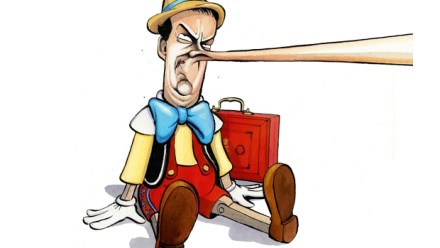
The Spectator podcast: Brexit, and the return of political lying | 28 May 2016

From our UK edition

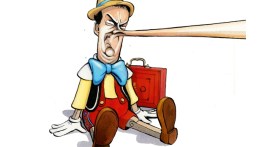
To subscribe to The Spectator’s weekly podcast, for free, visit the iTunes store or click here for our RSS feed. Alternatively, you can follow us on SoundCloud. Are David Cameron and George Osborne using the same techniques of deceit deployed by New Labour in the run-up to the Iraq war? In his cover piece this week, Peter Oborne argues that's just what is happening. He says that in their EU campaign, the Chancellor and Prime Minister have put dirty tricks back at the heart of government. But Matthew Parris in his column says that in politics there’s no point complaining about being lied to. That’s the cry of the bad loser. Both Peter and Matthew join Fraser Nelson on the podcast.

Vote Leave’s £50 million question

From our UK edition

If you ask most people if they wanted to win £50 million, the answer would be: where do I sign up? That’s why Vote Leave has launched a competition this morning (here’ the link to enter) offering £50 million to anyone who can correctly predict the result of every game in this summer’s European football championship, if no-one scoops the whole prize,£50,000 will go the person who came closest. Why is the prize £50 million? Because that’s what Vote Leave say the UK sends to the European Union each day. Vote Leave hope that this competition will get one of its key messages, the cost of EU membership, out to a non-politically involved audience. So, what’s in this £50 million competition for Vote Leave? Put simply, data.

Purdah could give the Brexit campaign the boost it so badly needs

From our UK edition

If you've become fed-up with half-baked Treasury statistics, the start of the purdah period is welcome news. The ban on Government and Civil Service resources being used to put forward the case for 'remain', means there will be no more of those. But with 'remain' having pushed ahead in the polls over the last few weeks, will this now help level the playing field? Based on how the Government has tried to press home the advantage of using its huge resources right up until the last moment, it seems that there are certainly jitters about that happening.

The Spectator poll: Are You In or Out? Bob Geldof, Tim Rice & Joey Essex have their say

From our UK edition

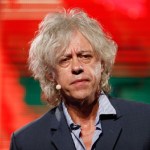
The Spectator's EU Poll asked a fairly random group of well-known people how they’d vote in the EU referendum, and this is what they said: Sir Tim Rice, lyricist: 'In 1975 I voted to stay in the Common Market from a standpoint of ignorance. In 2016 I shall vote to leave the EU, as a rebel without a clue. This is a gut reaction which I trust far more than the barrage of misinformation churned out by both sides of the campaign but overwhelmingly by the Remain camp. At least this time round I know I don't know anything which is more than can be said for most of the campaigners. It would be good to spend one's final years as part of a truly independent nation once more. I am intrigued that Mr.

Plutarch and the EU

From our UK edition

Boris Johnson argues that the current European Union is yet another failed attempt to replicate the golden age of a Europe united under the Romans. But how golden was it? The Greek biographer Plutarch (c. AD 100) thought it brought ‘peace, freedom, prosperity, population growth and concord’ but agreed that there was a price to be paid. In his essay on statecraft, he advised the Greek politician ‘not to have too much pride or confidence in your crown, since you can see the boots of Roman soldiers just above your head. So you should imitate an actor, who puts his own emotion, personality and reputation into a play but obeys the prompter and does not go beyond what he allows.

The Spectator’s notes | 26 May 2016

From our UK edition

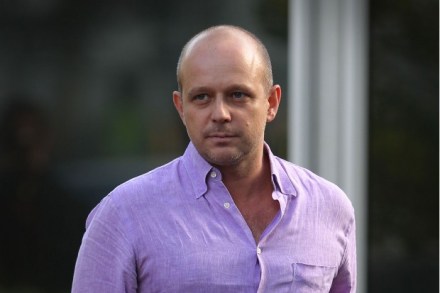
Obviously there is no such thing as ‘Cameronism’, as there is ‘Thatcherism’; but once upon a time, David Cameron did have a project. It was called Tory modernisation, and his most imaginative adviser on the subject was Steve Hilton. At Policy Exchange, on Wednesday, Mr Hilton spoke, Mark Antony-like, over the dead body of Tory modernisation. On virtually every modernising count — localism, openness to the world, looking to the future, ignoring the interests of the rich — the EU is failing, he said. Yet Mr Cameron is staking his career on it. It is rather as if Mrs Thatcher, in her last years in office, were fighting flat out for nationalisation.

Immigration dominates first BBC EU debate

From our UK edition

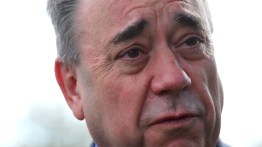
The Lincoln-Douglas debate it was not, but we have just had the first prime time TV debate of this EU referendum. With Alex Salmond and Alan Johnson for In and Liam Fox and the UKIP MEP Diane James for Out speaking to an audience of 18 to 29 year olds in Glasgow. Many in the audience wanted to complain about the tit for tat tactics of the two sides in this referendum campaign or to condemn the scaremongering by both sides; interestingly, they seemed very sceptical of the Treasury’s forecasts of economic pain if the UK left the EU. One audience member, though, seemed to object to the idea that he would have to think about the issue at all.

The Spectator podcast: Brexit, and the return of political lying

From our UK edition

To subscribe to The Spectator’s weekly podcast, for free, visit the iTunes store or click here for our RSS feed. Alternatively, you can follow us on SoundCloud. Are David Cameron and George Osborne using the same techniques of deceit deployed by New Labour in the run-up to the Iraq war? In his cover piece this week, Peter Oborne argues that's just what is happening. He says that in their EU campaign, the Chancellor and Prime Minister have put dirty tricks back at the heart of government. But Matthew Parris in his column says that in politics there’s no point complaining about being lied to. That’s the cry of the bad loser. Both Peter and Matthew join Fraser Nelson on the podcast.

The power trap

From our UK edition

Soon after the date for the EU referendum was set, Timothy Garton Ash published a piece in this magazine under the title ‘A conservative case for staying in’. He was followed by Ian Buruma, attacking the idea that, having left the EU, the British would be more free. And then, after the Obama visit to London, there was Anne Applebaum, assuring us that the US had ‘excellent reasons’ for being opposed to Brexit. Like the little boy at the back of the street brawl in the old Punch cartoon, I want to ask: ‘Is this a private fight, or can any former foreign editor of The Spectator join in?’ Tim Garton Ash was succeeded in that role by Ian Buruma; I came next, and was followed by Anne Applebaum.

If I were in charge of Leave, here’s what I’d say…

From our UK edition

It may be too late. But with only about three weeks before our referendum on EU membership I am itching to take the leadership of the Leave campaign. I could do them a power of good. Two serious objections may be raised to my bid. First, I couldn’t chair a parish meeting, let alone a snakepit of warring Leave enthusiasts. Secondly, I certainly don’t think Britain should leave the European Union. Setting these disqualifications aside, however, as a former speechwriter and politician I see so clearly the strategic direction the Leave campaign should set if they are to stand an outside chance of winning — and a much greater chance of losing with honour. I find myself barking advice at the radio whenever one of them is on.

Warning: top-performing funds are highly likely to contain tobacco

From our UK edition

Axa will no longer invest in the tobacco industry: the French insurance giant will sell €184 million of shares and gradually reduce its €1.6 billion bond holdings in the sector. No surprise, given Axa’s role as a health insurer and the oft-repeated statistic that smoking kills six million people a year; indeed, you might think any health-related investor would have taken the decision years ago. Except that cigarette-makers have been stellar stock market performers since the beginning of the century: British American Tobacco’s shares have multiplied in value a dozen times while paying rich dividends, and Imperial Tobacco (now Imperial Brands) has been almost as good.

Hilton: Brexit would be the crowning achievement of Tory modernisation

From our UK edition

In a speech to Policy Exchange today, Steve Hilton—David Cameron’s former senior adviser—will make the case that ‘any intellectual rigorous examination makes it impossible for a Tory moderniser to support staying in the EU’. He argues that Tory modernisation was about trusting people, and that the EU does not; that modernisation was about localism, and that the EU is inherently centralising; and that the EU helps the rich and not the rest. I think there’s much to be said for Hilton’s analysis. (Though, of course, it should be recognised that there are Tory modernisers on both sides of the argument.) But where Hilton is surely right is that the EU is not the future, it is an idea of its time—the late 20th century.

Today in audio: Fallon says Putin would ‘Vote leave’

From our UK edition

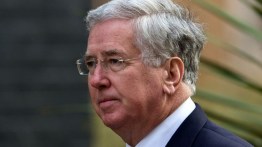
Vladimir Putin's name has popped up again in the Brexit debate. This time, however, it wasn't the Prime Minister suggesting that the Russian president would favour Britain leaving the EU, but the Defence Secretary. Michael Fallon said Putin would 'Vote Leave' and he also told a Commons select committee that 'there is absolutely no doubt in my mind that a British exit from the European Union would be applauded in Moscow'. He added that it would be a 'payday for Putin': Michael Fallon went on to say that being in the EU ensured that Russia had 'paid the price' for its intervention in Ukraine. Meanwhile, the Prime Minister gave a speech in which he said Brexit could ramp up the cost of a family holiday. But where was he planning on heading off to on his own summer trip?

So what if Brexit briefly raises the cost of a family holiday, Prime Minister?

From our UK edition

Nicola Sturgeon urged the Government yesterday to lay off the ‘Project Fear’ strategy and instead focus on spelling out the positive reasons for remaining in the EU. Unfortunately, it seems it’ll take the Prime Minister some time to heed that advice. Cameron will warn today that Brexit would ramp up the price of a holiday. He’ll argue later that: ‘The choice facing the British people on 23 June is increasingly clear: the certainty and economic security of remaining in the EU, or a leap in the dark that would raise prices – including the cost of a family holiday. All the evidence points to the value of the pound falling after a vote to leave the EU. A weaker pound means people’s hard-earned savings won’t go as far on holidays overseas.

Tony Benn on the 1975 referendum

From our UK edition

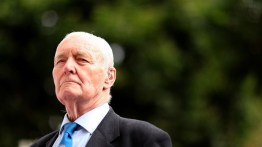
This letter from Tony Benn to his constituents was written in 1975 and published in The Spectator.  In 1975 you will each have the responsibility of deciding by vote whether the United Kingdom should remain a member of the European Common Market: or whether we should withdraw completely, and remain an independent self-governing nation. That decision, once taken will almost certainly be irreversible. In both the 1974 general elections I fully supported our manifesto commitment on the handling of the Common Market question. The present Government is now engaged in renegotiating the terms of entry along the lines set out in those Manifestos and is solemnly pledged, whatever the Outcome of those negotiations, to see to it that the final decision will be taken by the British people.

Catholic bishops split over Brexit as Archbishop accuses Osborne of ‘ludicrous’ scaremongering

From our UK edition

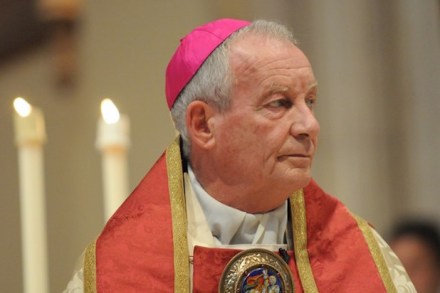
Archbishop Peter Smith, the Catholic Archbishop of Southwark – whose diocese covers all of London south of the Thames – has accused George Osborne of 'ludicrous' scaremongering in the EU referendum. The Archbishop, talking to Vatican radio, does not explicitly say that he supports Brexit. His line is that he is 'undecided how to vote'. But according to my sources, in private he has been telling 'anyone who cares to listen' that he favours the Out campaign. 'It seems that Peter Smith wants to leave the EU – he's made that very clear,' a Catholic bishop tells me. Here's an extract from the Catholic Herald report on Smith's interview.

Brexit might cause a short-term shock but it won’t be as bad as the Treasury makes out

From our UK edition

There’s already quite a wide consensus around the basic assumption of the Treasury’s latest report that there would be a short-term economic shock from leaving the EU. However, it’s nigh on impossible to credibly foresee the size of this shock. And by going too far on such estimates the Treasury risks undermining the consensus already in its favour. Contrary to what one may be tempted to assume, short-term economic forecasts are often harder to make than longer-term ones. Making reasonable assumptions about how policy choices a few years down the line shift economic growth from a baseline is a slightly easier exercise than trying to predict short-term market movements – especially without any historical precedent, as in the case of Brexit.

Boris hits back in Brussels banana row. But has he got his facts right this time?

From our UK edition

Boris has hit back in the row over whether Brussels tells Brits what types of bananas we can eat. Last week, he was accused of 'making it up as he went along' after claiming that the European Union prevented the fruit from being sold in bunches of more than 'two or three'. But instead of being quiet about them today, Boris has used his Brexit battlebus stop in York to insist that Brussels does meddle with our bananas. As Isabel Hardman reports, the former Mayor decided to take on those who had ridiculed him about his claims regarding EU control over bananas. He said he had looked into it and there were actually ‘four directives on bananas, including a directive on the curvature of bananas.’ So, is he telling the truth?