Eu

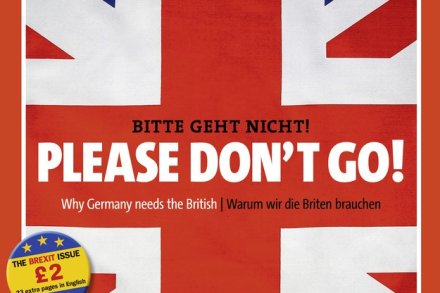
‘Please don’t go’: Spiegel magazine urges Brits not to leave

From our UK edition

A week after Angela Merkel intervened in the Brexit debate to say she hopes Britain stays in the EU, Germany’s Spiegel magazine has also waded in. The magazine’s headline is certainly emotive: ‘Please don’t go’, it urges, in an issue which includes several pages in English in a bid to reach out to Brits. As with the clear-cut message on the front cover, the magazine’s poll on whether Germans want Britain to stay in the EU is also conclusive. Spiegel’s survey, conducted by TNS, showed that 79 per cent of people in Germany thought Britain should remain in the EU. It’s possible that this attitude derives from the popularity of the EU in Germany (in the same poll, just 13 per cent of Germans wanted their own country to walk away from the EU).

The EU bullies everyone – on both the Left and the Right

From our UK edition

The prevalent notion is that all those people who wish for us to leave the European Union are thick as mince 'Little Englanders' (the wrong insult, incidentally), motivated by racism, nostalgia and xenophobic spite. The left-wing argument to get the hell out has been scarcely touched upon, and yet it is – for me, at least, and I suspect quite a few voters – just as compelling as the stuff about immigration and democracy. So huge credit to Suzanne Moore for her piece in Wednesday's Guardian. It’s, as ever, an excellent bit of writing and gets straight to the point. One caveat, though. Moore recognises the fundamental anti-democratic mindset of the EU, and the bullying unleashed upon Syriza in Greece. She gets the establishment versus the plebs argument, too.

Rome vs Brussels

From our UK edition

The principle of countries working harmoniously together is wholly admirable. Why, then, has the European Union become such a disaster area? The success of the Roman empire may offer a clue. Romans won that empire almost entirely by military might. But they could not have maintained it that way: for some 500 years, a mere 300,000 legionaries patrolled this area of approximately two million square miles and about 60 million inhabitants. So what was their secret? The key is pleasingly paradoxical: the Romans never consciously planned an empire at all. Once they had started down that road, they saw the material advantages it could bring, but there was no blueprint for it. Success was a result of hard-won experience.

The Spectator’s Notes | 9 June 2016

From our UK edition

One of the most influential and learned figures in the British European debate is Rodney Leach. In the 1990s, he helped lead those of his fellow businessmen who became convinced that the abolition of the pound would be a disaster. He was a moving spirit in Business for Sterling and then in the ‘No’ campaign against the euro. This did much to persuade Gordon Brown, as Chancellor, to ditch euro entry plans in 2004. The following year, Lord Leach set up Open Europe, and continues as its chairman to this day. It is the most trusted think tank for research and debate on all EU questions, and is incredibly useful for the media because of its daily press digests, which enable us to follow the debate across the entire Continent.

Is the looming prospect of Brexit dampening trade with other EU countries?

From our UK edition

Is the looming prospect of Brexit dampening trade with other EU countries? Not if the latest trade statistics are anything to go on. Figures out today – the final set to be published before the referendum – show that imports to the UK from other EU countries are at a record high: rising by £1bn between March and April this year. Britain’s exports to other EU countries also rose in the same period – jumping by £0.9bn, with oil and chemicals making up a large chunk of this number (£0.5bn). These figures can be interpreted in two ways and as with many things to do with the EU referendum, both ‘Leave’ and ‘Remain’ could argue these statistics make their case for their respective arguments.

The Spectator podcast: Brexit – the first 100 days

From our UK edition

To subscribe to The Spectator’s weekly podcast, for free, visit the iTunes store or click here for our RSS feed. Alternatively, you can follow us on SoundCloud. The EU referendum on June 23rd looks set to be one of the most important political moments in a generation. But if Britain does vote out, what would the next 100 days actually be like? The Prime Minister has predicted disastrous consequences, saying Brexit would plant a bomb under the economy. And we've been warned that house prices will crash and everything from air fares to ice cream will cost more. So, would Cameron step down straight away and watch the pound tumble? James Forsyth says in his Spectator column that a vote to leave would be a defining event in recent British political history.

The six best reasons to vote Leave

From our UK edition

For me, as for so many people, it’s a heart versus head issue. I’m emotionally drawn to Europe. I speak French and Spanish and have lived and worked all over the Continent. I’ve made many friends among the Brussels functionaries. Lots of them, naturally, are committed Euro-federalists. Yet they are also decent neighbours, loyal companions and generous hosts. I feel twinges of unease about disappointing them, especially the anglophiles. But, in the end, the head must rule the heart. Remainers often tell us to think of our children, and I’m doing precisely that. I am thinking, not just about the EU as it is now, but about the diminished role that a surly, introverted Europe will have in their lifetime. And that makes my decision very easy. 1.

The six best reasons to vote Remain

From our UK edition

Like almost everyone, I’ve piled angrily into this fight. But as the debate nears resolution I feel ashamed of all my furious certainties. In the end, none of us knows, and we shouldn’t pretend to. So I’ll try now to express more temperately six thoughts that persist as the early rage subsides. From the first three you’ll see that I’m beginning to understand that for many the EU is now a whipping boy. ‘Europe’ has become for many what in other ages Rome, or communist plots, or America, or international Jewry, or big business represented: a conspiracy against us, an explanation. In the words of Cavafy’s poem ‘Waiting for the Barbarians’, ‘a kind of solution’. Europe has become a punchbag for our fears and frustrations.

Brexit: the first 100 days

From our UK edition

The Spectator Podcast Christopher Meyer, James Forsyth and Isabel Hardman discuss the first 100 days of Brexit At 5.15 a.m. on Friday 24 June 2016, David Cameron calls Michael Gove and concedes defeat in the EU referendum. The conversation is brief. With nearly all the results in, it is clear that Remain cannot overturn Leave’s advantage. Downing Street announces that Cameron will address the country before the markets open. Up to now, this scenario has just been a worst nightmare for the Remain campaign and the wildest dream of the Brexiteers. Even now, the political class is almost unanimous that ‘in’ will win. But there is little psephological evidence for their certainty.

Ukip’s David Coburn cries BBC bias… over ITV debate

From our UK edition

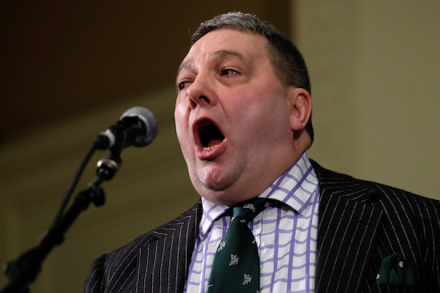
Nowadays it's difficult for the BBC to air anything without facing some accusation of bias. As well as the well documented strand of right-wing bias and EU bias, there's now anti-Corbyn bias -- with the BBC's Nick Robinson even accusing his employer of the latter. Last night things got so bad in the EU debate with David Cameron and Nigel Farage that the Beeb were accused of pro-EU bias once more. Ukip's David Coburn took to Twitter to vent that the 'BBC Knew the questions in advance' and 'chose which audience members speak' so Remain had an easier ride. Alas, the Scottish MEP concludes that 'Cameron still lost despite Aunties best efforts': https://twitter.com/DavidCoburnUKip/status/740309016534863872 Only there's a catch... last night's debate was on ITV, not the BBC.

EU referendum TV debate – David Cameron vs Nigel Farage

From our UK edition

Welcome to Coffee House's coverage of ITV's EU referendum debate. David Cameron and Nigel Farage faced public questions on the EU referendum. Here's our commentary, as well as audio and video highlights, from the discussion.  PODCAST: Listen to Fraser Nelson, James Forsyth and Isabel Hardman give their verdict on Cameron vs Farage: DAVID CAMERON:   James Forsyth David Cameron looked pretty happy at the end of that. He got his choice of opponent in this debate and did everything he could to take advantage of that, mentioning Farage at every opportunity. Cameron also benefited from going second, another thing which he got his way on, as he could rebut Farage's points without any opportunity for Farage to reply.

President Erdogan’s views about women should terrify European feminists

From our UK edition

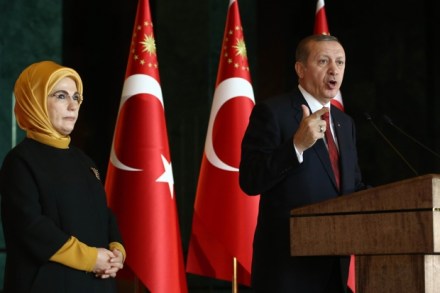
As I entered my 30s I remember thinking how lucky I was. I had a successful career, owned property and was enjoying life as a singleton. Many of my friends were already married, some with children, but the desire wasn’t quite there for me. I wasn’t ready. Now as I march towards my 40s, I’ve embarked on a new life in Turkey. I’m still single, childless and successful. I’m happy, but apparently I shouldn’t be, as according to the country's President, I have behaved in the wrong way. On the eve of Ramadan, the Muslim Holy month, President Erdogan gave all women something to think about during the fast.

Today in audio: ‘Remain’ fights back as PM warns of Brexit ‘bomb’

From our UK edition

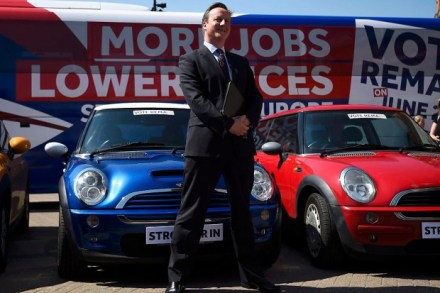
Momentum in the 'Leave' campaign seems to be growing after Brexit took the lead in two polls out today. There are, however, still several weeks until the actual day of the EU referendum and the gap between the two sides remains marginal (four per cent). But 'Remain' still seem shaken by these polls. Here's how they spent the day fighting back: David Cameron said Brexit would put a bomb under Britain's economy, going on to say that 'the worst thing is, we would have lit the fuse ourselves': The PM was backed up Lib Dem leader Tim Farron. In a joint event, Farron said the argument for 'Leave' was built on 'utter, invented rubbish': But in the tit-for-tat battle which is the EU referendum, the 'Leave' campaign also went on the offensive today.

Vote Leave has brought out its Turkish weapon

From our UK edition

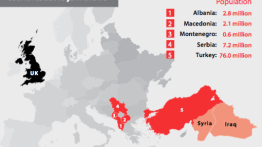
Vote Leave feel that they now have the momentum in this campaign. The three polls out today all have them ahead. Inside the Leave camp, they think that it is their focus on the possibility of Turkey becoming an EU member that is, in part, responsible for this apparent shift in their favour. So, in their official referendum address, which will go to 40 million people, Vote Leave is going big on the question of Turkish accession. The leaflet — which you can see here — has a map on the back showing how if Turkey joins, the EU would border both Syria and Iraq. Now, I can already hear David Cameron rebutting this by saying that there’s no chance of Turkey becoming an EU member anytime soon and that they won’t be in the EU before the year 3,000.

Brexit could leave Britain with the worst of both worlds – like Norway

From our UK edition

This is a translation of an article I wrote for the Norwegian daily VG Never since the German attack on Norway in 1940 destroyed Neville Chamberlain’s premiership and brought Winston Churchill to power, has your country been so discussed in Britain. Supporters of Britain staying in the EU warn of Norway's 'fax democracy'. The 'leave' campaign denounce Norwegian politicians who tell us about the dangers of following the Norwegian example, as liars bought with EU gold. There has been propaganda from both sides, of course, but the sheer lack of substance behind the 'leave' campaign is stunning.  The right-wing politicians, who dominate the anti-European cause, want the British to take an extraordinarily important decision.

Brexit momentum builds as another poll puts ‘Leave’ ahead

From our UK edition

If the polls this morning are anything to go by, the momentum for Brexit is building: an ITV poll for Good Morning Britain shows 45 per cent of voters planning on voting out, compared to 41 per cent who wanted the UK to remain in the EU. The poll is significant because it shows that in the purdah period in the final run-up to the referendum on June 23rd, the 'Leave' campaign's support is growing. What's more, a separate poll survey by TNS showed 'Leave' on 43 per cent compared to 41 per cent backing 'Remain'. The figures, based on a survey carried out last week, are also important because they reflect what was, by all accounts, a good week for those campaigning for Brexit: Michael Gove was widely praised for his performance in the Sky debate.

The Treasury’s Brexit forecast is ludicrous. We’re better off out of the EU

From our UK edition

Leaving the EU should boost pay and create more jobs. Spending our own money on our own priorities ensures that is true from the first post Brexit budget onwards. The dreary gloomy predictions of Remain are all based on the absurd idea that the rest of the EU will want to impose new barriers on their trade with us, and will be able to do so. As we are more the customer than the supplier and as we and they live under World Trade Organisation rules this is pure fantasy. There is one feature of the Treasury's ludicrous forecasts for 2030 that I agree with. They reckon the UK will be better off in 2030 than today whether we are in or out of the EU.

Could the Vote Leave strategy work?

From our UK edition

The Leave campaign have had their best week of the campaign this week. After months of being battered by the Whitehall machine, they’ve taken advantage of purdah silencing government departments to get themselves onto the front foot. As I write in The Sun this morning, even IN supporting Cabinet Ministers admit that Leave have had a good week. But they argue that they won’t be able to ride the immigration issue to victory on June 23rd. One argues that you can’t focus on immigration week after week, or ‘By week four, you end up sounding like Nigel Farage’. But Vote Leave think their trump card is the link between immigration and people’s pay packets. That is the economic argument they are confident they will win.

The Spectator podcast: David Cameron’s purge of the posh | 4 June 2016

From our UK edition

To subscribe to The Spectator’s weekly podcast, for free, visit the iTunes store or click here for our RSS feed. Alternatively, you can follow us on SoundCloud. Naming the best columnist in Britain is like naming you’re the best Beatles song: it varies, depending on what kind of mood you’re in. But who would deny that Matthew Parris is in the top three? The quality of his writing is, itself, enough to put him into the premier league but that’s just part of the art. What sets Matthew apart is his sheer range, and his originality. You never know what he’ll be writing about, whether you’ll agree with him, or virulently disagree. Most columnists join arguments; Matthew Parris starts arguments.