Eu

How European sovereign debt became the new sub-prime

From our UK edition

The New York Times has a great piece today on how banks became so exposed to the sovereign debt of European countries with a history of defaulting. Here’s the nub of the argument: “How European sovereign debt became the new subprime is a story with many culprits, including governments that borrowed beyond their means, regulators who permitted banks to treat the bonds as risk-free and investors who for too long did not make much of a distinction between the bonds of troubled economies like Greece and Italy and those issued by the rock-solid Germany. Banks had further incentive to overlook the perils of individual euro zone countries because of the fees they earned for underwriting sovereign debt sold to other investors.
The new German Question

From our UK edition

The Eurocrisis has put Germany in a twofold position that it abhors. First, it has forced Germany into a much closer relationship with France than is comfortable. For German policymakers, the great thing about the post-enlargement EU, of 27 countries, was that they and France could not rule supreme — they needed to bring other states on board. Germany prefers it this way, as it dilutes France's dirigiste instincts. But recent events have reshaped Europe's decision-making system, recreating the pre-1973 model in which Paris and Berlin reigned. The second thing Berlin abhors is to dictate things to others. The catastrophes of the 20th Century forced Germany to remake itself. It is a million miles away from the helmet-wearing caricature.

Euro crisis knocks Salmond off course

From our UK edition

A few years ago, SNP strategists coined the slogan 'independence in Europe'. They don't champion it too much now, for obvious reasons. To put it bluntly: they are in a pickle over Europe. Scotland's progress towards independence, which had seemed to be serene and almost unstoppable just a few months ago, has hit so much euro-induced turbulence over the last few days that it could be knocked off course for good. The First Minister had to fend off question and after question at Holyrood this afternoon as opposition leaders – including a notable first performance by the Tories' new Scottish leader Ruth Davidson – tried to get Salmond to answer two very simple questions.

The Italian domino effect

From our UK edition

For all the debate about Theresa May and border security, the big news has not been at Westminster today. Instead, people have been watching what is happening in Italy. For it is far from certain that Europe, or the Western world for that matter, has a bucket bigger enough to bail out a country that owes more than Greece, Ireland, Portugal and Spain do combined. As the New York Times reports, the European Central Bank is reluctant to step in and start buying Italian bonds because it fears that its previous bond buying efforts have simply enabled the Italians to avoid necessary reforms. It feels that only market pressure will make the Italians actually act. But this is a dangerous game to play because if Italy falls, France will be left teetering on the brink. BNP Paribas has 12.

Angela we have heard on high

From our UK edition

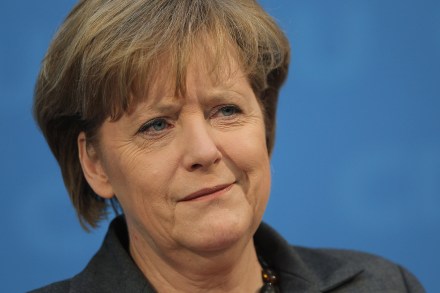
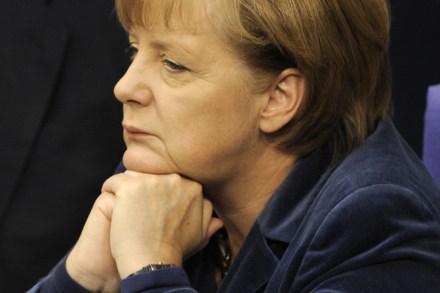
As Italy and Greece implode, and the pressure increases for Germany to do something, anything, Angela Merkel has made a call for 'structural changes' in the EU. In other words, in what's bound to get eurosceptics' hackles up, she's pressing for Treaty change and an even more tightly-knit union. At a conference known as Falling Walls, which commemorates the end of the Berlin Wall, she said: 'This is the time for a breakthrough to a new Europe. This is a time for a change toward more sustainability. That is the problem we have to contend with in Europe. And that means it is about more than declarations of intent but rather implementing structural changes.

Osborne gets frank with Europe

From our UK edition

George Osborne’s attack on the European Commission and his fellow finance ministers, for wasting time talking about a financial transactions tax when it is not going to happen, is quite a significant moment. It marks an attempt by Britain to knock this idea, which would hit this country far harder than anywhere else in Europe, off the agenda.   The Treasury, the Foreign Office and Number 10 have become increasingly exasperated about how this issue keeps coming up again and again. This feeling has been intensified by the fact that this issue is being discussed even as the crisis in the Eurozone is worsening by the hour.

Who will bail out the EU bailout fund?

From our UK edition

While all eyes are fixed on Italy's ever-increasing borrowing rates, a far larger problem may well be emerging. The EU bailout fund, set up to help countries who can't borrow, may itself have trouble borrowing very soon. A sale this morning of 10-year bonds by the European Financial Stability Facility (EFSF) had a very muted response, barely bringing in the €3 billion it was meant to. This despite the fact that the offer was priced at a much more enticing yield, some 90 basis points (or 0.9 percentage points in non-market lingo) above a previous sale. Mind you, that's better than last week's sale, which had to be postponed due to lack of interest. The EFSF was set up as a fund that lends to eurozone companies that are finding it hard to raise money.

After the EU

From our UK edition

If the EU comes crashing down as a result of the Euro crisis, one thing is certain: the UK will be at the forefront of re-creating the bloc. Not exactly the way it is now, but not a totally different entity either. The reasons for this are three-fold, simple and are about Britain's interests. First, Britain derives benefits from being part of, and determining the rules for, the world's largest market. When the world is entering a "no-Doha" future, where pressure for protectionism will rise, there is no substitute for access to a relatively open market of some 400 million people. Neither transatlantic trade, commerce with the Commonwealth or links with the BRICS can substitute for it. Check the figures.

Berlusconi may quit presto

From our UK edition

The word sweeping across Italy is that the PM may be forced to step down in a matter of hours, even "minutes". Ex-minister Giuliano Ferrara says: "That Silvio Berlusconi is about to resign is clear. It is a question of hours, some say of minutes." And he couldn't leave too soon. The Italian bond yield busted the 6.5 per cent threshold to reach 6.58 per cent this morning. It's now close to what some traders call "bailout territory". News of Berlusconi's imminent resignation has sent Italian stocks soaring though – the FTSE MIB is up 2.4 per cent. Berlusconi's scandal-ridden premiership and bunga-bunga antics have caused political deadlock in Rome and stalled the path of much-needed economic reform. Still, with Papandreou's "will he? won't he?

Papandreou to go, but uncertainty remains

From our UK edition

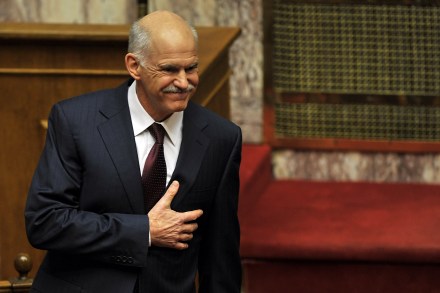
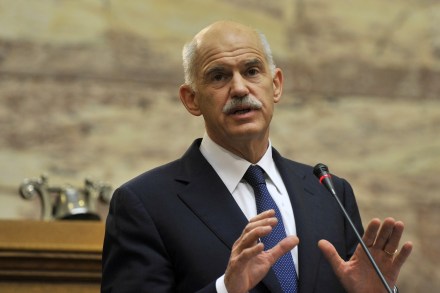
The eyes of Europe, which have been focused on Greece all week, will see a slightly brighter picture today – albeit one still engulfed in heavy fog. The good news: a new coalition government will be formed – the government of "national unity" that EU leaders wanted – to approve the bailout package ahead of new elections. Prime Minister George Papandreou will step down, following his aborted call for a referendum on the bailout terms last week. His future had been a major part of the uncertainty surrounding Greece: reports of his resigntion on both Thursday and Friday turned out to be premature, if only by a matter of days.

A belaboured EU position

From our UK edition

While the Coalition is split over Europe, Labour does not look like they are in a much better position. Ed Miliband told the BBC that he was in favour of the Euro; Ed Balls would presumably tackle anyone to avoid that becoming the party's policy. Meanwhile Douglas Alexander, Labour's brainy Shadow Foreign Secretary, has yet to make a game-changing intervention. Their predicament is obvious. Should Labour accept the narrative of renegotiation but opt for different areas to opt out of than those favoured by the Tories? Or should they, like William Borroughs, stand astride history and scream "stop", arguing for a pro-European position? Seemingly caught between the two views, the party's criticism of the government is like those two old-age pensioners in Woody Allen's joke.

The paradoxes of renegotiation

From our UK edition

David Rennie (aka The Economist's Bagehot) has an excellent column in this week's issue about the difficulties that Britain will face if she tries to repatriate powers from the EU. His main argument, having spoken to a number of senior German politicians and officials, is that if Britain holds up any treaty revisions in the hope of extracting concessions in return, then the other EU states will organise themselves without the UK. The Economist's former Brussels correspondent also makes the key point that the 10 countries that are outside of the euro are not natural allies for the UK – some, like Denmark, do not want to join the euro, but others such as Poland are keen.

Papandreou wins no confidence vote, but appears set to stand down

From our UK edition

The political situation in Greece remains unclear this morning. George Papandreou’s government survived last night’s confidence vote. But the main opposition party has rejected the idea of a national government and Papandreou’s finance minister appears to be maneuvering to replace him. Papandreou’s victory in the no confidence vote means that there probably won’t be elections in Greece this year. But the huge difficulties involved in implementing the austerity plan remain. The measures continue to command little public support and the opposition will continue to criticise them.

Envoy for repatriation

From our UK edition

A few days ago Douglas Carswell laid out a way for the Prime Minister to regain the eurosceptics' trust. One of his ideas was to replace the UK's new chief diplomat in Brussels with someone directly accountable to Parliament. This idea has a snowball's chance in hell of succeeding. First, the PM has resisted all sorts of political appointments – he's even limited the number of Special Advisers – and I don't think he's about to start. Second, doing so would upend a constitutional principle: that officials report to the government, not the legislature. For this reason even generals are not approved by Parliament, as they are in the United States.

Reuters: Papandreou to resign on Friday

From our UK edition

Reuters is reporting tonight that the Greek Prime Minister has agreed to resign on Friday. The news agency says that at a meeting Cabinet colleagues told George Papandreou that he had to resign for the good of the Socialist party and he agreed. It quotes one source saying, "He agreed to step down. It was very civilised, with no acrimony." Now, after Thursday’s experience, I suspect we’re all taking reports about what will, or will not, happen in Greece with a pinch of salt. But it does seem that the referendum is off, stymied in part by Merkel and Sarkozy, who have ridden roughshod over the idea of non-interference in another nation’s affairs. That is, I suppose, par for the course for the European project.

Papandreou stays… for now

From our UK edition

Confusion has reigned today in Athens, clouding the first day of the G20 summit in Cannes. Reports at midday that the Greek Prime Minister was to resign turned out to be false. Papandreou's staying put, for now at least. Instead, it seems there will be no referendum on Greece's bailout package. In a sharp reversal, Papandreou reportedly told his Cabinet: "The referendum was never an end in itself. We had a dilemma – either true assent or a referendum. I said yesterday, if the assent were there, we would not need a referendum." It seems he may have gained that assent, in that the opposition New Democracy party will support the deal. But they are still calling for Papandreou's resignation and for elections to be held in six weeks' time.

The euro sparks a Cabinet row

From our UK edition

Word reaches me of a vigorous exchange of views in Cabinet this week between Chris Huhne and Michael Gove over the European question. Huhne, who has form when it comes to Cabinet scraps, launched into a polemic against Tory Eurosceptics and insisted that the coalition not be "wagged by the Eurospecptic tail". It has, obviously, escaped Huhne’s notice that there are more Tory Euro-rebels than there are Lib Dem MPs. There then followed an even more incredible moment where Huhne implied that if he had been in power, the single currency would have worked and so it was unfair to suggest that he had been proved wrong.

BREAKING: Greek PM Papandreou offers his resignation

From our UK edition

The BBC reports that Papandreou will resign today and ask the Greek president to approve a new coalition government, with former ECB vice president Lucas Papademos likely to take over as Prime Minister. Opposition leader Antonis Samaras has said: "I'm asking for the formation of a temporary, transitional government with an exclusive mandate to immediately hold elections. And the ratification of the bailout deal from the current parliament." This is now the main question: will Papandreou's replacement approve the bailout before new elections are held? UPDATE: It now seems Papandreou might not be resigning after all.

The euro is destroying Europe

From our UK edition

This week's issue of The Spectator hits the newsstands today. Here, for CoffeeHousers, is James Forsyth's Politics column from it: Last week’s rebellion by David Cameron’s backbenchers in support of an EU referendum ended eight years of peace in the Tory party on the European question. Now, the offer by the Greek Prime Minister of a referendum on the bailout package — designed to appease nervous Greek Socialist party backbenchers — means that the uncertainty surrounding the eurozone will drag on into the New Year. George Osborne regards the confusion surrounding the future of the single currency as the single biggest obstacle to a British economic recovery.

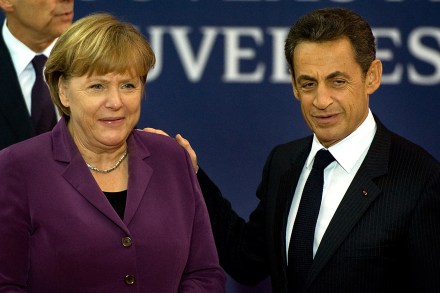
Merkel and Sarkozy try to hold the euro together

From our UK edition

Right about now, Nicolas Sarkozy and Angela Merkel are having George Papandreou for dinner. There have been all sorts of rumours today about what Sarkozy and Merkel will demand from him. Thankfully, they seem to have abandoned plans to tell him to cancel the referendum. But they still seem keen to dictate the question and the timing to him. How that will go down with the Greek demos remains to be seen. One thing is clear, though: the euro is now destroying the whole European project. The European Union’s claim to be a force for peace, stability and democracy in Europe is rapidly disappearing into the Athens smog. The wholesale sacking of senior Greek military officers shows that there are real fears in Athens of a military coup.