Eu

Governing the world – an interview with Mark Mazower

From our UK edition

‘People begin to feel that… there are bonds of international duty binding all the nations of the earth together.’ This quotation, which resonates so clearly as yet more blood is shed in Syria, belongs to Guiseppe Mazzini, the 19th century Italian nationalist whose vision of a ‘Holy Alliance of peoples’ underscores much of Professor Mark Mazower’s Governing the World: The History of an Idea. Mazower’s book is an account of the ideas and institutions of international relations from the Concert of Vienna in 1814 to the present day United Nations. It is, then, the story of how Western hegemony has shaped the international sphere; this period of hegemony is soon to end and perhaps Mazzini’s international ambitions will die with it.

The EU wins the Nobel Peace Prize

From our UK edition

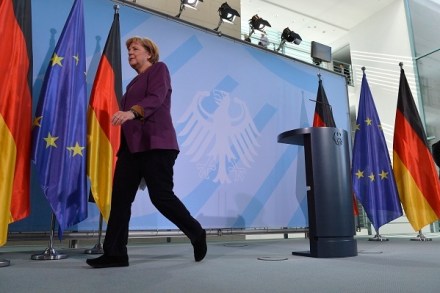
Today is not April the first; but the European Union has indeed won the Nobel Peace Prize. It is a bizarre decision given what is going on in Europe right now. Watching the reaction of the Greek crowd to Angela Merkel on her visit there this week, it was hard not to worry that the European project was now a threat to peace and stability on the continent. To be sure, France and Germany have not gone to war again since 1945. But to chalk that up solely to the European Union is a profound misreading of history. I suspect that the decision to award the prize to the European Union was a product of the desire of the Norwegian elite to rebuke the people there for not wanting to join the European Union. They are raging against the dying of the light.

Conservative conference: William Hague doesn’t want a minimalist Europe

From our UK edition

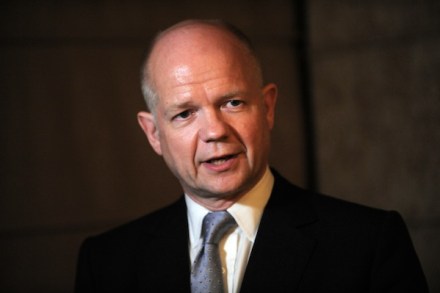
When it came to the passage in his speech on Europe, William Hague was clearly building up to a crescendo. He thundered out the lines 'which will require the fresh consent of the British people', and then paused for what he expected to be a rapturous round of applause from a Tory audience thrilled to have received more red meat on Europe. The applause certainly came, but it wasn't exactly full of enthusiasm; more a perfunctory round of clapping. The first thing holding back the cheers was that everyone in the hall had already heard this line. The promise had been that there would be more details at autumn conference about how the Conservative leadership wants to shape Britain's relationship with Europe. Instead delegates heard a line that the Prime Minister used as far back as July.

Labour conference: Blank sheets of paper are all the rage on EU policy

From our UK edition

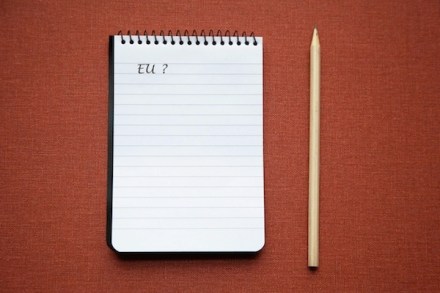
It's no secret that the Conservative party is in a bit of a pickle about Europe at the moment, and Douglas Alexander quite wisely chose to exploit the ravine that is ever growing between eurosceptic backbenchers and the Prime Minister in his speech this morning. But where does Labour stand? Well, that's still not entirely clear. This is what the shadow foreign secretary said about the Tories and Europe this morning: 'Just two years into Government and that’s David Cameron in a nutshell: out of touch at home; out of his depth abroad. But what’s the Conservatives’ strategy for the EU? Nothing, it’s a blank page. What's the Conservatives’ strategy for the G20? Nothing, it’s a blank page. What's the Conservatives’ strategy for the WTO?

What the BAE merger says about UK relations with the US and Europe

From our UK edition

The merger of British BAE Systems with French giant EADS finds the government at a tricky crossroads for the future of the UK's defence industry. Although merging with EADS threatens to rip the heart out of Britain's largest defence firm, BAE has little choice. The firm has suffered from spending cuts on both sides of the Atlantic — 98 per cent of BAE's business originates from the defence market and orders are in decline. Therefore a merger appears to be the obvious solution, allowing BAE to diversify and secure its future. But as the world's third largest defence contractor, any kind of dilution of BAE has security and strategic implications.

What Barroso should have said

From our UK edition

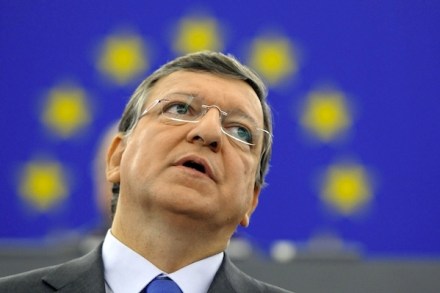
José Manuel Barroso gave his annual 'State of the Union' address in Strasbourg yesterday. If you are a glutton for punishment, you can read the full speech here, but in this week's Spectator, Quentin Letts offers the president of the European Commission a transcript for the speech he should have given. Here is a snippet of what Barroso should have said: For years we have dreamed of a Europe with level economies, a Europe with equality of outcomes. Our patience will soon have its reward, for all our economies will soon be equally knackered. Our Union thus becomes truly egalitarian. Let us salute the blue stars on our federal flag. Let us hum Beethoven’s Ode to Joy. Hum it, indeed, for unfortunately there is no money to pay for an orchestra.

Cameron’s odd behaviour over Europe

From our UK edition

Europe, as everybody knows, is one of those issues on which a Tory leader needs to pay particular attention to the words he uses. This makes David Cameron’s behaviour in recent weeks all the odder. First, we had that Brussels press conference in which Cameron sounded rather too enthusiastic about the EU for his own side’s tastes. This was followed by his Sunday Telegraph piece in which he stressed that ‘the two words “Europe” and “referendum” can go together’ for him. Now, those close to Cameron complain that the two positions were perfectly compatible and that in the first instance he was quoted selectively.

Cameron shows his hand on Europe

From our UK edition

David Cameron's interview with the Telegraph today reveals that the Prime Minister would not campaign for an 'out' vote in a referendum on Britain's membership of the European Union. This will confuse some Conservatives, who had hoped that the 'fresh deal and a fresh settlement' that the Prime Minister described in the chamber earlier this month would either lead to a successful renegotiation followed by a referendum in which the government pushed for a 'yes' vote, or a failed attempt at renegotiation followed by a referendum in which the government pushed for a 'no' vote. But Cameron told Robert Winnett that he would never campaign for an 'out' vote. He adds: 'It comes back to this, who are going to be the winning nations for the 21st century?

UK exports more outside EU for first time since 1970s

From our UK edition

Ministers will be taking heart today that they seem to be finally breaking into buoyant markets outside the European Union. Figures from the Centre for Economics and Business Research show that for the first time the UK is exporting more to non-EU countries than it has been to its traditional main export market within Europe. Over the past three months, 51 per cent of British exports went outside the EU. Exports outside the EU have risen 13.2 per cent, while exports within the EU have fallen by 7.3 per cent. It is the first time since the 1970s, according to the CEBR, that non-EU exports have overtaken those inside the union.

The EU amuse-bouche

From our UK edition

Tory MPs clamouring for a new relationship between Britain and Europe were given an amuse-bouche today when William Hague announced a review into the impact of the EU on everyday life. The Foreign Secretary told the House of Commons earlier that the review, which will report towards the end of 2014, 'will present the evidence and analysis', adding that it would be 'for political parties to decide on their own policy recommendations'. The Foreign Office is briefing that the audit was not about identifying powers to grasp back from the EU, but many in the Conservative party certainly hope it's the start of that process if nothing else.

Cameron hints at Coalition split on EU review

From our UK edition

Yesterday the Prime Minister made a point of showing his backbench how very willing he was to listen to their concerns about the European Union. Today, as he gave evidence to the Liaison Committee, David Cameron made a point of suggesting his Liberal Democrat coalition partners are a little less willing when it comes to reviewing the EU's powers.  Asked when he would launch the balance of competencies review, which will examine the impact of EU law on Britain, the Prime Minister said: 'I hope that we will be able to start the process before the summer, but we need to seek full agreement before we launch it.'  He added: 'Some preliminary work has been done but there does need to be proper coalition agreement before full work goes ahead.

A fresh deal and a fresh settlement

From our UK edition

Pressure has been building all weekend for the Prime Minister to give some form of concession to his eurosceptic backbenchers in his statement on the outcome of the Brussels summit. James blogged shortly before David Cameron stood up in the Commons that Tory MPs were being reassured that they were going to like what they would hear him, which a pro-European MP suspected would be 'feeding a beast with an insatiable appetite'. This is the meat the Prime Minister threw to the eurosceptics: 'Far from ruling out a referendum for the future, as a fresh deal in Europe becomes clear, we should consider how best to get the fresh consent of the British people.

Ministerial aides push Cameron on EU

From our UK edition

David Cameron's attempt to placate backbenchers clamouring for an EU referendum by writing a piece in yesterday's Sunday Telegraph has not gone down particularly well. Backbenchers are more than mildly irked that the Prime Minister focused mainly on the problems with an in/out referendum, when the letter co-ordinated by John Baron (which you can read here) did not call for that. They are also disappointed that the Prime Minister suggested that the time for a referendum was not now, as their demand had been for legislation in this Parliament which would provide for a referendum in the next. One MP told me the response was a 'smokescreen'.

Missed history lessons

From our UK edition

It’s a slow news day in the political world, as we wait for the Spanish government to take its cap to Brussels. There are, however, some brilliant opinion pieces in the papers today to keep you entertained. First, Spanish author Carlos Luis Zafron has penned a visceral attack (£) on the self-appointed elites who have brought his country to the abyss. This passage might appeal most to CoffeeHousers: Peter Oborne made a similar case with regard to the whole EU in a devastating column on Thursday. Today, Charles Moore turns his epigrammatic attention to the subject. He concludes that the derided Cassandras have been vindicated. He writes: Missed history lessons is at the heart of Niall Ferguson and Nuriel Roubini’s joint enterprise in the FT.

Cameron defies increasingly isolated Merkel

From our UK edition

‘No’ used to be the French prerogative in matters of European integration. Charles de Gaulle made a late career out of it. But perhaps the title is passing to Britain. David Cameron indicated yesterday that he would veto any EU banking treaty that did not safeguard the City, as James said he would. Meanwhile, George Osborne joined Cameron in recognising that a European banking union, under design by ECB president Mario Draghi, is necessary if the euro is to survive. Angela Merkel agreed, saying that the answer to the present crisis was more Europe everywhere, only at a pace that suits weary German taxpayers. This sedate approach is becoming unsustainable.

David Owen: It’s time for a referendum on Europe

From our UK edition

There is an intriguing intervention from Lord Owen in this morning’s Times (£)  — and he has also written a book on the subject, Europe Restructured?. He writes: ‘The [likely response to the] eurozone crisis [greater integration] now presents us with a clear choice: do we want to be part of a country called Europe? Or should the UK be a self-governing nation in a new, looser European Community?’ (He goes on to pose two rather different questions for the referendum itself — Do you want the UK to be part of the single market in a wider European Community? Yes/No Do you want the UK to remain in the European Union, keeping open the option of joining the more integrated eurozone? Yes/No.) When might this referendum take place?

Post-Jubilee, it’s back to a new European reality

From our UK edition

As the Jubilee celebrations draw to a close, attention once more returns to events in Europe. There’s a distinct sense among politicians, and especially coalition ministers, that what is happening there will change British politics in a huge way. As one senior MP said to me over the weekend, if a country leaves the Euro then the economic crisis that follows will reset the rules of the politics.   Measures that would have been deemed impossible six months ago will suddenly be on the cards. We’ve already seen a flash of this with Theresa May’s suggestion that the freedom of movement across the European Union could be suspended in the wake of a Eurozone break-up.

The deeper problem behind Europe’s rising carbon emissions

From our UK edition

The Government takes a lot of stick for blaming the weather when there are queues at airports or lacklustre growth figures. Now the European Union is blaming a ‘colder winter’, as well as ‘economic recovery in many countries’, for emissions in 2010 being 111 million tonnes of CO2-equivalent higher – about 2.4 per cent –than they were in 2009. They are insistent that ‘the increase could have been even higher without the fast expansion of renewable energy. ’ Looking at the record of emissions in the European Union and the United States though, it is clear there is a deeper problem.

Clegg takes on the Establishment (and the Tories) again

From our UK edition

So Nick Clegg wants to present himself as anti-Establishment, does he? That’s hardly surprising. After all, the Deputy Prime Minister has ploughed this furrow before now, attacking the ‘vested interests’ that are the banks and the political class. And it’s generally a large part of the Lib Dems’ ‘differentiation strategy’ to come across as insurgents in suits. But Clegg’s comments today are still striking for how far they weaponise this theme and then turn it against the Tories. It’s not just the context of it: with Tory ministers — including Jeremy Hunt — appearing before Leveson this week, Clegg chooses to attack those who ‘bow and scrape in front of Rupert Murdoch’.

Let’s show Eurovision some respect

From our UK edition

There are calls for Britain to pull out of the Eurovision Song Contest, after Engelbert Humperdinck finished second-last on Saturday, with Norway bottom. The Mayor of Leicester has today denounced Eurovision, saying: ‘The politics of Europe — which countries are friendly with which others — has a lot more to do with it than the quality of the songs.’ I agree: politics are involved and it is outrageous. Had George Osborne not given Ireland that £3.2 billion loan we would not have had its four points and Britain would be where it deserved: at the very bottom. We were dismal, and in the eyes of half a billion people. But the solution is not to withdraw from Eurovision. The solution is to properly compete.