Eu

In a preview of David Cameron’s 2013, Europe dominates his New Year interview

From our UK edition

David Cameron’s New Year interview on Marr was dominated not by the economy but by Europe. In a sign of what the promise of a speech setting out his European strategy has started, Cameron was repeatedly asked about what powers he would like back. He didn’t give much away, repeatedly telling Andrew Marr he would have to wait for the speech later this month. But two interesting things did emerge. First, Cameron indicated that he wanted to toughen up the way that the free movement of people is applied. I presume this means that only those with work or a clear means of support could come here; Nick Boles and others have long argued that this is possible under the existing treaties. Second, Cameron indicated that the new terms-or-out referendum would take place within five years.

When will the government confront the EU?

From our UK edition

Here is a story that should have got far more attention. A story that perfectly epitomises the corruption and anti-democratic activity of the EU. In 2010 the group NGO Monitor – which seeks to hold NGOs to account – petitioned the European Commission to reveal details of the NGOs it has funded in recent years.  As readers will know, much of the government-funded NGO business is a racket, and one which pushes highly specific political agendas. And so it has been in recent years with funding from the EU. In particular, as NGO Monitor has previously shown, there is the little matter of the European Commission funding rabidly anti-Israel groups in Europe and the Middle East.

A new EU membership for Britain: second-class or sensible?

From our UK edition

Becoming a 'second-class' member of the European Union doesn't sound awfully appealing on first glance at today's Times story. But the 'associate membership' being considered by the Union of European Federalists would see Britain remain in the single market but lose its commissioner in Brussels and eventually its MEPs, too. Those drawing up this version of the new treaty also envisage that there would continue to be a seat at the Court of Justice for Britain.

David Cameron needn’t fear renegotiating Britain’s relationship with the EU

From our UK edition

Nick Clegg has made a not-so-startling intervention in the debate about Britain's relationship with Europe today, warning that Britain must avoid selling itself short in a renegotiation. His interview with the Guardian is a necessary piece of positioning ahead of David Cameron's Big Europe Speech in mid-January, and this kind of differentiation is something the Tories are more than happy for the Lib Dem leader to continue doing. So in some ways, Clegg warning Cameron not to overdo it on Europe isn't at all significant. But the Deputy Prime Minister makes an important observation in his interview about Britain's bargaining power.

Tory minister says yes to EU and no to immigration to win at 2015

From our UK edition

David Cameron's Conservative modernisation agenda is struggling. Several of today's front pages highlight how traditional Tory issues — immigration and family values — have returned to the centre stage. And many of Cameron's attempts to modernise his party on big issues (climate change, green energy, gay marriage, HS2) have met with a negative responses. How can he retool his modus operandi to win a Tory a majority at the next general election? Policing and ex-immigration minister Damian Green has a few suggestions. In a speech he will give to Bright Blue this evening, Green suggests Cameron's modernising agenda is not yet an ex-agenda, and can still be refashioned to work in 2015.

Scottish Independence and Europe: Who does this Barroso guy think he is? – Spectator Blogs

From our UK edition

Today's Think Scotland column takes a gander at the rumpus over an independent Scotland's accession to the EU. Until recently the SNP promised that said accession would be automatic. Now it's simply "common-sense".  This is because Jose Manuel Barroso, the Spanish Iberian agent* at the heart of the EU Commission, has made an awkward intervention. Scotland would, he says, not be an automatic member of the club at all. Intuitively this is obvious just as Scotland would not be an automatic member of the United Nations. It would have to apply. Once it applied it's application would most probably be accepted. There are few plausible grounds upon which to reject it. With regard to Brussels, however, the truth is that no-one quite knows precisely what would happen.

Liam Fox’s attack on Foreign Office peeves former ambassador

From our UK edition

Liam Fox sparked a row with a former diplomat today after accusing the Foreign Office of an institutional bias towards greater integration with the European Union. The former Defence Secretary is building up a reputation for himself as a rallying figure for the eurosceptic right wing of the Conservative party with a series of speeches on Britain's relationship with Europe, and today he attacked the civil service for having a weak spot for the continent. He told an Open Europe event at the Royal United Services Institute that the government's desire to renegotiate its EU position was impaired as a result of the FCO being 'totally wedded to the concept of ever-closer union, for whom integration into the EU is virtually an article of faith'.

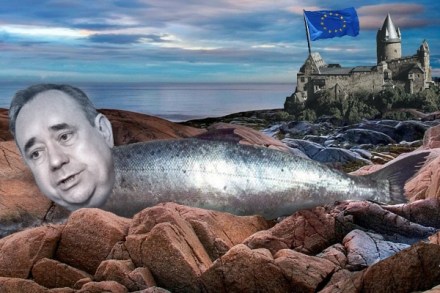
Salmond caught on the rock of Europe

From our UK edition

Europe, so often the rock on which Conservative hopes foundered, is now causing considerable trouble for Alex Salmond. The Scottish First Minister has long campaigned for Scottish separation under the slogan ‘independence in Europe’. Leaving aside his difficulty in justifying the departure from one Union only to become a junior member of another, this has always been a tricky proposal to sell. The main reason for the SNP’s vulnerability has been that no-one has really ever known how Scotland could leave an existing member state and automatically become another one in its own right – not without having to drop all the opt outs and advantages that the UK has squeezed out of Brussels over the decades.

Aide to Europe minister calls for Parliament to beef up its engagement with EU

From our UK edition

Another day, another paper by a Tory MP about Britain's relationship with Europe. Except the latest paper, by Tobias Ellwood for think tank Open Europe, is actually not so much about what's wrong with Europe, but about what's wrong with how our Parliament in Westminster deals with the whole issue. Ellwood, who is PPS to Europe Minister David Lidington, doesn't believe Westminster politicians are actually very good at engaging with European Union policymaking, preferring instead a 'complain-but-don't-change' approach. He paints a discomfiting picture of the way MPs relate to Brussels, describing an alienation which leads to 'little appetite amongst MPs to understand fully how the EU actually works - and how to use Parliamentary power to change it or its policies'.

A satisfactory outcome at the EU budget talks for David Cameron

From our UK edition

So, the EU budget summit has — as expected — broken up without agreement. We await the date of the next discussion of the matter. But for the moment it means there is nothing that David Cameron will have to try to pilot through parliament. Talking to those close to the Prime Minister, I sense that they are not unhappy with this conclusion. In Downing Street, they feel that their criticisms of the running costs of the EU bureaucracy have struck a chord with other contributor countries. They’re also pleased that Cameron has managed to strike a tough negotiating position without isolating himself. But what is giving them the greatest satisfaction is how solicitous of the British position Angela Merkel was. They regard this as a promising sign for the coming renegotiation.

EU budget talks end

From our UK edition

The EU Budget discussions have ended with no agreement, as seemed inevitable after yesterday’s struggles and rows. David Cameron has been copping a lot of flak for his intransigence, particularly from Francois Hollande, who has spent much of the time talking of the need for 'solidarity' with Europe - by which he means the Common Agricultural Policy. Despite these headlines, it's worth remembering that plenty of other countries objected to Van Rompuy's proposals, and for many different reasons. Indeed, far from being isolated, Britain may have forged closer relations with those countries thanks to the experience of these talks.

Europe’s new iron curtain

From our UK edition

The last 24 hours have yielded no agreement in Europe, and they have seen David Cameron’s ambitions decline (he appears resigned to the fact that EU spending will not be limited to 886bn euros, his original objective); but they have also demonstrated that Britain is far from alone at the diplomatic table. David Cameron has been able to forge pragmatic alliances and exert diplomatic pressure precisely. For example, his latest tactic at the budget discussions is to appeal to the downtrodden nations of southern Europe by insisting that the EU’s bureaucracy take its own medicine by raising retirement age and cutting jobs and reducing the final salary pension cap.

David Cameron pulled every which way on Europe

From our UK edition

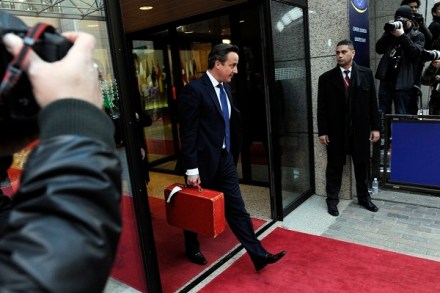
Another day, another set of newspapers full to bursting with pieces about Britain’s fractious relationship with the European Union – all of which, in their way, will unnerve David Cameron. The most enjoyable read is Boris Johnson’s column the Telegraph. Boris made his name as the Telegraph’s European Community Correspondent in the late ‘80s and early ‘90s, writing amusing stories about the EC’s penchant for mad waste and corruption. He gives a reprise today, drawing attention to the fact that the EU distributes your money to Spanish sheep farmers who do not have any sheep. Boris’ conclusion is that David Cameron must go into this week’s debates armed with Maggie’s handbag and tell Brussels that enough is enough.

The View from 22 — Britain vs. Germany, kicking the Lib Dems and the BBC 28

From our UK edition

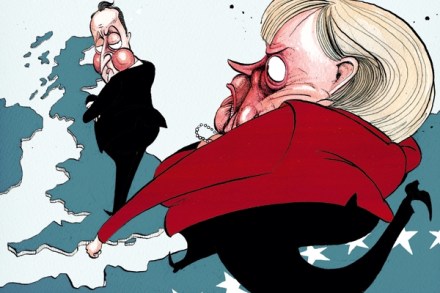
Are Britain and Germany heading for an almightily clash over the future of the EU? In this week's Spectator, Christopher Caldwell argues that Angela Merkel has had enough of Britain's position and is out to give David Cameron a kicking over Britain's lack of solidarity with her nation. On the latest View from 22 podcast, Fraser Nelson explains the significance of about is about to happen: 'The [problem is the] extent to which Europeans don't understand us, they can not get that for Britain, it is an issue of sovereignty. They keep thinking well the Brits don't want to agree the next budget, let's give them a few sweeteners — a subsidy here, a commissioner there. They are trying to horse trade with us, where for us now it's gone beyond that.

Britain, Scotland, Norway and Europe: lands of magical Sovereignty-Unicorns – Spectator Blogs

From our UK edition

Even the cheapest, Poundland crystal ball will tell even a blind observer that Europe is pretty soon going to be a pretty hefty problem for almost all of Britain's political parties. Almost all, I say, because that includes the SNP* whose europhilia is, in some respects, a product of a time that no longer exists. Anyway, the odds of manifesto pledges promising an in-or-out referendum in the next parliament seem to be shortening all the time. I have no idea what this is supposed to achieve since, as best I understand the matter, neither the Conservative nor Labour parties wish Britain to leave the European Union. Asking the question necessarily increases the chances of receiving an answer you do not think sensible or in the national interest.

‘Cameron will not turn back’: EU budget summit under threat

From our UK edition

Will David Cameron be denied his veto moment after all? Brussels sources appear to think the European Union budget summit on 22 and 23 November could still be cancelled. A report from Italian wire service ANSA quotes one source saying 'everything indicates that it will be impossible to overcome the British veto' and that cancelling the summit remains an option. This follows reports recently that Angela Merkel was threatening to cancel the summit as it was pointless if Britain was going to veto any increase above one in line with inflation. The German Chancellor had a lengthy dinner with Cameron to discuss the summit on Wednesday night, but their talks haven't stopped the European rumour mill.

Angela Merkel: I can’t imagine UK quitting the EU

From our UK edition

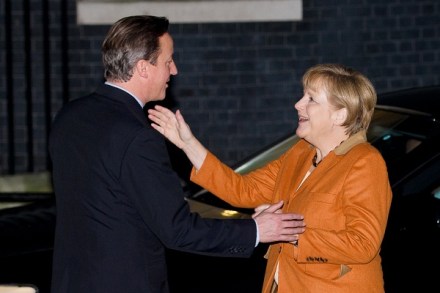
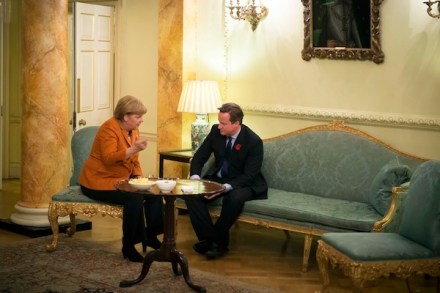
David Cameron and Angela Merkel are eating dinner together tonight, over which they will discuss the forthcoming European Budget summit. The discussion may make even the sweetest crème brûlée taste rather sour, with Cameron continuing to threaten to veto anything above a real-terms freeze in the budget. He has told reporters following him around on his tour of the Middle East that he will make the argument for a freeze 'with vigour'. As she arrives in Downing Street, Merkel will be mindful, though, that she has a key role in trying to reach a consensus between the British position and the desire of other countries in the union for more money.

Is David Cameron struggling to keep up with public opinion on Europe?

From our UK edition

Over the past two weeks, the government has been desperately trying to harden its position on the European Union to match public opinion. David Cameron has been rather bullish with his plans to opt out for 130 EU law-and-order measures and the veto threat over the budget, despite being outfoxed by both Labour and his backbenchers on the latter. Has it been successful? As Isabel reported yesterday, the voters of Corby, Witney and Doncaster North are not entirely happy with the Conservatives’ current position and new national polling reflects a similar attitude. This weekend’s YouGov poll compares public attitudes today towards the EU to this time last year.

UKIP are being taken more seriously but they have got to cut out the unforced errors

From our UK edition

With UKIP regularly challenging the Liberal Democrats for third place in the polls, the party is now beginning to be treated with the seriousness it deserves. In an interview on the Sunday Politics, Nigel Farage made his usual, spiky case for leaving the European Union. Farage argued that he wants a free-trade deal with the rest of the EU and that the other countries would agree because ‘they need us more than we need them’. Even if Farage is right on the numbers, there’s a major doubt if the rest of Europe would be inclined to cut a deal in the wake of a British exit: a country leaving and then prospering outside would be very damaging to the European project.

David Cameron needs to detail EU referendum plans soon to avoid future rebellions

From our UK edition

‘I thought it would hurt more than it did’ one loyalist minister remarked after last night’s government defeat on the EU budget. The fact that the vote isn’t going to bring the government down or bind its hands is what is consoling Cameron loyalists. They are also pointing out that the Eurosceptic vote split with Jacob Rees-Mogg, Priti Patel and Andrea Leadsom staying on the government side this time. But what should worry Number 10 about this rebellion is its flash mob nature. As Isabel pointed out last night, there wasn’t — unlike with the Lords revolt or the EU referendum vote — months of planning put into this one. Instead, it was a rebellion that flared up as soon as the amendment went down — gaining 24 supporters in the first 24 hours.