Eu referendum

The wisdom of Eurosceptic crowds

How much does public opinion on Europe matter? A poll for today’s Sunday Times found that 41 per cent want out of the EU and on the BBC1 Politics Show today, Jon Sopel confronted Douglas Alexander with this statistic. Wee Dougie replied that, on Monday’s vote, he was in the “no” lobby with the leaders of all British political parties – so of course he was in the mainstream. This raises a crucial issue: the vast disconnect over Europe between the political elite and the masses. To declare my hand: I’m in favour of our EU membership and regard the free movement of people, goods and services as a noble

The government's European tribulations continue

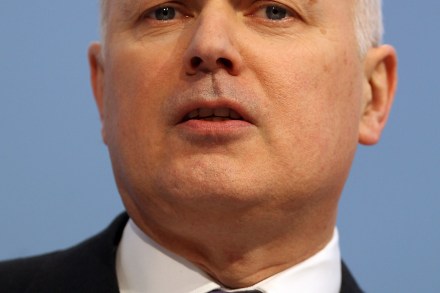
It has been a fraught and ill-tempered week in Westminster. And — whether it is the rumour that Tory backbencher Andrea Leadsom told George Osborne to “f**k off”, or David Cameron’s dismissal of Ed Miliband as a “complete mug” — most of it has had Europe at its root.  So it is, too, with the latest news of government strife. Iain Duncan Smith, it’s reported, had a ferocious row with the Tory chief whip, Patrick McLoughlin, over the EU referendum . Apparently, he warned that, “If you ever put me in this position again, that’s it”. As it happens, there is more on IDS’s disgruntlement in Charles Moore’s column for

Has the EU debacle hurt Cameron?

Leaving aside Cameron’s relationship with his own backbenchers for now, how has yesterday’s vote affected the public’s view of him? The first proper hint comes from today’s YouGov poll (conducted on Sunday and yesterday), which asks respondents to rate the qualities of each of the party leaders. Among the public as a whole, there is no significant change in views of the Prime Minister since last month. But there is a change in what Conservatives think of him, and not in the direction Cameron would like. Now just 40 per cent of Tory voters think Cameron is honest, down from 53 per cent last a month ago. And a mere

Why this is not the time for an EU referendum

Having spent five hours in the debate last night, one thing was absolutely clear: we are all Eurosceptics now. So why did I choose to vote against the motion? It is because I believe that anger and frustration alone will not resolve our justifiable grievances towards the EU; we need a clear-eyed strategy to move forward.    We can all agree that Europe in its current form is not working for us. We have passed powers to Brussels at the cost of undermining the sovereignty of Parliament. Regulations that hinder our growth have not only been adopted but gold-plated, and with the Lisbon Treaty we are saddled with a constitution

Cameron needs a new management style

There seem to be three schools of thought among those close to the leadership about last night’s rebellion. One even now maintains that the issue was handled as well as it could have been and blames the rebels for all the trouble. These people don’t seem to realise that what they are saying is effectively that the Conservative parliamentary party is unmanageable. The second group says that the issue of Europe sends the Conservative party loopy. But they also concede that Number 10 got caught up in the madness too. The third lot are the ones who have grasped the significance of last night’s events. Despite being loyalists, they are

The coalition bares its tensions over Europe

Here’s an irony: last night’s EU fandango was the fifth largest vote in favour of the government this year. And yet there is little about the situation that is favourable to the government this morning, as the story moves on from Tory splits to coalition ones.  It started with Michael Gove’s appearance on the Today Programme earlier. The Secretary of State for Education put in a much more conciliatory performance than William Hague managed yesterday; praising the “cordiality” of the Tory rebels, and reassuring them that the Tory leadership would like to see specific powers returned from Europe “in this Parliament”. As he put it: “We need to win more

43 percent of Tory backbenchers vote for an EU referendum in defiance of David Cameron

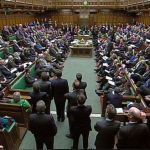
The scale of tonight’s rebellion is quite remarkable, 43 percent of Tory backbenchers have defied a three line whip—and we are only 18 months into the parliament. Indeed, if you factor in the abstentions more than half of Tory backbenchers rebelled. This should be a wake-up call to David Cameron. He needs to develop a proper policy for repatriating powers from Brussels, change his style of party management, and reform the Whips office.  This rebellion will encourage the hard-line Euro-sceptics to try again and again. They will reckon, rightly, that as the parliament goes on the number of potential rebels will grow. If they can get this number of rebels

Whipping up a storm | 24 October 2011

It looks like about a third of Tory backbenchers will rebel in tonight’s vote on an EU referendum. 18 months into government, this is a massive rebellion and one that should make the Prime Minister think again about his style of party management. Those in Number 10 who claim that many of the rebels will ‘never be happy’ are missing the point that, while there may be a hardcore of MPs keen to rebel, many more are reluctant rebels who feel they have been pushed into it by Cameron’s failure to engage with the party on the whole issue of Europe. One reluctant rebel said to me over the weekend:

Dave's EU opportunity

Lucky David Cameron. His chance to repatriate powers from the EU will come sooner than he thought. Now the latest EU summit is over, it looks as if there will indeed be change to the Lisbon Treaty — the very document that the Prime Minister and William Hague promised Britain a referendum on. Last night, Herman Van Rompuy said that EU leaders had promised to “explore the possibility of limited change” in the weekend talks. Germany since confirmed that provisions for “limited treaty change” were included in the conclusions. We all know what that means. Indeed, here are the Prime Minister’s words: “Treaty change can only happen if it is

Liddington: EU vote should follow a new treaty

David Liddington, the Europe Minister, has just told the Murnaghan Show that the moment for a referendum on the European Union is once a treaty change has been agreed. Liddington argued that then everyone would know what they were voting on. This is quite a significant shift in the government’s position. Up to now, the position has been that there would only be a referendum if yet more powers were transferred from Westminster to Brussels. Liddington appeared to be saying that a vote would follow any new treaty, even one that brought powers back. This moves the government far closer to a position of renegotiation followed by a referendum. If