Etymology

Matajudíos

From our UK edition

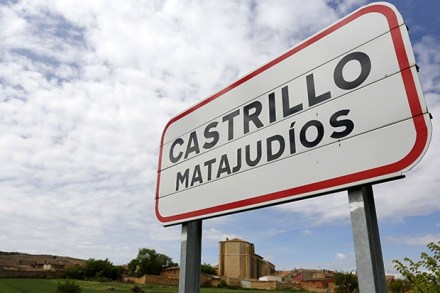
A village has changed its name because it seemed offensive. But I think the villagers were under a misapprehension. The village is in Spain: Castrillo Matajudíos. Of its population of 57, 29 voted to change the name to Castrillo Mota de Judíos because they did not like the idea of the former name meaning ‘Kill Jews’. Another settlement, in Extremadura, is called Valle de Matamoros, but its inhabitants are not planning to change it lest it be taken to urge the killing of Moors. The silly thing is that the Spanish place-name element mata does not mean ‘kill’ at all. It is quite common. There is a quiet little place in the Cantabrian region called Mataporquera. You might think it came from mata ‘kill’ and porquera, ‘piggy’.

Trigger

From our UK edition

A notion is going about that, just as readers of film reviews receive spoiler alerts, so readers of anything should get a trigger warning. Otherwise something nasty in the woodshed might trigger post-traumatic stress disorder or worse. ‘I use the phrase trigger warning myself,’ wrote Kate Maltby in a Spectator blog the other day, ‘to warn Facebook friends that they may not wish to click on a link because it is likely to automatically “trigger” flashbacks for survivors of trauma.’ That’s kind, and luckily I am not triggered by split infinitives. But she and fellow admirers of the classics are shocked by a demand from four students at Columbia University for tutors to issue trigger warnings before asking for certain authors to be studied.

Should ‘suicide’ mean pig-killing?

From our UK edition

There was a marvellous man in Shakespeare’s day known as John Smyth the Sebaptist. ‘In an act so deeply shocking as to be denied by Baptist historians for two and a half centuries,’ Stephen Wright, the expert on separatist clergy wrote, ‘he rebaptised first himself and then his followers, and set out his new views in The Character of the Beast (1610).’ His former confederate Richard Bernard fired a counterblast in that year showing (to his own satisfaction) that ‘the Church of England is Apostolicall, the Separation Schismaticall’. Reading a word like sebaptist we take the prefix se- to indicate a reflexive act, a self-baptism, as we would if reading French or Spanish. But that is not how ancient Romans used se-.

How Ebola got its name

From our UK edition

It should perhaps be called Yambuku fever, since that was the village in Zaire (as it was then, now the Democratic Republic of the Congo) where it was identified in 1976 by Peter Piot, a scientist from the Institute of Tropical Medicine in Antwerp. He is now director of the London School of Hygiene & Tropical Medicine, and went back to Yambuku earlier this year, meeting a survivor of the 1976 outbreak. Professor Piot decided to name it after the river Ebola, 60 miles from Yambuku, because he realised the stigma that would attach to the disease. In that, Yambuku is luckier than the German town of Marburg in Hesse, where seven people died of a haemorrhagic fever identified there in 1967, or Lassa in Borno state, Nigeria, where another haemorrhagic fever was described in 1969.

The fascinating history of dullness

From our UK edition

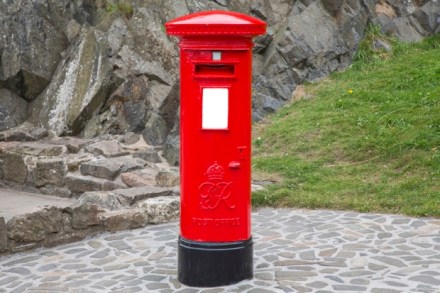
At least I’ve got my husband’s Christmas present sorted out: the Dull Men of Great Britain calendar. It is no doubt intended ironically, as travelling the country photographing old pillar-boxes, for example, does not strike me as being in the least bit dull. I had thought that dull, in reference to people, was a metaphor from dull in the sense of ‘unshiny’. ‘Dieu de batailles!’ as the Constable of France in Henry V exclaims of the English, ‘where have they this mettle?/ Is not their climate foggy, raw and dull?’ But I was quite wrong, as so often. It started off (in the form dol) meaning ‘foolish’. In English almost as old as you could care to have it, the author of The Seafarer declares: Dol bith se the him his dryhten ne ondrædeth; cymeth him se death unthinged.

Origins of the toe-rag

From our UK edition

‘I am glad to say that I have never seen a toe-rag,’ said my husband, assuming, as unconvincingly as one would expect, the demeanour of Gwendolen from The Importance of Being Earnest. ‘It is obvious that our social spheres have been widely different.’ I had been mentioning the perverse tendency of the human race to defend their own amateur etymological theories, even when convicted of gross error. A vigorous example at the moment is tow-rag, a catachrestic version of toe-rag, a term of abuse taken from the practice of wrapping rags round the toes. ‘Stockings being unknown,’ wrote J.F.

Why did we ever spell jail gaol?

From our UK edition

‘Go to jail. Go directly to jail. Do not pass Go. Do not collect £200.’ said the Community Chest card in Monopoly. I was never sure what a Community Chest was, but it seemed American, like the spelling jail. Those who love the spelling gaol, which combines characteristics of being very English yet outlandish, might be surprised to find that the Oxford English Dictionary prefers jail. There is a logical explanation. Both spellings derive indirectly from the Latin cavus, ‘a hollow’, from which came Latin cavea, ‘a dungeon or cage’, and thence French cage and Italian gaggia (like the coffee machine). The changing of cavea into cage is paralleled by the Latin salvia developing into sage, or the late Latin rabia into rage. So far, so good.

Lumpen’s journey from Marxism to nonsense

From our UK edition

A publisher, Kevin Mayhew, has written to The Tablet, which is not a computer journal but a weekly magazine of interest to Catholics, complaining that the newly revised translation of the Mass is ‘lumpen, difficult and odd’. What would you think he meant by lumpen? Or try this, from a recent review in the TLS of a biography of Jack London, commenting on an example of detail in The People of the Abyss (1903): ‘a deceptively lumpen old man who gently tucks a rogue strand of hair behind his wife’s ear’. The English word lumpen derives from Karl Marx’s use of Lumpenproletariat. He first used it in 1850 of the ‘down and outs’ who make no contribution to the workers’ cause.

Dot Wordsworth: Is M&S really ‘Magic & Sparkle’?

From our UK edition

‘Believe in Magic & Sparkle,’ says the Marks & Spencer television Christmas advertisement. The phrase is meant to suggest the shop, but it seems rather distant to me, either verbally or associatively (the shops, being lit by fluorescent tubes, are staring rather than sparkly). The popular name is Marks and Sparks, but merely as a rhyme. There is already an outfit called Believe in Magic. ‘Believe in Magic is a charity,’ its website says, ‘that spreads magic to the lives of seriously and terminally ill children.’ It takes them on outings for a treat. There is little chance of Believe in Magic being confused with Marks & Spencer. There is also some stuff called Ibuleve, a gel for the relief of muscular and rheumatic pain, strains and sprains.

Little lists for word lovers

From our UK edition

In his Modern English Usage, Henry Fowler used the term Wardour Street for ‘a selection of oddments calculated to establish (in the eyes of some readers) their claim to be persons of taste and writers of beautiful English’. In his Modern English Usage, Henry Fowler used the term Wardour Street for ‘a selection of oddments calculated to establish (in the eyes of some readers) their claim to be persons of taste and writers of beautiful English’. The metaphor was taken from the street in Soho, later occupied by the film industry, once the place for dealers in antique, or imitation-antique furniture. Among Fowler’s examples of Wardour Street English were anent, aplenty, forebears, perchance and well-nigh.

BOOKENDS: Hang the participle

From our UK edition

An awful lot of books are being published these days about the English language. David Crystal has a new one out every few weeks, and John Sutherland probably has half a dozen on the go. The Language Wars: (John Murray, £17.99) is Henry Hitchings’s third and unlikely to be his last. An awful lot of books are being published these days about the English language. David Crystal has a new one out every few weeks, and John Sutherland probably has half a dozen on the go. The Language Wars: (John Murray, £17.99) is Henry Hitchings’s third and unlikely to be his last.