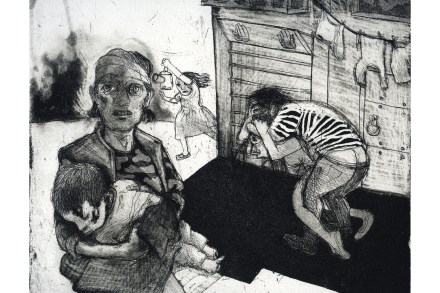
Etching

The art of printmaking in all its glorious complexity

From our UK edition

Do you know your aquatint from your drypoint? Your intaglio from your lithograph? The appearance of any one finished print can vary so much from another – the feathery delicacy of etching replaced by the bold forms of linocut or the carved sinews of a woodblock – that it can be difficult to believe they all derive from the same initial process. What image appears when an object – be it carved, chemically altered, or engraved – is covered in ink and pressed into a piece of paper? As Holly Black explains, it is difficult to know when this technique first originated. Was it with the work of monks carving woodblocks in the mid-9th century to print the lines of the Diamond Sutra (now held in the British Library)? Or does it have its origins centuries earlier?

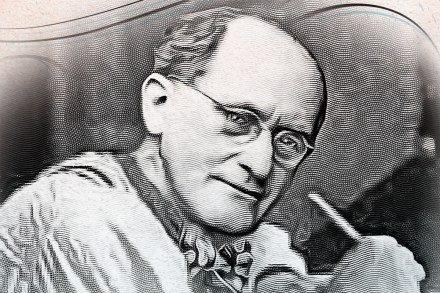
Bryan Garner has recovered a lost master

Bryan Garner has performed a remarkable act of cultural recovery with his vigorously written new book, The Etcher: The Life and Art of Oskar Stoessel, a long-forgotten Austrian artist who had total mastery of his form and deep understanding of the human face. Stoessel (1879-1964) attained success in the US in the 1940s after fleeing from the Nazis in 1938 with the help of US Minister to Austria, George Messersmith, who introduced him to elite American circles. Stoessel went on to etch portraits of Franklin Delano Roosevelt and Secretary of State Cordell Hull, among many others, and exhibited at the Corcoran Gallery in Washington, DC. He found his greatest supporters and subjects in the Supreme Court – he sketched all the sitting justices in 1941 and more in subsequent years.

bryan garner

Why is the smoky, febrile art of Marcelle Hanselaar so little known?

From our UK edition

I first became aware of the work of Marcelle Hanselaar in a mixed exhibition at the Millinery Works in Islington. All I remember now about the show, and my review, is that I said she could teach Paula Rego to suck eggs. From the mischievous energy packed into her small figurative paintings I assumed she was young enough to be Rego’s granddaughter. That was in 2003; she was pushing 60. Born in Rotterdam in 1945, Hanselaar is essentially self-taught. She dropped out of art school in The Hague — it was the 1960s — and ran away to Amsterdam; what she learned about painting she picked up from the artists she lived with.