Éric Zemmour

Paris match

“If you wish to meet intellectual frauds in quantity,” V.S. Naipaul once said, “go to Paris.” After two years of pandemic-induced shutdowns and travel bans — some of them instituted, it seemed at times, with the sole purpose of harrying visitors from Britain — it was oddly satisfying, rather than irritating, to be assailed once again by the sciolistic outpourings of aspiring novelists. On mild spring evenings, the Left Bank echoed with the chatter of students and veterans of the creative writing mills of North America. Paris, finally, was emerging from the thickets of depression and terror occasioned by disease, ennui and patrols of gendarmes hunting for delinquents out for a walk.

Paris

Marine Le Pen takes on the king of Europe

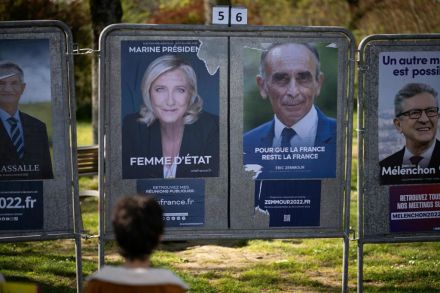
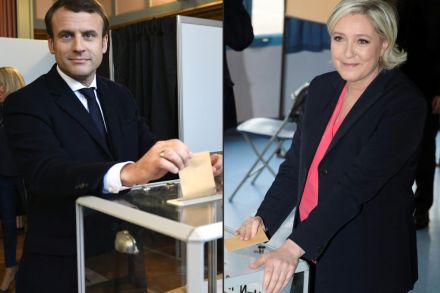
Last Sunday marked the beginning of the French presidential vote; the runoff election will take place on April 24, and incumbent president Emmanuel Macron winning again is no sure thing. If she plays her cards right, challenger Marine Le Pen has a legitimate shot at becoming the next president of France. Macron emerged victorious in the first round with 27 percent of the vote, followed by Le Pen with 23 percent. For the nationalist Le Pen, it is the second time she has qualified for the runoff, and thus the second time she is running against Macron. In 2017, she lost to Macron 66 percent to 33 percent, crushing once again the ambitions of her National Rally party. This year, however, will be a much closer call.

Is France set for another Le Pen-Macron showdown?

The first round of voting in the French presidential election will happen Sunday — and despite expectations of the last few years, the run-up appears increasingly anti-climactic. But not all is said and done in the campaign. Over the last few weeks, Emmanuel Macron has extended his lead in the opinion polls, bolstered by the uncertainty of the war in Ukraine. The most recent poll has Macron ahead at 28 percent, in front of far-right candidate Marine Le Pen at 23 percent, and far-left contender Jean-Luc Mélenchon. Far-right independent hopeful Éric Zemmour (9 percent) and Republican nominee Valérie Pécresse (8 percent) had experienced boosts in the campaign’s early stages, which have both since died down.

The other Camus

Nearly two-thirds of French citizens say they fear that Muslim immigrants threaten white Christians with “extinction.” That bodes well for Éric Zemmour, France’s ubiquitous right-wing polemicist, candidate for its presidency — and prominent popularizer of the concept of le grand remplacement, the conspiracy theory that a cabal of Jews and globalist elites are conniving to “replace” Europe’s native population with Africans and Arabs. This paranoid thesis has inspired white supremacists across the world, and is an increasingly popular import on the American right. The man who coined le grand remplacement is the seventy-five-year-old novelist and travel writer Renaud Camus — no relation to Albert, but a kind of philosopher nevertheless.

camus