Erasmus

Our resentment of migrants is centuries old: the Little Englanders of the Tudor era

From our UK edition

This Little World opens with a description of the riots of 1517, an explosion of pent-up hostility and resentment against ‘strangers and aliens’. Recently arrived migrants from France and the Low Countries were blamed for aggravating the poverty and want suffered by locals. That Easter, a rabble-rousing preacher had called for Londoners to remedy this injustice: ‘As birds would defend their nest, so ought Englishmen to cherish and defend themselves, and to hurt and grieve aliens for the common weale.’ Soon afterwards, on the May Day holiday, apprentices gave drunken, unruly vent to their frustration in riots. Five hundred years flash by and so little has changed.
How Hans Holbein brought portraiture to England

From our UK edition

On the evening of 6 May 1527, Henry VIII entertained an embassy from France at a lavish party in Greenwich. The festivities took place in a banqueting house and a theatre, both built for the occasion. At the feast’s end, Henry led his guests out through a great archway. After a moment, he invited the French to turn around and look at a painting which hung behind them. It was a vast panorama of the 1513 siege of Thérouanne – ‘very connyngly wrought’, a chronicler reported. As Henry knew, the siege was a sour memory for his guests. Henry himself, in league with Maximilian I, the Holy Roman Emperor, had routed them there. So great had been their humiliation that it was known as the Battle of the Spurs, after the spectacle of the French cavalry fleeing the field.

Thomas More’s courage is an inspiration for all time

From our UK edition

Three years ago, when memories of the final series of HBO’s Game of Thrones were still fresh, Joanne Paul published The House of Dudley, a gripping account of three generations of the Dudley family, whose efforts to seize the crown from the Tudors, as I noted in these pages, made the machinations of the Lannisters and the Starks look tame. Now, hard on the heels of the final instalment of the BBC’s adaptation of Hilary Mantel’s Wolf Hall trilogy – and with a revival of Robert Bolt’s A Man for All Seasons opening in the West End in August – Paul has published another book equally attuned to the zeitgeist.

What became of Thomas Becket’s bones?

From our UK edition

The St Brice’s Day Massacre? I must admit I hadn’t heard of this ‘most just extermination’ of Danes in Oxford at the instigation of King Aethelred the Unready in 1002, perhaps because the teaching of history in this country tends to kick off in 1066. You certainly don’t think of Oxford as a place that pioneered techniques of ethnic cleansing. Crypt is a collection of seven essays that unearth details about how certain people lived and died in the past. If you didn’t already know Alice Roberts’s background as an anatomist and biological anthropologist, you’d have a good chance of deducing it from this book.

Holbein at the Morgan

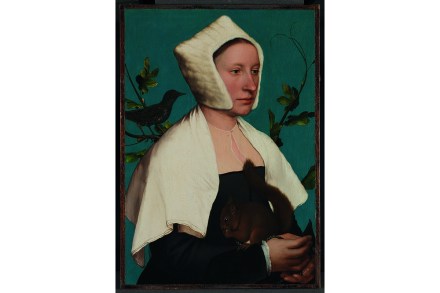
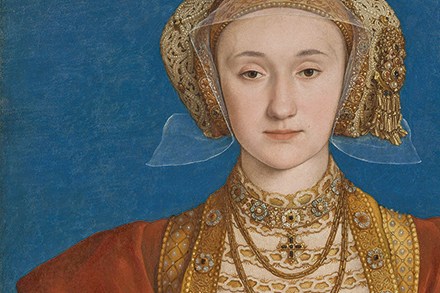
There’s a moment in portraiture when people started having a mind of their own. All of a sudden you see it in the faces: the eyes, the brow, the lip. We are no longer looking at a figure for all time — or even a sitter in a moment in time — but at something more like “me time.” The focus is not on outward appearances but inward looking. These people are lost in thought. That’s just where Hans Holbein the Younger, the great portraitist of the early sixteenth century, found them. The German artist, born into a family of painters around 1497, could conjure the smallest details at his fingertips. He quickly became the most sought-after portraitist in Europe and, by 1536, the court painter of Henry VIII (at a time when Henry himself was courting).

Holbein

It is impossible to imagine Henrician England except through the eyes of Hans Holbein

From our UK edition

‘Holbein redeemed a whole era for us from oblivion,’ remarks the author of a trilogy of novels set at Henry VIII’s court. ‘He has forced us to believe that his vision of it was the only feasible one.’ This is a bit of a tease. It’s not written by Hilary Mantel, as you might be expecting, but by Ford Madox Ford, who, a century before Wolf Hall, published a sequence of novels about Henry’s fifth queen, Katharine Howard. Nevertheless, Ford’s point is irrefutable. It is impossible to imagine the England of Henry VIII except through the eyes of ‘the King’s Painter’, Hans Holbein.

The trouble with Erasmus is not just the cost

From our UK edition

It was curious to see the explosion of outrage over the UK no longer participating in the Erasmus scheme. We were told it broadened young people’s horizons by sending British undergraduates to study at a European university. We were told our young people are being deprived of this opportunity. But having spent my pre-politics career working with young people, Erasmus and deprivation are not things I’ve ever associated with one another. The outrage is largely coming from a collection of the firmly middle class and affluent anti-Brexit folk – TV broadcasters and QCs among them.