Epics

The intellectual passions of J.R.R. Tolkien

It was December 1942 and J.R.R. Tolkien was having doubts about his new book, a sequel to The Hobbit published five years earlier. ‘Is such an “epic” possible to consider in the present circumstances?’ he wrote to his publisher Stanley Unwin. The specific circumstances included the second world war; but the literary climate was hardly more propitious. The warden of Merton College, Oxford, where Tolkien was Professor of English Language and Literature, was ‘visibly shaken’ when Tolkien showed him the blurb for that sequel, eventually titled The Lord of the Rings. Reviews were largely poor: the American critic Edmund Wilson was not alone in thinking it ‘juvenile trash’. In a sense, Tolkien’s question to Unwin holds good.
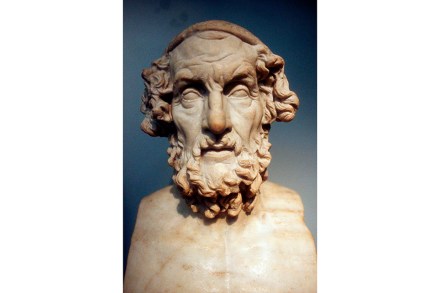
The illiterate poet who produced the world’s greatest epic

From our UK edition

Odysseus is tossed on the sea when he notices a rock and clings to it. ‘As when an octopus is drawn out of its lair and bits of pebble get stuck in its suckers,’ says Homer, ‘so his skin was stripped from his brave hands by the rock.’ There is such elegant tricksiness in that simile. Homer still sits at the apex of western literature thanks to the beauty and influence of his verse. Robin Lane Fox has been teaching the epics for 50 years and studying them for many more. His lifelong fascination with the texts has bred a sort of feverish passion in him that makes him declare Homeric poetry to be ‘beyond us’ today (he is probably right) and without equal anywhere in the world, except perhaps in the books of Tolstoy (who is surely still inferior).