Eno

Terry Gilliam turns to eye-watering excess for his staging of Berlioz’s Benvenuto Cellini

From our UK edition

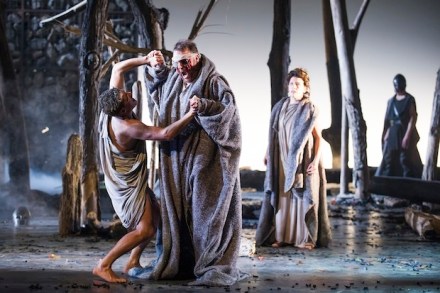
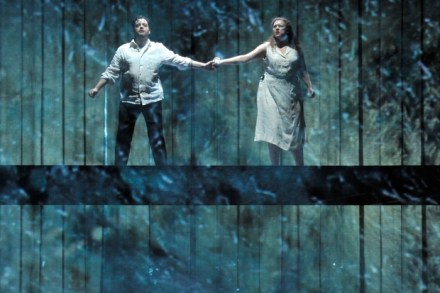
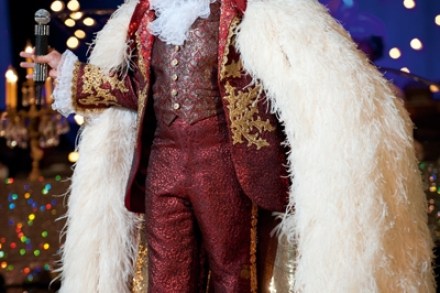
Operas about artists are not rare. However — perhaps for obvious reasons — those artists tend to be musicians, singers, or at least performers, able to persuade and cajole both us in the audience and the other characters on stage through their eloquence. Berlioz, in his first opera, presents the renaissance sculptor Benvenuto Cellini, in an episode loosely adapted from his autobiography. But the final casting and unveiling of his new statue of Perseus, against all the odds, provides a climax that music (let alone stagecraft) seems fundamentally ill equipped to portray.
A Rosenkavalier without a heart ain’t much of a Rosenkavalier

From our UK edition

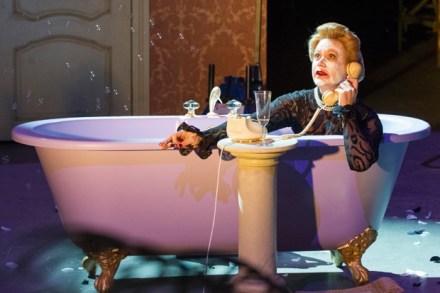
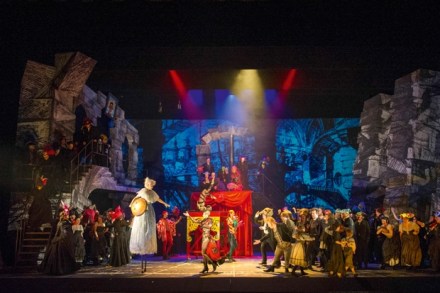
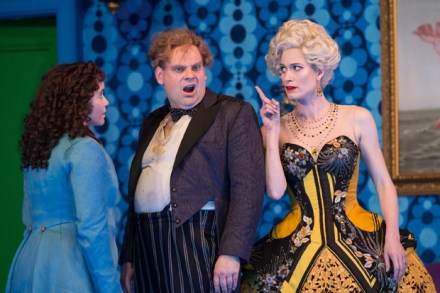
In all its minute details, Der Rosenkavalier is rooted in a painstakingly stylised version of Rococo Vienna that, paradoxically, is further fixed in a web of cannily juxtaposed anachronisms. Upset their balance and you risk upsetting the balance of the whole piece. That’s no bad thing, of course, but Richard Jones’s bold new production for Glyndebourne — opening the festival’s 80th season — shows exactly the advantages and disadvantages of doing that. Out go the dusty stucco-work and wobbly walls of elderly traditional productions; in come Paul Steinberg’s sharp sets and Jones’s trademark garish wallpaper, which Mimi Jordan Sherin’s brilliant lighting floods with further shifting colours.

More woe for Oedipus

From our UK edition

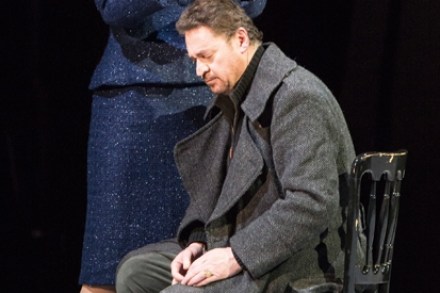
I had high hopes for Julian Anderson’s first opera, Thebans. Premièred at the Coliseum last Saturday, it promised to mark a departure from the trendiness of ENO’s recent commissions, Nico Muhly’s Two Boys, for example, or the dreadful Sunken Garden — in fact, ENO’s next season seems to reflect a company at last a little less enamoured of innovation for its own sake. Thebans, the advance publicity suggested, was to be a serious, grown-up work, closer in spirit, perhaps, to Detlev Glanert’s Caligula, of which ENO gave the UK première two years ago. The company had put a lot of faith in Anderson, currently composer-in-residence at Wigmore Hall and a master of orchestral colour and texture.

Mixed results from the ENO and ROH in their seasonal away games

From our UK edition

It’s been a spring tradition for several years now for English National Opera to present small-scale productions in various venues around London. But this year the Royal Opera followed suit, heading across the Thames to the new Sam Wanamaker Playhouse at Shakespeare’s Globe. Ahead of the announcement of its solid but mainly safe 2014–15 season, we also learned that the ROH will present Monteverdi’s L’Orfeo in English at the Roundhouse in Camden next year — a rather more blatant incursion into ENO territory. And if the company can take these small shows, which don’t even employ its orchestra, to NW1 and SE1, what’s to stop it taking them on tour beyond the M25?

ENO’s Rodelinda: near-perfect singing, perfectly gimmicky direction

From our UK edition

I wasn’t going to write about Handel’s Rodelinda, wasn’t even intending to go, but thanks to the kindness of the press office at ENO I did, and it was so marvellous that I can’t resist expressing my delight. Not that it was ideal — no production of Rodelinda is, or, I’m beginning to suspect, can be. The musical side of things, actually, was close to perfect, but Richard Jones seemed to be in several minds about what kind of work it is, and indulged in an orgy of director’s gimmicks, gleefully abetted by the set designer Jeremy Herbert. Set in fascist Milan, the show was redolent of Glyndebourne’s 1998 production, which took its inspiration from silent movies in the exaggerated posturing of its heroes and, especially, villains.

Spectator letters: EDF answers Peter Atherton, Christopher Booker on wildlife

From our UK edition

Nuclear reaction Sir: Peter Atherton questions whether a new nuclear power station at Hinkley Point is a fair deal for the UK (‘Nuclear fallout’, 22 February). However, his conclusion is based on some unvalidated assumptions. In May 2012, he wrote that EDF would need £166 for each megawatt hour of electricity produced to get a ‘realistic return’. Now he says that an agreed price of £92.50 offers rewards which are ‘eyewateringly attractive’. Neither claim is justified. It is a balanced deal which will unlock £16 billion of investment at the lowest possible cost for consumers. He claims returns to investors of up to 35 per cent.

The state of opera today (it’s not good)

From our UK edition

I’ve been hoping that in this, the last of my weekly columns on opera, I would be able to strike a positive, even cheerful note on the present and future of the art form, but honesty compels me to say that I don’t think it is in very good shape. Not, probably, that it has ever been, or at least only for brief periods. Owing to its mongrel nature, there has usually been a tendency for one or other of its ingredients to lord it over the others, so that the ideal balance of music and drama, spectacle and action, personalised in the collaboration of singers and conductors, stage directors and musicians, has only been rarely achieved.

The ENO’s Magic Flute ignores everything that makes Mozart’s opera great

From our UK edition

A new production of The Magic Flute is something to look forward to, if with apprehension. How many aspects of this protean masterpiece will it encompass, and how many will be neglected or distorted? The answer, in the case of Simon McBurney’s effort at the Coliseum, is that almost everything that contributes to the work’s greatness is ignored or reduced, so that an evening that should be spent in a state of growing elation merely induces irritation deepening to rage, with patches of life-draining boredom. Not that the first-night audience shared my view, to judge from the roar of applause that greeted the final curtain, and the frequent guffaws and outbursts of clapping during the work.

A Fledermaus worth seeing for all its inadequacies

From our UK edition

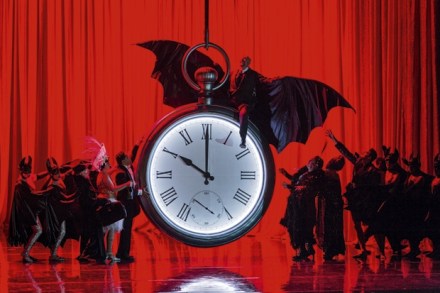
Johann Strauss’s Die Fledermaus (but if it’s given in English, why not The Bat? Does that somehow sound too unglamorous?) is not only the greatest operetta ever composed, as everyone agrees, but also, in my view, a great work, to be ranked with the finest comedies in any genre. That is, beneath its featherbrained hedonism there is a core of seriousness, conveyed as usual by Strauss in glittering music that never lets you forget that all good things come to an end, usually sooner than you expect. But that is only part of its claim to an exalted status that the term ‘operetta’ seems to deny. As in many great comedies, several of the characters spend much of the time in disguise, and sing some of their most telling music when they are pretending to be someone else.

A sensational week for opera: sensationally good and sensationally bad

From our UK edition

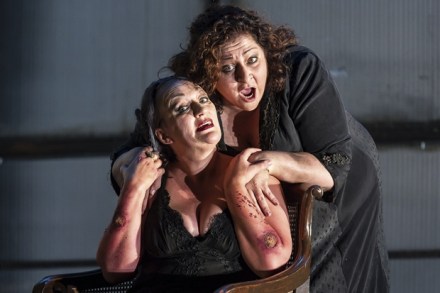
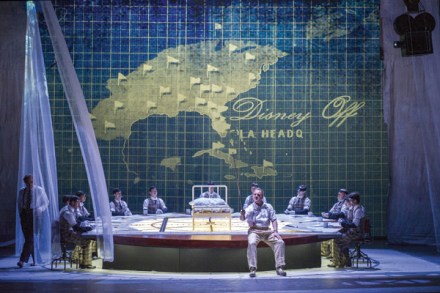
It’s been a sensational week for opera in London, with a sensationally good performance of Strauss’s Elektra at the Royal Opera, and a sensationally terrible production of Fidelio at English National Opera. Charles Edwards’s production of Elektra is revived for the second time, but this is quite the finest account of it, thanks above all to the conducting of Andris Nelsons and the assumption of the title role by Christine Goerke. This opera can, and usually does, remind me of lying on the road under a deafening drill, and reinforces my admiration for the tact with which Wagner places his climaxes.

Opera: Is Philip Glass’ trying to bore his way into immortality?

From our UK edition

First nights at English National Opera are, in the main, matters for a sociologist rather than an opera critic. That emphatically wasn’t the case with Wozzeck, but that is an acknowledged grim masterpiece, though still, nearly 90 years on, enough to put off casual opera goers and trendies. But the succession of vacuous new works that ENO has mounted in the past few years has attracted audiences, at any rate first-nighters, of a kind that one doesn’t see at any other operatic performance. They arrive early to kiss and shout and drink champagne, they trickle into the auditorium very slowly, stopping for many hugs on the way to their seats, and their talk in the interval is about anything other than the performance they are at.

Michael Douglas is 68 – and for the first time, as Liberace, vaguely sexy

From our UK edition

Behind the Candelabra is Stephen Soderbergh’s film about Liberace, starring Michael Douglas and Matt Damon, and already you will have heard two things which, naturally, you will need me to confirm so you can move on with your life. These two things are: 1. It is fabulous. 2. The film was ultimately funded by the television channel HBO, as Hollywood declared it ‘too gay’. I will now deal with both: 1. Yes. It is fabulous. No other word for it, unless that word is ‘glorious’. 2. True and, if I had the time, I would go to Hollywood and knock their heads together.

Opera: Wozzeck, Die Zauberflöte

From our UK edition

At the close of the first night of Wozzeck at the Coliseum there was a longer dead silence than I can remember after any operatic performance I have been to, and when applause began it sounded reluctant. Everyone was stunned by the intensity and involvingness of the preceding 100 minutes, the work having been performed straight through, no interval. Virtually every element in the production contributed to this shattering effect, and any shortcomings would be easily corrigible and with one exception trifling.

Deriding Donizetti

From our UK edition

Someone should write an opera about a once-great opera company, now in artistically suicidal decline. A few decades ago it had great productions and performances of the masterpieces of the repertoire, but it has been scared by successive governments warning about élitism, the need for attracting new, young, opera-hating audiences, and so on. So it has hired a succession of ‘directors’ (adopting the language of cinema), who have never seen an opera, to stage established works and mount new ones, making them look as much as possible like the eternally running musicals it eyes enviously.