English literature

Reading between the lines: the power of the unsaid

From our UK edition

This is the kind of book I wish I had the chance to sit down and discuss with the author. It is accessible without sacrificing academic rigour, astute and ingenious in its close readings and balances breadth with depth admirably. But why on earth does it have a singular title, given that the whole thrust of the argument depends on silence being a multifarious phenomenon? The reader encounters the enigma of silence as rapture, failure, slyness, avoidance, challenge. Silence is both built into literature and a kind of enwrapping, enclosing ocean, out of which words will emerge and back into which they will sink, rather like the primordial chaos at the beginning of Genesis. Speaking or writing about silence is inherently paradoxical. Many years ago I interviewed A.S.

All the gossip about Lady Chatterley’s Lover

Lady Chatterley’s Lover was written in a villa outside Florence during the winter of 1927-28, two years after D.H. Lawrence was diagnosed with TB. Described by him as ‘a phallic novel, but good and sun-wards, truly sun-wards’, the tale is set in his native Nottinghamshire, which he left in 1912 when he eloped with his aristocratic wife Frieda von Richthofen, who was then married to his tutor. Frieda, who valued her freedom, was enjoying an affair with the Italian officer Angelo Ravagli, who became her third husband after Lawrence’s death in 1930. It is believed that Lawrence was impotent for the last years of his life. In the evenings he would read aloud his finished pages, in which the Lawrentian philosophy is expressed by Oliver Mellors, gamekeeper to Sir Clifford Chatterley.

The young Tennyson reaches for the stars

From our UK edition

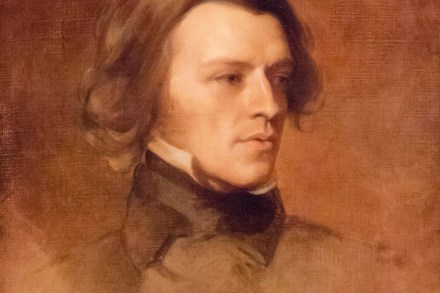
Edward FitzGerald had a good story about rowing across Lake Windermere at the end of May 1835 with his old friend Alfred Tennyson. As they rested on their oars and gazed into the clear, still water, Tennyson recited some lines from his work in progress, ‘Morte d’Arthur’, describing how the Lady of the Lake fashioned Excalibur out of sight: ‘Nine years she wrought it, sitting in the deeps/ Upon the hidden bases of the hills.’ Then he gave himself a little pat on the back: ‘Not bad that, Fitz, is it?’ The lines are better than not bad, as they imagine an invisible process of creation by incorporating several fragments of earlier writing.

Letters: How ‘Nick’ could save the Tories

From our UK edition

Dying wish Sir: As a 99-year-old with, presently, no intention of requesting assistance to die, I am struck by the articles of Dan Hitchens and Tom Tugendhat (‘Bitter end’ and ‘Killing me softly’, 7 June), which base their strong opposition on the opinions of everyone other than the person supposed to be requesting such assistance. He or she, poor soul, is expected to just lie there and listen to whether they are to be allowed to have any opinion at all on the matter. It’s my life they are writing about. At present I have the ability to end it whenever I might wish. What Messers Hitchens and Tugendhat are arguing is that, if I change my mind, no one is to be allowed to help me at a moment of my choosing. That’s wrong.

Studying Dickens at university was once considered demeaning. Now it’s too demanding

From our UK edition

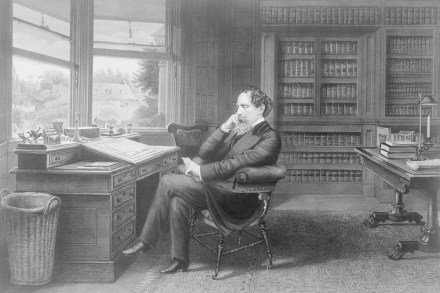
Any consideration of Stefan Collini’s subject has surely to address a major recent issue. The academic study of English, both at school and university, has fallen away significantly, with the numbers opting for it greatly diminishing. Anecdotal evidence from even the most serious institutions suggests that many students are now finding previously accessible texts impossible to read or understand – because of their length (Charles Dickens), their complexity of meaning (Alexander Pope) or remote sensibility or politics (Joseph Conrad). Collini has been given a generous amount of space to write his history. Despite this, he has chosen to end it more than 50 years ago. His subtitle is quite misleading.

How ‘The Rime of the Ancient Mariner’ plays tricks with the mind

From our UK edition

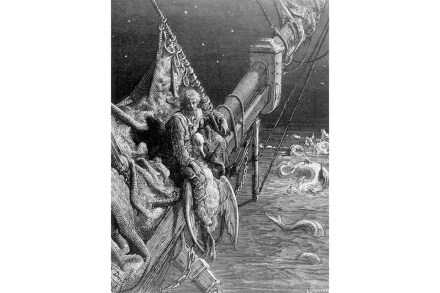
I’ve just returned from five days in the Lake District, attending the biennial ‘Friends of Coleridge’ conference in Grasmere. All the other attendees were seasoned Coleridge scholars, but I was a newbie. The reason for my going was the fact that I’m engaged in a project that has at times felt something of a lonesome road and indeed an albatross: to write a book about Coleridge’s ‘The Rime of the Ancient Mariner’. The poem comes to us with a vast undertow of explicit and implicit cultural and historical baggage, from its self-conscious antiquarian roots in late medieval ballads to its engagement with more currently pressing concerns of environmentalism and how we navigate the story of colonial expansion.

A marriage of radical minds: the creative partnership of Fanny and Robert Louis Stevenson

From our UK edition

It is hard to imagine any Victorian man living a fuller life in a flimsier body than Robert Louis Stevenson – and he certainly wouldn’t have managed it without the support of his partner and wife of several decades, Fanny Van de Grift. Born in Edinburgh on 13 November 1850, Louis suffered from countless childhood illnesses that limited his activity to reading books, writing stories and staging ‘pasteboard theatre’ productions with his nanny, or else travelling to health spas in Marseille, Genoa and Naples. He strongly resisted his father’s efforts to enlist him in his own career as a lighthouse designer, and at Edinburgh University the only thing he excelled at was truancy.

The clue to Shakespeare’s sexuality lies in the sonnets

From our UK edition

The question ‘Was Shakespeare gay?’ is not very rational. It might be a little like asking ‘Was Shakespeare a Tory?’. Some of his scenarios might coincide with later developments – Jaques trying to pick up Ganymede in As You Like It (gay), or Ulysses’s speech on degree in Troilus and Cressida (Tory). But the historical conditions are not there. No doubt there have been people keen on same-sex relations since the dawn of time. But the possibilities of a social identity embedded in the word ‘gay’ didn’t exist in the 16th century, nor the medical diagnosis from which the word ‘homosexual’ arose. Nor will ‘sodomite’ do. That describes some very different sexual tastes and practices through history.

‘Jerusalem’ is a rousing anthem – but who knows what the words mean?

From our UK edition

The spontaneous mass adoption of deep feeling is always interesting. Jason Whittaker has a very good subject, in the journey of the cryptic lyric section of the preface to William Blake’s incomprehensible epic Milton, written and illustrated between 1804 and 1810, to its becoming the de facto national anthem of England. ‘And did those feet...’ only took on its familiar title ‘Jerusalem’ (which has nothing to do with Blake’s poem entitled ‘Jerusalem’) after it was set to music by Hubert Parry on 10 March 1916. The following day, Parry handed over his composition to his colleague Walford Davies, saying insouciantly: ‘Here’s a tune for you, old chap. Do what you like with it.

Arnold Bennett’s success made him loathed by other writers

From our UK edition

Virginia Woolf admitted to her journal: ‘I haven’t that reality gift.’ Her contemporary Arnold Bennett had it in spades. He was a great novelist, as anyone who has read Riceyman’s Steps or the Clayhanger trilogy would attest. Being also the contemporary of Henry James, Joseph Conrad and D.H. Lawrence – you might say this was one of the reasons his reputation became obscured since those glory days of English fiction – he had fierce competition. Woolf’s snobbishness about him (see her lecture on ‘Mr Bennett and Mrs Brown’) did not help matters. It was easy to be snobbish about Bennett, ‘The Man from the North’, to use the title of his first novel.

What have the Anglo-Saxons ever done for us?

From our UK edition

It has been a while since I’ve considered the vexed question of Byrhtnoth’s ‘ofermod’. More than 30 years, in fact. I remember, as if it were yesterday, my Anglo-Saxon tutorials with dear, lovely, gentle Richard Hamer. And now he is the author of the standard translation being used by my children on their own university English Literature courses. (I suppose the Latin equivalent would be having been taught by the author of Kennedy’s ‘Eating’ Primer.

The dawn of Romanticism

From our UK edition

Several years ago, I was interviewing the garden writer and designer Sarah Raven at her home in Sussex when a tall, tanned figure bounded up from the woods towards us. It was Adam Nicolson, her husband, and he carried an axe over his shoulder. A few months later, an email arrived from Nicolson, inviting me to come with him and a gang of his friends on a ‘moon walk’ in the Quantocks. I couldn’t make it, but realise now that the night walk was part of the research for his extraordinary and engrossing record of the time William and Dorothy Wordsworth spent in Somerset with Samuel Taylor Coleridge. This ‘year of marvels’ (from June 1797 to September 1798) would end with the publication of the first great work of Romanticism, the Lyrical Ballads.

From fame to shame

From our UK edition

Biographers are a shady lot. For all their claims about immortalising someone in print, as if their ink were a kind of embalming fluid, it has long been suspected that they enjoy wielding their pens more like a cosh or a scalpel. Victorian writers were especially nervous about the prospect of a biographer prodding and slashing away at their reputations. Tennyson worried that he would be ‘ripped up like a pig’ after his death, and many of his contemporaries did all they could to present their best face to posterity: hand-picking an authorised biographer; making a bonfire out of any embarrassing letters; discreetly muzzling friends who might be tempted into unflattering reminiscences.

Outpourings of love and loss

From our UK edition

The deserved success of Shaun Usher’s marvellous anthology Letters of Note has inspired several imitators, and Caroline Atkins’s sparkling collection makes an ideal companion volume. Here are missives both literary and otherwise, all of them destined never to be read by their intended recipients. Some are grave, some are tender; some are funny, several are vengeful or self-justifying. It’s a great idea for a book. A letter which goes missing is of course a standard tragedy-inducing device in fiction.  Romeo could have lived had he received Juliet’s letter; but perhaps the most heartbreaking of all is poor Tess Durbeyfield’s to Angel Clare. Never was a flap of carpet responsible for so much misery.

Literary mafia boss

From our UK edition

Edward Garnett, radical, pacifist, freethinker, Russophile man of letters, was from the 1890s onwards for many years the pre-eminent fixer of English literature. D.H. Lawrence’s widow Frieda hailed him as ‘the midwife’ of Lawrence’s ‘genius’. And so he was; while he also nurtured Joseph Conrad, T.E. Lawrence, Edward Thomas, Liam O’Flaherty, H.E. Bates and Henry Green. He presided as ‘reader’ over the shoals of expectant manuscripts piling up daily at the publishers — starting out at Fisher Unwin, doing the business for Heinemann and Duckworth, putting in long stints at Dent and ending up at Cape. Jonathan Cape headhunted Garnett for his new firm in 1921 as ‘the best reader’ in the land.

A man with an agenda

From our UK edition

What’s this? An autobiography by Stuart Hall? Wasn’t he one of the guys who put the Eng. Lit. departments out to grass by arguing that it was senseless to talk about fictional characters as if they were real people when the truth was that real people were fictional constructs? Indeed he was; but don’t go thinking that just because Hall embarked, shortly before his death in 2014, on writing his life story, that he’d given up on the decentred subject. As he remarks early on in Familiar Stranger, despite our need to grasp our inner being, ‘we’ll never be ourselves’. It’s a nice line. It’s also a rare moment of clarity in a memoir that can be as cloudy and windy as a Turner sea study.

Found in translation

From our UK edition

Buririggu deshita. Suraibi tōbu Wēbu de gairu to gimburu shite, Nante mimuji na borogōbu, Mōmu rassu autoguraibimashita ne. If this looks familiar, it’s not surprising. This is the first verse of ‘Jabberwocky’ by Lewis Carroll, translated into Japanese by Noriko Watanabe. Ms Watanabe is a translator of children’s books living in Sendai, in the north of Japan, and she is working on a new translation of the two Alice books. I met her in a bar called Come Here. Is translating Lewis Carroll, which is already nonsense, into another language, a near-impossible task? I asked her. ‘No, not at all,’ she said. ‘Actually it’s easy because Japanese is about 15 per cent English.

A mirror to the world

From our UK edition

[audioplayer src="http://feeds.soundcloud.com/stream/260046943-the-spectator-podcast-obamas-eu-intervention-the-pms.mp3" title="Lloyd Evans and Dr Daniel Swift discuss how Shakespeare died" startat=1008] Listen [/audioplayer]Who’s there? Shakespeare’s most famous play opens with this slightly hokey line, and the question remains for his countless audiences, biographers and scholars. Who was this man? What makes his works so apparently endless? Like the plays, his life is studded with riddles. Even the basic facts are slippery and over-determined. We do not, for example, know the date of Shakespeare’s birth. His baptism was recorded at Stratford on 26 April 1564, and since it was customary to baptise newborns quickly, it has been accepted that his birthday was 23 April.

An incurable Romantic

From our UK edition

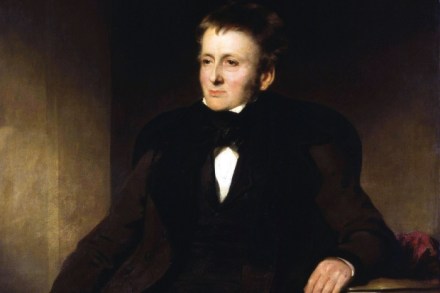
This biography of the craven Romantic and self-confessed ‘Pope of Opium’ concludes with the ominous words: ‘We are all De Quinceyan now.’ His life was shambolic but his legacy is strong. Many spores from his fevered mind have lodged in modern popular culture: his narcotic excursions inspired Baudelaire and Burroughs, his sensitivity to place influenced the psychogeographers Guy Debord and Iain Sinclair, his laconic, jaunty essay ‘On Murder Considered as One of the Fine Arts’ was deemed ‘delightful’ by Alfred Hitchcock, and his Escher-like imaginative double consciousness prompted Jorge Luis Borges to ask: ‘I wonder if I would have existed without De Quincey?’ And yet behold the man himself.

Dickens’s dark side: walking at night helped ease his conscience at killing off characters

From our UK edition

In England, walking about at night was a crime for a very long time. William the Conqueror ordained that a bell should be rung at 8 p.m., at which point Londoners were supposed to put their fires and candles out and their heads down. Again and again, until modern times, Matthew Beaumont tells us, specifically nocturnal laws were promulgated against draw-latchets, roberdsmen, barraters, roysterers, roarers, harlots and other nefarious nightwalkers — including those ‘eavesdroppers’ who stood listening in the close darkness where the rain dripped from a house’s eaves. Beaumont reads such laws as being designed to exert political and social control.