Energy

Ed Miliband’s windfall tax on tobacco to fund the NHS is economically illiterate

From our UK edition

The ‘windfall tax’, a concept introduced in the UK by the Blair government, is by definition a one-off seizure of revenue from a profitable industry, to fund an invariably unprofitable but popular project. It has been justified as putting ‘right a bad deal’ on the excesses of profits of unpopular industries. Between 1997 and 1998, Gordon Brown raised £5 billion from privatised utility companies to fund the Welfare-to-Work Programme. Today we have face another well-intentioned policy initiative, of ensuring every NHS patient is guaranteed a cancer test within 7 days, supposedly to be funded by a windfall tax on tobacco companies.

The man who could sell the British public on fracking

From our UK edition

Iain Conn, who will succeed Sam Laidlaw as chief executive of Centrica, would have been a dead cert for the top job at his current employer, BP, were it not for the Deepwater Horizon oil rig disaster in the Gulf of Mexico in April 2010. The subsequent PR fiasco terminated the BP career of the then chief executive Tony Hayward — who seemed crushed by the episode, but recovered to make a double fortune at Genel Energy and Glencore. Had Hayward served a full term, Conn (BP’s head of refining and marketing) would almost certainly have followed him. As it was, BP found it more politic to appoint an American, Bob Dudley, to repair relations in Washington while simultaneously arm-wrestling with the Kremlin-connected oligarchs who were BP’s co-investors in Russia.

Presumption against fracking in our beautiful countryside is welcome

From our UK edition

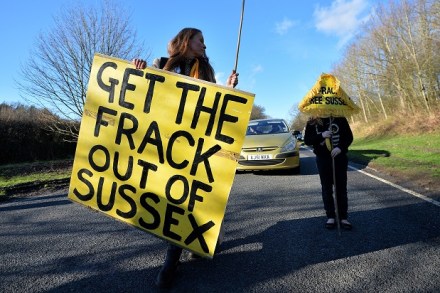
The government's announcement today that fracking will not take place in National Parks and Areas of Outstanding Natural Beauty save ‘in exceptional circumstances and where it can be demonstrated they are in the public interest’ is a welcome and sensible move. It may indeed be in the national interest to exploit a new source of energy, but these landscapes are specially protected in the national interest, too. The government states that countryside ‘adjacent’ to these protected areas will also be covered by the policy. That will be a relief to the residents of Wisborough Green and Kirdford in my constituency, two villages in beautiful countryside close to the South Downs National Park which have faced the prospect of drilling.

George Osborne’s grey-haired gamble

From our UK edition

George Osborne has been in retail mode this morning, selling his pension reforms and explaining how pensioners can unlock their life’s savings. The Chancellor has said that the Treasury will work with the Citizen’s Advice Bureau, Age UK and other organisations to provide pensioners with the best possible impartial guidance to transform their retirement. Interested parties can consult the Treasury for more details. listen to ‘Osborne: Russia sanctions would be an 'economic hit' for the UK’ on Audioboo Osborne went on to add that this was what the pension reforms are ‘all about’.

Jean-Claude Juncker’s biggest challenge: energy

From our UK edition

‘Energy is the single biggest issue facing Jean-Claude Juncker,’ remarked a seasoned Eurocrat to me earlier this week. Europe’s energy infrastructure is decrepit and insular. Rates of cross-border interconnection, for example, remain very low – at just 8 per cent of their production capacity on average across the union according to the FT. The Commission’s 2030 energy package aims to raise the average rate of interconnection to 15 per cent — part of a string of targets designed to complete the single market in energy. Alas, it’s going to take more than a target or two. The level of investment required is enormous (more than 1 trillion euros by the Commission’s estimate, of which only 5.8bn has been found for 2014-2020).

Wave power is a really, really stupid idea. That’s why it’s getting so much taxpayer subsidy

From our UK edition

The surface of the sea is a hostile and unforgiving place. Although it covers 71 per cent of the planet, nothing much bigger than a speck lives there. Obviously, lots of slimy and scaly things swim around beneath the surface — but on the very top, pretty much zilch. Mother Nature has found niches for life in the desert, the Arctic and deep underground but, after 4.5 billion years of trying, she is passing on the surface of the sea, thanks all the same. Now you would think that this very long experiment in trying to evolve life in a hostile environment would act as some kind of hint to the nice people at the Department of Energy and Climate Change (DECC).

The return of oil price anxiety is a timely reminder to get fracking

From our UK edition

‘Iraq turmoil sends crude oil prices to nine-month high’ is the sort of headline that used to send shivers down economists’ spines, especially if it appeared on the same page as ‘Europe faces gas shortage as Russia cuts Ukraine supply’. How worried should we be at the current turn of events in the energy world? Since Iraq’s new insurgency kicked off, the price of a barrel of Brent Crude has blipped from $105 to $115 — nothing to panic about — but the more pessimistic analysts are talking of a further $30 rise if Iraqi oil flows of 3.6 million barrels a day (representing about 4 per cent of global demand) are seriously disrupted.

Save on your energy bills with The Spectator – and help fix the broken market

From our UK edition

In a healthy, competitive market, prices go down when costs go down. Not in the energy market. As Ofgem announced this week, the wholesale cost of gas and electricity has dropped by more than a third since this time last year, but our bills have increased. Wholesale power is the cheapest it's been since 2010, so why haven’t the savings been passed onto consumers? The energy industry usually blames price rises on increasing wholesale costs, so the announcement those costs are going down is tricky for them. This week Energy UK, the Big Six trade body, said: ‘Wholesale energy is just one of a number of costs outside of an energy company’s control, which make up a household bill’.

The government needs to attack the enemies of energy consumers, including Ed Miliband

From our UK edition

‘I don’t know why energy companies invest in Britain,’ said a former energy minister to me a couple of weeks ago. He was referring to the lack of progress on shale exploration (more of which later), but he might easily have been talking about the politicisation of energy prices. In case you haven’t heard, Ofgem, the energy regulator, has written to the Big Six energy firms to ask them to explain why the fall in wholesale prices over the past 12 months has not been passed on to the consumer. Another political row has broken out, with politicians on all sides claiming that the energy market is dysfunctional. They have cause to do so.

Cut your energy bills with The Spectator

From our UK edition

Here's something that you won't read often in The Spectator: Ed Miliband is right. Britain's energy market is broken, and a small number of big companies have the upper hand against consumers. But the solution, of course, isn't state intervention – it's more competition. That's why The Spectator is making its own foray into the market. Under new rules put in place by Ofgem, energy companies are being told to simplify their tariffs. But you can also get a special rate negotiated by a collective of consumers, and our plan is to get enough Spectator readers (and anyone else who wants a good deal) together and then negotiate – something that will be done by a start-up company called the Big Deal on Energy.

David Cameron’s sacred cows exposed by Freakonomics

From our UK edition

There's an interesting bit in the first chapter of Think Like a Freak, (Allen Lane, £12.99), from the Freakonomics duo, Steven D Levitt and Stephen J Dubner in which the two Steves get to meet David Cameron and a few dozen of the team just before he takes office. They are there to do what freethinkers do, viz, cut through the guff and muddled thinking that surrounds the big issues. Well, I can tell you for free that Mr Cameron is unlikely to sue for his name check. They observe breathlessly that "everything about him radiated competence and confidence. He looked to be exactly the sort of man whom deans at Eton and Oxford envision when they are first handed the boy.

If you really hate wind farms, David Cameron won’t help you

From our UK edition

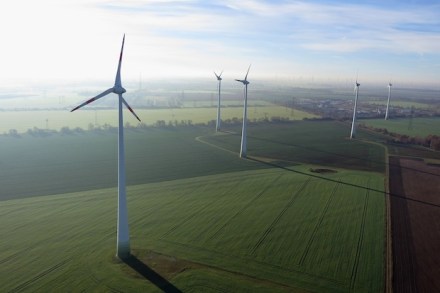
The Prime Minister is planning to cap the total number of onshore wind farms in Britain. But what would limiting the number of wind farms to those in existence or already in the planning system mean? The UK already has 7.1GW worth of turbines spinning away. There are 1.8GW under construction and some 4.3GW approved but not yet built. Once all these are up and running it will bring the total to 12.2GW. The government plans to install between 11GW to 13GW of onshore wind by 2020. If they were to limit turbines to those built or in the process of building, it would make precisely no difference at all. And, while we are number crunching, there is a further 8.3GW in the planning system but not yet approved. According to the industry, 1GW is enough to power 535,000 homes.

Don’t call him an oligarch – meeting Dmitry Firtash

From our UK edition

Who is Dmitry Firtash? Can he solve Ukraine’s troubles? And why is he currently under effective house arrest in Vienna, awaiting extradition on corruption charges to the US, with his bail set at a whopping €125 million? None of these questions has a simple answer — and when I fly to Austria to meet him it’s not even clear if I’m going to ask him. Firtash appears to be up for it, as far as can be ascertained via his barrage of minders, advisers, security and hangers-on. But his expensive American lawyers most definitely aren’t. It might jeopardise his case, they’re saying. Firtash mustn’t say a word about anything. ‘Who do they fucking think they are?’ says one of Firtash’s PRs.

The potential of shale – in the fight against climate change…

From our UK edition

The United Nations’ Intergovernmental Panel on Climate Change published a report earlier this morning which contains a remarkable insight. Ottmar Edenhofer, head of the IPCC working group, told a press conference that shale gas might work as a bridge between fossil fuel dependence and renewable energy. (The report also mentions carbon capture and storage, nuclear and biofuels alongside shale as alternative energy sources.) The IPCC is not endorsing shale or rejecting renewable energy, far from it; but it is saying that shale could be a short term measure in the long-term battle against climate change.

Ukraine increases mistrust and misinformation between Russia and the West

From our UK edition

The tense situation in Ukraine has escalated overnight. A deadline has passed for pro-Russian agitators to vacate government buildings in eastern Ukraine or face military action. There is no indication that the agitators have retreated. Meanwhile, reports from Kiev suggest that the government is trying to raise volunteer militias – perhaps in an attempt to avoid deploying the country’s armed forces, which would antagonise Russia. Last night a special session of the UN Security Council, called by Russia, was the scene of disagreement between Russia and the western powers. Ukraine and the western powers say that Russia is behind this unrest; as Vladimir Putin tries his hand at provatskiya (as described by Anne Applebaum in the Spectator recently).

Why can’t country views be protected from wind turbines?

From our UK edition

‘Surprisingly’, writes Geoffrey Lean (Daily Telegraph, 4 April), ‘two thirds of the country support onshore wind turbines’. It should not surprise him: those would be the two thirds who live in towns and cities, the people whose distinctive, familiar skylines are on the whole safe. When proposed city structures reach the height of St Paul’s they are the subject of deliberation and careful design. Not so in the country. I live in the East Mendips, a soft target for onshore wind turbines as it has little protection from developers: this is because its hills were sacrificed to quarrying after the war and it therefore does not qualify as an area of outstanding natural beauty. And yet it is outstandingly beautiful.

How green policies hurt the poor

From our UK edition

[audioplayer src="http://traffic.libsyn.com/spectator/TheViewFrom22_3_April_2014_v4.mp3" title="Matt Ridley and Fraser Nelson discuss the IPCC's latest report" startat=67] Listen [/audioplayer]Advocates against global warming often frame the issue in terms of helping the poor. ‘You’re right, people dying thanks to climate change is some way off...’ ran one fairly typical advert recently, ‘about 5,000 miles, give or take.’ Indeed, the United Nations agrees that, looking toward the future, climate change ‘harms the poor first and worst’. And the logic stacks up: the poorer you are, the less able you’ll be to afford the resources to adapt to a changing climate. However, climate policies also have a cost, and these predominantly hurt the poor.

PMQs: Lib Dems have thwarted changes to fox hunting law

From our UK edition

Ed Miliband started strongly at PMQs today. He seized on Scottish and Southern's announcement that they'll freeze energy prices as a justification of his most popular policy, the energy price freeze. He mockingly asked Cameron if he still thought the idea was unworkable and a Communist plot.

PMQs: who will take credit for SSE’s price freeze?

From our UK edition

Perhaps both David Cameron and Ed Miliband will try to take credit for SSE's announcement that it is freezing its prices until 2016 when they tussle at PMQs. Number 10 this morning said: 'Anything which helps consumers with their bills is to be welcomed, of course and one of the things that the company is explaining today is it is able to, a principle reason why it is able to make this decision is because of the rolling back of the green levies and green charges, which is a result of this government.' This is true, but it's not quite the full picture. The only reason the government decided to roll back the 'green crap' is that Labour spooked ministers with its energy prize freeze announcement. It was the political game-changer of the autumn.

How to disempower the Big Six energy companies

From our UK edition

I believe in free markets, but there are some markets that don't work properly.  Where competition has not prevailed in favour of the consumer. Where customers are too weak, companies too strong and choice too constrained. One such market is energy.  Just six companies control 98% of household gas and electricity supply.  British Gas accounts for over 70% of all gas customers. In energy the regional monopolies that existed before privatisation largely continue to this day.  If you’re reading this and live in London I’d be willing to bet that for three out of four of you EDF is your electricity provider.  If you’re in Cardiff I bet it’s SSE. And if I'm right i'd also be willing to bet you've never switched and you're paying too much.