Emily dickinson

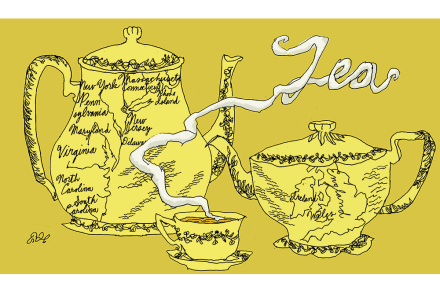
Time for Americans to give tea a second chance

“Last night,” John Adams confided in his diary on December 17, 1773, just after the Boston Tea Party, “3 Cargoes of Bohea Tea were emptied into the Sea... This is the most magnificent Movement of all. There is a Dignity, a Majesty, a Sublimity, in this last Effort of the Patriots, that I greatly admire.” Some things – like hyperbole and random capitalization – never seem to go out of style in American politics. Tea has been less fortunate. Once the most beloved non-alcoholic beverage in the 13 colonies, it fell so low in America’s regard, as Emily Dickinson would say, we heard it hit the ground. Or the water, in the case of the Boston bunfight.
Adams

Poems are the Duracell batteries of language, says Simon Armitage

From our UK edition

Ezra Pound in ABC of Reading: ‘Dichten = condensare.’ Meaning poetry is intensification, ‘the most concentrated form of verbal expression’. Simon Armitage saying the same thing, memorably, genially, metaphorically, democratically: ‘How much power and force could be stored in — and retransmitted by — such compact shapes. Poems as the Duracell batteries of language.’ Both poets go straight to the point. But a shift has taken place — in tone, in attack — which can be illustrated also by the photographs Armitage found as a ‘sleep-walking’ teenager leafing through Worlds, a sampler of seven contemporary poets, edited by Geoffrey Summerfield: ‘Norman MacCaig watched television and smoked fags.