Email

The Epstein files are a reminder that emails live forever

From our UK edition

Still they keep coming: email after email from Jeffrey Epstein’s personal correspondence, along with the almost unmanageable amount of other material in the Epstein files. They span two decades and an astonishingly wide range of topics: his Amazon purchases, missing laundry, the banning of his Xbox Live account, his reaction to photos of young women, how he considered potential plea deals and exchanges with famous people. There’s Sarah Ferguson’s message: To: Jeffrey Epstein [jeevacation@gmail.com] From: Sarah Sent: Sat 1/30/2010 10:22:44 PM You are a legend. I really don’t have the words to describe, my love, gratitude for your generosity and kindness. Xx I am at your service. Just marry me.

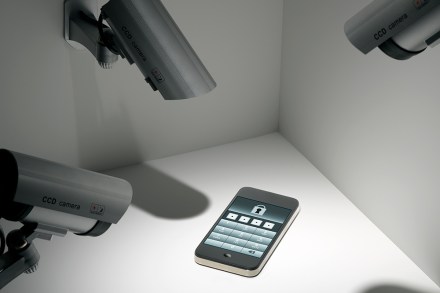
Is nothing private any more?

From our UK edition

How did the UK become a place where young people think it’s permissible to record a relative at home and make that recording public? Why has privacy been so easily discarded, and why have people welcomed its demise so they can control the behaviour of others? A few years ago, when I taught at university, a student who lived with their parents told me they had argued with their mother about what they described as ‘queer identity’. The student had secretly recorded the argument and wondered what I thought about them using it for a piece of writing. I think their assumption was that because I’m a journalist I would embrace the idea. I did not.

Inside an MP’s inbox

From our UK edition

There is nothing so ex as an ex-MP, Tam Dalyell used to say. Now that parliament has returned from recess, and the newly elected MPs are no longer described as ‘newly elected MPs’, it may seem that the old contrarian had a point. But the truth is that being an ex-MP’s staffer is as ex as it gets. I worked for Derek Thomas, the Tory MP for St Ives from 2015 until this year. The day after the election – our man lost to the Liberal Democrat, to make it even more humiliating; like being dumped for a librarian – the emails and the phone calls stopped. Even the woman who rang every day to tell us that the nurses on her ward were working for Isis (and she ought to know, she had been recruited by the CIA as an asset some years ago) had taken us off speed-dial.

The double standard over Biden’s classified documents

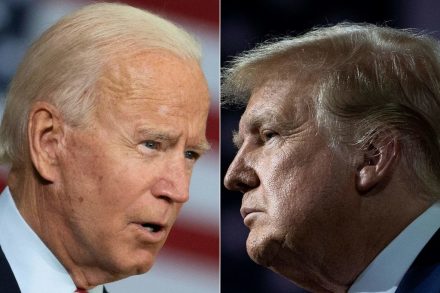
President Biden said Tuesday he was “surprised” to learn that in November his lawyers had found classified documents in his former office at a Washington think tank. No doubt he was equally shocked when more classified docs turned up in his Delaware home. Yet the tone of the mainstream media seems to be that boys will be boys. Since Biden is being so cooperative with authorities after being caught red-handed, maybe this has nothing in common with Donald Trump's cache of classified documents at Mar-a-Lago. Or Hillary's cache on her private e-mail server. Could there be a double-standard? Biden had some/several/a bunch of classified documents while Trump had hundreds so that's different.

biden

The media blackout on Fauci’s damning emails

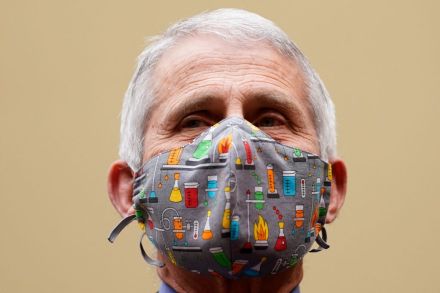
Last week saw another batch of emails drop from Anthony Fauci, and another media blackout as to their contents. The strategy by the press in cases like this has been pretty straightforward: ignore the story, wait for right-leaning media or Republicans to pick it up, then frame any attacks on the subject as tainted by partisanship. Last week, when confronted once again by Senator Rand Paul of Kentucky, Fauci responded with more hyperbole and ad hominem. The media, meanwhile, framed the exchanges as “Rand Paul Attacks!” and “Anthony Fauci defends!” They refused to look at the information in the emails that Paul was asking about, refused to ask questions about them, refused to even report on them. They are interested in the bloodsport, not the truth.

anthony fauci health

The hidden cost of free technology

From our UK edition

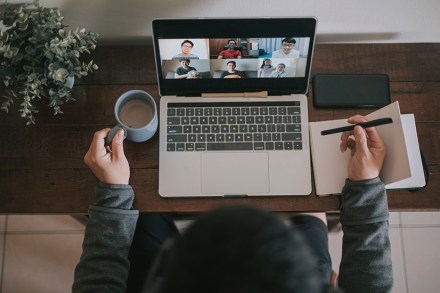
Back in late 2019 I met someone from Zoom who was visiting London. The company, then as now, offered free video-conferencing calls for up to 40 minutes, but charged a fee of around £10 a month to users who wanted longer calls. Towards the end of the conversation, I flippantly asked what I thought was a hypothetical question: ‘How much would you charge to give full Zoom access to the whole UK population?’ I didn’t think much more about it, but to my surprise they came back to me a few days later: ‘If you know anyone in the government who’d be interested in this, we’d like to talk.’ In the end, I never got round to doing anything, and then the pandemic hit, which solved their adoption problem overnight.

What should you put at the end of an email?

From our UK edition

Suzanne Moore, the Telegraph columnist, found it ‘deeply annoying’ when perhaps five years ago she noticed people putting ‘Kind regards’ at the ends of emails. Her real gripe was with false claims to kindness. So what should you put at the end of an email? Yours sincerely is conventional in letters to people whom one knows. Sincerely in this context is first recorded by the beloved Oxford English Dictionary from the year 1702, in a letter to Samuel Pepys, in the last year of his life, from Arthur Charlett, the gossipy self-promoting Master of University College, Oxford, who had designed a bookplate for the diarist. He signed himself as ‘your most sincerely obedient Servant’.

The terror of choosing the wrong email sign off

From our UK edition

Just now, I wrote an email and I couldn’t for the life of me think how to sign it off. ‘Kind regards’, the default setting for most messages, felt a bit too formal, given I am on friendly terms with the recipient; he’s older than me and a priest. ‘Yours ever’ seems forward. ‘Best wishes’ is fine for strangers but may be stilted for someone you know quite well. ‘M’, my most frequent sign-off, would look downright rude. An ‘X’ was out of the question. So plain ‘Melanie’ it was. But I was left wondering which of the range of options I should have gone for, each suggestive of a slight difference on the register from intimacy to formality.