Elon musk

Sell bitcoin, buy Tesla

From our UK edition

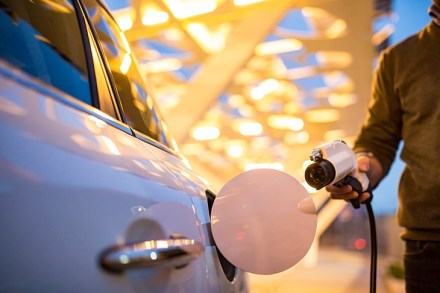
Which is madder, bitcoin at $41,500 — oops, make that $31,000 on Monday — or Tesla shares at $880 apiece? Don’t get me started on the crypto-mania in which the Financial Conduct Authority has warned gamblers ‘they should be prepared to lose all their money’. But Tesla, relatively speaking, is a real thing: a California-based carmaker which has expanded the frontiers of the electric vehicle market that’s going to become huge in the next decade and could soon make carbon--fuelled road transport extinct. Put that way, it’s not so surprising — in tech stock terms — that investors should value Tesla higher than the rest of the US auto industry combined.

There’s nothing neutral about Wikipedia

From our UK edition

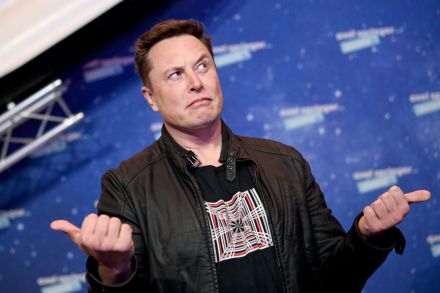
A couple of weeks ago Newsweek ran an article attacking Elon Musk, the CEO of Tesla, for engaging in a friendly Twitter exchange with me about the coronavirus pandemic. According to the article, I was a ‘eugenics advocate’. How could the apparently respectable industrial designer sully himself in this way? Didn’t he realise I was Britain’s answer to Dr Mengele? The claim that I’m a ‘eugenics advocate’ isn’t true, obviously.

Why our greatest inventors are supreme hucksters

From our UK edition

People often tell me I have a strange way of looking at the world. Obviously, it doesn’t seem strange to me. But I do tend to see the world backwards. For instance, most people think the principal obstacles to economic and technological growth are all about supply. To me, it’s all in the demand. I have met one Italian economist, Mario Fabbri, who agrees. But apart from him, me and maybe Matt Ridley, there’s nobody else. Now, how crazy is this idea? What if the biggest constraint to progress really is a question of psychology, not economics? Certainly, if it is true, it should not surprise us that economists and policy--makers are reluctant to believe it. The knowledge and influence they possess would be instantly devalued.

Cars weren’t invented for transportation, but conversation

From our UK edition

When I first heard Abba’s magnificent 1982 swansong ‘The Day Before You Came’, I’d never come across the Americanised use of the verb ‘make’, meaning ‘reach’. So the line ‘I must have made my desk around a quarter after nine’ baffled me. Given the Swedish obsession with self-assembly furniture, I even wondered whether Björn was using the word conventionally, and Ms Fältskog was in fact kneeling on the floor aligning Tab A with Groove C, while looking for the elusive Allen key with which to attach the castors.

Portrait of the week: MPs return, dentists reopen and racing resumes

From our UK edition

Home Primary schools were allowed to reopen but many did not want to. MPs voted to return to their physical presence in parliament. The government told people they were allowed to meet in gardens or on rooftops, up to the number of six, as long as those from different households remained two metres apart. About 2.5 million vulnerable people in England and Wales, who had been advised to stay at home, were now advised that those living alone might meet another single person out of doors. Rosie Duffield, the Labour MP for Canterbury, resigned as a whip after she was found to have gone for a walk with her current partner at a time that he was still living with his wife. Racing resumed. The Queen rode a fell pony at Windsor Castle.

It’s mavericks like Elon Musk who’ll get us through this crisis

From our UK edition

This month’s most significant corporate deal attracted less attention than it might have done in normal times, crowded out by grim news elsewhere. It is the proposed £31 billion merger of O2 and Virgin Media to create a telecoms giant with 46 million customers. Following BT’s 2016 acquisition of the mobile operator EE, further ‘convergence’ in the sector had been expected, but the mid-lockdown timing was spun as a vote of confidence in the UK, described as ‘one of the most attractive markets on Earth’ by José María Alvarez--Pallete, chief executive of Telefónica of Spain, which owns O2. Investment of £10 billion in the new group’s mobile, broadband and television platforms is promised over the next five years.

When will American schools catch up with the technological revolution?

As 75 million children head back to school for the fall semester, there are concerns among academics, technologists and social scientists that the current American education system is no longer fit for purpose. Such is the pace of the technology revolution that children in kindergarten or middle school today are likely to be educated for a world that will largely have disappeared by the time they graduate. Even those in high school today are going to find a different world where learning about the past or the present has less and less value for the future. Even universities, which have changed little in the past 25 years are confronting a revolution where whole professions, such as accounting or medicine, which have provided a steady income stream are going to be under assault.

education schools

Silicon Valley is your government now

The Federal Trade Commission’s decision to fine Facebook $5 billion for privacy violations is an expensive slap on the wrist that will do little to change anything in what is developing as a titanic struggle between the nation states (governments) and the new market states (technology companies). Across the world, the nation states are struggling to keep pace with technology developments and largely failing. Meanwhile, the nation states are proceeding at breakneck speed to develop a world of their choosing where countries become less and less relevant to the course of our future history. The FTC fined Facebook for a series of ethics and privacy violations and imposed the largest fine in the FTC’s history.

silicon valley

Elon Musk’s brain game

When Elon Musk took to the stage at the California Academy of Sciences on Tuesday, he gave the world the first insight into his vision for mapping and ultimately controlling the brain. Three years ago, Musk formed Neuralink which was specifically created to respond to the threat that Musk’ believes is posed by the imminent threat of thinking machines powered by AI. Musk believes that phase of the information revolution could mark the end of humanity as robots outpace humans in intelligence and pace of evolution. His answer is to fully understand exactly how the brain works and, in the process, he believes that the new science will find the cure for many of humanity’s most deadly illnesses such as Parkinson’s, Alzheimer’s and PTSD.

elon musk brain

Humanity + wants us to live forever

We are constantly pushing toward the apocalypse. Whether it's Judgment Day, suicidal death cults, or freaking out about how we only have five minutes to reverse climate change, the End of Days looms large in our imaginations. Relatively new to the End Times game are the transhumanists, who hope to defer the end for all time. Transhumanists believe that we can integrate humanity with tech to extend life, or even live forever.Transhumanists want us to evolve into a tech-integrated species. This would allow us to extend human life through deferring and even annulling the physical decay that ends in death. Organ replacement, micro repairs with nanotech, and AI integration would decrease likelihood of death by natural causes.

transhumanism humanity +