Edward viii

The vexed relationship of Winston Churchill and George V

From our UK edition

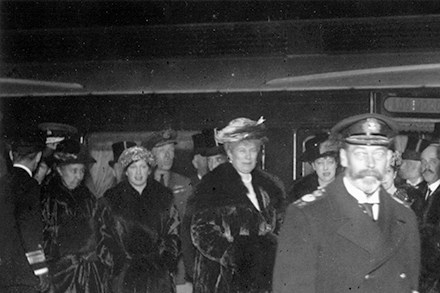
It is ironic that although Winston Churchill revered the concept of monarchy – his wife Clementine joked that he was the last believer in the Divine Right of Kings – half of the six monarchs under whom he served had anything but reverence for him.  He never met Queen Victoria, who signed his officer’s commission but died when Churchill was 26. He had a complicated relationship with Edward VII. As Prince of Wales, in 1876 Edward had been blackmailed by Winston’s father Lord Randolph Churchill, and had later slept with Winston’s mother, Jennie Jerome, after Lord Randolph’s death.
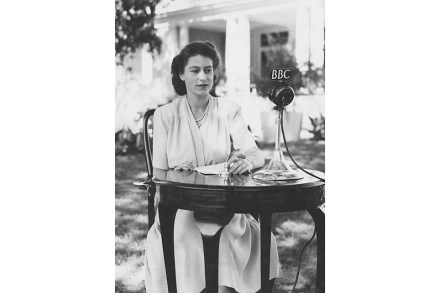
Resolute, dignified and intelligent: Elizabeth II inspired loyalty from the start

From our UK edition

It was George VI who first called his extended family ‘the Firm’. Today, with so many injuries and key players on the bench, it might better be known as ‘the Team’ – and one struggling to avoid relegation. It’s what you might call a reign in pain. So it’s a good time for Alexander Larman to publish this appreciative, but not sycophantic, conclusion to his royal trilogy. Its predecessors were The Crown in Crisis (2020) and The Windsors at War, published last year. The latest volume concerns the period between VE Day in 1945 and the coronation of the late Queen Elizabeth in 1953 when, in Larman’s telling, the royal family successfully rebranded itself after more than a decade of crises, both internal and external.

Paris

Paris: the place to be as a royal in exile

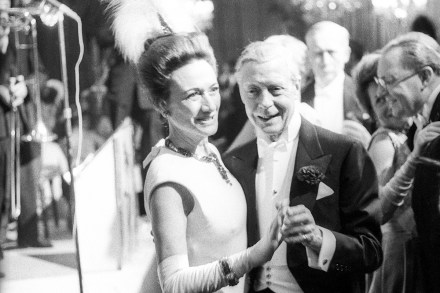
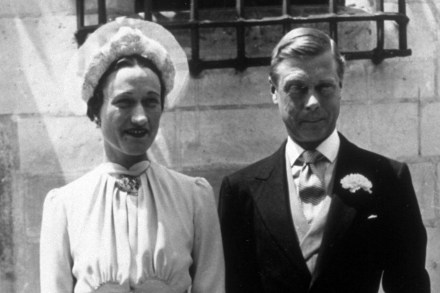
When rulers are thrown out of their countries, they cannot expect all that much. Think of Napoleon, first cooling his heels in Elba, then ending his days in the damp-infested confines of Saint Helena. Which is why the former Edward VIII, later the Duke of Windsor, was comparatively fortunate that the Parisian spot in which he found himself living after his abdication in December 1936 was Le Meurice in Paris: then, as now, a hotel that offers not only glitteringly luxurious accommodation to its well-heeled denizens, but a tangible sense of history — its lavishly appointed suites and restaurants exude an atmosphere that’s simultaneously relaxing and conspiratorial. Turn an unexpected corner, and you half-expect to see the ghost of Wallis Simpson, barking orders at some hapless minion.

The Windsors at War tells the rest of Edward VIII’s story

Alexander Larman’s The Crown in Crisis ended with the former Edward VIII, "now exiled to Europe, traveling away in the night." In his engrossing The Windsors at War, Larman relates what happened next. In some respects, the tale he tells can be read as a pitch-black comedy, something signaled by the dramatis personae that begins it. A "disgraced Yugoslavian prince" makes it into "Society — high" joining, among other grandees, a millionaire murder victim, and no fewer than three "playboys," one of whom was the millionaire’s suspected murderer. A "would-be royal assassin" fares less well, banished to "Society— low," along with the likes of a journalist (naturally) and an American engineer "unimpressed by the Duke and Duchess of Windsor.

windsors war

The art of the royal memoir

By the time you read this piece, Prince Harry’s autobiography Spare will have been published in the United States. The question of whether it’s any good will be decided swiftly by the newspaper and online literary critics, but we in the monthly magazine trade have, alas, been denied the opportunity to see it before our publication deadlines. Under normal circumstances, this would bode very badly indeed. As with films that are not screened for critics beforehand — “because we want the audience to discover the magic for themselves” — books that have very tight publication schedules and are embargoed to the hilt are usually seen as flops-in-prospect.

spare

She lived her best life

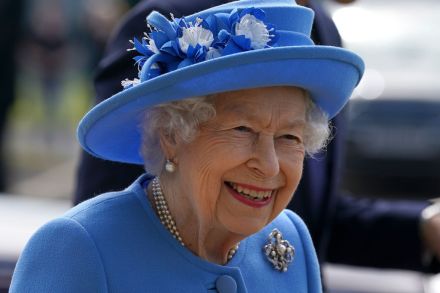
CNN and Fox were fine, but you had to tune in to the British news channels to get the full weight of the Queen's death on Thursday. Every anchor, every reporter, spoke in a voice burdened by grief. So it was easy to forgive one Sky News commentator when she said, "At a time when it's all about having a brand, the Queen stood in defiance of that trend." In fact, it's hard to think of anyone who had a more cultivated brand than Elizabeth II. Her every public appearance, every utterance, every twitch was carefully calibrated toward the image of a stately monarch. Yet you can also understand what the Sky commentator meant.

Should the Duke of Windsor have been tried for treason?

From our UK edition

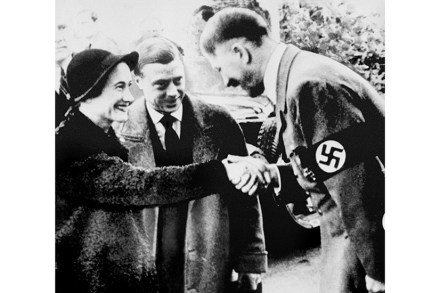
In Traitor King, Andrew Lownie shows how the Duke of Windsor — the former Edward VIII, who abdicated in 1936 — gave aid and comfort to his country’s enemies before and during the second world war. Reading this meticulously researched book, it seems extraordinary that he remained at liberty. A less deferential society would have interned him in 1940 along with the followers of his friend Oswald Mosley, most of whom were far less dangerous. He could even have been tried for treason after the war. To Lownie, the duke was an aberration, a one-off. But in Tea with Hitler, Dean Palmer shows us a family into which he fitted naturally.

Edward VIII: Unlucky in love, or a Nazi-loving cad?

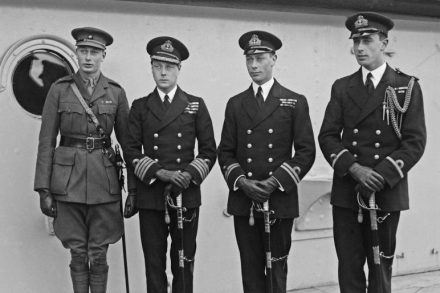
‘After I am dead, the boy will ruin himself within 12 months,’ King George V groused in his last days about his oldest son and heir, David, Prince of Wales. Never a particularly cheery fellow, by 1935 George V was worn down by a lifetime of non-stop smoking. His gloom might have been understandable, but it wasn’t universal, since he had nothing but good things to say about his second son, the stuttering Bertie. In the prescience that kings sometimes display about their successors, George V suspected that he was about to pass the imperial crown into unsteady hands. When the old king died in January of 1936, David, Prince of Wales became King Edward VIII. As Prince of Wales, he had been phenomenally popular, the House of Windsor’s first full-blown celebrity.

edward viii