Edward Said

Who knows Iran best?

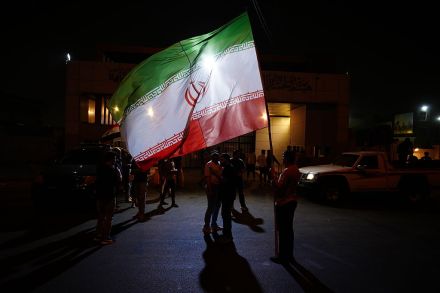
In a recent interview, Tucker Carlson sat across from Iranian President Masoud Pezeshkian, asking polite, unchallenging questions of a man who represents a regime that has issued a fatwa against a sitting US president and enshrined “Death to America” as a founding slogan. It was a stark contrast to Carlson’s often combative posture with American lawmakers – from mocking Representative Alexandria Ocasio-Cortez to his recent grilling of Senator Ted Cruz – as if democratically elected US officials were more of an adversary than the head of a theocracy with a long record of hostage-taking, terror sponsorship, nuclear brinkmanship and brutal repression at home. But Carlson’s posture is not an anomaly.
Iranian flag after Israel-Iran ceasefire (Getty)

The problem with westerners seeking oriental enlightenment

From our UK edition

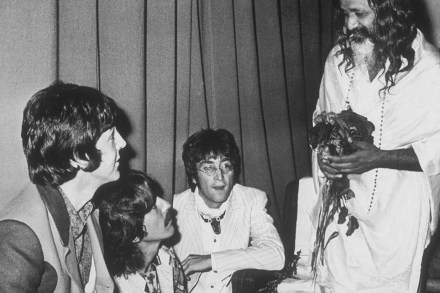
Call it a prejudice if you like. Living in Japan in the 1970s, I had a slight aversion to a particular type of westerner. He – for it was mostly a he – usually lived in Kyoto, sometimes wore a kimono and liked to sit in ancient temples chasing after that presumably blissful moment of enlightenment, awakening, satori, or whatever one wishes to call it. These seekers were less interested in Japan as a society of human beings. They wanted to float in higher spheres. As Christopher Harding explains in The Light of Asia, the Zen adepts, the Buddhist chanters, the rock-garden worshippers, the kimonoed fools (in my no doubt blinkered eyes) were part of a long western tradition. He identifies two ancient western perceptions of the ‘East’, by which he really means India, China and Japan.

Flirting in 15th-century Florence

From our UK edition

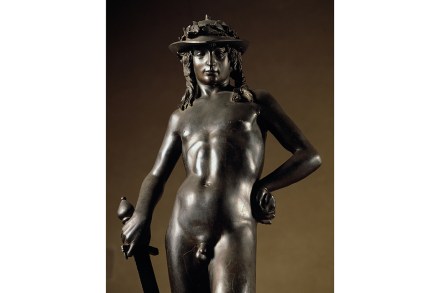
Noel Malcolm, a former political columnist of The Spectator, the historian of English nonsense verse and editor of Thomas Hobbes’s Leviathan, has written a book on an arresting subject. Forbidden Desire in Early Modern Europe gives close and relentless scrutiny to male-male sexual relations in Europe, the Ottoman empire, north Africa and in such dispersed colonies and outposts as New England, Peru, Cape Town and the Dutch East Indies. Malcolm’s interest in the subject began with his find of a cache of documents dating from 1588. These recorded the official investigation of a male couple – a trainee interpreter for Venice’s envoy in Constantinople and the envoy’s barber – who fell in love.

Our academics are attacking the whole concept of knowledge

From our UK edition

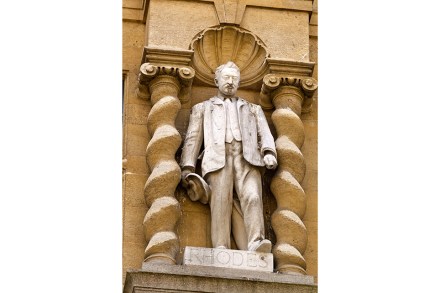
The first problem about decolonisation is the word itself. Colonisation is the process of establishing control over a foreign territory and its indigenous inhabitants, by settlement, conquest or political manipulation. But decolonisation? It has come to mean much more than the reversal of that process. Today, it refers to an altogether wider agenda, whose central objective is to discredit or downgrade the cultural achievements of the West. Objective truth and empirical investigation are mere western constructs. They are optional ideas which need have no weight beyond the western societies which invented them. But the West has imposed them on the rest of the world by a process akin to the colonial conquests of the past four centuries.