Education

Education reform works. Who knew?

From our UK edition

Education reform that actually works is one of the noblest, but most thankless, tasks in politics. Noble because it's necessary, thankless because it doesn't earn much in the way of an electoral dividend. Polling consistently suggests fewer than 15% of people consider education a top priority. This is understandable. If you do not have children you are, often, less interested in education than if you do. If your children attend a good school (or, at least, if you are satisfied with the school they attend) you may not care too much about the schools other kids have to attend.
Andrew Marr’s notebook: Rescued by Jonathan Ross

From our UK edition

We live by simple stories. X has a stroke. X recovers; or doesn’t. But we live inside more complicated stories. Recovering from a stroke is a long haul; I still have an almost useless left arm and walk like a wildly intoxicated sailor. In my mid-fifties, my stroke has been a special excursion ticket into old age — socks and toenails a bewildering distance away, walking sticks with minds of their own — that kind of thing. But here’s the odd bit. This is an old age whose effects (if you do the physio) lessen as the months pass. I’m living backwards — what a rare privilege! I am getting out again, walking, drawing and even shopping. But it still takes an hour to get dressed, and I still fall over.

Ignore Margaret Hodge and the BBC – free schools are working

From our UK edition

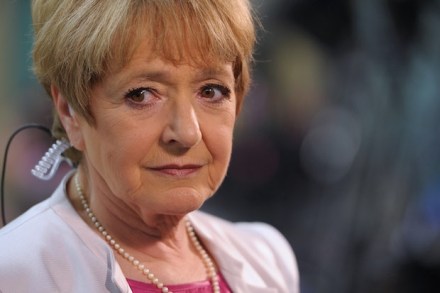
Today’s NAO report on free schools has recognised the ‘clear progress’ we have made opening 174 schools in three years with significantly lower costs than Labour’s school programmes. But, as Isabel Hardman, Toby Young and Policy Exchange’s Jonathan Simons have pointed out, instead of reading the report the BBC and PAC Chairwoman Margaret Hodge have chosen to ignore the facts. The BBC’s headline claims ‘free school costs budget trebled to £1.5bn, says report.’ But the NAO report states that ‘many new schools have been established quickly and at relatively low cost’. At £6.

The psychosis of the PISA report and best practices

From our UK edition

The enemies of school reform have something of a champion in Finland’s Pasi Sahlberg. In a recent comment piece for the Guardian, he discusses his self-invented bogeyman, the ‘Global Education Reform Movement’ with the evil-sounding acronym ‘GERM’. GERM has failed, he says. In his story, choice, competition, and accountability have spread like a virus around the world, infecting education system after education system. But, according to Sahlberg, there’s no evidence the policies work! Only that they increase school segregation, which in turn may have a negative effect on equality in outcomes. He tries to quote the latest 2012 PISA survey to prove his point.

Super-heads are a super-huge mistake

From our UK edition

Another month, so it seems, another super-head rolls. Not that many would have noticed the latest. Greg Wallace’s resignation as executive head teacher of five schools in the east London borough of Hackney was drowned out by the hubbub surrounding the Revd Paul Flowers. Yet the departure of Wallace — much lamented by pupils and their parents, according to tributes in the local newspaper — deserves a closer look. For Wallace was not just any top teacher.

The PISA rankings have exposed Labour’s policies on education

From our UK edition

Michael Gove wants to blame Labour for today's PISA rankings, in which the UK has fallen five places to 26th, and Labour wants to blame Michael Gove. So in this spirit of mutual accusation, Gove and his opposite number Tristram Hunt, pitched up in the Commons asking one another to support their own plans for reform. Gove repeatedly appealed to the opposition to join him in supporting his various policies from more autonomy for head teachers to performance-related pay, closing his statement by appealing to Labour for a 'unified national commitment to excellence' in education. Hunt then responded by asking Gove if he would join Labour in supporting various policies cooked up by the Opposition front bench, such as qualified teachers and collaboration for free schools.

PISA rankings are a shot in the arm for education reformers

From our UK edition

Like measuring water by the handful, calculating the success of the education system at a time of rampant grade inflation is an impossible task. If exam results go up every year how can we know if are our children are actually getting a better education or if exams are just getting easier? Part of the answer is international comparisons – which is why the OECD PISA rankings published today do actually matter. The last time they were published, in 2009, they showed that as a country we slipped to 25th in reading, 28th in maths and 16th in science. Yet at the same time domestic UK exam results were getting better. If you think that doesn’t add up, that’s because it doesn’t.

Untold truths – how the spirit of inquiry is being suppressed in the West

From our UK edition

It looks like Boris has offended lots of people by suggesting that some folk are where they are because they’re not very bright, something Nick Clegg calls ‘unpleasant’ and ‘careless’. It’s also, as Clegg must know perfectly well, true, but as Rod Liddle writes this week there are certain things you just can’t talk about, not just despite being true but because they’re true. Rod cites what Dominic Grieve recently said about corruption, which was rude, offensive, insulting to the Pakistani community and of course totally true. Likewise when Richard Dawkins recently pointed out a fact about the relative success of the Muslim world vs Trinity College, Cambridge – that was offensive.

Lord Bamford on why JCB is staying independent

From our UK edition

‘If I can’t see a factory from up here,’ I mutter to myself, throwing the car round an uphill bend of the B5032 south of Ashbourne, ‘I must be in the wrong county.’ But no, I’m not lost; there below me is a long pale slab of a building that announces itself as JCB World Headquarters — adding, on a giant polythene wrap, ‘Celebrating 1,000,000 Machines May 2013’. Equidistant between the Rolls-Royce aero-engine works at Derby and the potteries of Stoke-on-Trent, what I’m looking at is the beating heart of what’s left of industrial England. I’m here for lunch with the man whose fiefdom it is, the recently ennobled Lord Bamford.

Failing free school to be shut

From our UK edition

The Department for Education is determined to show that it’ll deal quickly with any failing free school. This morning it has announced that the Al-Madinah free school in Derby will be taken over by Greenwood Dale Foundation Trust, a successful East Midlands academy chain. Meanwhile, the Discovery New School in Crawley, which has failed a second Oftsed inspection, has been given 10 days to sort itself out or be closed. Any innovation involves a certain amount of risk. But the fact that three quarters of free schools have been rated as good or outstanding under Ofsted’s new tougher inspection regime, suggests that the policy is generally succeeding.

Toby Young: Tristram Hunt, the Spectator’s ‘Newcomer of the Year’?

From our UK edition

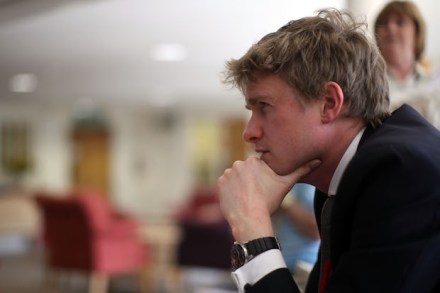
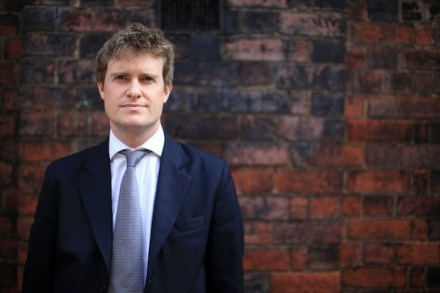
I love The Spectator’s Parliamentarian of the Year Awards. On the face of it, they’re a great advertisement for just how broadminded and sophisticated the editors of this magazine are. We’re able to rise above the political fray and generously acknowledge MPs on both sides of the House, regardless of which party they belong to. But at the same time, it’s also a way of drawing attention to the fact that we Tories aren’t as parti pris as our lefty opponents. Unlike us, they’re far too bogged down in the petty bickering of daily politics to pay tribute to their enemies. And in this way we’re able to score a few cheap political points. Having said that, I was slightly taken aback when Tristram Hunt won ‘Newcomer of the Year’.

Sir John Major is right about education and privilege in modern Britain

From our UK edition

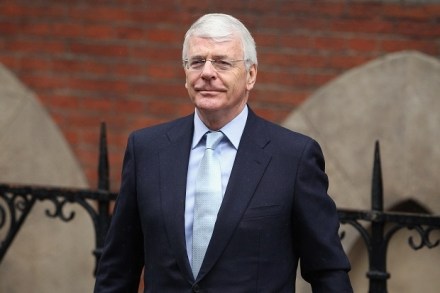
Sir John Major is, of course, correct. It is depressing, though perhaps not surprising, that the British upper-middle-classes - that is, those educated privately - still dominate what he termed the "upper echelons" of "every sphere of British influence". Depressing because no serious person can sensibly believe that talent is restricted to the minority of people educated in Britain's excellent private schools. But unsurprising because elites - I use the word dispassionately - have a natural tendency to do whatever it takes to maintain their elite status. Ed West is right about this. Still, Major's remarks were hardly, as has been claimed in some right-of-centre quarters, "an attack" on private education.

Rebutting #govevreality — a video of untruths and lazy thinking

From our UK edition

The blob strikes again. A video called Gove vs Reality is doing the rounds, taking pot shots at Michael Gove’s education policies, or ‘challenging his assumptions and the evidence he advances to support his approach’ as the producers put it. It’s had nearly 50,000 views so far, but is there any truth in it? With absurdly dramatic music, handpicked headlines and sound bites from the likes of Tom Watson, one might think that Michael Gove has been a complete disaster. Well, not surprisingly, there are a few untruths in the video: Gove has taken too many 'urgency pills' — shock, a minister who wants to get something done!

Should state education be abolished?

From our UK edition

These days I find myself so drifting away from the bounds of acceptable opinion that I don’t even shout at Radio 4 for being biased, because I don’t even understand the basis of what the arguments are about. Take this morning’s schools feature (occasioned by Sir John Major's comments about the 'truly shocking' dominance of a privately educated elite in public life), in which Harry Mount argued in favour and Owen Jones against the motion that grammar schools lead to more social mobility than comprehensives.

Malala for free schools

From our UK edition

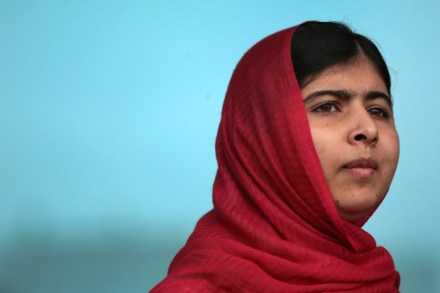
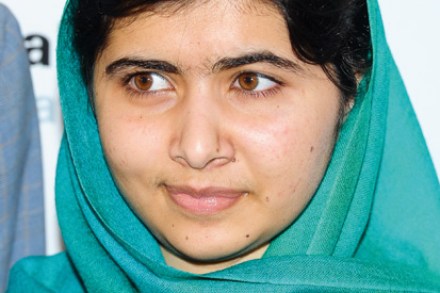
That Malala Yousafzai, the girl the Taleban tried to murder, is a brave and resolute young woman is not in doubt. The youngest person ever nominated for the Nobel Peace Prize, she has won many awards, including the Sakharov Prize and an honorary degree from Edinburgh University, in her campaign for ‘the right to -education’. But something curious is going on. Something crucial to her experience is always omitted when her life and mission are described by international agencies and the media. Education International, the global teachers’ union umbrella group, is typical. Malala is campaigning, they say, so that all can benefit from ‘equitable public education’; that is, government education.

Gove’s school choice can end social segregation. The old system entrenches it

From our UK edition

Like most foreigners who move to Britain, I was struck when I first arrived by how much people worry about which school their children go to. Even couples who don’t have kids seem to fret about where to send them. But now, working in the field of education reform, it makes sense to me. The disparity between a bad state school and a good one is huge, which in turn produces an enormous difference to the life chances of children attending them. It’s linked to money. To get into the good state schools here, you need to afford to live next to them. And if you live in a sink estate, the odds are that your children – no matter how bright – will be going to a sink school.

Tristram Hunt tries to needle Lib Dems with troublemaking teacher debate

From our UK edition

Opposition Day debates from Labour are often rather boring, with a frontbencher getting very angry about energy bills (one of their favourite topics for opposition day debates), and three backbenchers pulling stern faces at the lonely minister whose job it is to reply. But tomorrow's debate is being billed as a 'box office' encounter (which says a lot about the sort of thing people in Parliament get excited about) between the party's new Shadow Education Secretary Tristram Hunt and Michael Gove. Up to this point, Labour attempts to attack Gove have been about as effective as trying to scratch a diamond with a pin.

Bring back EMA — another unfunded Labour policy

From our UK edition

Tristram Hunt is on a crusade — to find Labour an education strategy. In today’s Daily Mirror, the new shadow education secretary takes a punt by offering up some fresh ideas, including a pledge to bring back the Education Maintenance Allowance for 16 to 19 year olds in further education. When it was canned in 2011, the EMA scheme had an annual budget of £560 million so how would Labour fund its return? By cutting back winter fuel allowance from rich pensioners: ‘Mr Hunt also wants to bring back the Education Maintenance Allowance to help teenagers from the poorest backgrounds stay in education. This could be paid for by stripping the wealthiest pensioners of the winter fuel allowance.

Educating Yorkshire was, for the most part, self-indulgent pap

From our UK edition

I don’t know if you’ve seen the documentary series, Educating Yorkshire, which has been as depressing as you might imagine from the title. Some of the teachers in the film were excellent, but the overall feeling one got was of inadequate individuals endlessly indulging their arrogant and stupid charges. As described here, rather brilliantly, in The Daily Mail. The headmaster in particular got my goat. I don’t think heads should address the pupils as ‘mate’ and suck up to them. There was an especially emetic final scene for the end of year address from the headmaster to the year 11 pupils, in which the staff all started crying.

Malala’s voice is defiant — but how much can she change Pakistan? 

From our UK edition

In 2012 a Taleban gunman, infuriated by Malala Yousafzai’s frequent television appearances insisting that girls had a right to education, shot her in the face. She survived and is now an inspirational symbol both of defiance and of the love of learning. As you might hope in a memoir by a 16- year-old, full acknowledgment is given to parental influence and particularly to the role of her father. Ziauddin Yousafzai is himself a long-standing champion of girls’ education who, until the Taleban forced the family into exile in Birmingham, ran girls’ schools in the famously beautiful Swat valley in northern Pakistan. And yet, as his daughter reveals, his life so nearly took a different path.